


Flow Chart Depicting HR Recruitment Process





Try Before you Buy Download Free Sample Product
 Impress Your
 Audience
 100%
100% Editable
 Save Hours
 of Time


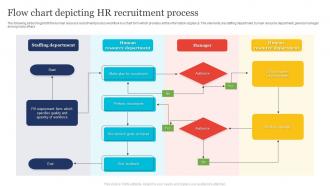
The following slide brings forth the human resource recruitment process workflow in a chart form which provides all the information at glance. The elements are staffing department, human resource department, general manager among many others
People who downloaded this PowerPoint presentation also viewed the following :
Flow Chart Depicting HR Recruitment Process with all 6 slides:
Use our Flow Chart Depicting HR Recruitment Process to effectively help you save your valuable time. They are readymade to fit into any presentation structure.





FAQs for Flow Chart Depicting
Honestly, it's pretty standard stuff. First you do job analysis and post the role - definitely spend time getting those requirements right upfront because otherwise you'll get bombarded with totally random applications (learned that the hard way). Then comes resume screening, phone interviews, in-person interviews with your final candidates, reference checks, and boom - offer time. Most places do multiple interview rounds which can drag things out. Timeline's usually 2-4 weeks depending on how fast you need someone and whether half your team needs to approve everything.
Honestly, start with an applicant tracking system - that's gonna save you the most time right off the bat. It'll filter resumes by keywords so you're not drowning in applications. AI chatbots are pretty solid for handling basic candidate questions around the clock. Video interviews make connecting with remote people super easy too. Oh, and don't sleep on social media recruiting! LinkedIn's the obvious choice, but you can find people who aren't even looking for jobs yet. Skills assessment platforms are clutch - test candidates before wasting time on calls. I'd probably go ATS first though.
Honestly, job boards are kinda overrated. Try employee referrals with some decent incentives - those hires usually work out better anyway. Social recruiting is huge right now, especially LinkedIn but don't sleep on TikTok either (sounds weird but it works). University partnerships are solid too. Here's the thing though - passive candidates are where it's at. They're not actively looking but they're often your best bet. You just gotta build those relationships early, not when you're desperate to fill a role. Pick 3-4 new channels you haven't tried yet and test them out this quarter. Networking events, professional groups, whatever fits your vibe.
Look, employer brand is just your rep as a workplace. Good Glassdoor reviews and happy employees posting about work? You'll get way better applicants who actually want the job. Think of it like dating - nobody swipes right on someone with terrible photos and sketchy reviews. When candidates can picture themselves there, they're more likely to accept offers. Honestly, skip the superficial stuff like ping pong tables (everyone's over that anyway). Focus on what genuinely makes your company cool to work for. Culture and values matter more than free snacks.
Honestly, data analytics is a game-changer for hiring. Track which job boards send you decent candidates vs total duds. Look at your best employees' backgrounds - you'll start seeing patterns you never noticed. Time-to-hire is huge to monitor too. If people keep bailing after the second interview, that's telling you something, right? You can even predict who might quit early based on certain traits. I'd start simple though - just track where good hires come from and how long your process takes. The insights are actually pretty crazy once you dig in.
Start with a clear job title and summary that grabs attention. Don't be vague about responsibilities - specifics save everyone time. Skip the cringe words like "rockstar" (seriously, who thought that was a good idea?). Salary ranges help build trust if you can swing it. Highlight your company culture and growth opportunities too. Have someone outside your team review it first - they'll catch jargon you didn't realize you were using. You'll be surprised how much internal language creeps in. The goal is making candidates actually want to apply, not decode what you're saying.
Start with standardizing your interview questions and scoring - that'll give you the biggest bang for your buck. Honestly, removing names from resumes during initial screening is a game changer. You'd be shocked how much we judge based on a name alone. Get multiple people involved in decisions instead of trusting one person's "vibe check." Train your team on unconscious bias (everyone thinks they don't have it, but we all do). Skills-based tests work way better than those weird "culture fit" conversations anyway. Don't try to fix everything overnight though - pick two things and nail those first.
Don't discriminate against protected groups - race, gender, age, disability, religion, pregnancy. Sounds obvious but it's surprisingly easy to screw up! Ask everyone the same basic questions and stick to job-relevant stuff only. Document everything because you might need to explain your choices later. Your interview questions, job posts, selection process - all of it has to be compliant. I learned this the hard way at my last company. When something feels sketchy, just check with HR or legal first. Way better than dealing with problems down the road.
Honestly, social media recruiting goes way deeper than just throwing up job posts. LinkedIn's the obvious choice for professional stuff, but Twitter's crawling with developers and Instagram's where all the creative types show off their work. I've even seen companies find great people on TikTok now - weird but it works. The real trick is building up your company's vibe first. Share actual behind-the-scenes content and let employees tell their stories. Makes people want to work there before you're even hiring. Follow industry hashtags and jump into groups where your dream candidates are already hanging out. Way more effective than waiting for applications to roll in.
Honestly, don't rush it - that's where most people screw up. Also make sure you actually know what you're looking for before you start interviewing people. I see hiring managers all the time who just go with their gut instead of having any real structure, and it's a disaster. References matter way more than people think, so actually call them. Oh and here's something - technical skills aren't everything if the person's gonna be a nightmare to work with. Try to keep your interview process the same for everyone so you can actually compare candidates. Make a scorecard or something and stick to it.
Honestly, just keep candidates in the loop - even a "hey, still reviewing applications" text beats radio silence. Your application process shouldn't be a nightmare where people upload resumes then retype everything (seriously, why do companies still do this?). Give realistic timelines upfront and don't blow past them. Train interviewers properly so they're not fumbling through questions they obviously didn't prep for. Oh, and feedback matters - candidates who made it far deserve to know why they didn't get it. Start by going through your own process like you're applying. You'll probably cringe at least once.
Behavioral interviews are your best bet - ask about teamwork stuff and how they handle conflict. Situational questions work too, like "tell me about disagreeing with company direction." Panel interviews are solid since different people can weigh in on compatibility. Honestly, informal meetups with potential teammates are where you'll learn the most. Coffee chats beat formal settings every time. Work simulations help too if you can swing it. Just don't fall into the trap of hiring carbon copies of your current team - you still need fresh perspectives, even if someone fits the culture well.
So basically, competency-based interviews dig into what people have actually done instead of asking those weird hypothetical questions. Like instead of "how would you handle conflict?" you ask "tell me about a time you dealt with a difficult teammate." STAR method works great here - they walk through the situation, task, action, result. Honestly, it's so much better because you get real examples instead of people just saying what they think you want to hear. Try mixing in a few of these questions next time. You'll be shocked how much more you learn about whether someone can actually do the job.
So AI is completely changing how we find and screen people - automated resume sorting, chatbots doing first interviews, algorithms ranking candidates. It speeds up sourcing big time and cuts down on boring repetitive stuff. Honestly though, some of these tools are getting almost too good? Human judgment still wins for cultural fit and bigger decisions. Your job's gonna shift toward building relationships and strategic stuff instead of manually going through resumes all day. I'd start playing around with AI tools now - better to get ahead of it than get left behind, you know?
Mix quantitative and qualitative stuff - time-to-fill, cost-per-hire, quality of hire through performance reviews and retention. Candidate satisfaction scores matter too. Honestly, offer acceptance rate is my favorite metric because it reveals so much about your process and brand. Source effectiveness shows which channels work best. Oh, and actually review this data monthly instead of just hoarding it in spreadsheets (guilty of that myself). Short sentences work. Longer ones help you see patterns and make real adjustments based on what's actually happening.
-
The slides come with appealing color schemes and relevant content that helped me deliver a stunning presentation without any hassle!
-
SlideTeam is the way to go when you are in a time crunch. Their templates have saved me many times in the past three months.