

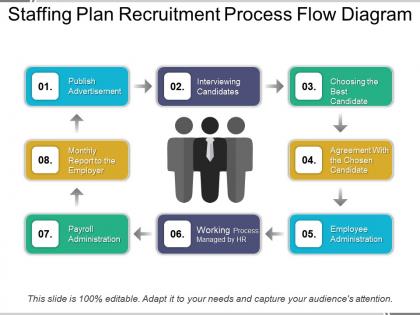
Staffing plan recruitment process flow diagram




Try Before you Buy Download Free Sample Product
 Impress Your
 Audience
 100%
100% Editable
 Save Hours
 of Time


Connect better through our Staffing Plan Recruitment Process Flow Diagram. Build firmer bonds with the audience.
People who downloaded this PowerPoint presentation also viewed the following :
Staffing plan recruitment process flow diagram with all 5 slides:
Folks find your ideas intriguing due to our Staffing Plan Recruitment Process Flow Diagram. It generates intense interest.



FAQs for Staffing plan recruitment
Look, you'll want to start with workforce analysis - basically figuring out what skills your team has now versus what you actually need. Then do some forecasting based on where the business is heading and typical turnover rates. Succession planning is huge too (seriously, everyone skips this and kicks themselves later). Map out your recruitment strategy, budget, and timeline milestones. I'd honestly just start simple - grab a spreadsheet and compare current roles to what you'll need over the next year. Track both immediate gaps and longer-term growth stuff. It's way less overwhelming than it sounds.
Look at what you're actually trying to accomplish first - expanding? Cutting costs? Going digital? Map those goals to the skills you need. Don't just copy last year's hiring plan (seen too many teams bloated with people doing irrelevant work that way). Work backwards from your 2-3 year targets instead. What's missing right now? Build your timeline around filling those specific gaps. Honestly, most companies just replace whoever quit and wonder why they're spinning their wheels. Focus on capabilities you actually need, not headcount for the sake of it.
Look, workforce forecasting is just predicting what people you'll need down the road. You look at your business plans, check seasonal patterns, and figure out who might quit soon. Then you can actually plan instead of scrambling when Bob from accounting suddenly bounces. Historical data helps tons here - like if you always need extra hands during Q4. I swear, companies that skip this step are constantly behind. Do it quarterly so you're not caught off guard. Way better than posting "urgent hiring" on LinkedIn every other month because you didn't see the gaps coming.
Honestly, tech can make staffing way less of a headache. Workforce management software handles the boring scheduling stuff automatically and can predict when you'll need more people based on past data. HR analytics are pretty cool too - they'll catch patterns you'd totally miss, like which departments are bleeding employees. AI recruitment tools will screen candidates super fast, though you still gotta trust your gut on whether someone's actually gonna fit in with your team (learned that one the hard way). My advice? Pick your worst staffing nightmare and find one specific tool to fix it first.
So you'll want to watch a few things - time-to-fill, turnover rates, and if you're actually hitting those headcount goals on time. Cost-per-hire matters too because recruiting fees add up fast! Don't just count warm bodies though. Check employee satisfaction and productivity to make sure you're getting decent people. Monthly reviews work way better than waiting three months - trust me on that one. Maybe set up some kind of simple tracker so you can catch problems before they snowball. Oh, and productivity metrics help prove you're not just filling chairs with random people.
Honestly, you've gotta bake this stuff into your process from day one. Track specific diversity targets for each role - I know it sounds corporate but numbers actually tell the truth when intentions don't. Post jobs where diverse candidates actually are, not just LinkedIn. Your hiring managers need bias training because we all have blind spots, even the "woke" ones. Structure interviews the same way so you're not comparing random stuff. Oh, and here's what companies always mess up - audit your retention rates by demographics. What's the point of diverse hiring if everyone bounces after six months?
Ugh, budget constraints are the worst - you're always fighting for headcount when leadership doesn't want to spend. Finding good people is brutal too, especially in tight markets. Plus the timing thing drives me crazy... you needed someone three months ago but hiring drags on forever. Oh, and don't even get me started on turnover completely scrapping your plans. One person quits and suddenly your whole staffing strategy is toast. My honest take? Always pad your timeline and have a backup plan, because your first attempt won't survive reality. Growth projections help but they're basically educated guesses anyway.
Okay so here's the thing - startups and big companies are totally different when it comes to hiring. You're scrambling to hire whoever can help you survive right now, maybe get your product launched or just keep everything from falling apart. Plans change constantly because honestly, who knows what crisis will hit next week? Meanwhile established companies actually have the luxury of planning ahead 12-18 months (wild, right?). They've got clear job descriptions, career ladders, all that structured stuff. The big difference? Startups hire for today's fires while bigger companies hire thinking about tomorrow's strategy. My advice: plan for where you actually are, not where you hope to be in two years.
Mix full-time staff with contractors you can dial up or down when things change. Cross-training is honestly a lifesaver - lets you shuffle people around instead of panic-hiring. I'd map out backup plans now rather than figuring it out mid-crisis. Hiring freezes work better than layoffs for morale. Voluntary time off or reduced hours are options too, though not everyone can swing the pay cut obviously. The companies that think ahead on this stuff don't get caught scrambling when the economy goes sideways.
Ask your team directly - they see stuff you totally miss from management level. Regular surveys about workload and skill gaps work great. Exit interviews are honestly where you get the real tea though, people will straight up tell you what was broken. Most managers think they know what their teams need but they're usually way off! Try focus groups for deeper conversations about roles and resources. The trick is asking specific questions about their actual daily struggles, not generic "how are things" stuff. Then use that feedback when you're planning your next hiring cycle.
So outsourcing basically means you're swapping internal employees for external contractors - totally changes how you think about staffing. You'll have fewer full-time people but way more vendor management work. It's kinda like trading problems, honestly. Instead of hiring specialists, you're hunting for solid outsourcing partners. The downside? You lose control over training and culture stuff, plus knowledge walks out the door easier. Oh, and the transition period is rough - you're juggling both internal teams and contractors at the same time, which gets messy fast.
Quarterly reviews are the bare minimum, but honestly? Do monthly check-ins when things get crazy or you're hiring fast. Those deeper quarterly sessions help you see if headcount still matches your goals and budget. Monthly ones catch problems early - like that developer who's clearly job hunting or when project deadlines suddenly shift. Oh, and any major changes (new launches, budget cuts, whatever) should trigger an immediate review. Don't rely on memory though - set those calendar reminders right now or you'll totally forget.
Honestly, training your current people is way smarter than constantly hiring new ones - it's cheaper and they actually stay. Map out what skills your team needs now versus later, then figure out how to get them there. I'd start with your best performers and the ones with real potential. Build development plans around what your business actually needs. People stick around when they see they can grow, which is huge for retention. Plus you're basically growing your own talent pool instead of competing for everyone else's leftovers on the job market.
Honestly, you gotta think about location stuff right from the start when you're planning staffing. Map out which jobs can go full remote, which ones need people in the office, and which can do both. Time zones matter way more than you'd think - learned that the hard way! Also budget for remote equipment and figure out how you'll track productivity across different setups. It's kinda like solving a puzzle at first. Way easier to build this into your job posts and budget now instead of scrambling to fix it later.
Okay so first thing - don't mess around with discrimination laws like ADA and Title VII. Those will bite you hard. Job requirements should actually be necessary for the role, not just wishlist items that might accidentally filter out certain groups. Wage and hour laws matter too when you're planning schedules. The legal side gets messy fast depending on what industry you're in (manufacturing has different rules than retail, obviously). Document everything you do because if someone challenges your decisions later, you'll need that trail. Seriously though, bring in HR or legal before making big staffing moves.
-
Colors used are bright and distinctive.
-
Very unique and reliable designs.