HR Onboarding Process Flow Chart
Try Before you Buy Download Free Sample Product
Audience
Editable
of Time
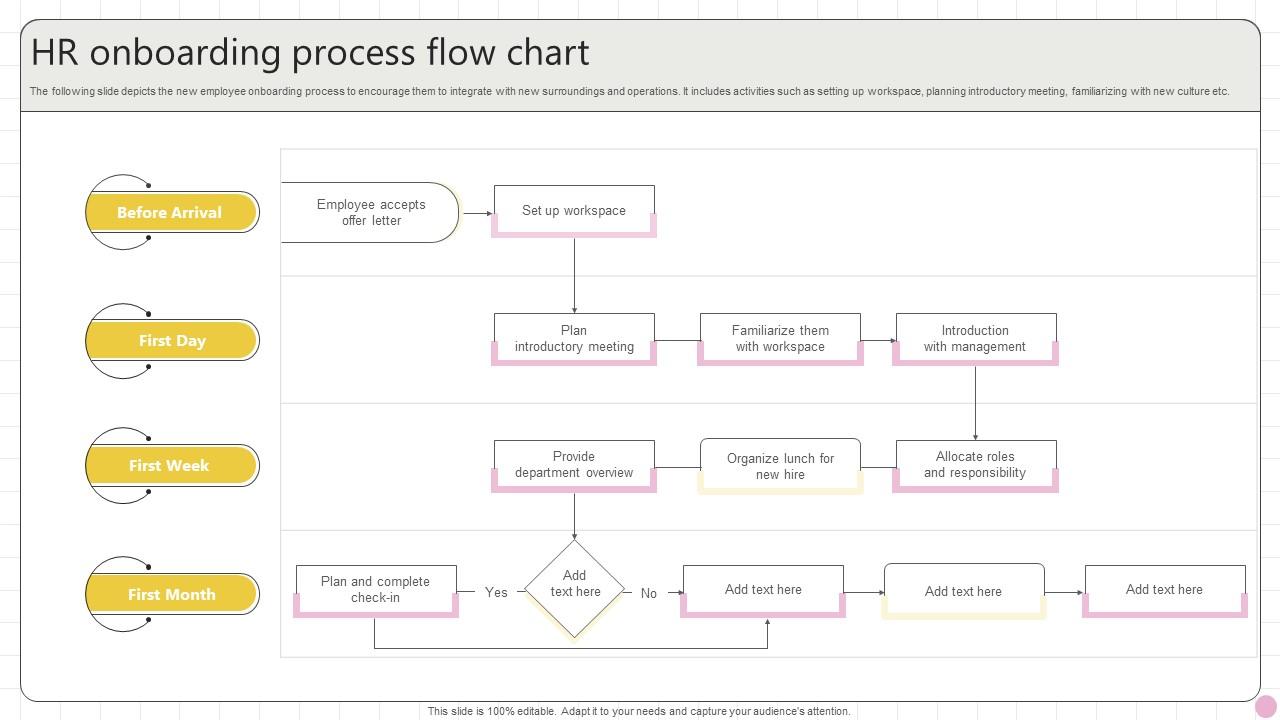
The following slide depicts the new employee onboarding process to encourage them to integrate with new surroundings and operations. It includes activities such as setting up workspace, planning introductory meeting, familiarizing with new culture etc.
People who downloaded this PowerPoint presentation also viewed the following :
HR Onboarding Process Flow Chart with all 6 slides:
Use our HR Onboarding Process Flow Chart to effectively help you save your valuable time. They are readymade to fit into any presentation structure.
FAQs for HR Onboarding
Okay so first tackle all the paperwork nonsense - I know it's boring but just get it out of the way. Then focus on actually teaching them their job and introducing them to the team. Honestly, the social stuff matters way more than most companies think - if people don't click with anyone, they're gone. Don't dump everything on them day one though, that's overwhelming. Check in with them regularly for like the first three months. Oh and be upfront about what you expect from them performance-wise. Have a plan but don't be super rigid about it since everyone learns differently.
Oh dude, technology makes onboarding so much smoother! You can automate all that paperwork nightmare - tax forms, benefits stuff, policies - through platforms like BambooHR or Workday. New hires can knock it out before they even start. Interactive training modules are clutch too, plus you can set up virtual office tours and learning paths. Chatbots handle the basic questions (though honestly, some people still prefer texting HR). The trick is making sure your tools actually work together instead of creating a bigger mess. I'd start with whatever manual process currently makes you want to scream.
Honestly, start with time-to-productivity - like how long before new people actually hit their targets. Also track your 90-day retention because that's where you'll see if onboarding actually worked. Manager feedback is gold though, they know if someone's ready or just checked boxes. Completion rates for training matter too, plus how fast people hit key milestones. But here's what I'd really focus on: ask new hires if they'd recommend your process to friends. That question cuts through all the BS. Oh, and don't try measuring everything right away - pick maybe 3 things you can actually improve on.
Honestly, you'll want everyone going through the same basic stuff first - company culture, policies, core systems. That's your foundation. After that? Let each department tack on their own specialized training. I've worked places where IT onboarding was completely different from what Marketing got, and it was honestly a mess. Nobody knew what anyone else learned. Use checklists to keep things consistent (saves your sanity too). Start by figuring out what's truly universal versus department-specific. Build the universal stuff first, then let teams customize from there. Have someone check the process every few months so it doesn't go off the rails.
Honestly, culture is huge for onboarding - way more than most places realize. New people need to pick up on your vibe and how things actually work, not just their specific job stuff. I've watched someone crush their tasks but still feel totally out of place because they never clicked with the team dynamic. The good programs mix cultural stuff into everything - like when you're doing introductions or sharing those random company stories that explain why everyone does X instead of Y. You want them understanding the real deal from day one, not just whatever's written down somewhere.
Remote people need way more hand-holding, honestly. You'll have to schedule virtual coffee chats and send care packages - basically over-communicate everything. Office folks get those random hallway conversations naturally. Both groups need the same culture and process info, just delivered differently. I'd make separate checklists since logistics are totally different - remote workers need tech setup and digital intros, office people need badges and desk tours. The tricky part is making everyone feel equally welcome through different channels. Remote onboarding is honestly such a pain but worth doing right.
You're gonna see three main problems: info overload on day one, nobody explaining what the job actually entails, and managers who basically disappear. Oh, and PowerPoint dumps that make people's eyes glaze over - that's still everywhere unfortunately. Better approach? Spread onboarding across a few weeks instead of shoving everything into one day. Define what "doing well" looks like for their specific role. Schedule regular manager check-ins so new people aren't left wondering if they're screwing up. Create a timeline that mixes the boring必要 stuff with time to actually connect with the team.
Honestly, you HAVE to get feedback from new hires - it's the only way to know what's actually broken in your process. Without it, you're just guessing based on how things look from the inside. I've watched companies think their onboarding is amazing while new people are secretly struggling with confusing steps or pointless tasks. During their first 90 days, do regular check-ins and ask specific stuff about what's unclear or poorly timed. Oh, and actually fix what they mention - don't just collect feedback to pat yourself on the back for asking.
Honestly, mixing things up is what works best - don't just dump PowerPoints on people. I'd do some structured training for the boring policy stuff, pair them with someone experienced for shadowing, then throw in workshops where they can actually practice. Most companies totally overdo the presentation marathon thing and everyone zones out. Break it up with mentorship, small group chats, maybe check-ins throughout their first few months. Oh and make it feel like a conversation, not a lecture series. Short sessions work way better than those all-day training nightmares. Figure out what clicks for your specific team first though.
Honestly, just bake the compliance stuff right into your workflow from day one. Collect all the paperwork - I-9s, tax forms, the whole nine yards - and actually verify work eligibility. Labor laws are all over the place depending on where you are, so keep a solid checklist covering federal, state, and local stuff. Document everything because audits are the worst when you're unprepared. Your team needs to stick to the same process every single time, no shortcuts. Oh, and review your steps quarterly - regulations change and you don't want to miss something important that'll bite you later.
Dude, good onboarding can literally cut your turnover in half - we're talking 50-60% better retention than places that just wing it. First 90 days are crucial. Instead of dumping everything on people day one (which honestly sucks for everyone), you want consistent check-ins and clear expectations. I mean, think about it - when you show new hires they actually matter and aren't just another body, they'll stick around. The expensive early turnover drops big time. Just don't make it some boring orientation marathon. Real follow-up makes all the difference.
Honestly, pair your new people with someone experienced from day one - or even before they start if you can swing it. That person becomes their lifeline for everything from culture questions to finding the damn coffee machine. Set up regular check-ins for the first three months with actual goals, not just casual hangouts. Match personalities carefully though - this isn't just throwing people together randomly. The big thing? Train your mentors properly and give them time to do it. Otherwise they'll half-ass it and everyone loses. Those little logistics questions matter way more than most companies realize.
Get them the basics ready beforehand - employee handbook, org chart, their actual job description. Login info for all systems is crucial because honestly, IT always takes forever to reset passwords. Throw in an office map and parking details too. I'd add a contact list since they won't remember anyone's name or role that first week anyway. Oh, and any training stuff for their position. The dress code thing matters more than you'd think - saves awkward conversations later. Just have it all prepped before they show up. Nothing's worse than day one chaos when you're scrambling around looking for their computer login.
Honestly, ditch the cookie-cutter onboarding thing - it never works. Survey people upfront about their experience and how they like to learn. Some folks need way more technical stuff, others just want to understand company culture and unwritten rules. What's worked super well for us is pairing newbies with buddies who get their background. Way less intimidating that way. Also build in different speeds because some people pick things up crazy fast while others need more time. The trick is actually asking what they need instead of guessing - saves everyone headaches later.
Honestly? Your manager can totally make or break those first few weeks. Good ones will actually carve out time for regular check-ins and introduce you around - not just dump a task list on you and vanish. They explain the "why" behind what you're doing, which makes such a difference. Bad managers leave you sitting there like... what am I even supposed to be doing here? If you're managing someone new, don't try to squeeze them between other meetings. Block out real time. They'll connect you to the right people and set clear expectations so you're not just floundering around.
-
Been using SlideTeam for some time now…can’t imagine why I wasted all that time in front of the screen trying to make the perfect presentation.
-
I’m not a design person, so I couldn’t make a presentation to save my life. Thankfully, they have all kinds of templates that I regularly use for my work.