


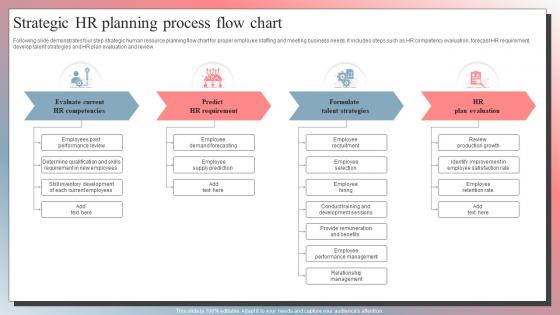
Strategic HR Planning Process Flow Chart




Try Before you Buy Download Free Sample Product
 Impress Your
 Audience
 100%
100% Editable
 Save Hours
 of Time


Following slide demonstrates four step strategic human resource planning flow chart for proper employee staffing and meeting business needs. It includes steps such as HR competency evaluation, forecast HR requirement, develop talent strategies and HR plan evaluation and review.
People who downloaded this PowerPoint presentation also viewed the following :
Strategic HR Planning Process Flow Chart with all 6 slides:
Use our Strategic HR Planning Process Flow Chart to effectively help you save your valuable time. They are readymade to fit into any presentation structure.






FAQs for Strategic HR Planning
Okay so basically you need four main things: workforce analysis, demand forecasting, gap identification, and action planning. First, figure out what talent you currently have - skills, performance, all that stuff. Map out what capabilities you'll need based on where the business is heading. Honestly, the gap analysis is where things get interesting because you'll spot issues you never even realized were there. Then create specific plans to fix those gaps through recruiting, training, succession planning, whatever works. Oh and don't treat this like some annual HR ritual - your business shifts constantly, so this should too. Regular check-ins are crucial.
Okay so first figure out what your company's actually trying to do - growing, cutting costs, whatever. Then just connect your HR stuff directly to that. Growing 30%? You'll need serious hiring and retention plans. Cost cuts? Maybe streamline processes or restructure some roles. I know it sounds super basic but honestly most HR teams just do their own thing without thinking about the bigger picture! Regular check-ins with leadership help a ton. They speak business, you need to translate that into actual HR moves. Every big decision should tie back to some real business result or you're just wasting time.
So basically data analytics is like having a crystal ball for HR stuff. You can spot turnover patterns and figure out where you're missing skills before it becomes a total mess. Performance data and recruiting numbers help you make actual strategic calls instead of just winging it. Honestly, I was skeptical at first, but the amount of insight you get from employee data is pretty crazy. The numbers basically tell you what's bombing and what's working in your talent game. My advice? Don't go overboard initially - just pick something simple like retention rates and see where it takes you.
Look, demographics basically dictate your whole talent game plan. Got a ton of boomers about to retire? You're screwed without proper knowledge transfer and succession planning. Millennials and Gen Z want totally different stuff - remote work, better development opportunities, benefits that actually matter to them. Age mix affects everything too, from how much tech training you'll need to what your healthcare budget looks like. Honestly, I'd map out where you are now versus where you'll be in 3-5 years, then build your hiring and retention strategy around that. Otherwise you're just flying blind.
Start with workforce analytics - dig into turnover rates, retirement dates, promotion patterns. I know, spreadsheet city, but trust me it's worth the headache. Map your business goals for the next 2-3 years and figure out what skills you'll actually need. Department heads are goldmines here - they always know stuff that hasn't made it into the official docs yet. Oh, and don't just do this once a year like most companies. Update your forecasts regularly or you'll be scrambling when someone important leaves.
Track your leading and lagging indicators - stuff like engagement scores, retention rates, how long it takes to fill positions. Internal promotion rates too. But here's what most places mess up: they don't check if their talent pipeline actually matches where the business is heading. Connect your HR stuff to real business results. Revenue per employee, customer satisfaction, that kind of thing. I'd do quarterly check-ins against whatever goals you set earlier. Oh, and don't just measure what's easy to count - measure what actually matters. That's the trap everyone falls into.
Honestly, start with skills assessments to see what your team actually knows vs. what they need. Performance reviews are super telling - they usually show exactly where people are struggling. I'd also do employee surveys and get feedback from managers. Oh, and here's something that helped me - look at your hiring patterns. If you're always posting the same job openings, that's a dead giveaway you've got gaps. Mix a couple of these methods together instead of just winging it. Way better than going off hunches, trust me.
So basically the economy keeps messing with your HR plans constantly - you can't escape it. When things go south, you're stuck doing hiring freezes and maybe even layoffs. But then when the economy's hot? Good luck finding anyone decent because everyone's fighting over the same talent pool. Plus inflation screws with your whole compensation budget, and don't even get me started on how interest rates affect benefits costs. The trick is just building wiggle room into everything so you can switch gears fast. Honestly wish the market would just chill for like five minutes.
Honestly, the secret is making them partners from the start, not just people who rubber-stamp your plans. Get leadership involved when you're mapping out workforce strategy and spotting skill gaps. I've watched so many HR initiatives crash because execs felt blindsided later. Set up regular touchpoints where they share what's coming down the pipeline business-wise. Feed them numbers that hit home - like how talent shortages might torpedo their big projects. Oh, and assign specific leaders to sponsor different pieces of your strategy. When budget season rolls around, they'll actually fight for your stuff instead of cutting it first.
Honestly, tech can handle most of the grunt work for HR planning these days. Your HRIS will track headcount and turnover trends automatically - way better than drowning in Excel sheets. AI tools are actually pretty decent at forecasting hiring needs based on growth projections. Real-time dashboards show you what's happening with your workforce without digging through reports. The trick is finding stuff that plays nice with what you already have. Nobody wants to bounce between five different platforms. I'd map out your current process first, then see where automation would save you the biggest headache.
Honestly? Leadership buy-in is your first nightmare - they want instant results but workforce planning takes forever. Getting decent data about who you actually have is rough too. Business priorities change every five minutes, so predicting what you'll need feels impossible. Different departments hoard their info like dragons, which doesn't help. Budget's always tight obviously. My advice? Start with small pilot programs first. Build some wins, get people to trust you, then go bigger. Focus hard on workforce analytics early - sounds boring but you're screwed without that baseline data. Everything else falls into place after that.
Honestly, track engagement scores the same way you'd track revenue - make it part of your actual strategic planning. Survey people annually, then bake those goals into workforce plans. Maybe that's better manager training or fixing broken career paths. Most companies I've seen treat this stuff as an afterthought, which is just dumb. When you're hiring, look for culture fit and growth mindset too. The real trick though? Connect engagement data to business outcomes in your planning models. Then you're not just crossing your fingers that happy employees work harder - you're planning around it.
Look, strategic HR planning is basically your early warning system for keeping good people around. You can spot who might bail before they do, figure out what skills you're missing, and actually plan out career paths that make sense. Honestly, most companies are terrible at this part. Use your data to see turnover patterns - like, are people leaving after 18 months? Why? Then build specific programs around your critical roles and the people in them. Map out who's in your must-keep positions first, then work backwards from there. It's way easier than scrambling after someone gives notice.
Honestly, D&I isn't just nice to have - it's gotta be baked into your strategic HR planning from the start. Diverse teams crush it financially and creatively, so why wouldn't you prioritize this? Set specific diversity targets for your leadership pipeline when you're forecasting talent needs. Look for bias in recruitment channels too. Build development programs that actually include everyone. I've seen too many companies treat this like an afterthought instead of tracking D&I metrics the same way they obsess over other business numbers. Makes zero sense to me.
Honestly, you've got to keep your finger on the pulse of what's happening in your field. New trends pop up constantly - automation, remote work changes, different skill needs. It's exhausting but necessary. Build flexibility right into your HR strategy so you can pivot fast when things shift. Update your hiring approach and training programs based on where the industry's going, not where it was last year. Oh, and definitely set up regular check-ins with leadership about what's coming down the pipeline. That way your people strategy can actually evolve with the changes instead of playing catch-up all the time.
-
I am extremely pleased with these PPT slides that we used for our event. They were easy to modify and came out great in all aspects!
-
Making a presentation has never been this easy for me. Thank you SlideTeam for offering a splendid template library.