

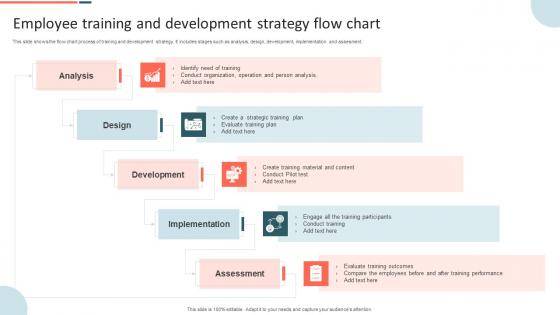
Employee Training And Development Strategy Flow Chart




Try Before you Buy Download Free Sample Product
 Impress Your
Audience
 100%
Editable
 Save Hours
of Time


This slide shows the flow chart process of training and development strategy. It includes stages such as analysis, design, development, implementation and assesment.
People who downloaded this PowerPoint presentation also viewed the following :
Employee Training And Development Strategy Flow Chart with all 6 slides:
Use our Employee Training And Development Strategy Flow Chart to effectively help you save your valuable time. They are readymade to fit into any presentation structure.






FAQs for Employee Training And Development
Honestly, investing in training is one of the smartest moves you can make. Your people stick around longer when they feel like they're actually growing. Performance goes up too, obviously. What I love about it is you're building talent from within instead of constantly hiring from outside - way less headache. Plus your team gets way more engaged when they see you actually care about their development. The productivity bump usually covers what you spent on training pretty quickly anyway. I'd figure out where your biggest skill gaps are first, then hit those with some targeted programs. That's where you'll see results fast.
Start with a skills gap analysis - compare what your team has now versus what they actually need. Surveys work well, but honestly? Just watching people struggle day-to-day tells you tons. One-on-ones are clutch too. Performance reviews are perfect for this since they show exactly where people get stuck. Your managers usually catch training gaps before employees even notice them - they're good at spotting patterns. Oh, and don't make this some yearly thing. Check in regularly or you'll miss stuff that comes up between formal reviews.
Honestly, tech has completely transformed how we do training. LMS platforms handle all your course content, AI customizes learning paths for each person, and VR/AR make complex skills way more engaging to learn. Your team can train on mobile anywhere - no more sitting in stuffy conference rooms for hours. Analytics actually show you what's working instead of just guessing. The real win? You can scale to hundreds of people without your budget exploding. I'd say start by looking at what tech you're already using and figure out where you can automate the boring stuff or make things more interactive.
Honestly, I'd start with whatever's easiest to track in your current setup. Completion rates are obvious but don't tell the whole story. Test people before and after - that'll show you if they're actually absorbing anything. The real test though? Watch how they perform back on the job. Survey participants about confidence levels and whether they're using what they learned (you'd be surprised how many people finish training then never touch it again). If you can connect training to business stuff like fewer errors or better productivity, that's gold for ROI calculations. Just build up your measurement approach gradually instead of trying to track everything at once.
Honestly, gamification works crazy well - people get weirdly competitive over training badges and points. VR simulations are solid too since employees can practice real scenarios without screwing anything up. I'd also try microlearning (those 5-10 minute bite-sized chunks) because nobody has time for hour-long sessions anymore. Interactive workshops where people learn from each other hit different than regular presentations. Oh, and peer-to-peer learning sessions are gold. Don't roll everything out at once though - test one method first and see what actually clicks with your team before going company-wide.
Honestly, it's gotta feel rewarding instead of just another box to tick. Get your leadership actually doing the training too - if the CEO won't learn new stuff, why should anyone else bother? Give people real time and budget for it. I've seen too many companies say learning matters then provide zero resources, which is pretty much pointless. Celebrate completions and when people use their new skills. Oh, and put it in performance reviews so it actually counts for something. Bottom line: show that growing skills leads to promotions and recognition.
Dude, training is like a retention magic trick. People who get regular development opportunities are way more likely to stay put. Think about it - you just learned some awesome new skills, why would you bail now? Companies with solid training programs see 40-50% better retention, which is pretty wild. When you invest in someone's growth, they actually feel valued and can picture a real future there. It's not just about their current job anymore, it's about where they're headed. If you're bleeding people left and right, honestly just look at what development stuff you're actually giving them. Bet it's not much.
Yeah, generations totally learn differently! Boomers want face-to-face training with actual printed handouts - none of this screen stuff. Gen X needs flexibility since they're juggling everything, so self-paced online modules work best. Millennials love interactive digital content and videos, plus anything collaborative. Gen Z? Forget long presentations - they want quick mobile content and gamified learning. Honestly, PowerPoints put them to sleep. Oh, and they're big on social learning too. You'll need multiple formats instead of picking just one. Nobody wants to be stuck with a style that doesn't click for them.
Honestly, remote training is tough because people get so distracted at home. I've seen folks doing laundry mid-session! Keep things short - like 30-45 minutes tops. Interactive stuff helps too, polls and breakout rooms work well. Tech issues will happen, so always do sound checks first because nobody wants to waste time on "can you hear me" drama. Recording sessions is clutch for people who zone out. Oh, and those bite-sized modules? Way better than long lectures. People actually watch those.
Oh man, mentorship programs are seriously underrated! They fill all those weird gaps that regular training misses - like how to actually deal with office drama or figure out the unwritten rules nobody tells you about. Your mentor helps you take those boring PowerPoint concepts and use them in real situations. Plus they'll teach you soft skills that matter way more than people admit. Some of my biggest "aha" moments happened just chatting with mentors over coffee, not sitting through another presentation. Just make sure you match people smart - pair mentors' strengths with what the mentee actually needs to work on.
Honestly, start with digital literacy and critical thinking - those are non-negotiable now. Your people need to be comfortable with basic tech, AI tools, and reading data since that's just expected everywhere. Remote collaboration is still tricky for most teams, so communication skills matter way more than they used to. Problem-solving and emotional intelligence won't get automated away anytime soon (thank god). I'd do a quick skills audit first - see where the biggest gaps are, then build training around those specific weak spots instead of some generic program.
Just survey your people first - seriously, don't guess what they want. Everyone learns differently. Visual folks need diagrams, others want hands-on stuff, some prefer clicking through modules alone vs sitting in group sessions. I've watched so many companies bomb with cookie-cutter programs. Mix up your delivery methods for the same content. Oh and definitely offer beginner/advanced tracks since skill levels are all over the place. Flexibility beats forcing everyone down the same path every time. Maybe pilot test it first?
Okay so you've got to hit the big ones - harassment prevention, safety stuff, and whatever compliance your industry requires. California's crazy strict about this btw, so definitely check your state laws. Document absolutely everything because lawyers love paper trails when things go sideways. Keep your content current since these regulations change all the time. Here's the thing though - set up a solid tracking system showing who finished what training and when. Trust me, that documentation can save you from massive fines later. It's boring work but way cheaper than dealing with lawsuits down the road.
Look, forget those one-and-done training sessions that everyone sleeps through. Get your leadership actually invested first - with real money they won't yank away later. Most programs bomb because they're mind-numbing and totally disconnected from what people actually do day-to-day. Build it into your culture instead. Make sessions relevant to their jobs and where they want their careers to go. Track what's working through feedback and results. Then - this is crucial - follow up regularly with mentoring or chances to practice those skills. Otherwise you're just wasting everyone's time, honestly.
Honestly, you've got way more control than you think. Figure out what skills you're missing and just ask for training - most managers actually love it when you come to them with ideas instead of waiting around for your annual review. Nobody knows what you want better than you do, so make your own plan. Look up courses or certifications that make sense for your goals. I always tell people to think about where you want to be in two years, then work backwards from there. Oh, and definitely find a mentor if you can - those stretch assignments they suggest are usually gold. Don't just sit there waiting for development to happen to you.
-
It’s really cool, and you can find pretty much everything you could need for your work or school.
-
Amazing product with appealing content and design.