

Employee Training And Development Process Flow




Try Before you Buy Download Free Sample Product
 Impress Your
 Audience
 100%
100% Editable
 Save Hours
 of Time


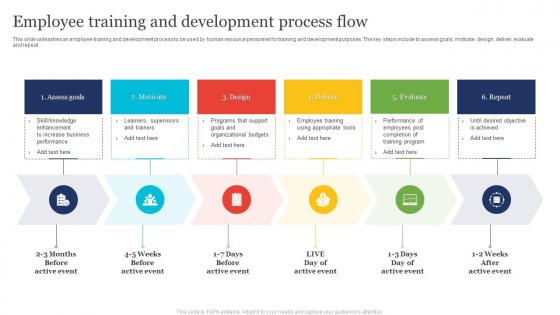
This slide unleashes an employee training and development process to be used by human resource personnel for training and development purposes. The key steps include to assess goals, motivate, design, deliver, evaluate and repeat
People who downloaded this PowerPoint presentation also viewed the following :
Employee Training And Development Process Flow with all 6 slides:
Use our Employee Training And Development Process Flow to effectively help you save your valuable time. They are readymade to fit into any presentation structure.





FAQs for Employee Training And
Honestly, monthly one-on-ones are where the real magic happens - way better than those useless annual reviews everyone dreads. Figure out what skills they're missing first, then where they actually want their career to go. Some people want management, others just want to get really good at what they do, you know? Create learning plans that fit each person - could be formal training, shadowing someone, or just throwing them into a challenging project. Track how it's going and tweak things when needed. Oh, and definitely have those "where do you see yourself in 2 years" conversations regularly. Keeps people motivated when they can see the path forward.
Honestly, start with performance reviews and those one-on-ones you probably already do. People usually know where they're struggling if you just ask directly. Map out your business goals for next year and work backwards - what skills are you missing? Also check what's trending in your industry because those "optional" skills become requirements crazy fast. I learned that the hard way a few years back. Make it a quarterly thing instead of annual. Way easier to fix small gaps than scramble when someone quits and you realize nobody else knows their stuff.
Honestly, mentorship is a game-changer for developing your people. Formal training only goes so far - having someone experienced actually guide you through real situations? That's where the magic happens. I've seen people grow way faster when they have that one-on-one relationship. Coffee chats, quick check-ins, whatever works. Your team gets someone to bounce ideas off, learn those unwritten rules we all had to figure out the hard way. Builds their confidence too. Even if you start super informal, like monthly meetups, it beats throwing them into the deep end alone.
Dude, personalized development goals are such a win. People actually give a damn when you connect their goals to what they want long-term, not just what the company needs. Performance goes up because they're working toward stuff they care about. Plus you can spot your future stars way earlier - which is honestly pretty clutch for planning. The sweet spot? When someone's personal interests actually match business priorities. Suddenly training doesn't feel like a chore anymore. Just start with real conversations about where they see themselves heading. Works way better than generic goal templates.
Honestly, tech is a game-changer for employee development. Learning platforms can adapt to how fast someone picks things up, and AI suggests skills based on their actual job. Mobile apps are clutch - people can learn during their commute or whenever. VR training is getting pretty wild for hands-on stuff too. The data side helps you figure out what's actually moving the needle instead of just busy work. I'd start by looking at your current setup and spotting where you're losing people's attention. That's usually where adding the right tech makes the biggest difference.
Mix 360 feedback with regular one-on-ones and skill assessments - that combo works best. Get input from peers, managers, and your team, then back it up with actual performance data. Quarterly check-ins beat annual reviews every time (seriously, who remembers January by December?). Track specific examples instead of fuzzy personality stuff. Set up something simple to monitor goals and document everything as you go. Oh, and don't try implementing everything at once - pick one method first, then build from there. Way less overwhelming that way.
Oh man, you're so right about learning styles mattering! I made this mistake with my last team - just assumed everyone would pick up new stuff the same way. Some people are super visual and need to actually see demos or watch videos. Others learn by doing, like they need to get their hands dirty with the actual work. Then there's folks who process things better when they can talk it out in groups. It's wild how different we all are. I'd definitely ask your team upfront how they like learning new skills, then mix up your approach. Maybe do video tutorials AND hands-on workshops for the same topic? Way more effective than one-size-fits-all training.
Make it part of your regular routine, not some special initiative that'll get forgotten. Have managers ask "what'd you learn this week?" during one-on-ones and actually get excited about the answers. Block out time for it - even 30 minutes helps. Let people teach each other through lunch sessions or quick demos (honestly, everyone loves being the expert for five minutes). Here's the key though: connect learning directly to promotions and career growth. Otherwise it just feels like busy work. Oh, and celebrate the wins when someone picks up a new skill - that stuff spreads fast.
Honestly, feedback is everything when it comes to development programs. You can't just assume what people need - I learned that the hard way. Quick surveys or casual check-ins every few months will tell you way more than any formal assessment. People actually engage when they feel heard about their career goals and learning style preferences. Plus, it beats sitting through another generic training nobody asked for. The whole thing falls apart without that input though. Maybe start small with your team and see what they're actually interested in developing?
Honestly, I'd go 70-30 or maybe even 80-20 toward hands-on stuff. That's where people actually learn. Give new hires some formal training upfront for the basics, then get them doing real work with mentors and challenging projects. Too much classroom time kills people - I've watched companies bore employees to death that way. The formal sessions you do have need to connect directly to their actual job, not some theoretical BS. Maybe do structured training quarterly or when you roll out new systems, but daily coaching and real projects should be your main thing. That's what actually sticks.
Honestly, you need both formal training AND hands-on experience. Start with structured programs covering communication and decision-making basics. The classroom stuff helps, but real growth happens when people actually lead things - even small projects work. Get them mentors, rotate them through different departments. Cross-functional exposure builds perspective like crazy. I'd identify high-potential employees early (like, really early) and create individual development plans. Don't be afraid to throw them into leadership roles - that's where they'll actually figure it out.
Look, performance reviews are honestly your best shot at figuring out what you need to work on. Your manager will call out your strong points and where you're falling short - that becomes your whole development roadmap right there. Then you can target specific training or ask for projects that'll actually help you grow. I know they can feel awkward, but without that feedback you're just guessing at what skills to build. My advice? Don't just sit there passively. Ask questions about what opportunities are coming up and how you can get involved in them.
Look, diversity and inclusion make a massive difference for employee development. First thing - check who's actually getting the good opportunities. I bet you'll find some patterns that'll surprise you. Some groups always seem to miss out on leadership programs or mentorship because of informal networks or wonky feedback systems. You've gotta mix up who gets stretch assignments and sponsorship deals. Don't let the same types of people grab everything. Oh, and different people learn differently too - factor that into your programs. Start by auditing your current stuff and see where the gaps are hiding.
So here's what works - figure out what your business actually needs first, then build training around that. Most places do it backwards and waste a ton of money. Sit down with leadership and map out the skills you'll need for the next year or two. Build programs targeting those specific gaps. Oh and don't set it and forget it - priorities change constantly, so your training focus should too. I've seen companies stick with the same development plan for years while their business totally shifted. Every training dollar should connect back to something concrete you're trying to accomplish.
Budget's gonna be your first headache, plus good luck getting managers on board. Time is the real killer though - people can't squeeze in development when they're drowning in regular work. Measuring if this stuff actually moves the needle? Super tricky. Leadership usually thinks it's fluff until they see numbers. Content gets stale fast too since jobs change constantly. Start with something small, maybe just one team first. Get managers excited about it instead of fighting you. Oh, and tie everything back to actual business results or you'll lose them completely.
-
“Superb. What a great finding. Thankful for SlideTeam. We were paying people to make slides which went all in vain. We are so happy to have found you.”
-
Thank you for offering such fantastic custom design services. The team is really helpful and innovative. In a very short time, I received my personalized template.