


Employee Monthly Training Calendar Professional Development Training





Try Before you Buy Download Free Sample Product
 Impress Your
 Audience
 100%
100% Editable
 Save Hours
 of Time


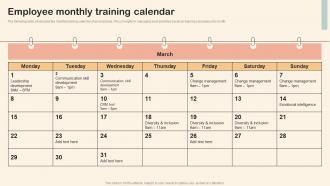
The following slide showcases the monthly training calendar of an employee. This is helpful in managing work priorities based on training schedules of a month.
People who downloaded this PowerPoint presentation also viewed the following :
Employee Monthly Training Calendar Professional Development Training with all 6 slides:
Use our Employee Monthly Training Calendar Professional Development Training to effectively help you save your valuable time. They are readymade to fit into any presentation structure.





FAQs for Employee Monthly Training Calendar
You'll need training type, duration, target audience, and prerequisites for each session. Include the trainer's name plus location or meeting link. Don't forget materials people need beforehand - always someone who shows up empty-handed! Add completion deadlines and follow-up dates since those get missed constantly but they're super important for tracking. Skill level indicators help too so people know what they're getting into. Build buffer time between sessions because honestly, everything runs late. Oh, and start with your mandatory compliance stuff first, then fit the development sessions around those. Way easier than trying to move required training later.
Start with your performance review data - figure out what skills everyone's actually missing. Schedule training about 2-3 months before your crazy busy periods when those skills really matter. I map out our busiest quarters and work backwards, which honestly feels like doing a puzzle sometimes. Pick one or two critical skills instead of trying to fix everything at once (trust me on this one). Then check if people are actually using what they learned by looking at performance metrics 30-60 days later. That feedback loop is everything - you need to see what's actually working.
Oh man, this stuff actually works! Learning management systems will save your sanity - they track everything automatically and send those annoying reminder emails for you. Your team can pull up training on their phones too, which is clutch for remote people. Honestly the best part is getting real data on who's actually engaging vs just clicking through. You'll see completion rates, skill gaps, all that good stuff. Makes planning way easier. I'd start by checking what platforms already play nice with whatever HR system you're stuck with - saves a headache later.
Honestly, just plan everything around the remote people from the start - don't make it an afterthought. Schedule stuff when everyone's actually working (time zones are a nightmare but what can you do). Record everything because someone will always miss it. Send materials beforehand so remote folks aren't scrambling while in-person people already have handouts. Break long sessions into chunks - nobody wants to stare at screens for 3 hours straight. Oh, and use video tools that actually work on everyone's setup. I've been in too many trainings where half the time gets eaten up by "can you hear me now?" Tech issues kill the vibe completely.
Honestly, mid-week works best - Tuesday through Thursday. Mondays are a disaster and nobody's mentally present on Fridays anyway. Give people at least two weeks notice so they can actually block time for it. Keep it under 90 minutes or you'll lose everyone (learned that the hard way). If you can swing multiple time slots, do it - especially for remote people who might be in weird time zones. Oh, and definitely ask your team what times work before you just pick something. Seems obvious but I've seen managers completely whiff on this.
Oh totally, feedback is gold for planning your next calendar! Check your surveys and see what people actually showed up for. Like if that Excel workshop was packed but the 8am leadership thing was a ghost town, you've got your answer right there. Timing matters way more than people think. Also look at which trainers got rave reviews - book those ones again for sure. Maybe I'm overthinking it, but I'd make this a quarterly thing where you actually sit down and go through the data before planning. Short feedback loop keeps you from repeating mistakes.
So honestly, I'd focus on a mix of engagement stuff and actual impact. Completion rates and attendance are obvious starting points. Post-training assessments too. But here's the thing - feedback scores look pretty but don't really tell you much. What matters is whether people are actually performing better afterward. Are they sticking around longer? Using skills on the job? That's where you see if training's worth it. Oh, and definitely track how it affects your actual business metrics - productivity, quality, whatever matters to your company. I do quarterly check-ins to see what's working and tweak from there.
Don't do the whole "diversity month" thing - it always feels forced and people tune out. Better to space it throughout the year. I'd start with basic stuff early on, then add unconscious bias training, leadership sessions, that kind of thing in different quarters. Mix it into your regular onboarding and leadership programs so it doesn't feel like extra homework. Switch up the format too - sometimes workshops, sometimes bring in speakers, lunch sessions work well. Oh, and make sure it's actually relevant to what's happening at your company, not just generic theory. People connect way better when they see real workplace examples.
Look, timing is everything with training stuff. Map out when you're slammed first - then squeeze the big programs into those dead periods when people aren't drowning in work. Black Friday week leadership retreat? Hard pass. Save those marathon sessions for January when everyone's bored anyway. Quick online modules work fine during busy seasons though. I learned this the hard way trying to do new hire training right before our peak season hit. Total disaster. Build around your natural business rhythms and you'll actually get people to show up and pay attention.
Honestly, don't think of them as two separate things - that's where people mess up. Mix development stuff right into your mandatory sessions. Like, have employees run the compliance training for topics they actually know about, or throw some skill-building into those boring safety meetings. I've watched managers get pretty creative with this approach and it actually works. You could also alternate months between the required stuff and pure development time so your whole calendar doesn't turn into a nightmare. The real trick? Making sure people can see what they're getting out of even the mandatory sessions. Start by looking at what you're already doing - bet there's more overlap than you think.
Honestly, start with whatever you've got - Google Calendar works fine when you're beginning. TalentLMS and Cornerstone OnDemand are solid picks for full training programs. Project management stuff like Asana or Monday.com gives you more flexibility, which I actually prefer sometimes. If you're at a bigger company, HR platforms like BambooHR or Workday are worth it since they connect training schedules with employee info. Don't overcomplicate it though. Begin simple and upgrade later when things get messier.
I'd say every six months works fine unless you've got major changes happening. Quarterly's even better but honestly most places can't keep up with that pace. Main thing is not getting blindsided by compliance stuff expiring - I've watched entire departments panic over certifications they forgot about lol. Also check if your team's telling you they need different skills now, and maybe avoid scheduling heavy training during your busiest seasons if possible. Just set a phone reminder so it doesn't slip through the cracks. Way less stressful than scrambling later when deadlines hit.
Honestly, ditch the whole "mandatory training day" vibe and spread stuff out all year. Mix it up with workshops, lunch sessions, peer teaching - whatever clicks with your people. I swear peer-led sessions work better anyway since employees actually speak human, not corporate trainer. Survey your team first about what they want to learn instead of just pushing compliance stuff nobody cares about. Make it feel natural, you know? Short bursts work way better than those soul-crushing all-day events. Create different ways people can jump in depending on their style.
Multi-channel approach works best honestly. Email people directly about what they'll gain from it. Drop it in team meetings and post on Slack/intranet too. Manager endorsements are clutch - people actually listen to their direct boss way more than HR announcements. Timing's everything though, so dodge crazy busy weeks and offer different time slots. Throwing in some perks helps too - free lunch, certificates, maybe small giveaways. Don't make it feel like punishment! Oh and start promoting like 2-3 weeks out so it's on their radar.
Block out set weeks monthly for new hire stuff - that's your non-negotiable foundation time. Honestly, I think existing employees benefit from sitting in on those sessions too as refreshers. Then fill the gaps with shorter skill-building modules for ongoing development. The flexible stuff can shift around if you suddenly get hit with a hiring wave. It's basically like Tetris but way less stressful! Don't make yourself choose between getting new people up to speed vs keeping current team members growing. Both can happen if you structure it right.
-
One-stop solution for all presentation needs. Great products with easy customization.
-
I can always count on your designs for my professional needs. I believe I found a one-stop-shop for PPTs.