


Employee Performance Improvement Process Flowchart




Try Before you Buy Download Free Sample Product
 Impress Your
 Audience
 100%
100% Editable
 Save Hours
 of Time


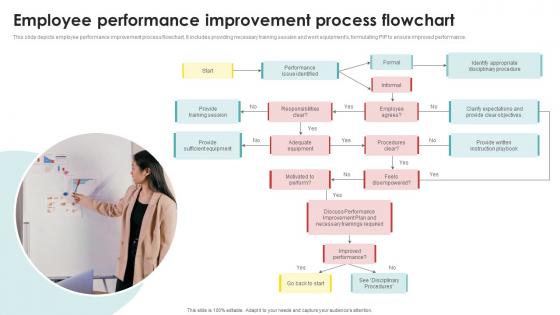
This slide depicts employee performance improvement process flowchart. It includes providing necessary training session and work equipments, formulating PIP to ensure improved performance.
People who downloaded this PowerPoint presentation also viewed the following :
Employee Performance Improvement Process Flowchart with all 6 slides:
Use our Employee Performance Improvement Process Flowchart to effectively help you save your valuable time. They are readymade to fit into any presentation structure.





FAQs for Employee Performance
Honestly, start with just 3-5 KPIs or you'll go crazy with data overload. Mix the hard numbers (goal completion, productivity stuff) with quality measures like how well they collaborate and communicate. Deadline tracking is obvious but super important. Peer feedback is gold - people know who actually pulls their weight. The innovation metrics are interesting because that's where you spot who's genuinely invested vs. just coasting. Oh, and make sure whatever you pick actually ties back to what they're trying to grow into, not just random benchmarks.
Honestly, waiting for annual reviews is such a waste. Your team needs to know what's up way before then - like, people actually want feedback even if it stings a bit. The not knowing is worse sometimes. I'd do quick weekly check-ins instead of hoarding everything for those formal sit-downs. Just make sure you're specific about what needs fixing, not just "nice work" or whatever. When people can adjust stuff right away, you'll see changes happen faster. Plus they won't feel like they're just wandering around hoping they're doing okay.
Honestly, engagement is like the foundation for everything else. You can't improve someone who's already checked out mentally - waste of time. When people actually feel valued and connected to their work, they'll listen to feedback instead of getting defensive about it. They start owning their growth instead of you having to drag them through it. I've seen this play out so many times. Focus on getting that engagement piece right first. Makes the whole performance conversation way less painful for everyone involved.
Honestly, you've gotta figure out what each person actually sucks at first - like a proper skills assessment. Performance reviews, manager input, self-evaluations, the whole thing. Generic training is basically useless because it doesn't hit anyone's real problems. Sarah might need help with presentations while Tom's struggling with the new software. Build specific modules around their actual job issues, not some random corporate curriculum. Oh and definitely pilot it with a small group first - I learned that the hard way last year. Measure what works before you blow your whole budget on something that flops.
Okay so the biggest mistake I see? Managers set these super vague goals like "be a better communicator" - that means literally nothing. Make them specific and measurable instead. Break big goals into smaller chunks so people can actually see they're making progress. And honestly, don't just tell people what their goals should be - ask them what they think they can realistically handle in the next quarter. They know their workload better than you do anyway. The SMART framework is solid but most people screw up the "achievable" part and set unrealistic expectations.
Dude, it's honestly pretty simple - when people don't hate coming to work, they actually try harder. Weird concept, right? Your team will collaborate way better instead of just doing the absolute minimum to get by. I've seen offices where everyone's constantly complaining and it kills productivity. Happy employees stick around longer, solve problems instead of creating drama, and genuinely care about results. Oh, and they're not secretly job hunting on company time. Start small - call out good work in front of everyone and actually ask what your team thinks before making decisions that affect them.
Dude, there's so many ways to do this! Public shout-outs work great, or just send a personal thank-you note. Spot bonuses are clutch for immediate stuff. Bigger accomplishments? Think promotions or development opportunities. Honestly though, the best move is just asking them directly how they want recognition. Some people hate being put on the spot in meetings - who knew, right? Others live for that spotlight moment. Flexible schedules sometimes matter more than money too. Just make sure it's timely and specific to what they actually did. You'd be shocked at how different people's preferences are.
Oh man, alignment is everything! I've seen people burn out because they're grinding away but can't see how it connects to the bigger picture. When someone's personal goals actually tie into what the company needs? Total game changer. Performance reviews become way less awkward too since you're both talking about the same stuff. Here's what I'd do - grab each person's top 3 goals and literally draw lines to specific business needs. Sounds basic but it works. Without that connection, people just feel like hamsters on a wheel, you know?
Dude, wellness stuff actually works - I've seen teams get like 20-30% more productive when people aren't burnt out. Stressed employees call in sick more and just phone it in, you know? But give them mental health support or flexible hours and suddenly they're way more engaged. Honestly, even letting people take real lunch breaks makes a difference. I'd start by just asking your team how they're handling their workload. Simple check-ins can catch problems before people crash and burn. You don't need some fancy program right away.
Honestly, tech tools are game-changers for performance reviews. Instead of just going with your gut, you get actual data on what's working and what isn't. Performance software tracks goals and feedback automatically - no more scrambling to remember what happened six months ago. Analytics show you patterns you'd never catch otherwise. Employees can see their own progress on dashboards too, which honestly motivates them way more than waiting for annual reviews. Just don't pick something that'll make your life harder - find tools that actually fit how you already work.
Honestly, it usually comes down to managers just being terrible communicators. They'll avoid the hard conversations completely, then wonder why nothing changes. Your team probably has zero clue what you actually expect from them - I see this all the time. No feedback system means people are just guessing if they're doing well or totally screwing up. Training budgets get slashed first when money's tight, which is backwards if you ask me. Sometimes the whole office vibe is just toxic and demotivating, so why would anyone even try? I'd start by figuring out if your people actually know what good work looks like in their specific role.
Honestly, peer feedback changes everything. People actually try harder when they know coworkers are watching - not just the boss during those awkward annual reviews. You get so many different angles on your work too, since your teammates see stuff your manager totally misses. The accountability thing is real. But here's where it gets tricky - you absolutely have to teach people how to give decent feedback first. Otherwise it turns into high school drama real quick, with people either playing favorites or settling old scores. Training upfront saves you from that mess later.
Honestly, you gotta be super direct about what's going wrong first - none of that vague "needs improvement" stuff. Give them specific goals with actual deadlines, like getting response times under 24 hours by month-end or whatever makes sense. Weekly check-ins are a game changer instead of waiting forever for reviews. If it's a skills thing, throw some training their way. But here's the thing - document absolutely everything because you might need it later. Be straight with them but don't be a dick about it, you know? Give them real steps they can actually follow.
You really need those weekly one-on-ones - can't stress this enough. Set clear, measurable goals upfront since you can't just pop by someone's desk anymore. I'd honestly rather overcommunicate than have people wondering what's expected of them. Shared dashboards work great so everyone sees how they're tracking. The informal stuff matters too though - maybe start meetings with 5 minutes of random chat? Remote teams perform way better when they actually feel connected to each other. Pick one check-in format and stick with it consistently, even when it feels repetitive.
Dude, mentorship is seriously underrated for skill development. You get that one-on-one guidance that generic training just can't match. I've seen it work magic - experienced people paired with newer folks creates these breakthrough moments that actually stick. Way better than death-by-PowerPoint sessions, honestly. Both sides win too. Mentors develop their leadership chops while mentees get real insights from someone who's genuinely invested in their success. Start with your best performers who don't mind teaching - though honestly, some amazing workers are terrible mentors, so pick carefully. Then match them up based on specific skills gaps.
-
I didn’t expect such a good service for the money I am paying. But, they exceed my expectations. Great work SlideTeam.
-
SlideTeam is my one-stop destination for templates. Highly recommended!