

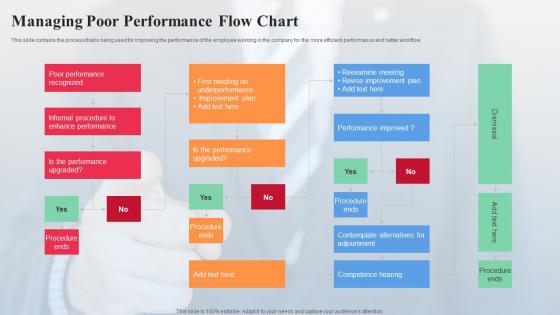
Managing Poor Performance Flow Chart




Try Before you Buy Download Free Sample Product
 Impress Your
Audience
 100%
Editable
 Save Hours
of Time


This slide contains the process that is being used for improving the performance of the employee working in the company for the more efficient performance and better workflow.
People who downloaded this PowerPoint presentation also viewed the following :
Managing Poor Performance Flow Chart with all 6 slides:
Use our Managing Poor Performance Flow Chart to effectively help you save your valuable time. They are readymade to fit into any presentation structure.






FAQs for Managing Poor
Honestly, most performance systems fail because people skip the ongoing conversations - they just do the big annual review and call it done. You'll want four main things: clear goals upfront, regular check-ins (I'd say monthly), documenting specific examples as they happen, and development planning. That last part's my favorite because it's where people actually grow. Don't just tell someone what they did wrong; help them figure out what skills they want to build next. Keep everything tied to real examples, not vague feedback. Oh, and make those check-ins actually happen - put them on the calendar or they won't.
Okay so here's what works - take your company's big goals and actually connect them to what each person does day-to-day. Break those business objectives into stuff people can measure and control. Then sit down with each employee and figure out 3-4 personal goals that feed into the bigger picture. Like if you want 20% revenue growth, maybe your salesperson needs to boost their pipeline by 25%. Sounds simple but honestly? Most companies totally blow this part. The trick is being super clear about how someone's daily grind actually impacts what leadership cares about. People need to see that connection or they're just going through the motions.
Look, it's basically like having GPS for your team - way better than letting people drift for months until their annual review hits. Most folks actually want to know how they're doing more than we think. Quick feedback lets them course-correct in real time instead of repeating the same mistakes over and over. Builds trust too, and you avoid those super awkward "surprise, you've been screwing this up all year" moments. Honestly, even one short weekly check-in makes a massive difference. Five minutes, that's it.
Look, good performance management is basically about being upfront with expectations and actually tracking how things go. You want goals everyone can see, plus regular check-ins where people feel heard - not just judged. The transparency thing works both ways too. Your team needs to know what you're thinking, but you also gotta listen to what they need to do their job well. Most systems suck because they're either super secretive or just one big evaluation dump at the end of the year. Make it collaborative instead of scary. Everyone should know what winning looks like for them specifically.
Mix hard numbers with soft skills - that's what actually works. Sales targets and project deadlines are obvious picks, but don't ignore stuff like teamwork and how someone takes criticism. Those matter way more than people think. Regular check-ins beat annual reviews every time, and 360 feedback is clutch for getting the full picture. Oh, and keep it simple - maybe 4-5 metrics tops. You'll go crazy trying to track everything. The trick is making sure whatever you pick helps both the person grow and hits your company goals. Numbers don't lie, but they're not the whole story either.
Honestly, the whole performance management thing is so much easier now with tech. Instead of those awkward annual reviews, you can get feedback instantly through apps. Analytics actually show you what's working instead of just guessing. Some AI tools even catch problems before they blow up - which is kind of amazing if you ask me. Your team can track goals and give each other feedback on the spot. The shift toward ongoing conversations vs yearly meetings is huge. But don't go crazy with it - just pick one tool that fixes your biggest pain point first, then expand from there.
Honestly, just ditch the vague stuff like "good attitude" and get specific with your metrics. Document examples all year long - don't be that manager scrambling to remember what happened in March. Multiple people should weigh in if you can swing it, and 360 feedback from their peers is gold. Oh, and definitely separate the performance chat from money talk because that gets messy fast. The whole thing works better when you've got concrete evidence instead of going off whatever drama happened last week. Short version: make it about facts, not feelings.
Honestly, you gotta be super specific about what you want from day one. Don't just tell people what to do - sit down together and figure out the goals so they actually understand why it matters. I made this mistake once and everyone was doing completely different things lol. Check in with them regularly too, not just once a year when review time comes around. Write stuff down so nobody can claim they didn't know what was expected. The whole thing works way better when it feels like a team effort instead of you just barking orders. Maybe start by asking your team what they're confused about right now?
Honestly, most companies mess this up because managers wait all year to give feedback, then panic when review time hits. The rating systems are usually a nightmare too - nobody gets them. Bias is huge - some people are just the favorite, or that one mistake last month suddenly defines your whole year. Drives me crazy. After reviews happen, there's typically radio silence until the next cycle rolls around. Train managers to give feedback regularly and actually DO something with the performance info. Use it for promotions, development plans, whatever. Otherwise it's just paperwork.
Honestly, just fold development planning into your regular performance reviews instead of doing them separately. When you're talking performance, spot the skill gaps and career goals, then build actual plans with deadlines and milestones you can track. So many companies waste time on annual reviews that only look backward - drives me crazy. Train your managers to have these growth conversations and actually stick with them afterward. The trick is linking personal development to both performance goals and what the business actually needs. Oh, and make sure it's not just a one-time conversation thing.
Have that awkward but honest talk about what's not working - be specific about the gaps and set real deadlines. Yeah, you gotta document everything (total pain but covers your ass later). Give them whatever help they need - training, mentoring, whatever. I'd check in weekly, maybe every two weeks max. Most people need 30-90 days to turn things around, honestly depends on how bad it is. If nothing changes after that? Time for serious consequences. The trick is staying direct without being a complete jerk about it. Don't let this stuff fester - it only gets worse.
Look, employee involvement makes or breaks the whole thing. When people help set their own goals, they actually care about hitting them instead of rolling their eyes. They know their job way better than you do anyway - what's realistic, what roadblocks they hit daily. Without their input you're basically shooting in the dark. The process stops feeling like something that happens TO them and becomes more collaborative. Honestly, most managers skip this step and wonder why performance reviews suck. Try having them draft goals first before you sit down together.
Honestly, training is what separates systems that actually work from the ones that just sit there doing nothing. Your managers need to learn how to give real feedback and have those awkward conversations - employees too need to get what's happening. I've watched companies spend crazy money on these elaborate systems that nobody uses because they skipped the training part. One workshop isn't enough either. You need ongoing coaching and support, or you'll just be dealing with constant problems later. Worth investing in upfront though - saves so much drama down the road.
So basically, pull your performance data to see who's actually crushing it and where teams are falling short. I'd map those top performers against whatever leadership roles you'll need filled down the road. Check their ratings over time, how they hit goals, growth patterns - that stuff tells you way more than just winging it on instinct. Some people look ready for bigger roles right now, others need more time to develop (which is totally fine). Track leadership skills and how well they work across different departments too. Honestly beats the old "promote whoever seems nice" approach by miles.
So the big changes right now? Companies are ditching those awful annual reviews for ongoing feedback throughout the year. AI's tracking everything in real-time now too. Way more emphasis on developing people instead of just judging them - which honestly makes sense since job roles change every five minutes these days. Skills-based assessments are huge because nobody stays in the same role anymore. Your manager conversations will probably be less "here's what you did wrong" and more planning ahead together. Oh, and peer feedback is everywhere now. I'd get ready for way more frequent check-ins and maybe work on being better at evaluating yourself.
-
You guys are life-saver when it comes to presentations. Honestly I cannot do much without your services. Thank you!!!
-
Extensive range of templates! Highly impressed with the quality of the designs.