


Project Management Task Flow Chart




Try Before you Buy Download Free Sample Product
 Impress Your
 Audience
 100%
100% Editable
 Save Hours
 of Time


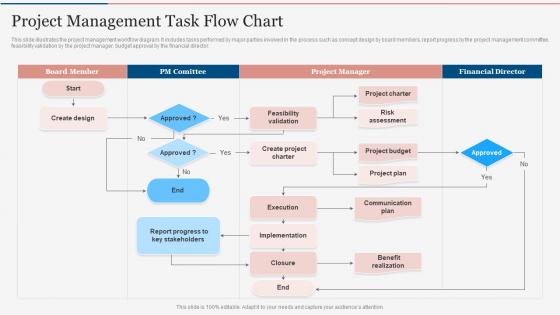
This slide illustrates the project management workflow diagram. It includes tasks performed by major parties involved in the process such as concept design by board members, report progress by the project management committee, feasibility validation by the project manager, budget approval by the financial director.
People who downloaded this PowerPoint presentation also viewed the following :
Project Management Task Flow Chart with all 6 slides:
Use our Project Management Task Flow Chart to effectively help you save your valuable time. They are readymade to fit into any presentation structure.





FAQs for Project Management
So there are five main phases you gotta hit. First is initiation - basically defining what you're actually doing and getting the green light. Then comes planning, which honestly most people hate but it's where you map out your timeline and figure out who's doing what. Execution is the fun part where stuff actually gets built. While that's happening, you're also monitoring everything and tweaking as needed - it gets pretty chaotic tbh. Last is closing where you wrap everything up and do a post-mortem. Trust me, don't skip the planning even though it's tempting.
Dude, Agile is a game changer because you're not waiting forever to see if stuff actually works. Every couple weeks you have something real to show instead of crossing your fingers for months. Daily standups keep everyone on the same page - just 15 minutes but honestly it catches problems before they explode. The whole team talks more, which sounds obvious but makes such a difference. When something's not working, you can actually change direction instead of being married to some plan from six months ago. Oh and those retrospectives? Pure gold for figuring out what's broken. Start with daily check-ins if you're testing it out.
Honestly? Just go with Asana or Monday.com for most stuff - solid dashboards and tracking without the headache. Jira's amazing for dev work but total overkill otherwise. I've watched teams crush it with basic Trello setups, while others get lost in Microsoft Project's crazy Gantt charts (why do corporate people love those things so much?). The real trick isn't finding the "best" tool. Pick whatever your team won't abandon after two weeks. Try free trials of maybe three options, see what clicks naturally with how you guys already work together.
Honestly, you gotta think beyond the obvious stuff that could tank your project. Those sneaky resource conflicts and weird dependencies? They'll bite you. Make a basic risk register - just probability, impact, and what you'll do about each one. Sort them by type (tech issues, budget problems, timeline stuff) and give someone ownership of each. Weekly team reviews are clutch since risks change constantly. Oh, and set up warning signs so you catch problems early instead of scrambling when everything's on fire. Trust me, being ahead of this beats playing defense every time.
First thing - figure out who actually needs to know what. Weekly emails work for most people, but save the monthly sit-downs for important folks and quarterly stuff for the big bosses. Honestly, I've learned people are weird about how they want info. Some love those fancy dashboards, others need you to literally walk over and talk to them. A few just want quick Slack pings. Don't wait for people to ask though - that's where things get messy. Set up your whole communication thing upfront and actually follow it.
Honestly, you're like the glue holding everyone together. Break down those silos - get people actually talking instead of hiding in their departments. I've seen too many projects crash because nobody communicated. Create regular check-ins and make it safe for people to speak up without getting roasted. When conflicts pop up, jump on them fast before they blow up. Model what you want to see - be transparent, admit when you're clueless about something, and always give props where they're earned. Cross-functional work is messy but it's where the magic happens.
Get everything in writing before you even start - that's your lifesaver right there. Write up exactly what you're doing (and what you're NOT doing) and make them sign off on it. Someone's gonna ask for "just one tiny thing" later, guaranteed. That's when you pull out your document and say nope, gotta go through the change request process. Make scope changes require actual approval with impact reviews. People suddenly care a lot less about their "quick additions" when there's paperwork involved. Honestly saved my butt so many times.
Track the obvious stuff first - budget, timeline, scope. Did you nail those basics? But honestly, that's just scratching the surface. Stakeholder surveys tell you way more about real success than spreadsheets do. Team morale matters too, plus quality stuff like how many bugs you're dealing with or if customers actually use what you built. Oh, and business impact - sometimes projects check all the boxes but still miss the mark entirely. Pick maybe 3-4 metrics at the start and stick with them. Trust me, you don't want to get buried in tracking everything.
Oh man, cultural stuff can seriously derail international projects. Germans might think your timeline is rushed while Americans are like "why is this taking forever?" - it's wild how different time perception gets. Then you've got communication styles all over the map. Some people are brutally direct, others drop hints you'll totally miss. Hierarchy's another minefield - half your team wants clear orders from the top, the other half expects everyone to collaborate on decisions. Honestly, I learned this the hard way on a project last year. Do yourself a favor and have that awkward cultural chat upfront. Set explicit timelines and communication rules everyone actually agrees on.
Okay so first thing - make a list of everyone and what they're actually good at. Sounds basic but I've seen so many projects blow up because someone assumed Jake could handle the coding when he's way better at design stuff. Map out your budget and equipment too, then figure out which projects matter most. Use resource histograms to catch scheduling disasters early. Never book people at 100% - trust me, 80-90% max or they'll burn out fast. Check in weekly because things always shift around. Oh and build in buffer time for your critical people. You'll need it.
Build change management into your planning from the start - don't treat it as an afterthought. Map out everyone who'll be affected, then keep them in the loop throughout. Most projects crash and burn because people ignore the human element, which honestly drives me crazy. Figure out where you'll hit resistance early and have a game plan ready. Actually involve key people in decisions instead of just telling them what's happening later. Oh, and budget about 15-20% of your time for change management stuff. Trust me, it's way better than dealing with chaos at the end.
Okay so kickoff meetings - don't overthink it but cover the basics. Start with what you're actually building and the scope (saves headaches later). Go around the room introducing everyone and their roles. Nobody wants that awkward "wait who's handling this?" moment three weeks in. Timeline and budget stuff comes next - hit the major milestones and any money constraints. Communication is huge though. Like, decide how often you're meeting and what tools you're using upfront. Oh and definitely talk through risks and dependencies - trust me on this one. Leave solid time for questions and write everything down. Send those notes out fast while people still remember what was discussed.
Do this during your project wrap-up meetings while everyone still remembers what actually happened. Document what worked, what was a disaster, and concrete steps for next time. Honestly, most teams just skip this part entirely which is such a waste. Make sure future teams can actually find these docs - maybe in a shared drive or whatever system you're already using. Oh and be specific with your takeaways. Don't write "better communication needed." Instead say something like "set up weekly check-ins from the start." I'd create a simple template now so you're not scrambling later.
Dude, leadership really can make or break a team's vibe. Set clear expectations and get obstacles out of their way. Give people room to actually do their jobs without micromanaging - that's huge. Celebrate the small wins too (I swear this matters more than most managers think). Your team will either feel engaged or just coast through for the paycheck, and that's largely on you. Consistent communication helps. Oh, and actually care about growing your people, not just hitting deadlines. Constructive feedback goes way further than you'd expect.
Start by baking sustainability right into your project charter - don't treat it as some bonus feature you'll "get to later." During planning, map out your environmental and social impacts, then create actual KPIs for them alongside your normal metrics. Vendor selection matters here too (plus sustainable vendors often save you money down the road, which is nice). Track stuff like resource usage and waste the same way you'd obsess over budget and timeline. Honestly, the biggest thing is making someone actually own these goals. Assign sustainability targets to specific team members like any other deliverable.
-
Easily Understandable slides.
-
Visually stunning presentation, love the content.