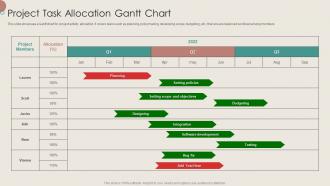
Project Task Allocation Gantt Chart

Rating:
80%
Project Task Allocation Gantt Chart
Slide 1 of 6
Favourites Favourites

Try Before you Buy Download Free Sample Product

Audience Impress Your
Audience
Editable 100%
Editable
Time Save Hours
of Time
The Biggest Sale is ending soon in
0
0
:
0
0
:
0
0
Rating:
80%
This slide showcase a Gantt chart for project activity allocation. It covers tasks such as planning, policymaking, developing scope, budgeting, etc., that ensure balanced workload among members. Introducing our Project Task Allocation Gantt Chart set of slides. The topics discussed in these slides are Planning, Setting Policies, Software Development. This is an immediately available PowerPoint presentation that can be conveniently customized. Download it and convince your audience.

FAQs for Project Task

So there's five main phases you gotta think about: initiation, planning, execution, monitoring, and closure. First you define what you're actually trying to accomplish and your scope. Then comes planning - seriously, don't skip this part or you'll hate yourself later. Create your timeline, figure out resources, all that stuff. Execution is the messy part where actual work happens (and yeah, it always gets chaotic). You'll need to monitor progress and tweak things as you go. Closure wraps everything up and captures what you learned. Planning really is make-or-break though - I've seen too many projects crash because people rushed straight into doing stuff.

So here's the thing about agile - it breaks everything down into these short sprints (like 1-2 weeks), which is way better than waiting forever for some massive launch. Daily standups actually help your team talk to each other, weird as that sounds. Plus you're getting feedback constantly from stakeholders instead of building something in a cave for months. Honestly, the retrospectives can feel annoying at first, but they catch problems early when they don't cost a fortune to fix. Just stick with the ceremonies even when you don't feel like it.

Honestly, just pick something and go with it - I've watched teams waste weeks arguing over the "perfect" tool. Asana's great for visual stuff, Monday.com too. Jira if you're doing dev work (though it can be overkill). Microsoft Project is the beast mode option with all the Gantt charts and resource planning bells and whistles. But here's the thing - whatever your team already uses daily is probably your best bet. No point having fancy tracking that sits empty because nobody wants to log in. For reports, Tableau's nice but even Excel works fine. Sometimes simple wins.

First thing - figure out what each stakeholder actually wants, because trust me, they all want different stuff. Set expectations right away, then overcommunicate like crazy. I send weekly updates even when nothing's happening because people get weird when they don't hear from you. They start making up problems that don't exist. Also, don't save bad news for meetings - tell them about risks and changes as soon as you know. Oh, and write everything down so nobody can pull that "but I thought you meant..." nonsense later.

Honestly, track four things: did you deliver what you promised (scope), finish on time, stay under budget, and actually meet quality standards. Everyone gets hung up on those first three, but stakeholder happiness matters just as much - maybe more. Here's the thing though - don't just check boxes. Actually measure whether the project hit its real business goals. Oh, and define what "success" means right at the start of planning. Trust me, you'll thank yourself later when there's no arguing about whether things went well or not.

Look, risk management is basically your insurance policy against chaos. Spot problems early, figure out how bad they could get, then make backup plans. When stuff inevitably hits the fan, you won't be running around like a headless chicken. I learned this the hard way on my last project - wish I'd done it sooner. Brainstorm with your team about what could go wrong, then rank everything by how likely it is and how much it'd hurt. Assign someone to keep an eye on each risk. Trust me, being proactive beats scrambling later. Try a quick risk session next week - you'll uncover things you never thought of.

Honestly, communication can make or break your whole project. I've watched so many teams crash and burn just because people weren't talking to each other properly. Regular check-ins are huge - like actually schedule them, don't just wing it. Slack or Teams help too, but document the important stuff because people forget everything. Here's the thing though: you can't talk to your boss the same way you talk to developers. Executives want the big picture, devs need all the nitty-gritty details. Oh and definitely look at how you're communicating now first - you'll probably spot some obvious problems right away.

Figure out your critical path first - what'll actually blow your deadline if it gets delayed. Those are non-negotiable priority one. Dependencies come next, so knock out whatever's blocking other people's work. I like doing that impact vs effort thing where you rank stuff in a little grid, but tbh half the time you just know what's gonna bite you if it goes wrong. Put your strongest team members on the scary high-risk stuff and don't hesitate to move people around when needed. Oh, and write down why you made these calls - you'll thank yourself later when someone asks.

Honestly, you've gotta be crazy specific about what you're doing AND what you're not doing. I learned this the hard way when stakeholders kept throwing "quick requests" at me that took forever. Write down your objectives, then get detailed with deliverables, acceptance criteria, and milestones. Don't forget assumptions and constraints - that stuff will save your butt later when scope creep hits. Oh, and exclusions too! List what's NOT included upfront. Get everyone to sign off before you touch anything. Trust me, when someone tries sneaking in extra features halfway through, you'll be glad you did this.

Honestly, team dynamics are everything. I've watched solid projects completely tank because people couldn't get along or communicate properly. Bad vibes, unclear roles, personality drama - it all leads to missed deadlines and crappy work. But when a team actually gels? Magic happens. Decisions get made faster, problems get solved creatively, and people actually want to show up. My advice: nail down who does what from day one. Set up regular check-ins (even if they feel annoying at first). And don't let conflicts fester - call them out early. Maybe start with a team charter so everyone's on the same page about how you'll work together.

Dude, you're gonna need to overcommunicate like crazy. Daily standups are clutch, plus those weekly one-on-ones catch problems before they explode. Slack for quick stuff, project management tools for the bigger picture. Timezones are honestly the worst part - but async messaging saves your sanity. Write everything down so people can catch up later. Here's what really matters though: actually build relationships with these people. Virtual coffee chats aren't stupid, they work. Oh, and try starting your next meeting by having everyone share a work win. Sounds cheesy but it's surprisingly effective.

Dude, cultural stuff can seriously mess up your project if you're not careful. Communication styles are huge - some people are blunt as hell, others dance around problems forever. That creates chaos in status meetings, trust me. Different attitudes toward deadlines and hierarchy matter way more than just time zones. I've seen team members nod along to impossible timelines because questioning authority isn't their thing. Conflict handling varies wildly too. Your direct feedback style might totally backfire with certain cultures. Ask everyone upfront how they like to communicate. Build in extra time for those "wait, what did you actually mean?" conversations.

Start with bottom-up estimating or three-point estimation to get a decent baseline. Earned value management is clutch for tracking actual vs planned spending - seriously saves you from nasty surprises later. Set up change request processes and do regular budget reviews so things don't get crazy. Oh, and always build in contingency reserves because something will go wrong, trust me. The trick is being obsessive about tracking everything and having those awkward money talks early. Way better than realizing you're screwed when it's too late to fix anything.

Set up a basic template - what worked, what bombed, next steps. Right after each project wraps, grab your team for a quick debrief while it's all still in your heads. Seriously, wait two weeks and half the good stuff vanishes. Put everything in a shared spot people actually use (not some random buried folder). Then - and this is where most teams mess up - actually look at old lessons when starting new projects. Keep it stupid simple though. The second it feels like paperwork, everyone will bail on it.

Watch for missed deadlines, budget overruns, and that gut feeling something's off - seriously, trust your instincts on this stuff. Team members start mentally checking out, communication gets weird, and stakeholders complain more. I'd do regular check-ins with everyone, not just about deliverables but how people are actually feeling. Track your numbers but don't ignore the human side. When red flags pop up, deal with them right away instead of crossing your fingers they'll magically fix themselves (they won't). The biggest thing? Make sure people feel safe telling you bad news early rather than hiding problems until everything's on fire.

Ratings and Reviews

80% of 100
Review Form
Write a review
Most Relevant Reviews
  1. 80%

    by Dirk Kelley

    Top Quality presentations that are easily editable.
  2. 80%

    by Clarence Mendoza

    Unique research projects to present in meeting.

2 Item(s)

per page: