


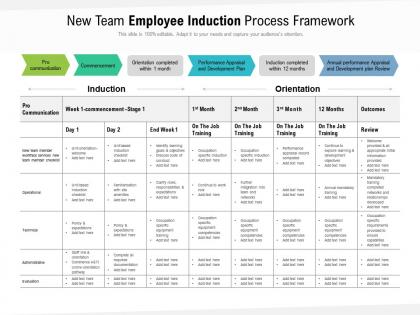
New team employee induction process framework




Try Before you Buy Download Free Sample Product
 Impress Your
 Audience
 100%
100% Editable
 Save Hours
 of Time


Our New Team Employee Induction Process Framework are topically designed to provide an attractive backdrop to any subject. Use them to look like a presentation pro.
People who downloaded this PowerPoint presentation also viewed the following :
New team employee induction process framework with all 2 slides:
Use our New Team Employee Induction Process Framework to effectively help you save your valuable time. They are readymade to fit into any presentation structure.
FAQs for New team employee
So you need the basics covered first - clear expectations, structured content, regular manager check-ins. Don't forget culture stuff and systems training too. Goal-setting sessions are huge. Most places totally botch the buddy system though, which is honestly such a waste because it's amazing when done right. Oh, and make your framework at least 90 days, not just that first week everyone focuses on. That's when people actually start figuring things out. Build in feedback loops so new hires can tell you what sucked and what didn't - you'll be surprised what they catch.
Look, good onboarding is honestly a game-changer for keeping people around. Map out their first 90 days so they're not wandering around confused. Give them a buddy or mentor - trust me, it makes a huge difference. When new hires know what's expected and feel connected to the team, they stick around way longer. I think I read somewhere that solid onboarding improves retention by like 80%? Could be wrong on the exact number but it's massive. Nobody wants to feel lost on their first week. Show them they matter from day one and you'll see the difference.
Tech totally transforms onboarding - way more engaging than those dusty binders we used to get! Learning management systems deliver consistent training modules. VR creates cool immersive job simulations. Mobile apps let people finish induction wherever they are. All the tedious paperwork gets automated too - digital forms, e-signatures, progress tracking. I swear my last company's onboarding took like 3 days just for forms alone. The trick is choosing tools that match your culture instead of going crazy with every shiny new platform.
Don't do the same induction for everyone - that's where most companies mess up. Senior people need a fast track since they already know how businesses work. Entry-level folks? Give them way more support and time. Mix up your content formats too because some people learn by doing while others need to see diagrams or whatever. The worst thing you can do is dump everything on someone in their first week when they're already freaking out about remembering everyone's names. Stretch it over three months instead. Oh, and actually ask people how it's going - you'll be surprised how much the pace needs tweaking person by person.
So basically you wanna look at if people are actually sticking around past 90 days - that's probably your biggest red flag if they're not. Time-to-productivity matters too, like how fast are they actually useful? Survey responses from new hires will tell you a lot, plus check completion rates for whatever training stuff you're making them do. Oh and definitely get feedback from managers - they'll know if someone feels totally lost or not. The touchy-feely feedback is honestly just as important as the hard numbers. Pick maybe 3 metrics and check quarterly. Don't go crazy with tracking everything.
Honestly, just make one solid template that every department can build on instead of letting them wing it. Start with the basics - company culture, policies, all that foundational stuff everyone needs to know. Then departments can tack on their specific training. The problem is HR usually thinks they've handled everything while departments are out there doing whatever random onboarding they feel like. Someone needs to actually check what's happening vs what's planned - maybe monthly check-ins between HR and department heads? Make sure there's clear ownership though. HR owns the big picture experience, departments handle their specialized bits.
Honestly, the hardest part is usually budget and convincing managers it's worth doing properly. Keeping everything updated is a nightmare - nothing's worse than showing someone a process that changed six months ago. Most people try to cram in way too much info instead of focusing on what actually matters day one. Oh, and good luck getting different departments to stick to the same approach! Team leads always think they know better. I'd say pick one team first and get that right before expanding. Keep it simple and engaging, not some boring checklist they'll hate.
Definitely get feedback from new hires! They spot stuff you can't see anymore - like when someone goes "um, why are we doing this weird extra step?" Fresh eyes are everything. I'd send surveys after week 1, month 1, and quarter 1 while it's all still annoying to them. Some of our best fixes honestly came from newbies questioning things we just did automatically. They'll catch confusing instructions, pointless processes, or info that's totally missing. Super simple feedback system works fine - just make sure you actually change things based on what they say.
Don't just throw culture into one boring "values" presentation - that's honestly the worst approach. Weave it throughout everything instead. Get leaders telling real stories about your values during first-week meetings. Coffee break conversations? Those actually matter more than conference rooms sometimes. Show new people how decisions really get made around here, not just the official process. Connect them with culture champions in different departments. Oh, and give them small projects that actually reflect what you stand for. The whole thing needs to feel authentic, not like those generic motivational posters nobody reads.
Honestly, match new hires with mentors from their first day - it's a game changer. Don't just go by seniority though. Personality fit matters way more than I realized when we first started doing this. Weekly check-ins work great, but give your mentors actual time for it instead of cramming it into their already packed schedule. Oh, and definitely ask people if they want to mentor before just assigning them! Some of your best workers might hate it. Clear expectations help too - mentors need to know what they're signing up for during those crazy first months.
Dude, proper onboarding seriously makes a huge difference - we're talking 25-40% better productivity in those first months. Instead of new people wandering around confused for weeks, they actually start contributing fast when you give them a clear plan. Connect them with the right people early, cover the job stuff AND company culture. Honestly, I've seen too many good hires quit because they felt lost those first few weeks. Short version: don't just throw them in and hope for the best. The upfront effort totally pays off.
Honestly, you'll need to totally rethink your onboarding for remote folks. Set up video calls with the team instead of just sending emails - way more personal. Check in with them constantly those first few weeks too. The hardest part? Replacing all those random hallway conversations that just happen naturally in person. I've seen companies do well with dedicated Slack channels for random stuff - not work related, just chatting. Oh, and definitely send them a physical welcome package. Sounds cheesy but it works. You basically have to manufacture all the connections that used to be automatic.
So definitely throw in the basics - employee handbook, org chart with actual faces (not just names), and whatever training stuff is specific to their role. Access credentials are huge too, obviously. Building maps and parking info might seem dumb but trust me, people get lost on day one. Oh and coffee locations - seriously important lol. Make sure they have contact info for their mentor, IT, and HR. I'd organize it as a simple checklist so they're not drowning in everything at once. Think more "what would've saved me stress" instead of every single company document that exists.
So basically an induction framework lets you dump all the boring compliance stuff on new hires from day one - data protection, safety training, harassment policies, you know the drill. No more frantically trying to remember if Sarah finished her modules or not. It tracks everything automatically, which honestly saves your butt during audits. Build it once and every new person gets the same training without you having to think about it. Keeps you out of trouble with regulators too. Pretty much set-and-forget for all that mandatory training nonsense.
Definitely set up check-ins at 30, 60, and 90 days – catches problems before they get weird. Mentorship programs are clutch, plus maybe rotate them through different departments so they actually get how things connect. Skills workshops for their specific role, obviously, but honestly the soft skills stuff is what really matters. Communication, time management – that's where people usually crash and burn. Oh, and make it feel supportive, not like some corporate torture session. Create a feedback loop where new hires can actually tell you what sucks, then fix it. Most companies ask for feedback then ignore it completely.
-
Very unique, user-friendly presentation interface.
-
Designs have enough space to add content.