


New Recruitment Induction Powerpoint Presentation Slides






Try Before you Buy Download Free Sample Product
 Impress Your
 Audience
 100%
100% Editable
 Save Hours
 of Time


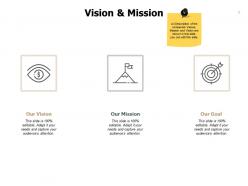
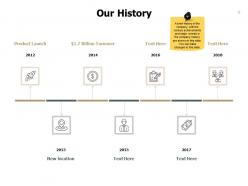
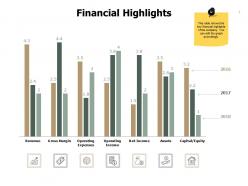
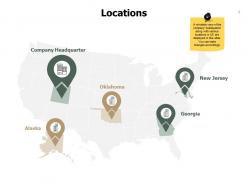
Amaze your new employees and wow them with the help of professionally designed new recruitment induction PowerPoint presentation slides. Use our content ready complete deck to familiarize your employees about company background history, its values and beliefs, long term goals and management structure. Present company profile, vision, and mission, company history, financial highlights, company revenue growth, locations, achievements, work policies, attendance portal, leaves and holidays, office timings, office dress code, office rules and regulations, roles and responsibilities, salary and package, targets and goals, etc. This new hiring induction PPT will help new employees to understand the basic functionalities and will make them clear about the company's policies and rules and regulations. You can use this HR introduction PowerPoint template to show relatable topics like employee orientation, induction training, and many other such topics. Download this awesome induction process PPT slides to impress your new employees.Your appeal is bound to generate desired funds due to our New Recruitment Induction Powerpoint Presentation Slides. It will fill empty coffers.
People who downloaded this PowerPoint presentation also viewed the following :
Content of this Powerpoint Presentation
Research conducted by Brandon Hall Group has revealed that organizations with a strong onboarding process enhance their new hire retention rate by as much as 82 per cent. In addition, a smooth and detail-oriented induction process can boost new employees' confidence, help them familiarize themselves with the company, and avoid miscommunication or confusion.
When the induction process is strong, the new employees feel welcome, and realize the value they can add to help the organization grow. Employees also learn faster and are usually more loyal when they have gone through a thorough induction process.
If you work in the HR department of a company and want to strengthen your induction and onboarding efforts, the following slides created by SlideTeam can help make the process seamless. The slides cover essential aspects of employee induction, such as attendance, pay, dress code, etc. The templates are 100% editable and customizable. You can edit these to make them your own and present them to the new hires. It would only take a couple of minutes and require very little effort on your part.
Are you looking for a recruitment strategy, too? Check out these slides explaining the perfect recruitment strategy.
New Recruitment Induction PowerPoint Slides
Without further ado, let’s have a look at the top new recruitment induction PowerPoint slides created by SlideTeam.
Seeking help with recruitment planning? These slides by SlideTeam might help.
Let’s explore!
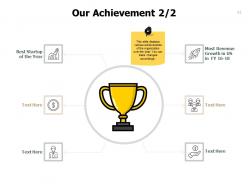
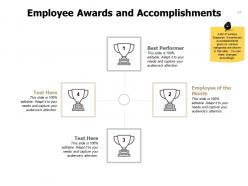
Template 1- PowerPoint Slide Focusing on the Organization’s Achievements
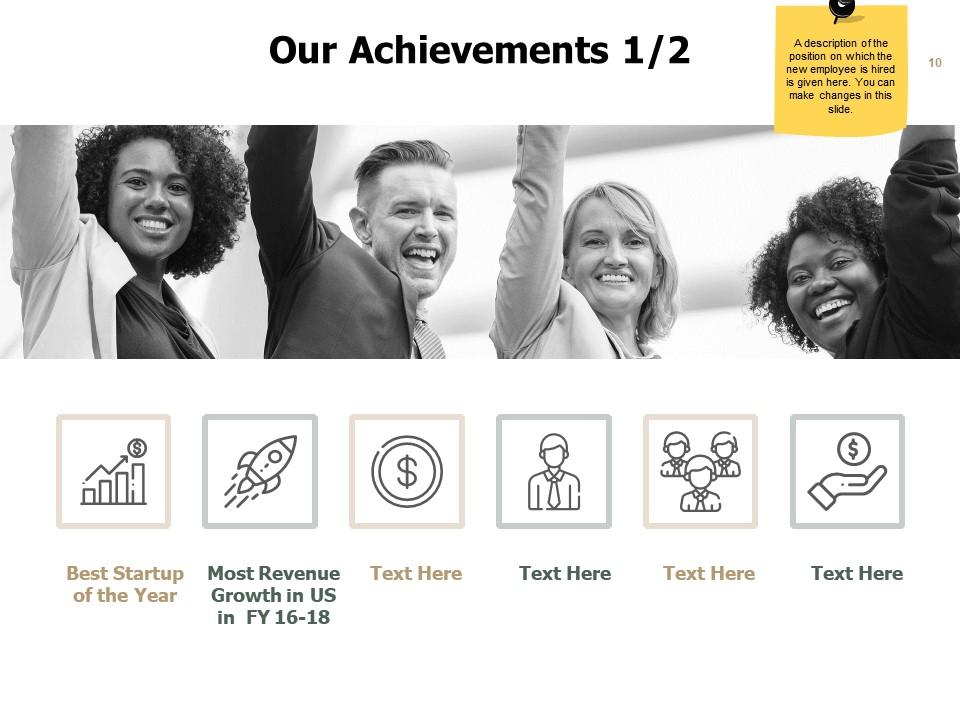
Focusing on achievements is the crux of the induction process. It brings positivity and motivation to new hires. With this innovative slide, you can focus on awards and accolades your company has earned through the years. You can also highlight the key revenue or growth statistics to assure new hires that the company is growing, and so will they.
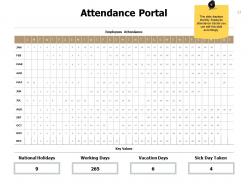
Template 2- PowerPoint Slide Focusing on the Attendance Portal
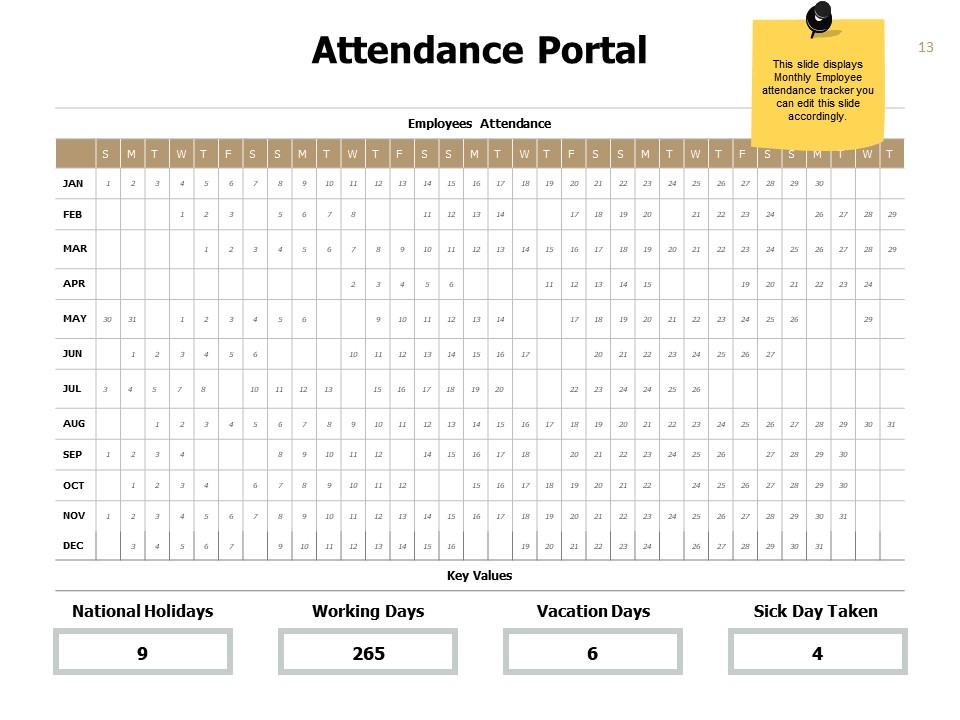
Attendance is a required element from every employee. It would be best if you introduce your new hires to your attendance portal. Here is an example slide you can use to explain your attendance system. It mentions the vital elements like working days in a year, national holidays offered to employees, vacation days offered to employees, and the sick days an employee can avail. It gives employees a clearer picture and avoids miscommunication on holidays or leaves.
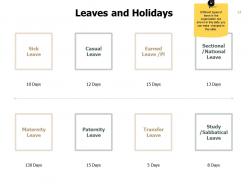
Template 3- PowerPoint Slide Focusing on Leaves and Holidays
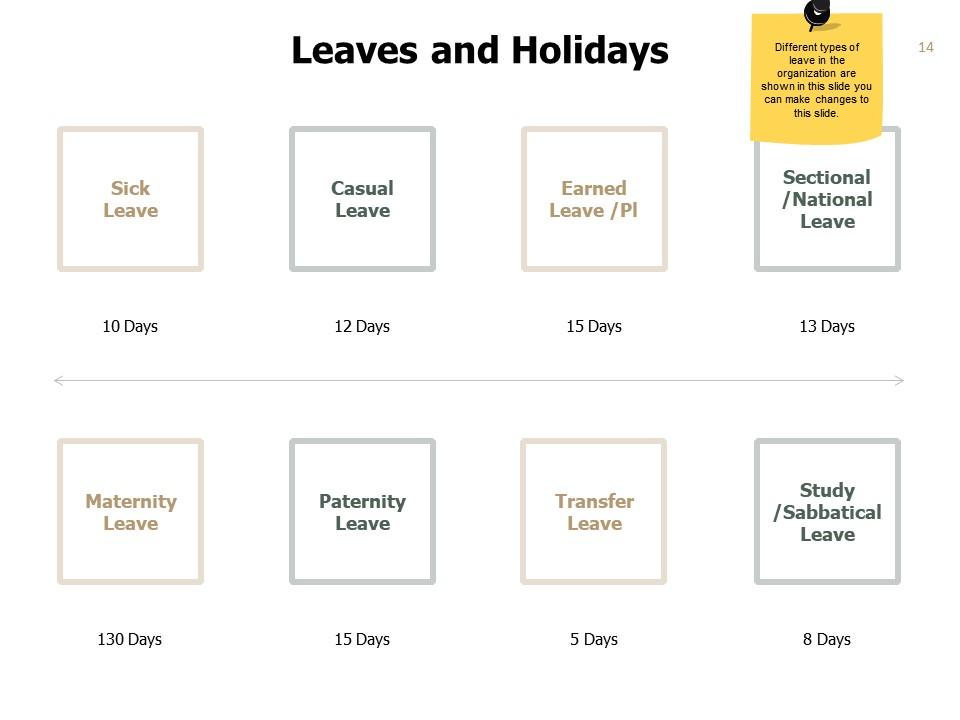
Every company offers leaves or holidays to employees. It’s essential to include details of holidays that your company offers in the induction to ensure clarity. This slide depicts types of leaves like earned leave, sick leave, casual leave, national or sectional leave, paternity or maternity leave, transfer leave, and study or sabbatical leave options. You can mention how many of each your company offers by editing the slide instantly. You can also add or remove any leaves, as every element of the slide can be edited easily.
Template 4- PowerPoint Slide Focusing on Office Dress Code
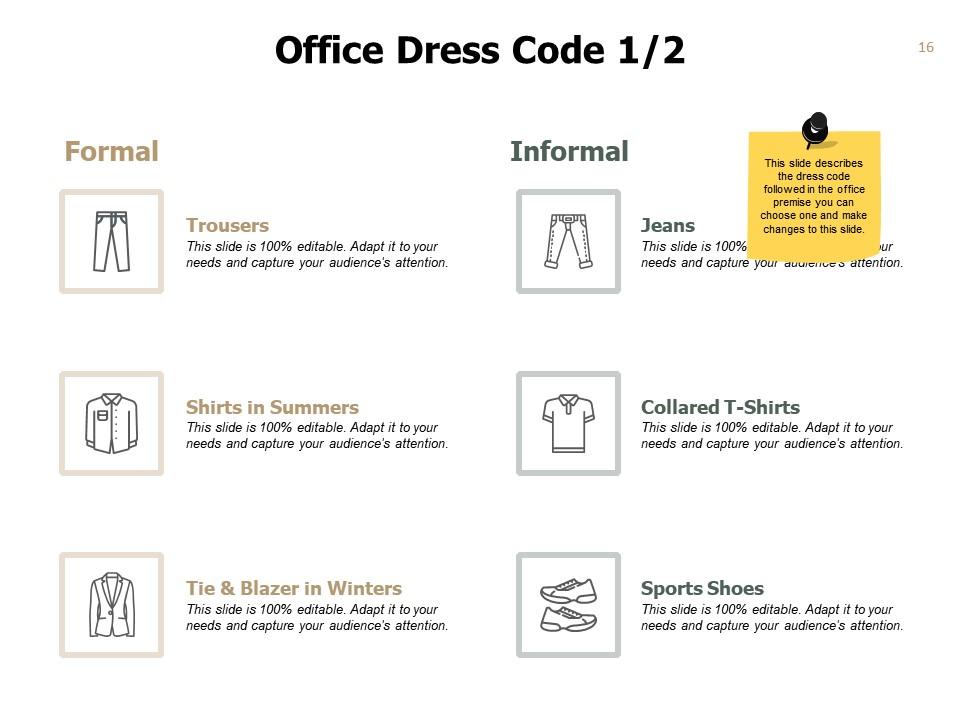
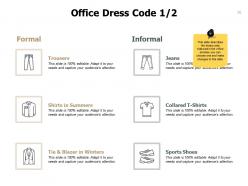
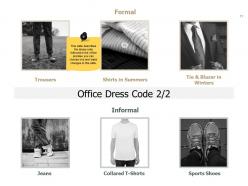
Many organizations are particular about the dress code for office as well. If your organization is like that, this slide might be a worthy addition to your induction process. It mentions what is considered formal wear and what is considered informal wear. For instance, collared T-shirts with jeans and sports shoes are considered informal wear and might be allowed on certain days, like Fridays or Saturdays.
Template 5- PowerPoint Slide Focusing on Salary and Package
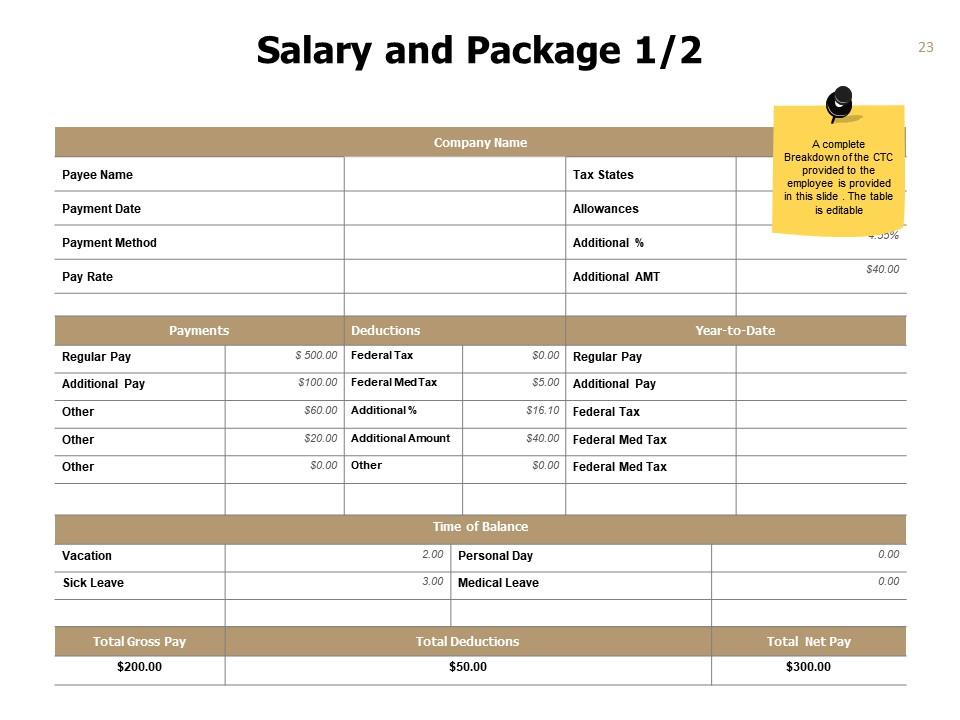
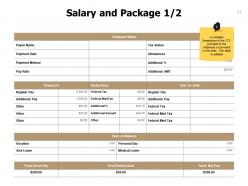
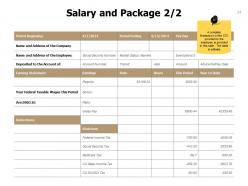
When new employees join, they expect clarification regarding the salary and its components. To enlighten your new employees on the same, you can use this simple slide. It lets you focus on pay components like regular pay, additional pay, etc. It also focuses on key elements like federal tax, time of balance, payment date, payment methods, deductions, and total net pay.
Template 6- PowerPoint Slide Focusing on Salary and Package of New Hires
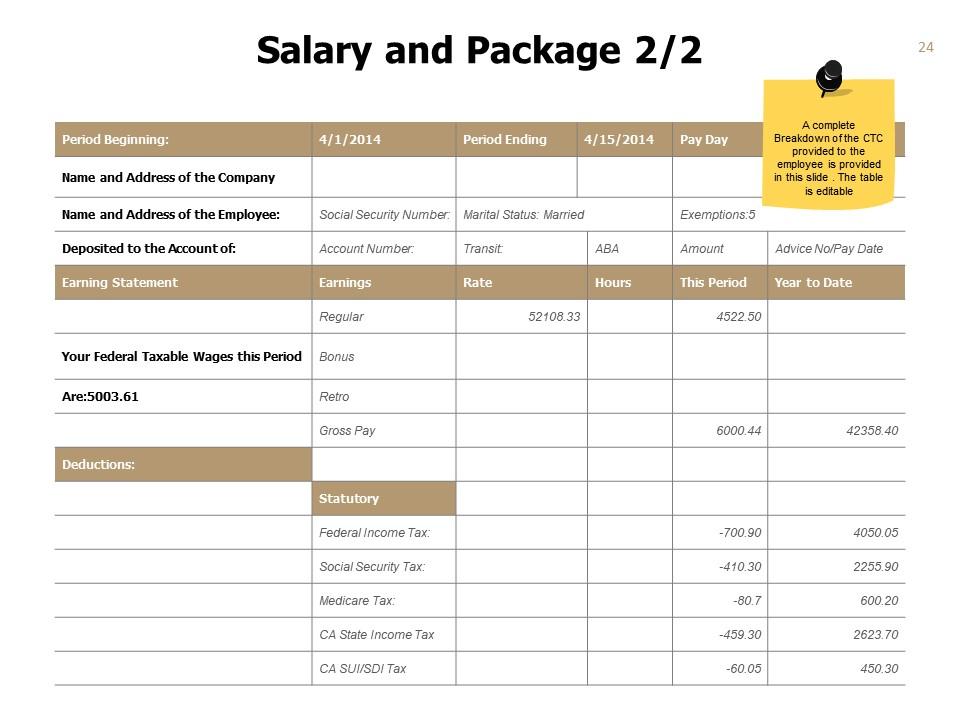
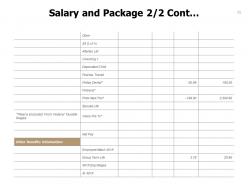
All well-established companies provide employees with a detailed breakdown of the CTC. It’s smart to do that during induction to avoid any confusion later. This useful slide can help with that as it mentions everything essential, like the period beginning and ending, the payday, the earnings, rate of tax, and deductions.
Template 7- PowerPoint Slide Focusing on the Salary and Package of New Recruits
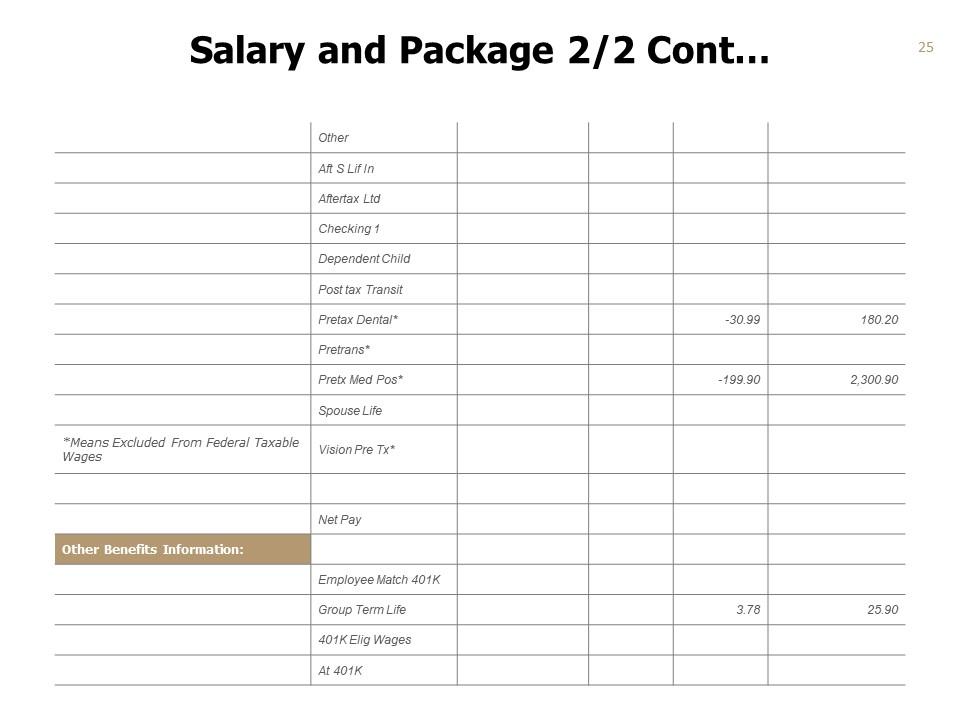
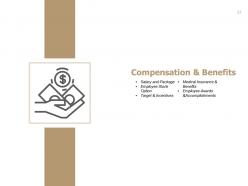
A company usually offers tons of benefits in addition to the salary. When used correctly, they can be a great motivator for employees. If your company also offers benefits and perks, use this detailed slide to share that information. You can also mention which benefits offered are excluded from federal taxable wages to make the benefits seem more appealing to the employees. Examples of the benefits you can add include 401k, group term life, etc.
Template 8- PowerPoint Slide Focusing on Employee Stock Options

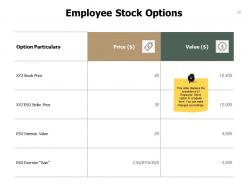
Many companies, especially startups, offer stock options to employees. This lucrative factor helps win employee loyalty and keeps them longer with a company. If your company offers stock options, too, and you want to enlighten your new employees about them, then you can use this creative slide. It mentions the particulars like the stock price, intrinsic value, strike price, etc., and it also clearly mentions the price and value in dollars.
Template 9- PowerPoint Slide Focusing on Targets and Incentives
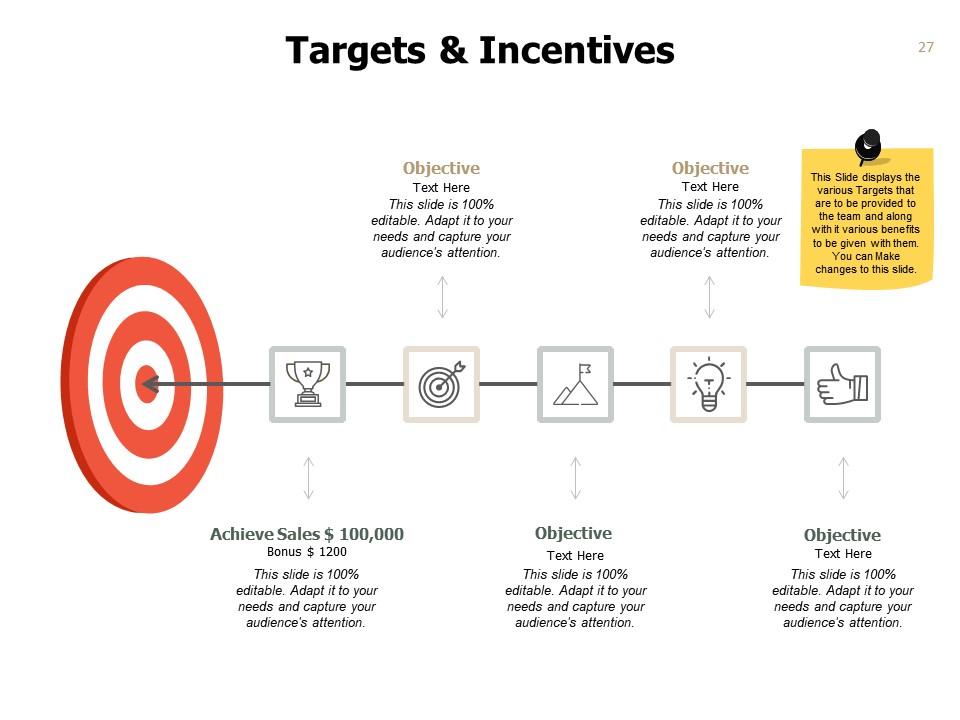
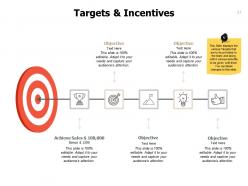
Gone are the days when only sales jobs were incentive-based. Now, many jobs in an organization are incentive-based. If you have hired people to do jobs that are directly linked to incentives, you can use this slide to make the targets clear. It mentions the key objectives or targets and specifically mentions the benefits or incentives an employee will get if they achieve the desired targets within a set timeframe.
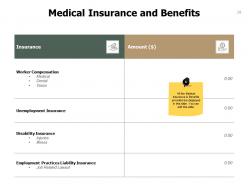
Template 10- PowerPoint Slide Focusing on Medical Insurance and Benefits
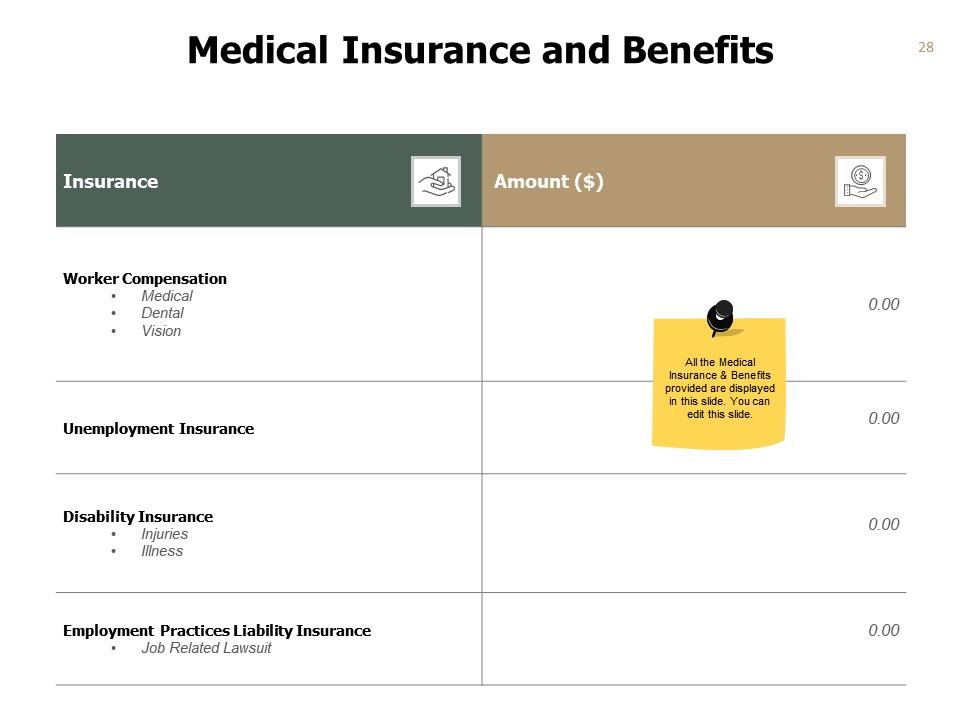
Medical or health insurance is a major component of compensation today. Each employee expects good insurance coverage not only for themselves but also for their family. If your company provides types of insurance, you can cover these with the slide. Examples of insurance and benefits offered are covered here. They include, but are not limited to, medical, dental, and vision insurance, disability insurance, unemployment insurance, and even employment practices liability insurance.
******
WELL BEGUN IS HALF DOME
When you do the employee induction right, you make your employees feel valued from the start and start winning employee loyalty. The slides mentioned above, created by SlideTeam, are meant to make the process simpler and stress-free. Download them once and use countless times with minor edits. Save your time, energy and harvest value for money. Get started now!
PS Check out this recruitment dashboard, which helps you keep track of new positions and roles that need to be filled.
New Recruitment Induction Powerpoint Presentation Slides with all 54 slides:
Use our New Recruitment Induction Powerpoint Presentation Slides to effectively help you save your valuable time. They are readymade to fit into any presentation structure.











FAQs for New Recruitment Induction
Honestly, you gotta map out that first week hour by hour - sounds overkill but trust me on this one. Get them meeting the team early and show them the actual tools they'll be using, not just the fancy stuff nobody touches. Write down EVERYTHING because you'll definitely forget to explain something obvious later. Company culture stuff matters too, but don't make it weird. Check in with them regularly those first few weeks so you can catch problems before they snowball. The whole point is getting them useful fast while they still feel like someone's got their back.
Honestly, just figure out what each role actually needs in their first 90 days and work backwards from there. Start everyone with the basics - company culture, policies, core systems. Then get specific. Sales people need product training and CRM stuff, developers need the tech stack walkthrough and code reviews. Make it modular so you can mix and match pieces. Oh, and definitely get department heads to design their own sections - they know exactly where new hires get stuck. I've watched companies way overcomplicate this when it's really pretty straightforward.
Honestly, tech runs the whole show now when it comes to onboarding new people. Digital platforms handle all the paperwork automatically, plus you get VR training modules and real-time tracking of how everyone's doing. It's wild compared to the old days of just handing someone a stack of forms, you know? Companies can build personalized learning paths for each person, throw in some chatbots for quick questions, even make it feel like a game to keep people interested. Oh, and if you don't have a decent digital onboarding system yet - seriously get one. You'll thank me later when you're not drowning in manual work.
Honestly, virtual onboarding is a game changer - especially for remote teams who'd otherwise feel totally lost on day one. New hires can work through modules whenever, which is huge. Interactive videos and some gamification keep things way more interesting than those old PowerPoint marathons we've all suffered through. The consistency across locations is clutch too. Real-time progress tracking lets you see who's struggling, and updating content when policies change? So much easier than reprinting a million handbooks. Oh, and people can go back to review stuff later, which they actually do more than you'd think. I'd start with digitizing whatever sessions you're most tired of repeating.
Honestly, I'd focus on time-to-productivity first - that's your biggest indicator. Then track retention at 90 days and one year, plus satisfaction scores from surveys. Manager feedback is gold too since they see the day-to-day stuff. Oh, and don't sleep on engagement levels in those first few months - checked-out newbies tend to ghost pretty fast. Maybe I'm biased, but I think measuring how long it takes someone to actually feel settled matters more than most companies realize. Just pick 3-4 things max though. Otherwise you'll drown in spreadsheets and never actually fix anything.
Honestly, new hire feedback is like getting the cheat codes for your onboarding process. I'd hit them up with surveys or casual one-on-ones during their first couple months - people are surprisingly candid about what sucked. Watch for patterns: too much info dumped at once, confusing timelines, role clarity issues. Then actually fix stuff based on what they're telling you. Maybe spread things out more, pair them with a buddy (works better than you'd think), or just be clearer upfront about expectations. Don't forget to circle back and show them their input mattered - changed something real.
Honestly, most companies dump way too much info on people day one - it's like drinking from a fire hose. Plus departments never seem to coordinate, so new hires get mixed messages about everything. What works better? Spread onboarding across a few weeks instead of cramming it all upfront. Get a solid checklist going so nothing falls through the cracks. Pair newcomers with someone who's actually good with people (not just whoever's available). Interactive stuff beats death-by-PowerPoint every time. I'd start by asking your recent hires what confused them most - they'll tell you exactly where things went sideways.
So don't wait until orientation to talk about culture - weave it in way earlier. During interviews, let candidates actually meet their potential teammates and ask about work styles, not just skills. Once they're hired, pair them with someone who genuinely lives your values (not just whoever raises their hand first, you know?). Tell real stories about how culture actually affects decisions - skip the polished website nonsense. Oh, and showing beats telling every time. People need to see your culture in action, not sit through another PowerPoint about it.
Honestly, pairing new hires with mentors from day one is a game changer. New people build confidence way faster and actually absorb what they're learning instead of just pretending they get it. Mentors eat it up too - makes them feel useful and obviously doesn't hurt come review time. The best part? New employees finally have someone they can ask those embarrassing questions without looking clueless in front of their boss. I've seen companies do this and their retention numbers definitely improved. Worth setting up formal pairings right from the start.
Honestly, I'd check it every 6 months instead of waiting a full year. Everything moves so fast now - new tools pop up, processes change, and you really want to grab feedback from recent hires while it's still fresh in their heads. Nothing's worse than someone going through orientation and getting confused about systems that don't even exist anymore (been there!). Set a reminder twice yearly to collect input from your last 5 new hires, their managers, plus HR. Trust me, they'll tell you exactly what felt outdated or made zero sense.
Look, proper induction programs can bump your retention by 25-40% which is honestly insane ROI for something pretty straightforward. New people who actually understand their job and meet the right folks from day one? They stick around way longer. Those first 90 days are make-or-break territory. I've seen too many companies just dump people at their desk with zero context - don't be that place. Cover what they'll actually be doing, introduce them to key players, and explain the weird quirks every office has. Your new hires will hit their stride faster and won't be updating their LinkedIn after two weeks.
Look, most companies totally blow this - they treat induction like some boring checklist instead of actually connecting it to their bigger talent goals. Here's the thing: your onboarding should directly support what you're trying to achieve. Want better leaders? Start mentorship programs right away. Worried about people leaving? Show them clear career paths from day one. It's honestly such a wasted opportunity when companies don't use this time to reinforce their brand and set up performance expectations early. I'd start by just looking at what you're doing now versus what you actually want to accomplish - the gaps will be pretty obvious once you map it out.
Group sessions are perfect for the boring but necessary stuff - company culture, policies, basic logistics that everyone needs to know anyway. Definitely do Q&As and icebreakers though, because death by PowerPoint is real. One-on-ones work way better for role-specific training and personal goal-setting. People open up more about concerns when it's just you two talking. Honestly? Mix both. Start with group orientation to cover the big picture, then do individual follow-ups for details. Just don't contradict yourself between formats - I've seen that confuse new hires more than you'd think.
Don't just slap D&I onto your induction like an afterthought - weave it throughout everything. Show diverse role models during welcome sessions and make sure your materials actually reflect different backgrounds. Honestly, the companies that do this best make it feel so natural you don't even realize it's intentional. Get unconscious bias training in early. Pair new hires with diverse buddies or presenters. Highlight your employee resource groups too - people love knowing those exist from day one. The whole thing should feel like it's just part of who you are as a company, not some mandatory checkbox thing.
Honestly, the whole induction thing is just the beginning - it's what happens after that really matters. Don't just throw people into a week-long program and hope for the best. Those first few months? That's when you need regular check-ins with their manager, maybe pair them with a buddy who actually knows the ropes. New people need to feel okay asking questions without looking clueless. I've seen too many good hires bail because they felt lost after that initial training ended. Keep the support going for at least 3-6 months if you want them to actually stick around and become valuable team members.
-
Helpful product design for delivering presentation.
-
good