

Recruitment Strategy Presentation Powerpoint Presentation Slides






Try Before you Buy Download Free Sample Product
 Impress Your
 Audience
 100%
100% Editable
 Save Hours
 of Time


Make your recruitment process transparent using Recruitment Strategy Presentation PowerPoint Presentation Slides. Let the selection process be hassle free and without any nuisance. Identify the job vacancies and their specifications, experience and the skills required for the job with the help of recruitment strategy PPT PowerPoint show. Select, screen and interview the resources from a pool of qualified candidates using recruitment process template. Analyse how many candidates walked in for the interview, their applications, eligibility, qualification, experience, and more with the help of a recruitment tracker PPT slide. Set a budget for a selection and hiring process by adding the salary budget, number of employees to be hired, total recruitment expenses, and more by incorporating the ready-to-use talent acquisition PPT deck. HR managers and recruitment specialists can get access to this content- ready recruitment strategy presentation PowerPoint Presentation slide. Download this professionally designed PPT deck and fill vacancies with qualified candidates. Advise folks to avoid creating clusters with our Recruitment Strategy Presentation Powerpoint Presentation Slides. It helps discourage groupism.
People who downloaded this PowerPoint presentation also viewed the following :
Content of this Powerpoint Presentation
Nothing generates as much worry and anxiety among a business's rank and file as a recruitment drive. The management wants the best talent and the most experience to flock to it for work, ensuring that the business is 90% sorted.
Experience and anecdotal evidence tell us that even getting half the required results from recruitment requires a well-balanced, planned strategy. Everything needs to be in place, from job descriptions to recruitment sources, days before the recruitment drive starts.
You also need a recruitment monitoring tool to ensure you are moving in the right direction. Find the best-in-class template here.
Organizations that take this lightly find nothing of note after the recruitment ends, as quality candidates do not join it or ask for too much remuneration.
At SlideTeam, we have designed and curated expert-level recruitment strategy presentations to guide CEOs and the top brass. Our aim is to ensure that nothing is left to chance. These 100% editable and customizable templates serve as reference guides and ensure the best results.
Internalize the recruitment process lifecycle with this complete deck.
Let’s explore these templates now!
Template 1 Executive Summary Guiding the Recruitment Process
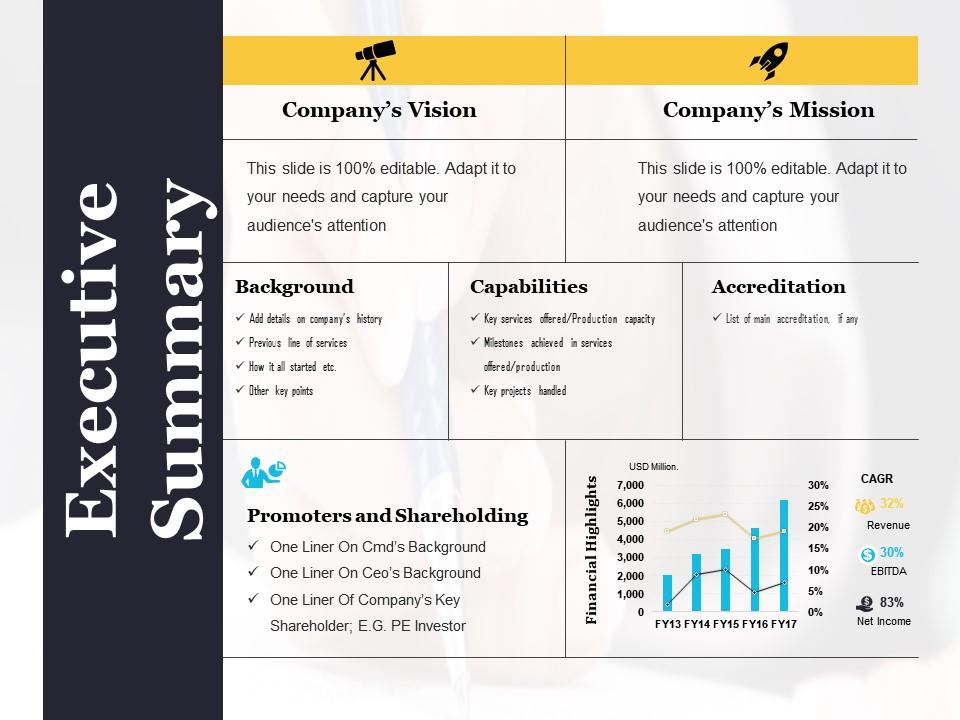
Before a recruitment consultant can put forward a plan for a company's recruitment strategy, an executive summary of the business is the inevitable document to study. Use this PPT Template to list the company’s vision, mission, background, capabilities, and accreditation to ensure it can be conveyed accurately to all stakeholders. The financial highlights are in the form of a line chart, and the promoters and shareholding complete this important document.
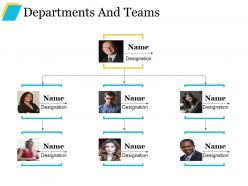
Template 2 Departments and Teams to Highlight Organizational Structure
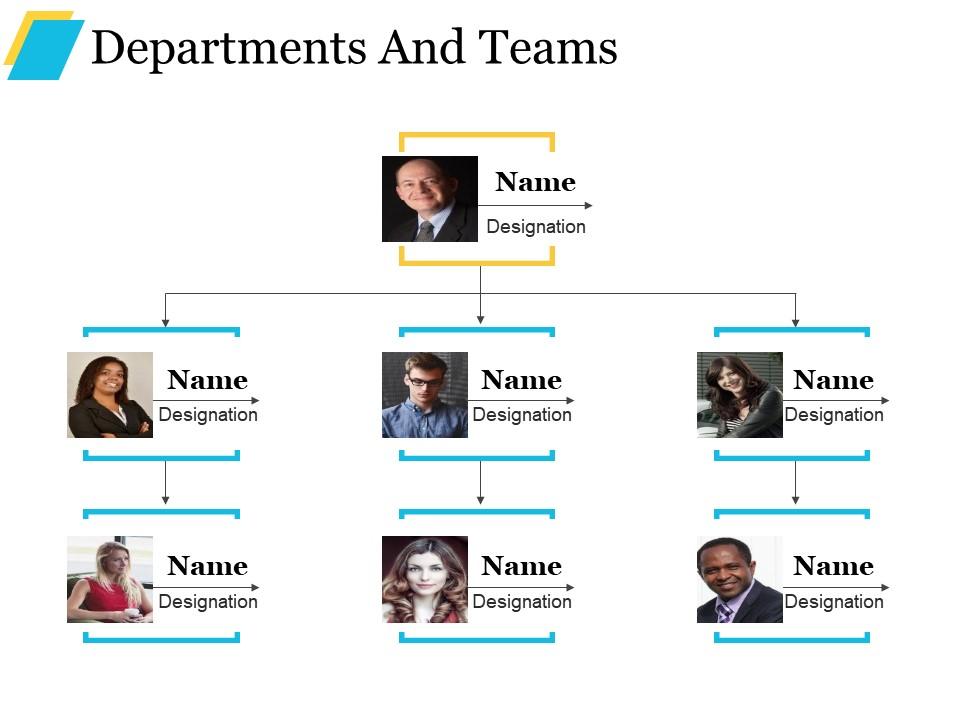
This PPT Template lists the departments and teams that make up and execute the tasks as dictated by the business's organizational structure. The name and designation framework of the slide adds to the polished way in which the business attracts and convinces candidates that they will be entering the right place when they accept the recruitment offer from the form. Get the template now!
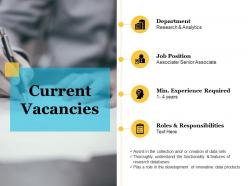
Template 3 Current Vacancies and How to Position these during Recruitment
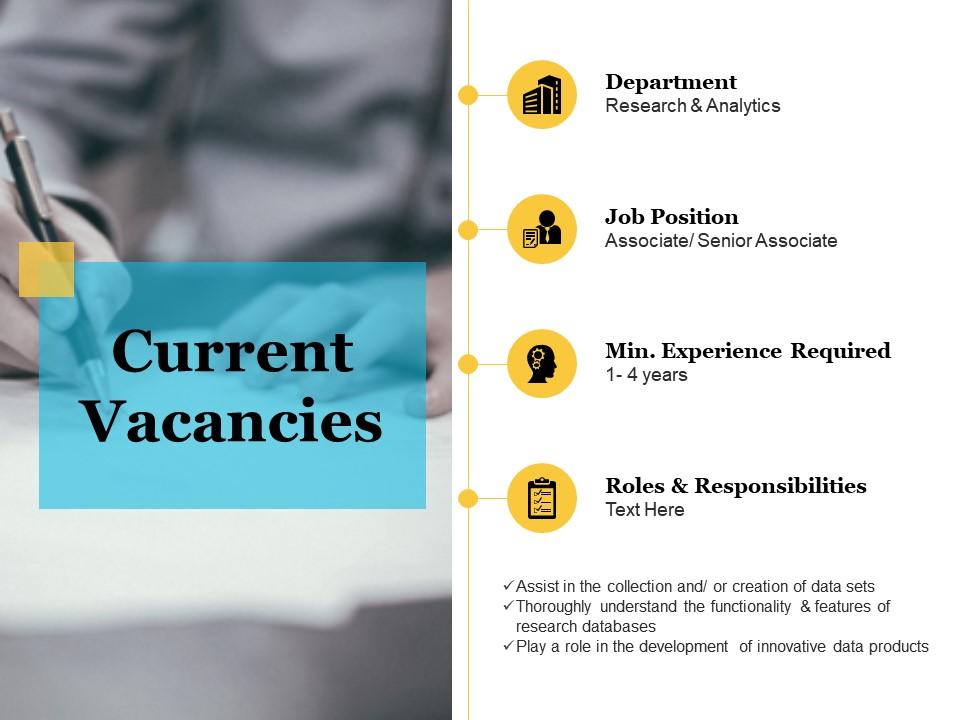
Use this PPT Template to assist in the collection and/ or creation of data sets of vacancies you have. The slide depicts the experience required, the job position, and the roles and responsibilities. The slide lets users thoroughly understand the functionality and features of research databases. The vacancies template makes the job of an HR manager a lot easier, as it describes the goals to achieve for successful recruitment. Get it now!
Template 4 Recruitment Process to Get the Desired Results and Ideal Candidates
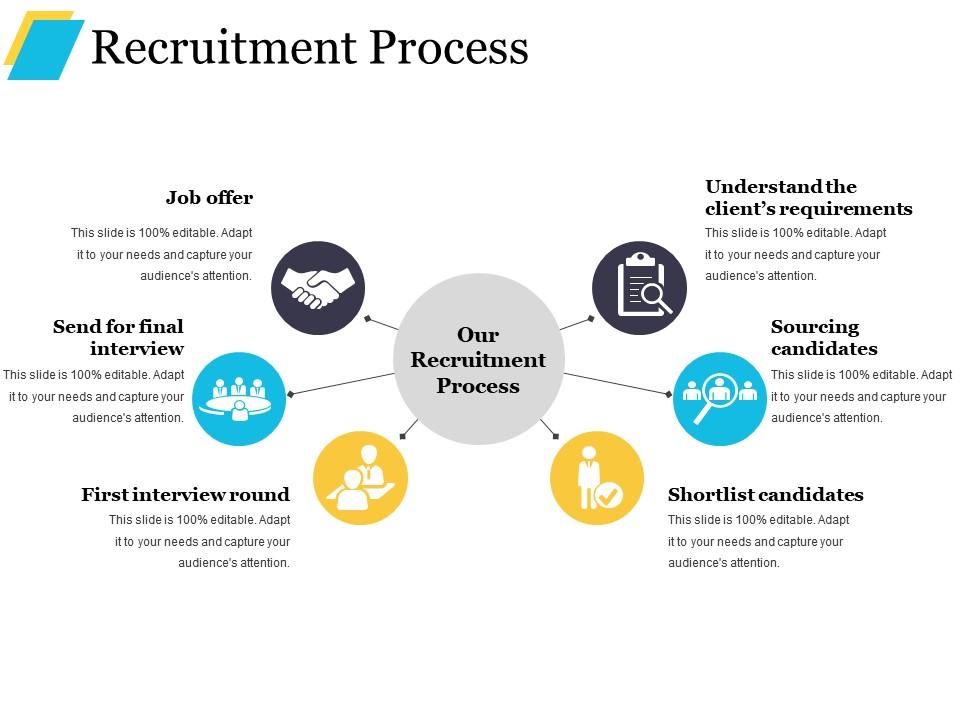
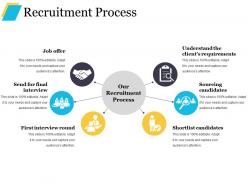
A recruitment consultant will find this PPT Template to be of immense value. This slide lists the process of recruitment as starting with understanding client requirements and sourcing candidates. After sourcing, candidates are shortlisted, and the first interview round is conducted. Later, there is the step where candidates are sent for the final interview. The job offer is rolled out, and the recruitment process is completed if accepted. Only joining is left for the successful end of the long journey and process.
Template 5 Recruitment Sources to Ensure the Efficiency of the Process
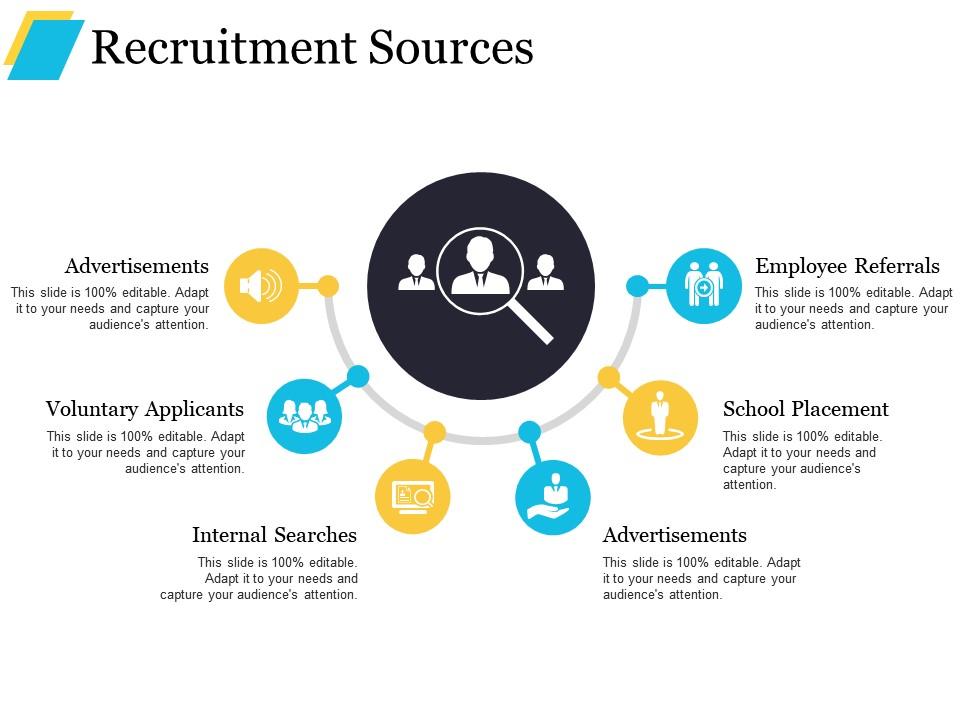
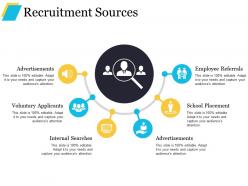
Advertisements, employee referrals, and internal searches are the most common recruitment sources that work reasonably well. The sources act as talent tools from where interested parties can source CVs that could be matched to the job description and the company requirements. The icons easily convey the source that is tapped for recruitment. Get the template now!
Template 6 Job Description Explaining Nature of Work
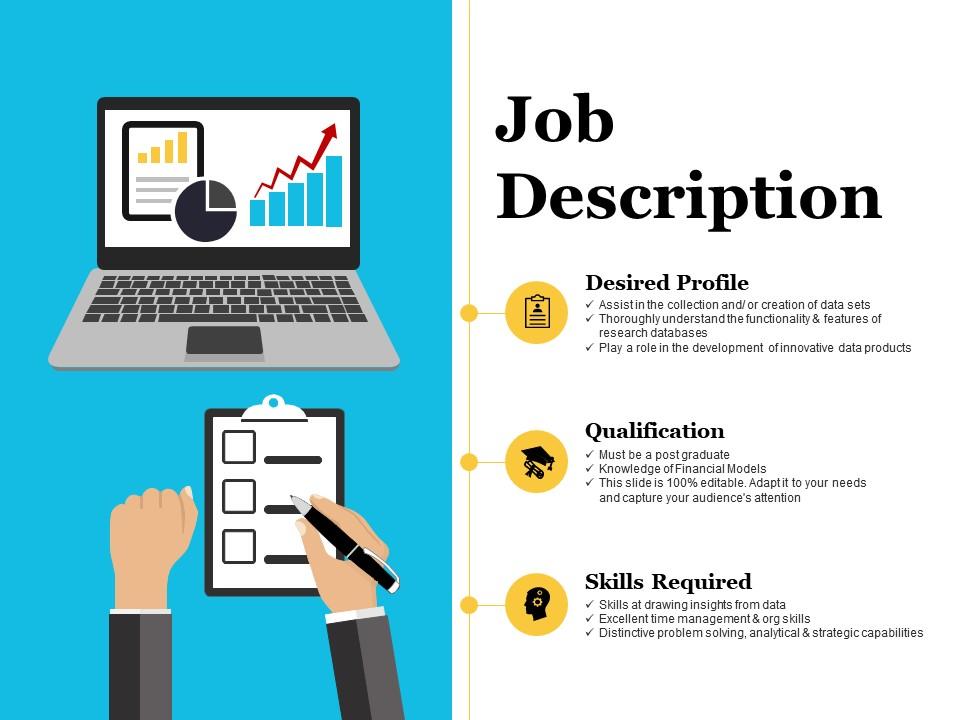
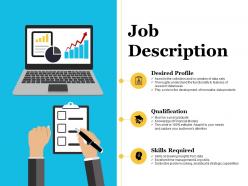
This attractive PPT adds to potential applicants' desire to give it a shot with its clear, concise, and accurate description of the nature of the job. The PPT Template publicizes the job descriptions in three broad narratives: the desired profile, qualifications, and skills required. Each of these three segments can be explained further with bullet points. For instance, being excellent at MS Excel can be one requirement that this slide communicates brilliantly well under the skill sub-section.
Template 7 Recruitment Funnel to Go From Many Candidates to 1 Selected
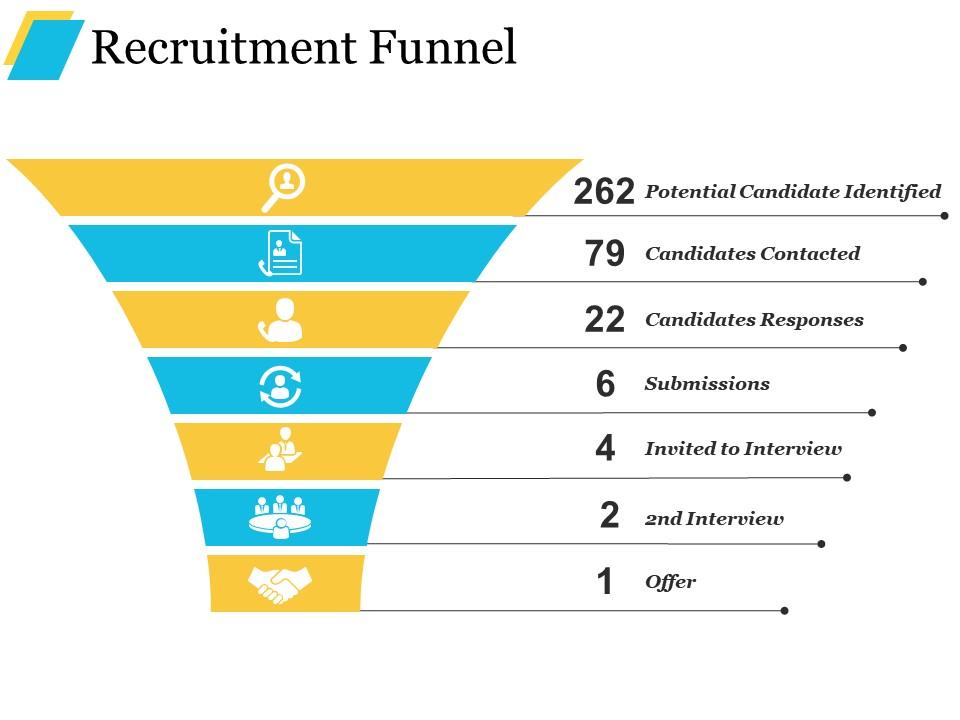
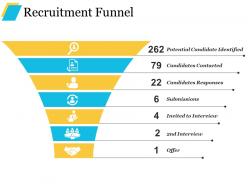
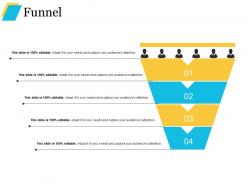
For a recruiter, the journey of potential candidates identified to the one selected is long. Roughly around 40% of candidates identified are contacted (in this PPT Template, the numbers happen to be 262 identified and 79 contacted). Then, the number dips considerably in the third stage of candidate responses with single-digit submission of CVs. There are then the interview rounds, for which the number is usually less than five before the 1 offer is rolled out.
Template 8 Recruitment Tracker: How Well the Company Did at Hiring
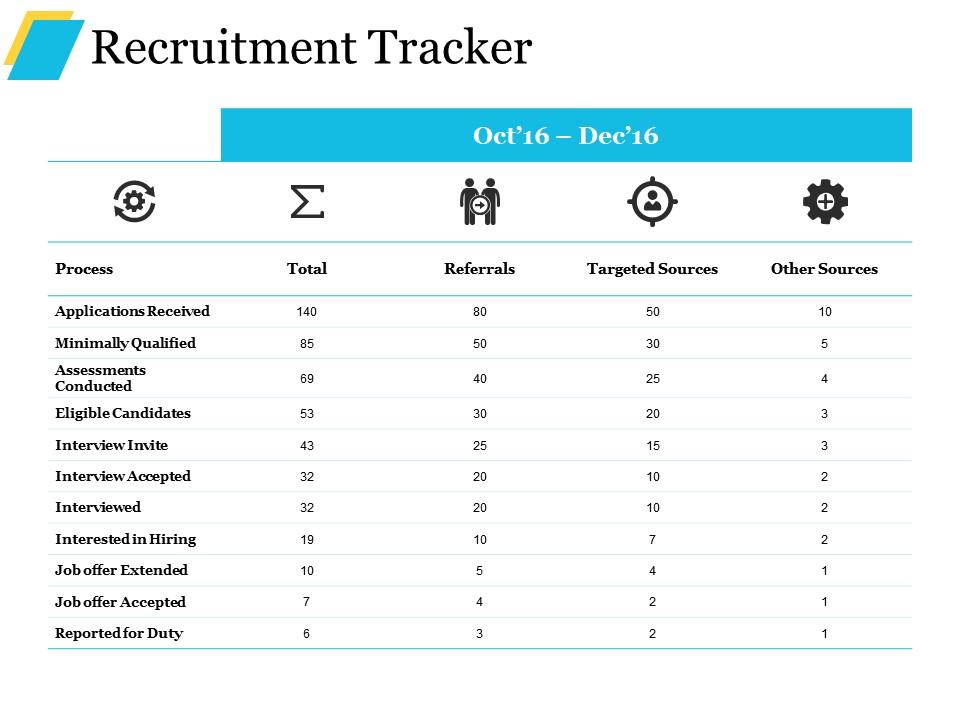
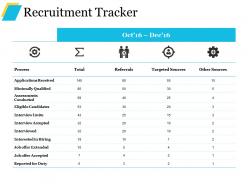
This PPT Template is a four-monthly recruitment tracker that assesses performance from the number of applications received to the number of applications that are finally reported for duty. The results are compiled recruitment-source-wise, with referrals, targeted sources, and others in the tracked categories. Eligible candidates, minimally qualified, and job offers extended are the major processes reviewed.
Template 9 Recruitment Budget to Ensure Clarity on Finance
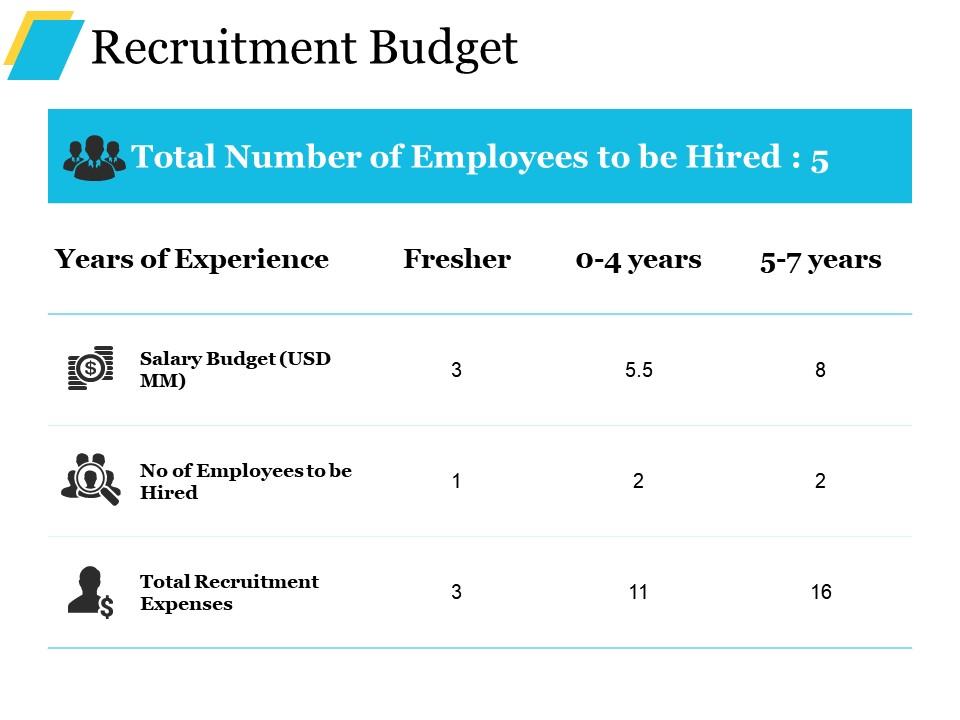
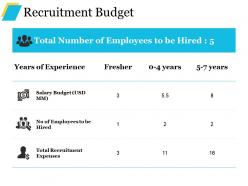
Companies must use this recruitment budget PPT Template to list the number and quality of candidates they want and at what salary price. After listing the total number of employees to be hired, we move on to segmenting this broad matrix into years of experience required, the number in each experience category, and total reimbursement expenses warranted if it happens to be a sales or business development job. Get this template now!
EMPLOYEES MAKE A BUSINESS
After customers, the next critical assets of a business without which it cannot function are employees. Yet, in practice, businesses behave as if they do not matter, and ‘taken for granted’ is a common refrain in almost everyone with a job. It is clear that this must change as soon as possible, so why not start with the recruitment strategy you adopt?
PS After extensive research, here are the eight recruitment strategies to hire the best talent you can.
Recruitment Strategy Presentation Powerpoint Presentation Slides with all 41 slides:
Feel as if in heaven with our Recruitment Strategy Presentation Powerpoint Presentation Slides. Your happiness will know no bounds.






FAQs for Recruitment Strategy Presentation
Figure out what roles you absolutely can't live without first. Budget's probably tight, so decide if you're competing on salary or going heavy on equity/culture instead. Remote work opens up way more candidates but honestly makes coordination a pain. Your online presence matters more than you'd think - people will definitely stalk you online before applying. How long can you afford to spend hiring? That'll shape everything. Write clear job descriptions with realistic expectations, then work backwards. Don't sleep on the nice-to-have roles either, but prioritize the must-haves.
Honestly, start with an ATS - those applicant tracking systems are lifesavers for organizing all those resumes. AI screening tools can filter candidates by skills way faster than doing it manually (trust me on this one). Chatbots handle basic questions around the clock, which is pretty neat. Video interviews cut down scheduling headaches too. Predictive analytics help spot who'll actually work out, though I'm still figuring that part out myself. Don't try everything at once - pick whatever's causing you the biggest headache first, probably resume screening, then add more tools later.
So employer branding is basically how people see your company as a workplace. Top talent has choices, right? They're definitely stalking your Glassdoor and social media before applying. Your current employees are honestly your best marketing tool - when they share real stories about working there, it beats any fancy corporate stuff by miles. I know it sounds kind of soft and fluffy, but it genuinely affects who even bothers to apply. Quality candidates won't waste time on companies with sketchy reputations. Start small though - just get your team talking authentically about why they actually like working there.
Hey! So start by posting jobs on diverse boards and partnering with groups that support underrepresented communities. Your job descriptions probably have biased language you don't even realize - definitely audit those. Train your hiring managers on unconscious bias too (seriously, we all have it). Mix up your interview panels so they're not all the same type of people. Oh, and try blind resume reviews - just focus on skills first. I know it sounds like extra work, but you've gotta be intentional from the beginning. Don't just tack it on later as some checkbox thing.
Focus on time-to-fill and cost-per-hire first - those show if you're being efficient. Quality of hire and retention rates matter way more though, since they tell you if people actually stick around. Track which sources bring your best candidates too. Honestly, most people sleep on candidate experience scores but they're critical in competitive markets. Your offer acceptance rate is another good one to watch. Oh, and don't try to track everything at once - start with maybe 4-5 metrics then add more based on whatever's giving your team the biggest headaches.
Honestly, just tailor your approach to what each generation actually cares about. TikTok and social impact messaging work great for Gen Z - they want flexibility too. Millennials are all about career growth and work-life balance. Gen X? They're honestly the easiest - just give them clear job descriptions and decent pay, none of the fancy stuff. Boomers still prefer personal connections and traditional interviews (which makes sense). Don't pick just one strategy though. Try multiple channels at once, see what brings in good candidates from each group, then focus your energy there.
Okay so first thing - lead with the cool stuff right away. Don't bury what's actually exciting about the job under boring company history nonsense. Be realistic about requirements too (honestly, does every single role really need 5+ years?). Pick like 3-5 actual must-haves instead of some ridiculous laundry list. Salary transparency helps a ton when you can swing it. Write how your company actually talks, not that generic corporate voice that makes every posting sound identical. What makes your team different? Put that in there. Oh and give them a clear next step - tell them exactly how to apply and when they'll hear back.
Honestly, treat social media like you're actually talking to people, not just blasting job posts everywhere. LinkedIn's obvious for networking and finding candidates directly. But Twitter and Instagram? Total goldmines for passive candidates, especially creatives. I've seen people have crazy success with Facebook groups too - weird but it works. Start by following people in roles you hire for and actually comment on their stuff. Share some behind-the-scenes company content so people get what you're about. Build those relationships first. When you finally reach out about a role, it won't feel like cold spam because you've been part of their world already.
Blind resume reviews are a game changer - strip out names, photos, school info so you're just looking at actual qualifications. Have multiple people do interviews with the same standard questions for everyone. It's honestly annoying to set up initially but pays off big time. Post your jobs in different places too, not just the usual spots. I learned this the hard way when we kept getting the same type of candidates over and over. Build these safeguards into your process from the start rather than trying to course-correct later when you realize there's a problem.
Look, candidate experience can totally make or break your hiring game. Even people who don't get the job? They'll either trash-talk or hype up your company afterward. Word spreads crazy fast in most industries - trust me on this one. You lose amazing talent when your process sucks, plus it makes your employer brand look terrible. Future hiring becomes a nightmare. Map out what candidates actually go through right now and spot the worst pain points. That's honestly where you'll see the biggest wins. People should walk away feeling good about you guys regardless of whether they got hired.
Oh man, biggest mistake is rushing in without figuring out what you actually want first. Like, nail down the role requirements and pay range before you do anything else or you'll waste so much time. Don't just post on one job board either - I see people do this constantly then complain about getting zero good candidates. Super annoying when hiring managers keep changing what they want halfway through too. Set real timelines because good people won't wait around forever while you drag your feet. Other companies move way faster. Get everyone on the same page about must-haves vs nice-to-haves right from the start.
Honestly? Every 6 months is probably your sweet spot, though some people swear by quarterly reviews. The market's just moving too fast these days - what crushed it last year might totally flop now with all the remote work stuff. Your company changes, candidate expectations shift, it's wild out there. Missing your hiring goals? Time for an update. Suddenly can't compete for good talent? Yeah, definitely revisit things. Don't get stuck waiting for those big annual planning meetings either. Just set a reminder to check your numbers and what candidates are actually saying. Even tiny adjustments can totally flip your results around.
Dude, employee referrals are seriously your secret weapon. People already working there know what you're looking for, so they're basically filtering out the weirdos before anyone even applies. Referred candidates usually get hired way faster too. Plus they stick around longer since there's this built-in "don't make me look bad" factor with whoever recommended them. Honestly, it's like having your whole team as recruiters without paying them extra. Just make the process dead simple - nobody wants to fill out a 20-page form to help you hire someone. Throw in some decent rewards when their referrals actually work out and you're golden.
Yeah, so recruiting totally depends on your industry - the differences are wild. Tech companies obsess over coding tests and whether you'll fit their vibe. Healthcare? All about certifications and making sure you won't accidentally kill someone (fair enough). Manufacturing wants to see if you can actually do the job with your hands. Financial services takes forever with background checks - like, they'll investigate your third grade teacher. Startups just want someone who can start yesterday. I learned this the hard way trying to jump between sectors a few years back. Just research how your industry normally hires and copy what works.
Dude, remote work totally flipped recruitment on its head. Now you're competing with companies worldwide for talent - which is honestly kinda intimidating but also exciting? Your job posts need to spell out the remote situation upfront. Video interviews are the norm now (I've hired people I've literally never shaken hands with). The tricky part is selling your company culture through a screen. Like, how do you show someone the office energy when there's no office? Focus your employer brand on flexibility perks. Oh, and get decent interview software - nothing kills the vibe like technical difficulties.
-
Excellent products for quick understanding.
-
Best way of representation of the topic.