

Recruitment Strategy Powerpoint Presentation Slides





Try Before you Buy Download Free Sample Product
 Impress Your
 Audience
 100%
100% Editable
 Save Hours
 of Time


Our Recruitment Strategy Powerpoint Presentation Slides are topically designed to provide an attractive backdrop to any subject. Use them to look like a presentation pro.
People who downloaded this PowerPoint presentation also viewed the following :
Content of this Powerpoint Presentation
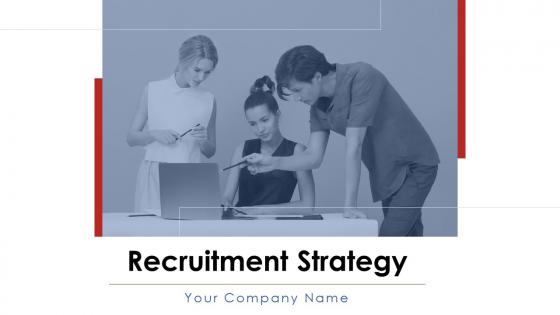
Slide 1: This slide introduces Recruitment Strategy. State your Company name and begin.
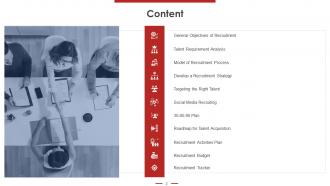
Slide 2: This slide depicts Content of the presentation.
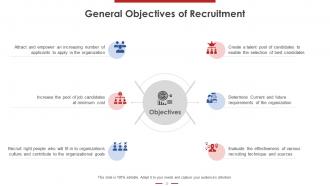
Slide 3: This slide showcases General Objectives of Recruitment.
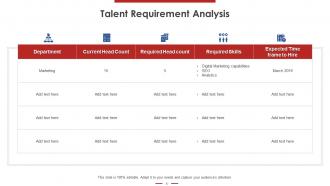
Slide 4: This slide displays Talent Requirement Analysis.
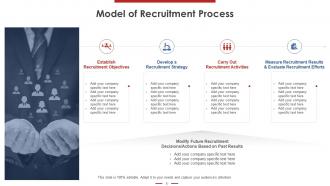
Slide 5: This slide depicts Model of Recruitment Process.
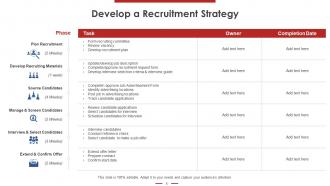
Slide 6: This slide showcases Developing a Recruitment Strategy.
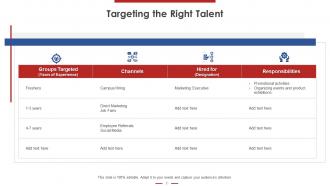
Slide 7: This slide depicts Targeting the Right Talent.
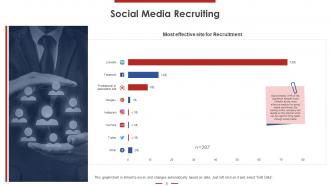
Slide 8: This slide shows Social Media Recruiting.
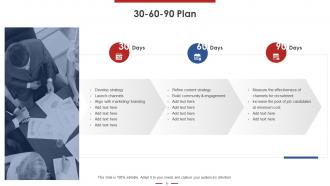
Slide 9: This is 30-60-90 Plan slide.
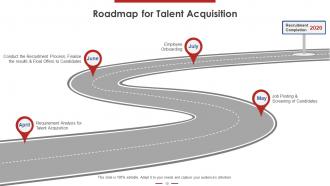
Slide 10: This slide displays Roadmap for Talent Acquisition.
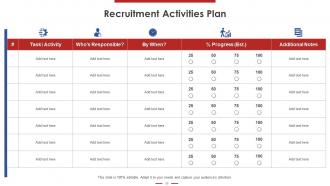
Slide 11: This slide showcases Recruitment Activities Plan.
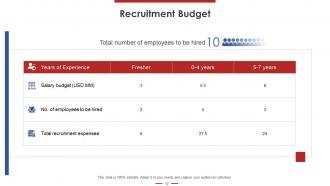
Slide 12: This slide shows Recruitment Budget.
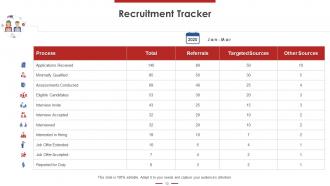
Slide 13: This slide displays Recruitment Tracker.
Slide 14: This is Recruitment Strategy Icons Slide.
Slide 15: This slide is titled as Additional Slides for moving forward.
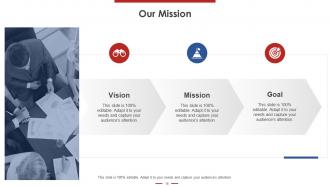
Slide 16: This is Our Mission slide with Vision, Mission and Goal.
Slide 17: This is Our Awesome Team slide with names and designations.
Slide 18: This is About Us slide to showcase Company specifications.
Slide 19: This slide is titled as Post it Notes. Post Your important notes here.
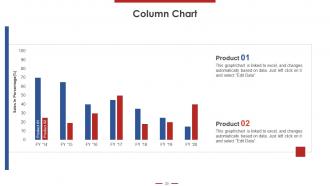
Slide 20: This slide depicts Column Chart with products Comparison.
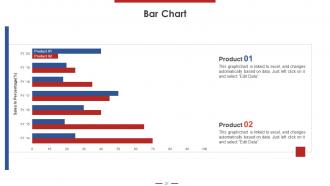
Slide 21: This slide displays Bar Chart with products Comparison.
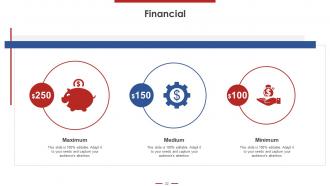
Slide 22: This is Financial slide.
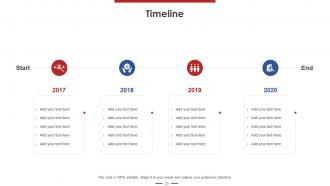
Slide 23: This is Timeline slide.
Slide 24: This is Thank You slide with address, email address and contact number.
Recruitment Strategy Powerpoint Presentation Slides with all 24 slides:
Use our Recruitment Strategy Powerpoint Presentation Slides to effectively help you save your valuable time. They are readymade to fit into any presentation structure.


FAQs for Recruitment Strategy
Honestly, start with your job requirements - make them crystal clear. Then work on your employer brand and find sourcing channels beyond the typical job boards (everyone's fishing in the same pond there). Candidate experience is huge because people talk, especially in competitive markets. Track stuff like time-to-hire and which sources actually work. Get hiring managers involved early so they're bought in, not just complaining later. Keep a backup pipeline going too. I'd audit what you're doing now first though - find your biggest weakness and tackle that. You'll probably see results faster than trying to fix everything at once.
Think of employer branding as your talent magnet - quality candidates come to you instead of the other way around. People already know your vibe before applying, so you're not stuck selling the company in every interview. It's honestly such a time-saver. Strong branding helps you compete without just throwing cash at everyone (though decent pay still matters, obviously). Get your current team sharing real stories about what it's actually like working there. That authentic stuff works way better than polished PR nonsense. Good candidates want to know they'll fit in culturally anyway.
Honestly, you can't compete in recruiting without decent tech anymore. An ATS will track your candidates, AI screens resumes way faster than you ever could, and LinkedIn is basically a treasure trove for finding people. Video interviews save tons of time and money too - we're all pros at Zoom calls now anyway. Don't just buy the flashiest tool though. Figure out where you're actually struggling first. Is it finding candidates, screening them, or just scheduling interviews? That's annoying but necessary. Then grab whatever tech fixes that specific problem.
Honestly, recruitment metrics are a game-changer for figuring out what's actually broken in your hiring process. Track stuff like time-to-hire and where your best candidates come from. You might find out LinkedIn applicants are way better than Indeed ones - which happened to us last year, totally unexpected. Candidate drop-off rates will show you if people are bailing during interviews or somewhere else. Pick maybe 3-4 metrics that match your biggest headaches right now. Don't go crazy measuring everything at first. Once you've got consistent data, you can test changes and see if they actually move the needle.
Honestly, most companies are fishing in the same pond. Branch out to HBCUs, women's professional groups, veteran orgs - places you probably aren't looking yet. Those diversity recruiters are worth partnering with since they've already done the networking legwork. Your job descriptions are likely the problem too - I bet they're packed with "must haves" that aren't actually must haves. Companies ditch degree requirements and suddenly get way more diverse candidates. Oh, and don't have your interview panels be carbon copies of each other. Pick one group to focus on first, then expand.
Honestly, you gotta tailor your approach based on what you're hiring for. Senior people aren't scrolling job boards - they're probably happy where they are, so you need to build relationships and headhunt them directly. Entry-level folks are the opposite though, super eager and all over campus events and online postings. Technical roles are tricky - skip the standard interview BS and just give them actual coding problems or look at their GitHub. Creative positions should show you their portfolio right away. I learned this the hard way after wasting time on mismatched strategies. Think about where these people actually spend their time and what would make them want to jump ship.
LinkedIn's your best bet - that's where all the professionals are scrolling anyway. Twitter and Instagram can work too depending on what industry you're in. The key is posting real stuff about your company culture. Behind-the-scenes content, employee spotlights, those "day in my life" posts people actually want to see. Nobody wants to read robotic corporate posts anymore, they're just cringe. Use hashtags but don't go overboard with them. Oh, and get your current team to share your recruitment posts - honestly, that's way more effective than anything else you'll try.
Dude, stop leading with job posts - that's where most recruiters screw up. Build actual relationships first. Comment on their LinkedIn stuff, share industry news that's actually useful. Give them value upfront - salary data, market insights, career tips even when they're not job hunting. I swear, the "spray and pray" approach is so 2015. When you finally do pitch a role, make it about growth opportunities and cool challenges, not boring job descriptions. Stay consistent but patient. It's totally a long game thing, but that's how you get on their radar for real.
Dude, candidate experience literally makes or breaks your hiring. Good experiences? People accept offers and tell their friends about you. Bad ones spread faster than gossip - I've seen companies tank their reputation over one awful interview process. Your offer acceptance rates will jump, plus you'll get access to those passive candidates who only apply because they heard you're decent to work with. Oh, and your employer brand won't be trash on Glassdoor. Honestly, just walk through your own hiring steps and think "would this annoy me?" That's half the battle right there.
Your hiring process is literally your culture in action - candidates will judge everything from your job posts to how long you take to get back to them. Share real employee stories on your careers page and let people meet their potential teammates during interviews. Be upfront about work-life balance too. Honestly, I've seen companies tank great candidates just by going radio silent for weeks (major red flag). The interview questions you ask, how you treat people throughout the process - that's what actually shows your values. Give them a real glimpse into daily life there.
Dude, the money/talent/recognition trifecta is going to hit you hard. Big tech companies are basically vacuum cleaners right now for good people. Your ace in the hole? Sell the startup dream - equity, crazy growth potential, way less corporate BS. Start with people you already know, then hit up AngelList and those startup-specific job boards. Don't blow cash on recruiters yet (learned that one the hard way). Oh, and post constantly about your company culture on social - candidates actually look at that stuff. Speed matters most though. Good people get snapped up fast, so don't overthink your hiring process.
Track your hiring data to see which job boards and platforms actually deliver good hires, not just tons of random applications. Most companies are basically throwing spaghetti at the wall here - total waste of time. Check where candidates drop out of your process and how long it takes to hire. Quality scores matter more than quantity. Once you spot patterns in your best hires (what skills they had, where they came from), you can focus your efforts there instead of casting a huge net everywhere. Oh, and don't overcomplicate it - pick 3 or 4 metrics and stick with tracking those consistently.
Honestly, remote work changed everything. Flexible options aren't a nice-to-have anymore - they're expected. Your talent pool is now global, which sounds awesome until you realize you're competing with companies from Silicon Valley to Singapore for the same person. Communication and self-motivation skills matter way more now since nobody's looking over shoulders in an office. I'd rewrite your job posts to be super clear about remote policies upfront. Also worth tweaking your interviews to actually test if someone can work independently - some people think they can but really can't.
Honestly, make referrals part of your actual hiring strategy instead of just hoping they happen. Cash bonuses work great, but I've seen companies do extra PTO or just shout people out publicly - whatever fits your budget. Send your team regular updates about open roles via email or Slack, don't assume they'll remember what you're hiring for. Referrals have been our strongest hires because people already get the vibe, you know? Focus on roles where culture fit matters most first. Oh, and track those numbers alongside your other recruiting stuff so you can actually see if it's working.
Anti-discrimination laws are huge here - you can't base hiring decisions on race, gender, age, religion, disability, all that stuff. Job postings and interview questions need to tie directly to the actual role. Background checks have specific legal hoops too, don't just assume you can run them however. Employment law shifts constantly and varies by state, which is honestly annoying but whatever. Document your entire process so you can prove decisions were legitimate business calls. Seriously though, get your legal team involved early - way better than scrambling to fix things later when someone's already pissed.
-
The content is very helpful from business point of view.
-
Nice and innovative design.