category-banner

Training Plan Strategy Development Roadmap

Rating:
90%
Training Plan Strategy Development Roadmap
Slide 1 of 6
Favourites Favourites

Try Before you Buy Download Free Sample Product

Audience Impress Your
Audience
Editable 100%
Editable
Time Save Hours
of Time
The Biggest Sale is ending soon in
0
0
:
0
0
:
0
0
Rating:
90%
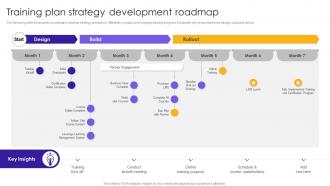
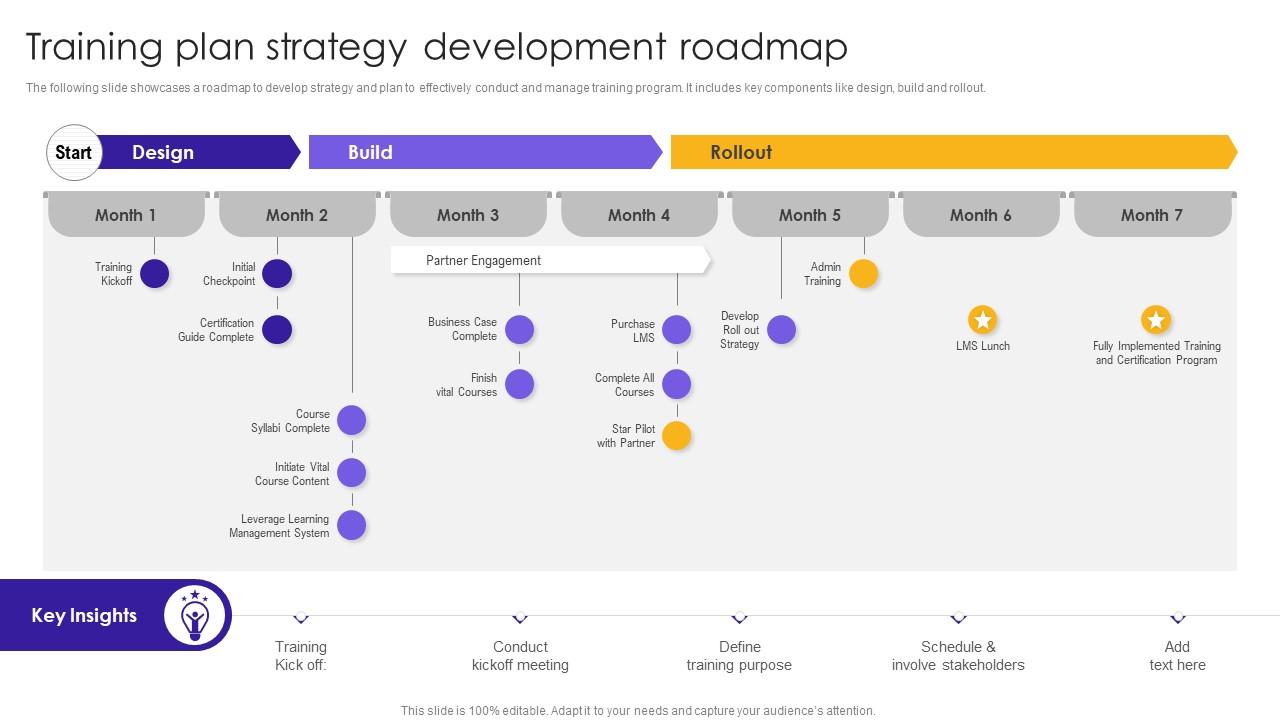
The following slide showcases a roadmap to develop strategy and plan to effectively conduct and manage training program. It includes key components like design, build and rollout. Introducing our Training Plan Strategy Development Roadmap set of slides. The topics discussed in these slides are Design, Build, Rollout. This is an immediately available PowerPoint presentation that can be conveniently customized. Download it and convince your audience.
People who downloaded this PowerPoint presentation also viewed the following :

FAQs for Training Plan

Honestly, most companies mess this up because they think training ends when people walk out the door. You need clear objectives tied to real business stuff, content that doesn't bore people to death, and regular check-ins to see if anyone's actually learning. But here's the thing - the follow-up support is where the magic happens. Build in feedback loops so you can tweak things later. Oh, and make it relevant to what they actually do at work, not some generic nonsense. Otherwise you're just burning money on something nobody remembers next week.

Honestly, just start by figuring out what gaps you actually have. Survey your people about what they think they're missing - they usually know better than anyone. Also ask managers where they're seeing performance issues. Look at your metrics too, like productivity numbers or customer complaints. That stuff reveals blind spots you wouldn't catch otherwise. I swear the best info comes from just having real conversations with people though. Once you've got all that, rank everything by what'll actually move the needle for your business and build your training plan from there. Way more straightforward than it sounds.

Honestly, tech has completely changed how we do training these days. AI can customize content for different learning styles, which is pretty cool. VR lets people practice in realistic scenarios without the real-world consequences. Mobile learning means your team doesn't have to sit through those painful all-day classroom sessions anymore - they can learn on the go. Analytics actually show you what's working instead of just crossing your fingers and hoping. The trick is choosing tools that fix actual problems you're having, not just whatever's trending. Otherwise you'll end up with fancy software nobody uses.

Honestly, you need to measure this stuff on two levels. Right after training, grab feedback and test if people actually got it - basic but necessary. The real test though? Check back in like 6-8 weeks. Are they using what you taught them? Look at whatever numbers matter for your goals - productivity, mistakes, whatever. I learned this the hard way once when everyone loved a session but nothing changed afterward. Also do some follow-up surveys because people sometimes get it later. Oh, and figure out your measurement plan first - don't wing it.

Honestly, just make it interactive - people zone out so fast with boring slides. I always throw in polls or quick quizzes every few minutes. Real scenarios work way better than theoretical stuff too. Short bursts are key, maybe 10-15 minutes tops because everyone's attention span is shot these days. Oh, and analogies are clutch for explaining complicated things. Videos help break up all that text. But here's the thing - start with why they should care. Like, how will this actually make their job easier? That's what hooks people from the start.

Honestly, just get into the habit of collecting feedback after every session - quick surveys or just asking people how it went. Look for patterns in what they're telling you. Like, are people always confused about the same thing? Is your timing consistently off? I keep a running doc because I'll totally forget otherwise (learned that the hard way). When you're prepping the next session, actually use that feedback to change stuff up. Maybe ditch that lecture part for something more interactive, or add more Q&A time. The trick is being consistent about gathering feedback AND actually doing something with it instead of just hoarding responses in a spreadsheet somewhere.

Hands-on stuff works way better than lectures - case studies, real problems they're actually dealing with, that kind of thing. Keep it short though, like microlearning modules. Nobody has time for those marathon training sessions anymore (honestly, who ever did?). Peer mentoring is gold because everyone's got experience to share. Adults really don't want to be lectured at like they're in school again. Self-directed learning is your friend here. I'd say pick one approach first and see how it goes with your team before going all-in on everything.

Honestly, just mix up how you deliver stuff. Some people are super visual - they need charts and diagrams to get it. Others learn better by talking things through or listening to explanations. Then you've got the fidgety ones (you know the type) who need to actually DO something - role plays, simulations, whatever gets their hands moving. Don't put everything into one format though. I'd throw 2-3 different methods into each session so you're hitting everyone. Maybe start with a quick survey asking your team how they actually prefer to learn? Way easier than guessing what works for people.

Look, you gotta tie training to what actually drives your business forward. Revenue, customer happiness, efficiency - whatever your big 3 priorities are. That's where you start building programs. When people see how learning connects to real outcomes, they're way more engaged. Plus leadership will actually fund it because they can see ROI instead of just hoping money spent equals results. I've seen too many companies just dump random training on employees - total waste. Map those skills to business impact first. Makes all the difference between checking a box and actually improving performance.

Honestly, don't make it a separate thing - just bake it into what you're already doing. When people finish technical training, have them present their stuff to the group. Boom, communication practice. Team problem-solving during regular sessions works great too. Role-playing feels super weird at first but actually gets results (I was skeptical initially). Here's what really works though - use real workplace problems as your examples. People practice the soft skills while tackling actual challenges they recognize. Makes it feel way less like some random HR requirement and more like... you know, actual useful stuff they'll need.

Honestly, break up those marathon sessions first - nobody's absorbing anything after hour two of slides. Mix in hands-on stuff and let people actually discuss problems they're dealing with. The key thing is showing them how this training connects to their real work headaches, you know? I'd also celebrate the small wins along the way because people need that motivation. Oh, and always explain WHY they're learning something - like how it actually helps them, not just makes the boss happy. Give them space to share their own stories too. Trust me, that participation makes all the difference.

Figure out your total training hours first, then multiply by cost per hour. The tricky part? Employee time away from their actual jobs - that's way more expensive than the course materials. I learned this the hard way lol. Always pad your budget by 15-20% because stuff comes up. Break it down by department so you can cut things if needed. Last year's numbers are gold if you tracked them. Oh, and when you present it to leadership, frame it as boosting productivity rather than just another expense. They eat that up.

Honestly, budget's gonna be your biggest headache, plus getting the higher-ups to actually care. People hate change too - try introducing new training when everyone's already drowning and you'll get major pushback. And don't even get me started on trying to coordinate schedules across different teams, it's like herding cats. The ROI thing is tricky because how do you actually prove soft skills training worked? Start with small pilot programs first. Get some wins, then use those to convince people to give you more money and resources. Way easier than going big right away.

Honestly, focus on stuff that actually matters - performance scores, how engaged people are, skill assessments. Don't get caught up in completion rates though, they're pretty useless. I'd look at which programs are genuinely helping with productivity or keeping people around longer. Survey feedback is gold too, plus you can spot knowledge gaps with regular check-ins. Different teams probably respond better to different training styles anyway. The whole point is figuring out what's working and what's a waste of time. Maybe start with just 2-3 metrics that tie back to real business results? Way less overwhelming that way.

Honestly, your leaders make or break the whole thing. If they're just mandating training from their office while never showing up themselves, people will treat it like busy work. You need managers who actually participate and follow up afterward - that's where real learning happens anyway. I've watched so many programs crash because leadership thought they could just throw money at it and walk away. Employees can smell BS from a mile away. When bosses genuinely care about the training outcomes and help reinforce stuff back on the job, suddenly everyone takes it seriously.

Ratings and Reviews

90% of 100
Write a review
Most Relevant Reviews
  1. 100%

    by Darren Olson

    Amazing slides! Unique, attractive, and easy to understand.
  2. 80%

    by Mason Thompson

    It is my first time working with them and that too on a friend's recommendation. I would say, I am not expecting such a worldly service at this low price.

2 Item(s)

per page: