


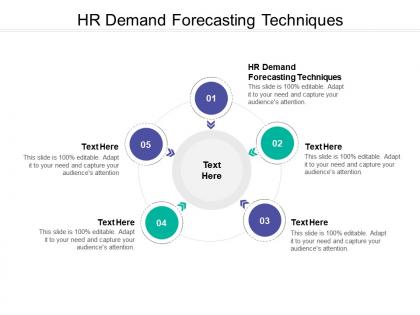
Hr demand forecasting techniques ppt powerpoint presentation file pictures cpb




Try Before you Buy Download Free Sample Product
 Impress Your
 Audience
 100%
100% Editable
 Save Hours
 of Time


Our HR Demand Forecasting Techniques Ppt Powerpoint Presentation File Pictures Cpb are topically designed to provide an attractive backdrop to any subject. Use them to look like a presentation pro.
People who downloaded this PowerPoint presentation also viewed the following :
Hr demand forecasting techniques ppt powerpoint presentation file pictures cpb with all 2 slides:
Use our HR Demand Forecasting Techniques Ppt Powerpoint Presentation File Pictures Cpb to effectively help you save your valuable time. They are readymade to fit into any presentation structure.
FAQs for Hr demand forecasting techniques ppt powerpoint presentation
The most effective quantitative methods for HR demand forecasting include regression analysis, time series forecasting, ratio analysis, econometric models, and simulation techniques. These approaches enable organizations to predict workforce needs by analyzing historical data, business trends, and operational metrics, with many companies in manufacturing, healthcare, and financial services finding that strategic workforce planning reduces hiring costs while ensuring optimal staffing levels.
Predictive analytics enhances HR demand forecasting accuracy by analyzing historical workforce data, identifying seasonal patterns, and incorporating business growth indicators to predict future staffing needs. Through machine learning algorithms, organizations streamline recruitment planning, reduce hiring costs, and minimize talent shortages, with companies in retail and healthcare finding that predictive models ultimately deliver strategic workforce optimization.
Historical data serves as the foundation for HR forecasting by revealing staffing patterns, turnover rates, seasonal fluctuations, and growth trajectories that inform future workforce planning decisions. Through analyzing past hiring cycles, performance metrics, and departmental expansions, organizations can predict talent gaps, optimize recruitment timelines, and strategically allocate resources, ultimately delivering more accurate workforce planning and competitive advantage.
Scenario planning integrates into HR demand forecasting by developing multiple workforce models based on different business conditions, market changes, and growth trajectories. Organizations create best-case, worst-case, and most-likely scenarios to anticipate staffing needs, with many companies finding that this approach enables more agile resource allocation and strategic hiring decisions.
Key indicators for HR demand forecasting include business growth projections, seasonal fluctuations, employee turnover rates, retirement schedules, and skills gap analyses. These metrics enable organizations to anticipate workforce needs by analyzing historical patterns, market trends, and operational requirements, ultimately delivering strategic talent acquisition and resource allocation that supports competitive advantage.
External factors significantly influence HR demand forecasting by creating market volatility, shifting consumer behaviors, and altering industry growth patterns that directly impact workforce needs. Economic downturns may reduce hiring in sectors like retail and hospitality, while growth periods increase demand across manufacturing and financial services, with many organizations finding that integrating economic indicators into forecasting models delivers more accurate predictions and strategic workforce planning.
Small businesses benefit from moving averages, trend analysis, and ratio-based methods due to their simplicity and lower data requirements, while large enterprises leverage advanced techniques like predictive analytics, machine learning algorithms, and regression modeling. Through scalable HR management systems, smaller organizations can streamline workforce planning with straightforward forecasting methods, whereas larger companies utilize sophisticated analytics to handle complex workforce dynamics across multiple departments, ultimately delivering more precise staffing decisions and competitive advantage.
HR technology and software solutions enhance forecasting efficiency by automating data collection, utilizing predictive analytics, and integrating multiple data sources into unified dashboards. Through machine learning algorithms and real-time analytics, organizations streamline workforce planning, reduce manual errors, and accelerate decision-making processes, ultimately delivering more accurate predictions and strategic workforce alignment.
Qualitative methods that complement quantitative HR forecasting include manager interviews, employee surveys, focus groups, expert panels, and scenario planning workshops. These approaches capture organizational knowledge, cultural factors, and strategic insights that numbers alone miss, with many companies finding that combining both methods delivers more accurate workforce predictions and enables better strategic talent decisions.
Workforce planning models can be adapted through predictive analytics, scenario planning, flexible skill frameworks, real-time labor market data integration, and agile forecasting methodologies. These approaches enable organizations to anticipate demographic shifts, technological disruptions, and evolving skill requirements, while many companies find that incorporating machine learning algorithms and continuous workforce intelligence ultimately delivers more resilient talent strategies and competitive hiring advantages.
Organizations face challenges including data quality issues, rapidly changing business conditions, limited forecasting expertise, integration difficulties across departments, and resistance to predictive approaches. Many companies struggle with outdated systems, inconsistent metrics, and balancing quantitative models with qualitative insights, ultimately requiring strategic investment in technology, training, and cross-functional collaboration to deliver accurate workforce planning.
Employee turnover rates significantly impact HR demand forecasting by creating recruitment urgency, budget fluctuations, and workforce planning challenges that require proactive strategies. High turnover in sectors like retail and hospitality demands more aggressive forecasting models, while organizations with stable retention can focus on growth-based projections, ultimately enabling better resource allocation and competitive talent acquisition.
Cross-departmental collaboration in demand forecasting ensures comprehensive data integration, aligns workforce planning with business objectives, and reduces forecasting blind spots through diverse perspectives. Through strategic partnerships between HR, finance, operations, and sales teams, organizations enhance prediction accuracy, streamline resource allocation, and anticipate skill gaps more effectively, ultimately delivering competitive advantage in talent management.
Machine learning and AI enhance HR demand forecasting by analyzing historical hiring patterns, seasonal trends, business growth metrics, and external market indicators to predict future staffing needs. These technologies enable organizations to automate predictive modeling, identify skill gaps before they occur, and optimize recruitment timelines, with many companies finding that AI-driven forecasting reduces hiring costs while improving workforce planning accuracy.
Key metrics for evaluating HR demand forecast effectiveness include forecast accuracy percentage, mean absolute percentage error, variance analysis between predicted and actual hiring needs, time-to-fill deviations, and budget variance measurements. These metrics enable organizations to refine their workforce planning models, optimize resource allocation, and enhance strategic decision-making, with many companies finding that regular evaluation improves forecasting precision by 25-40%.
No Reviews