


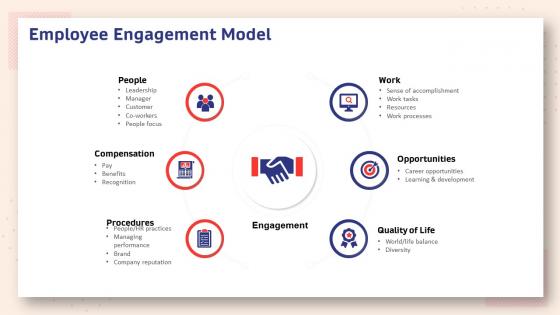
Human resource planning structure employee engagement model




Try Before you Buy Download Free Sample Product
 Impress Your
 Audience
 100%
100% Editable
 Save Hours
 of Time


Our Human Resource Planning Structure Employee Engagement Model are topically designed to provide an attractive backdrop to any subject. Use them to look like a presentation pro.
People who downloaded this PowerPoint presentation also viewed the following :
Human resource planning structure employee engagement model with all 9 slides:
Use our Human Resource Planning Structure Employee Engagement Model to effectively help you save your valuable time. They are readymade to fit into any presentation structure.








FAQs for Human resource planning structure
Effective human resource planning includes workforce analysis, demand forecasting, supply assessment, gap identification, and strategic alignment with business objectives. These components work together by analyzing current talent capabilities, predicting future staffing needs, and developing recruitment strategies, ultimately delivering optimized resource allocation and competitive advantage in talent management.
Organizations forecast future HR needs accurately by analyzing historical staffing data, evaluating business growth projections, assessing skill gap requirements, and incorporating market expansion plans. Through workforce analytics and strategic planning tools, companies in manufacturing, healthcare, and financial services streamline talent acquisition timelines, enhance resource allocation, and minimize recruitment costs, ultimately delivering competitive advantage in an increasingly talent-focused market.
Workforce analytics enhances human resource planning by providing data-driven insights into employee performance, turnover patterns, skill gaps, and future talent needs. Through predictive modeling and performance metrics, organizations can optimize recruitment strategies, improve retention rates, and align workforce capabilities with business objectives, ultimately delivering more strategic talent management and competitive advantage.
Technology enhances human resource planning through predictive analytics for workforce forecasting, AI-powered recruitment platforms, automated performance tracking systems, and cloud-based HRIS solutions for seamless data integration. These digital tools streamline talent acquisition, optimize resource allocation, and enable real-time workforce insights, with organizations across healthcare, manufacturing, and financial services finding significantly improved hiring efficiency and strategic workforce management capabilities.
Common challenges in human resource planning include talent shortages, changing skill requirements, budget constraints, workforce aging, and uncertain business forecasts. These challenges impact organizations by creating gaps in critical positions, misaligned compensation strategies, and delayed hiring processes, with many companies finding that proactive succession planning and flexible workforce models help navigate these complexities while maintaining competitive advantage.
Demographic changes significantly reshape human resource planning by requiring strategic adaptations in recruitment, retention, compensation structures, and workplace policies. Organizations increasingly develop multi-generational management approaches, flexible work arrangements, and targeted benefits packages, with many companies finding that diverse age groups, cultural backgrounds, and skill sets ultimately deliver enhanced innovation, broader market understanding, and competitive advantage.
HR managers can create talent pipelines through strategic university partnerships, robust internship programs, employee referral systems, succession planning initiatives, and continuous skills development programs. These approaches enable organizations to identify, nurture, and retain high-potential candidates across various departments, while building internal expertise and reducing external recruitment costs, ultimately delivering sustained competitive advantage in increasingly competitive talent markets.
Aligning human resource planning with organizational goals is critical for strategic success, ensuring workforce capabilities directly support business objectives through targeted recruitment, skill development, and resource allocation. This alignment enables companies to anticipate talent needs, reduce operational gaps, and maintain competitive advantage, with organizations like tech firms and healthcare systems finding that synchronized HR strategies deliver improved performance and sustainable growth.
Methods for assessing current employee skills include performance reviews, competency assessments, skills inventories, 360-degree feedback, and technical evaluations. These approaches enable organizations to identify skill gaps, optimize workforce allocation, and develop targeted training programs, with many companies finding that regular assessments enhance productivity and strategic planning capabilities.
Succession planning integrates into human resource planning through comprehensive talent mapping, skills gap analysis, leadership development programs, and strategic workforce forecasting that align with organizational goals. This strategic combination enables companies to identify high-potential employees early, develop targeted training pathways, and ensure seamless leadership transitions, ultimately delivering operational continuity and competitive advantage in increasingly dynamic business environments.
Remote work significantly impacts human resource planning by requiring new approaches to talent acquisition, performance management, digital infrastructure planning, and workforce distribution strategies. Organizations must now plan for virtual onboarding, remote collaboration tools, flexible scheduling models, and geographically dispersed teams, with many companies finding that strategic remote work policies enhance talent pool access while reducing overhead costs and improving employee retention.
Organizations ensure diversity and inclusion in workforce planning through targeted recruitment strategies, inclusive hiring practices, bias-free assessment tools, diverse interview panels, and equitable promotion pathways. These approaches streamline talent acquisition by expanding candidate pools, enhancing innovation through varied perspectives, and strengthening company culture, with many companies finding that diverse teams deliver superior performance and competitive advantage.
Legal considerations in human resource planning include employment law compliance, equal opportunity requirements, wage and hour regulations, workplace safety standards, and data privacy protections. These frameworks guide organizations by ensuring fair hiring practices, preventing discrimination, and maintaining regulatory compliance, with many companies finding that proactive legal alignment streamlines operations while minimizing litigation risks and enhancing workplace trust.
Employee engagement significantly influences human resource planning by driving decisions around retention strategies, skill development programs, compensation structures, and workforce expansion timelines. Organizations with higher engagement levels typically experience lower turnover rates, enabling more predictable staffing forecasts and resource allocation, while companies facing engagement challenges must factor in increased recruitment costs and knowledge transfer requirements when developing their strategic workforce plans.
Organizations can adopt regular workforce analytics reviews, skills gap assessments, succession planning programs, cross-functional training initiatives, and flexible resource allocation strategies for continuous HR planning. These practices enable companies to anticipate talent needs, develop internal capabilities, and adapt to market changes, with many businesses finding that strategic workforce development ultimately delivers competitive advantage and operational resilience.
-
Great quality product.
-
Unique research projects to present in meeting.
-
Design layout is very impressive.
-
Colors used are bright and distinctive.