


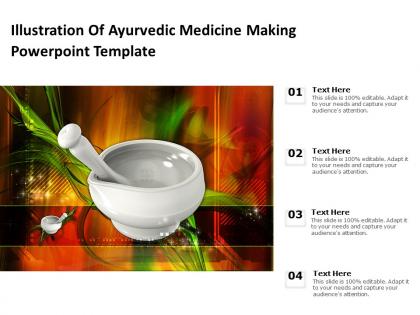
Illustration of ayurvedic medicine making powerpoint template




Try Before you Buy Download Free Sample Product
 Impress Your
 Audience
 100%
100% Editable
 Save Hours
 of Time


The following Powerpoint Image slide titled Illustration Of Ayurvedic Medicine Making Powerpoint Template is an editable Powerpoint template available in Standard as well as Widescreen size. This slide has an image pasted strategically on a slide with sections for text that you can fill in. You can move and edit any element and paste your own image in place of this provided image if required.
People who downloaded this PowerPoint presentation also viewed the following :
Illustration of ayurvedic medicine making powerpoint template with all 2 slides:
Use our Illustration Of Ayurvedic Medicine Making Powerpoint Template to effectively help you save your valuable time. They are readymade to fit into any presentation structure.

FAQs for Illustration of ayurvedic medicine
Ayurvedic medicine's fundamental principles include individualized treatment based on unique body constitutions (doshas), prevention through lifestyle balance, holistic mind-body-spirit integration, natural remedies from herbs and minerals, and emphasis on root cause healing rather than symptom management. This ancient system enables personalized wellness approaches, seasonal health adjustments, and comprehensive lifestyle medicine, with many healthcare practitioners finding that Ayurvedic principles complement conventional treatments by addressing underlying imbalances and promoting long-term vitality.
Ayurveda categorizes body types through three primary doshas—Vata (air and space), Pitta (fire and water), and Kapha (earth and water)—which represent different physiological and psychological characteristics within individuals. These doshas function as foundational frameworks for personalized health management, enabling practitioners to develop targeted treatment plans, dietary recommendations, and lifestyle modifications that address individual constitutional needs, ultimately delivering more precise healthcare approaches and enhanced wellness outcomes.
Common Ayurvedic herbs include turmeric for inflammation, ashwagandha for stress management, neem for skin conditions, triphala for digestive health, and brahmi for cognitive enhancement. These natural remedies streamline wellness approaches by targeting root causes, reducing dependency on synthetic medications, and enhancing overall vitality, with many healthcare practitioners increasingly integrating these time-tested botanicals into comprehensive treatment protocols.
Ayurvedic dietary alignment involves eating according to your dosha constitution, incorporating six tastes in each meal, choosing seasonal and locally-sourced foods, and following proper meal timing and mindful eating practices. This approach enhances digestion, balances energy levels, and supports natural detoxification, with many wellness practitioners finding that personalized nutrition ultimately delivers improved immunity and sustained vitality.
Mindfulness and meditation serve as foundational practices in Ayurvedic therapies, helping balance the mind-body connection, reduce stress, and enhance the body's natural healing capacity through increased self-awareness and emotional regulation. These practices enable practitioners to achieve deeper therapeutic outcomes by calming the nervous system, improving digestion, and promoting mental clarity, with many wellness centers and healthcare institutions increasingly integrating these approaches to deliver more holistic patient experiences.
Ayurveda approaches chronic illnesses by addressing root causes through personalized constitutional analysis, lifestyle modifications, and herbal treatments, while Western medicine typically focuses on symptom management and standardized protocols. This holistic methodology emphasizes prevention, detoxification, and mind-body balance, with many practitioners finding that combining both approaches delivers comprehensive patient care and improved long-term outcomes.
Lifestyle forms the foundation of Ayurvedic healing, encompassing daily routines like rising before dawn, oil pulling, meditation, seasonal eating, and consistent sleep schedules tailored to individual constitution types. These practices work by aligning natural body rhythms with environmental cycles, promoting digestive health, and maintaining energetic balance, with many wellness centers and healthcare practitioners finding that structured routines significantly enhance treatment outcomes and long-term vitality.
Clinical studies demonstrate Ayurvedic treatments like ashwagandha, brahmi, and meditation-based therapies reduce cortisol levels, improve mood stability, and enhance cognitive function in anxiety and depression management. Research from institutions studying traditional medicine integration shows these approaches, combined with conventional treatments, deliver improved patient outcomes and reduced pharmaceutical dependency, with many healthcare systems increasingly adopting integrative mental health protocols.
Seasonal changes significantly influence Ayurvedic practices by requiring adjustments to diet, lifestyle, and treatments to maintain dosha balance throughout the year. During summer, practitioners recommend cooling foods and pitta-pacifying herbs, while winter emphasizes warming spices and vata-stabilizing routines, with many wellness centers and healthcare institutions finding that seasonal protocols enhance patient outcomes and preventive care effectiveness.
Standard Ayurvedic diagnostic methods include pulse diagnosis (Nadi Pariksha), tongue examination, eye assessment, physical observation, and detailed questioning about lifestyle, digestion, and emotional patterns. These comprehensive evaluation techniques enable practitioners to identify constitutional imbalances and root causes of health issues, with many wellness centers and integrative clinics finding that this holistic approach delivers more personalized treatment plans and sustainable health outcomes.
Newcomers can start incorporating Ayurvedic principles by identifying their dosha through online assessments, establishing consistent daily routines aligned with natural rhythms, and making gradual dietary adjustments based on their constitution. These foundational practices enhance well-being by promoting balanced digestion, improved sleep patterns, and stress reduction, with many individuals finding that simple changes like mindful eating and seasonal food choices deliver noticeable energy improvements.
Common misconceptions about Ayurvedic medicine include beliefs that it's unscientific, only uses herbs, works slowly, or lacks standardization and safety protocols. While traditional knowledge forms its foundation, modern Ayurvedic practices increasingly integrate scientific research, diverse treatment modalities, and standardized protocols, with many healthcare institutions finding that evidence-based Ayurvedic approaches deliver measurable therapeutic outcomes.
Ayurvedic medicine integrates with modern healthcare through complementary treatment protocols, evidence-based research validation, and collaborative care models that combine traditional diagnostics with contemporary medical assessments. Many hospitals and wellness centers increasingly adopt integrative approaches, with practitioners finding that combining Ayurvedic therapies with conventional treatments enhances patient outcomes, reduces medication dependency, and delivers more holistic healthcare experiences.
Panchakarma is a comprehensive five-step Ayurvedic detoxification therapy that systematically eliminates toxins through specialized treatments including therapeutic vomiting, purgation, medicated enemas, nasal cleansing, and bloodletting procedures. These integrated approaches work by targeting different organ systems, restoring digestive balance, and enhancing natural metabolic processes, with many wellness centers and holistic healthcare practitioners finding that clients experience improved energy levels, better immunity, and enhanced overall vitality.
Ayurvedic therapies are personalized through comprehensive dosha assessments, detailed health consultations, pulse diagnosis, physical examinations, and lifestyle evaluations that determine individual constitutional types. Practitioners create customized treatment plans combining specific herbal formulations, dietary recommendations, and therapeutic procedures, with many wellness centers and integrative medicine clinics finding that this individualized approach enhances treatment effectiveness and patient satisfaction.
-
Enough space for editing and adding your own content.
-
Editable templates with innovative design and color combination.
-
The content is very helpful from business point of view.
-
Unique research projects to present in meeting.