


Implementing Digital Marketing For Customer Acquisition Powerpoint Presentation Slides




Try Before you Buy Download Free Sample Product
 Impress Your
 Audience
 100%
100% Editable
 Save Hours
 of Time


Application user acquisition is a strategy that helps companies to increase app discoverability and downloads. The purpose of a user acquisition strategy is to gain new users and maximize profits. This PPT Implementing Digital Marketing for Customer Acquisition provides an overview of customer acquisition along with objectives, best practices, emerging trends, journey models, and potential challenges the company faced during application marketing. It further covers multiple strategies such as SEO, social media organic marketing, content marketing, referral programs, paid advertising, etc. that increases mobile app install volume and revenue. Furthermore, it exhibits steps to develop customer acquisition strategies and advertisement approaches to boost awareness and goodwill. Additionally, it showcases the overall cost and budget to implement the above strategies. Moreover, this deck represents the impact to analyze the effectiveness of approaches and return on investment. Lastly, the PPT deck includes dashboards to track and measure business application performance. Download our digital marketing ppt deck now.
People who downloaded this PowerPoint presentation also viewed the following :
Content of this Powerpoint Presentation
Slide 1: This slide displays the title Implementing Digital Marketing for Customer Acquisition.
Slide 2: This slide displays the title AGENDA.
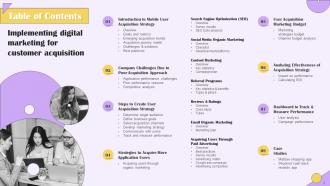
Slide 3: This slide exhibit table of content.
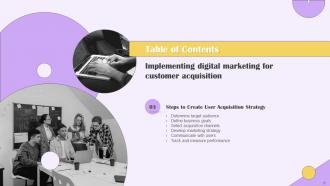
Slide 4: This slide showcase table of content that is to be discuss further.
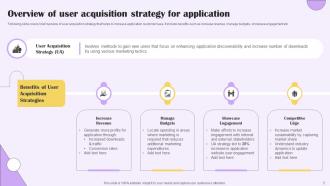
Slide 5: The Following slide covers brief overview of user acquisition strategy that helps to increase application's customer base.
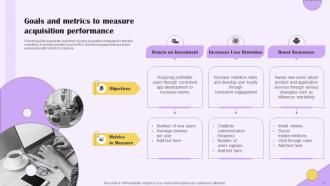
Slide 6: The following slide represents objectives of using acquisition strategies for effective marketing.
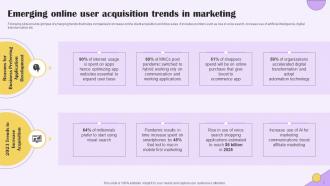
Slide 7: The following slide provide glimpse of emerging trends that helps companies to increase online client acquisition and drive sales.
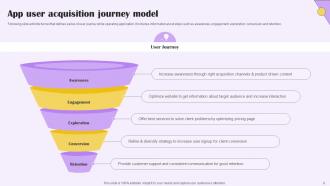
Slide 8: Following slide exhibits funnel that defines series of user journey while operating application.
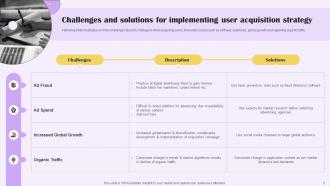
Slide 9: The following slide illustrates common challenges faced by managers when acquiring users.
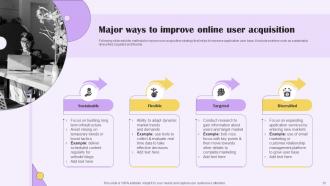
Slide 10: The following slide exhibits methods to improve user acquisition strategy that helps to increase application user base.
Slide 11: This slide showcase table of content that is to be discuss further.
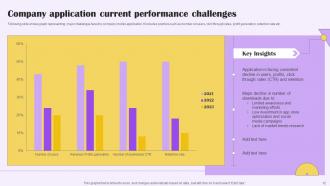
Slide 12: Following slide shows graph representing ,major challenges faced by company mobile application.
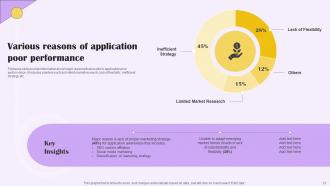
Slide 13: The following slide provide information about major reasons that results in application poor performance.
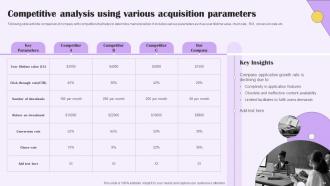
Slide 14: The following slide exhibits comparison of company with competitors that helps to determine market position.
Slide 15: This slide showcase table of content that is to be discuss further.
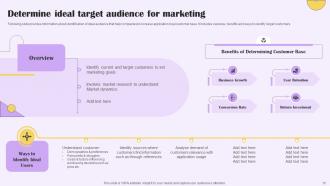
Slide 16: The following slide provides information about identification of ideal audience that help companies to increase application loyal customer base.
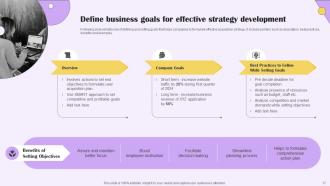
Slide 17: Following slide exhibits role of defining and setting goals that helps companies to formulate effective acquisition strategy.
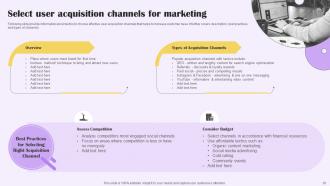
Slide 18: The following slide provide information about tactics to choose effective user acquisition channels that helps to increase customer base.
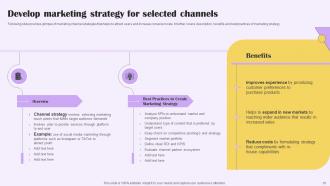
Slide 19: The following slide provides glimpse of marketing channel strategies that helps to attract users and increase conversion rate.
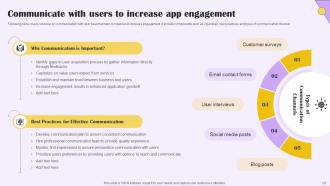
Slide 20: The following slide covers overview of communication with user base that help companies to increase engagement.
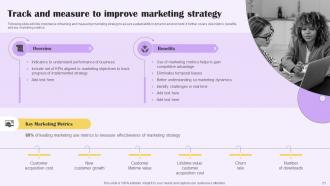
Slide 21: Following slide exhibits importance of tracking and measuring marketing strategy to assure sustainability in dynamic environment.
Slide 22: This slide showcase table of content that is to be discuss further.
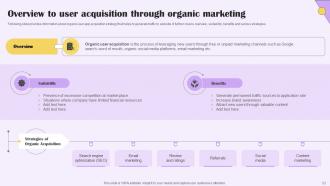
Slide 23: The following slide provides information about organic user app acquisition strategy that helps to generate traffic to website.
Slide 24: This slide showcase table of content that is to be discuss further.
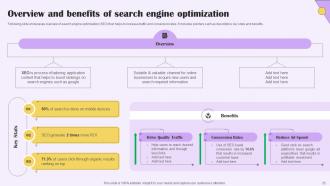
Slide 25: Following slide showcases overview of search engine optimization (SEO) that helps to increase traffic and conversion rates.
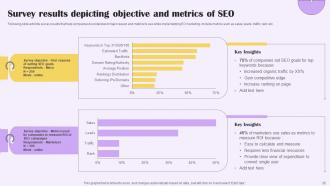
Slide 26: Following slide exhibits survey results that help companies to understand major reason and metrics to use while implementing EO marketing.
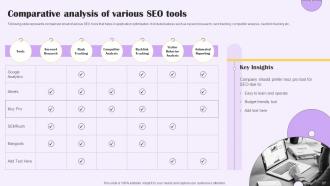
Slide 27: Following slide represents comparison sheet of various SEO tools that helps in application optimization.
Slide 28: This slide showcase table of content that is to be discuss further.
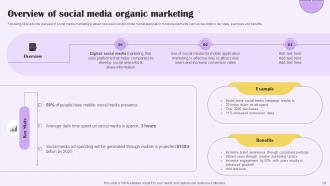
Slide 29: The following slide exhibits overview of social media marketing to attract new users and promote mobile application.
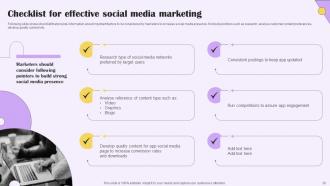
Slide 30: Following slide shows checklist that provide information about important factors to be considered by marketers to increase social media presence.
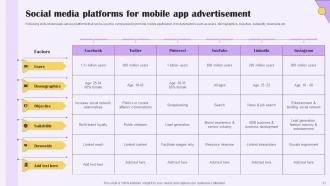
Slide 31: The following slide showcases various platforms that can be used by companies to promote mobile application.
Slide 32: This slide showcase table of content that is to be discuss further.
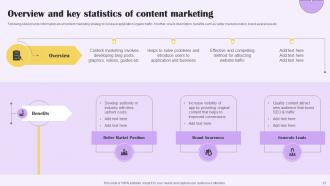
Slide 33: Following slide provide information about content marketing strategy to increase application organic traffic.
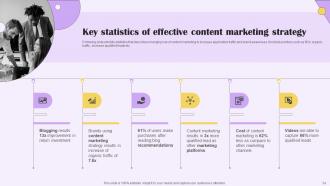
Slide 34: The following slide exhibits statistics that describes emerging role of content marketing to increase application traffic and brand awareness.
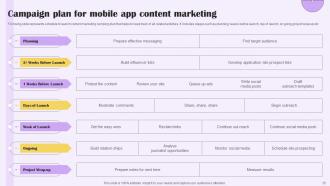
Slide 35: The following slide represents schedule to launch content marketing camping plan that helps to keep track of all related activities.
Slide 36: This slide showcase table of content that is to be discuss further.
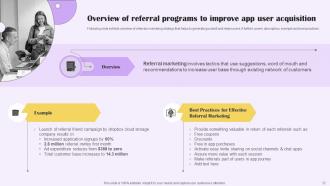
Slide 37: Following slide exhibits overview of referrals marketing strategy that helps to generate goodwill and retain users.
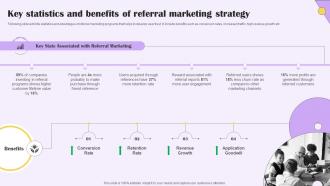
Slide 38: The following slide exhibits statistics and advantages of referral marketing programs that helps to develop user trust.
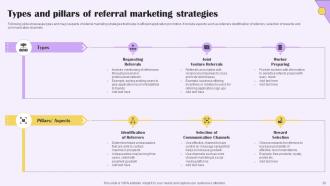
Slide 39: The following slide showcases types and major aspects of referral marketing strategies that helps in efficient application promotion.
Slide 40: This slide showcase table of content that is to be discuss further.
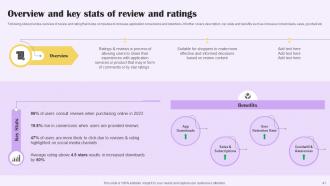
Slide 41: The following slide provides overview of review and rating that helps companies to increase application conversions and retentions.
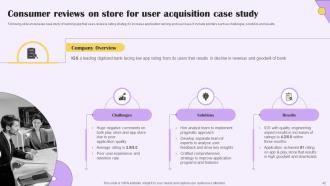
Slide 42: Following slide showcases case study of banking app that uses review & rating strategy to increase application ranking and user base.
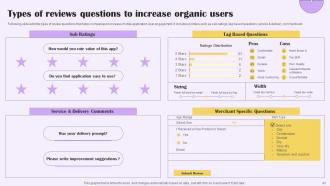
Slide 43: Following slide exhibits types of review questions that helps companies to increase mobile application user engagement.
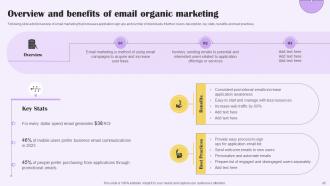
Slide 45: Following slide exhibit overview of email marketing that increases application sign ups and number of downloads.
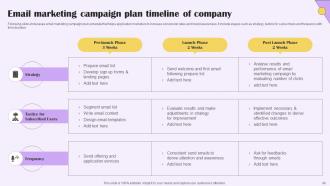
Slide 46: Following slide showcases email marketing campaign plan schedule that helps application marketers to increase conversion rates and brand awareness.
Slide 47: This slide showcase table of content that is to be discuss further.
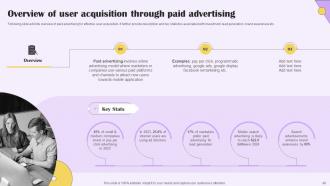
Slide 48: Following slide exhibits overview of paid advertising for effective user acquisition.
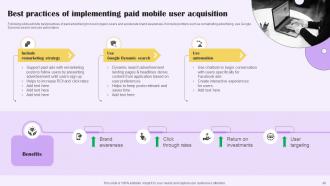
Slide 49: Following slide exhibits best practices of paid advertising to boost organic users and accelerate brand awareness.
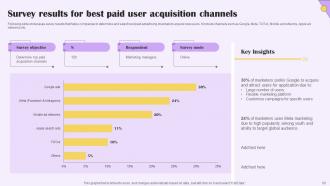
Slide 50: Following slide showcases survey results that helps companies to determine and select best paid advertising channels to acquire new users.
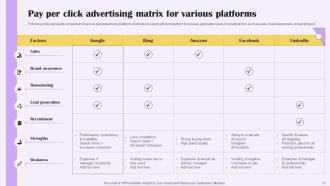
Slide 51: The following slide represents comparison of various paid advertising platforms that helps to select optimum platform to increase application users.
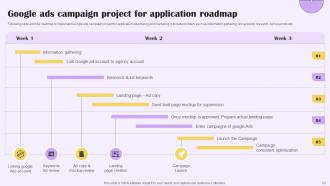
Slide 52: Following slide exhibits roadmap to implement Google ads campaign project for application advertising and marketing.
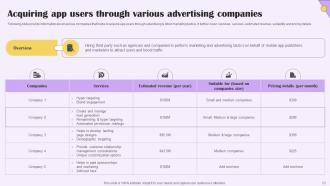
Slide 53: The following slide provide information about various companies that helps to acquire app users through advertising & other marketing tactics.
Slide 54: This slide showcase table of content that is to be discuss further.
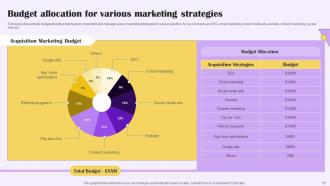
Slide 55: Following slide exhibits budget allocation that helps to implement and manage various marketing strategies for user acquisition.
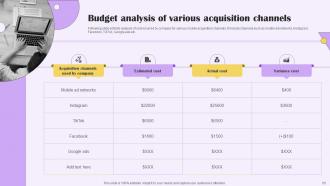
Slide 56: Following slide exhibits analysis of cost incurred by company for various mobile acquisition channels.
Slide 57: This slide showcase table of content that is to be discuss further.
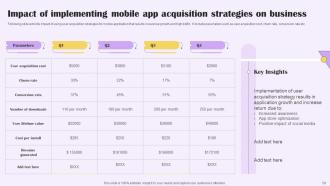
Slide 58: Following slide exhibits impact of using user acquisition strategies for mobile application that results in revenue growth and high traffic.
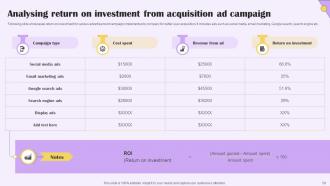
Slide 59: The following slide showcases return on investment for various advertisement campaign implemented by company for better user acquisition.
Slide 60: This slide showcase table of content that is to be discuss further.
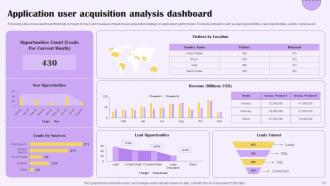
Slide 61: Following slide shows dashboard that help company to track and measure impact of user acquisition strategy on application performance.
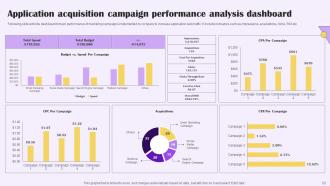
Slide 62: The following slide exhibits dashboard to track performance of marketing campaigns implemented by company to increase application web traffic.
Slide 63: This slide showcase table of content that is to be discuss further.
Slide 64: Following slide exhibits case study of apparel app that implements strategies to increase conversion rates.
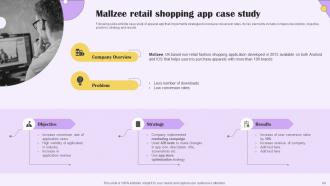
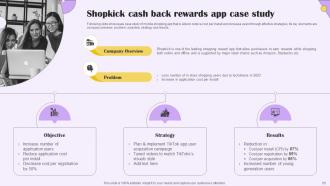
Slide 65: Following slide showcases case study of mobile shopping app that is able to reduce cost per install and increase users through effective strategies.
Slide 66: This is the icons slide.
Slide 67: This slide presents title for additional slides.
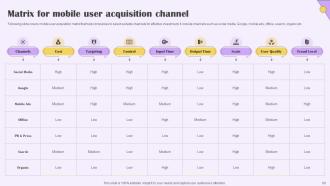
Slide 68: The following slide covers mobile user acquisition matrix that help companies to select suitable channels for effective investment.
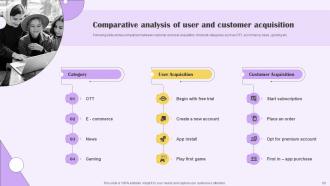
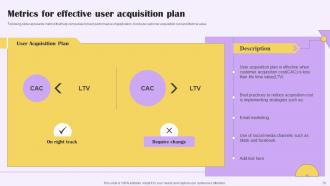
Slide 69: The following slide shows comparison between customer and user acquisition. It include categories such as OTT, ecommerce, news , gaming etc.
Slide 70: The following slide represents metrics that help companies to track performance of application.
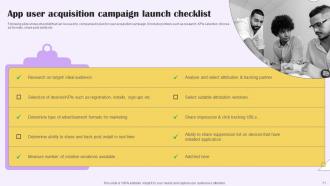
Slide 71: Following slide shows checklist that can be used by companies to plan for user acquisition campaign.
Slide 72: This slide shows about your company, target audience and its client's values.
Slide 73: This slide presents your company's vision, mission and goals.
Slide 74: This slide exhibits ideas generated.
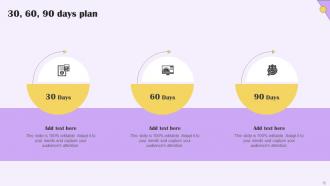
Slide 75: This slide depicts 30-60-90 days plan for projects.
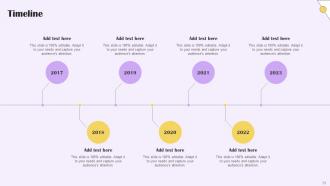
Slide 76: This slide shows roadmap of company.
Slide 77: This slide shows puzzle for displaying elements of company.
Slide 78: This slide depicts posts for past experiences of clients.
Slide 79: This slide showcases financials of company.
Slide 80: This is thank you slide & contains contact details of company like office address, phone no., etc.
Implementing Digital Marketing For Customer Acquisition Powerpoint Presentation Slides with all 86 slides:
Use our Implementing Digital Marketing For Customer Acquisition Powerpoint Presentation Slides to effectively help you save your valuable time. They are readymade to fit into any presentation structure.












FAQs for Implementing Digital Marketing For Customer Acquisition
Okay so first figure out who you're actually trying to reach and what you want them to do. Then focus on content strategy, SEO, social media, and email marketing - plus you absolutely need analytics tracking. Seriously, I can't tell you how many people I know who skip measuring results and then complain nothing works. Make sure your branding looks consistent everywhere, and honestly? Your mobile experience better be solid because that's where people are. Oh, and map out your customer journey so you know how people find you. Without clear goals upfront, you're basically just burning money on random stuff.
Honestly, just talk TO people instead of AT them, you know? Comment back fast, show some behind-the-scenes stuff that's actually interesting. Stories are huge right now - and getting customers to post about your stuff works way better than fancy ads. The whole algorithm thing seems to reward real conversations anyway, which is kinda refreshing. Oh, and don't try to be everywhere at once. Pick maybe 2 platforms and actually nail those instead of half-assing five different ones. Being consistent trumps being perfect every single time.
So SEO is what helps people actually find your site when they're googling stuff about your business. Think of it like - you could have the most gorgeous website ever, but if it's buried on page 50 of search results, who cares? Google needs the right signals to understand what you're about and show you to the right people. You'll want to figure out what keywords your customers actually type in (not what you think they search for - trust me, it's different). Then optimize your content and site structure around those terms. Better rankings = more free traffic coming your way.
Honestly, PPC can be a game-changer for ROI if you don't mess it up. But yeah, it'll burn through cash super fast if you're not paying attention. What I love about it is you get results right away - like, you'll know within days if it's working, not months like with other stuff. The targeting is crazy precise too. Just track your conversions properly (sounds obvious but so many people skip this). Start with a small budget and test everything. Once you find what converts, then you can throw more money at it. Oh and the data you get helps with your other marketing too, which is nice.
Oh man, AI personalization is everywhere right now - plus interactive stuff like polls that actually get people engaged. Short videos are still dominating too, obviously. Voice search is getting pretty important since we're all basically married to our phones at this point lol. First-party data collection is the real winner though, especially with cookies going away. Brands are ditching the super polished look for more genuine storytelling, which honestly feels way less annoying. My advice? Don't try to jump on everything at once - pick maybe two things that make sense for your people and test them. Trends move so fast you'll burn out chasing them all.
Dude, you've actually got advantages the big companies don't. Be super responsive to comments and DMs - like, actually fast. Show your face, your team, the real humans running things. Corporate giants can't do that authentic stuff well. Honestly? Small budgets make you more creative anyway. Pick ONE platform where your people actually are and crush it there first. Partner with local influencers or micro ones - way cheaper. User-generated content is gold because it's free and feels real. Oh, and target super specific niches instead of trying to reach literally everyone. That's their game, not yours.
Okay so you want to mix awareness, engagement, and conversion stuff to see the whole picture. Website traffic and click-through rates are good starting points. Social media engagement too. Then track lead gen - form fills, email signups, that kind of thing. Conversion rate is honestly your MVP metric though, shows if people actually do what you're asking. Customer acquisition cost and lifetime value matter for ROI but I always forget to check those regularly. Pick maybe 5-7 metrics max and review weekly. Any more than that and you'll just get overwhelmed by all the numbers.
Dude, reviews are everything now. People literally don't trust brands anymore - they want to hear from actual customers who bought the stuff. Real photos, honest feedback, all that. It's crazy how much more a genuine review moves the needle than some fancy ad copy. Like, I've bought so many random things just because someone posted a good review with photos. Your job is making it super easy for happy customers to leave feedback and share pics. Then plaster that real content everywhere you can. Trust me, it works way better than whatever your marketing team writes.
Honestly, three things will make the biggest difference: segmenting your list, personalizing content, and nailing those subject lines. Don't just segment by demographics - look at purchase history and how people actually behave on your site. For personalization, skip the basic "Hey [Name]" stuff and use their browsing data instead. Subject lines are everything though, so A/B test like crazy until you find what works. Oh and most people read emails on their phones now, so make sure everything looks good mobile. Always throw in a clear call-to-action too. Check your current open rates first - that'll show you where you're bleeding subscribers.
Honestly, start with email segmentation - it's super easy and you'll see results right away. Break down your audience by what they actually do, not just age/location stuff. Cookie data shows you the real story of how people browse your site. Dynamic emails that change based on what someone likes work way better than generic blasts. Oh, and those targeted social ads for different groups? Total game changer. I'd also set up your website to show relevant products automatically - sounds fancy but most platforms do this now. Marketing automation is clutch for sending messages when people take specific actions. Trust me, personalization isn't as complicated as it sounds once you get going.
Okay so main things: don't be sketchy with people's data and actually tell them what you're doing with it. Make ads look like ads - none of that fake article BS that fools people. Get real consent too, not buried in some 50-page terms thing nobody reads. Also maybe don't target like, gambling ads at college kids or whatever. Keep your claims honest because getting sued sucks. I swear some companies have zero shame about this stuff. But yeah, basic rule is just don't be the company everyone hates.
Honestly, data analytics is a total lifesaver for marketing. No more guessing what works! You'll actually see which channels bring in conversions and what content your audience loves. Plus you can catch budget drains before they get crazy. The real-time insights are clutch - customer behavior, campaign performance, ROI across everything. Way better than just throwing stuff out there and crossing your fingers. Oh, and set up tracking for your main metrics first. I check mine weekly to spot any weird trends early. Trust me, it beats the old spray-and-pray method by miles.
Honestly, influencer marketing is where it's at right now. People trust recommendations from creators they follow way more than random ads - and for good reason, those relationships feel real. You'll get access to super specific communities that are impossible to reach otherwise. Plus the content doesn't scream "advertisement" like traditional stuff does. Engagement rates? Way higher than regular posts. Oh, and here's the thing - start with micro-influencers first. They're cheaper and often have better engagement than those massive accounts anyway. People are getting pretty good at spotting fake endorsements these days, so authenticity matters more than follower count.
Honestly, mobile optimization comes down to three things: speed, design, and how easy it is to actually use. Your site needs to load in under 3 seconds or people just leave - I've done this myself a million times. Make sure everything scales right on different screen sizes, but here's the thing: actually test it on your phone because those desktop previews lie. Keep your navigation super simple with bigger buttons. Nobody wants to deal with tiny links when they're scrolling with their thumb. Cut down on pop-ups, make forms easier to fill out, and compress your images. Oh, and run Google's mobile test on your site - it'll tell you exactly what's broken.
Honestly, start with email stuff like Mailchimp or ConvertKit - they'll handle your drip campaigns without you babysitting everything. For social media, Hootsuite saves me like 3 hours a week just scheduling posts ahead of time. Google Analytics is a must (boring but necessary). HubSpot's amazing if you can swing the cost, otherwise stick with free versions first. Oh and Canva's clutch for quick graphics when you can't afford a designer. I'd focus on automation, analytics, and content tools. Don't go crazy buying everything at once though - test the free stuff first to see what actually works for your setup.
-
I was confident and well prepared for my presentation for the first time ever. With SlideTeam’s templates, I could deliver one of my best presentations. Will be coming back for more!
-
Great quality slides in rapid time.