


Influencer Media Kit Branding MD





Try Before you Buy Download Free Sample Product
 Impress Your
 Audience
 100%
100% Editable
 Save Hours
 of Time


Our Influencer Media Kit Branding MD are topically designed to provide an attractive backdrop to any subject. Use them to look like a presentation pro.
People who downloaded this PowerPoint presentation also viewed the following :
Content of this Powerpoint Presentation
Slide 1: This slide introduces Influencer Media Kit. State Your Company Name and begin.
Slide 2: This slide states Agenda of the presentation.
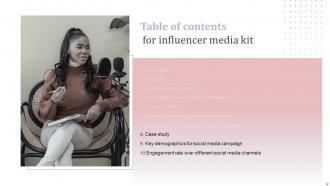
Slide 3: This slide presents Table of Content for the presentation.
Slide 4: This slide highlights title for topics that are to be covered next in the template.
Slide 5: This slide shows Sample profile for personal branding.
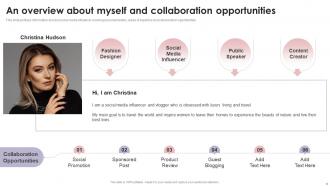
Slide 6: This slide displays An overview about myself and collaboration opportunities.
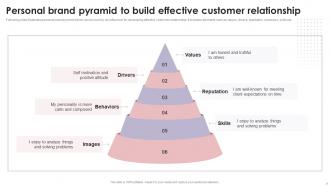
Slide 7: This slide represents Personal brand pyramid to build effective customer relationship.
Slide 8: This slide showcases Work experience and key collaborations.
Slide 9: This slide shows Services offered with pricing plans.
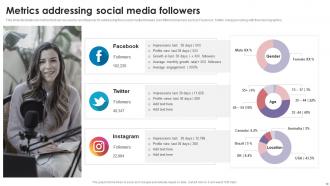
Slide 10: This slide presents Metrics addressing social media followers.
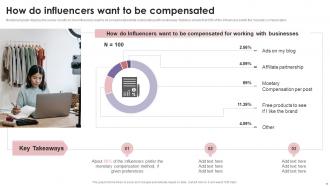
Slide 11: This slide displays How do influencers want to be compensated.
Slide 12: This slide highlights title for topics that are to be covered next in the template.
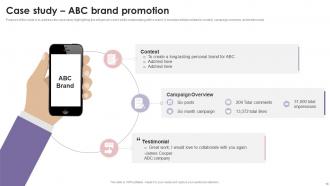
Slide 13: Purpose of this slide is to address the case study highlighting the influencer's work.
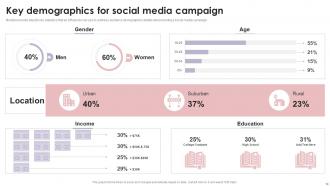
Slide 14: This slide represents Key demographics for social media campaign.
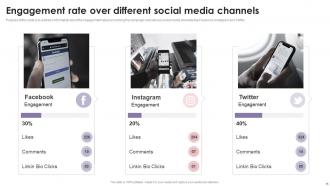
Slide 15: This slide showcases Engagement rate over different social media channels.
Slide 16: This slide displays Icons slide for influencer media kit.
Slide 17: This slide is titled as Additional Slides for moving forward.
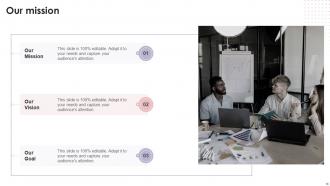
Slide 18: This is Our Mission slide with related imagery and text.
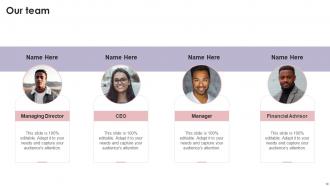
Slide 19: This is Our Team slide with names and designation.
Slide 20: This slide presents Roadmap with additional textboxes.
Slide 21: This slide provides 30 60 90 Days Plan with text boxes.
Slide 22: This slide shows Post It Notes. Post your important notes here.
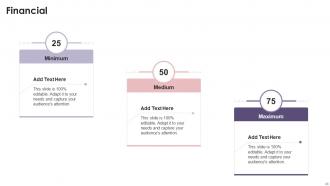
Slide 23: This is a Financial slide. Show your finance related stuff here.
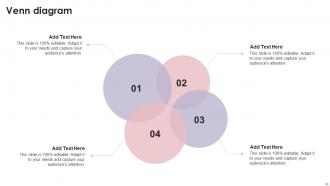
Slide 24: This slide depicts Venn diagram with text boxes.
Slide 25: This is a Timeline slide. Show data related to time intervals here.
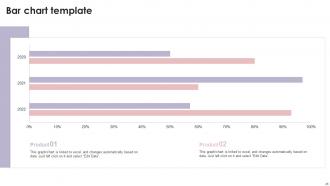
Slide 26: This slide presents Bar chart with two products comparison.
Slide 27: This is a Thank You slide with address, contact numbers and email address.
Influencer Media Kit Branding MD with all 32 slides:
Use our Influencer Media Kit Branding MD to effectively help you save your valuable time. They are readymade to fit into any presentation structure.














FAQs for Influencer Media
Key influencer marketing metrics include engagement rates, reach and impressions, click-through rates, conversion rates, and return on investment (ROI). These measurements enable brands to assess campaign effectiveness by tracking audience interaction, brand awareness growth, and sales attribution, with many retail and fashion companies finding that combining engagement quality with conversion data delivers the most comprehensive campaign insights.
Identifying the right influencers requires analyzing audience demographics, engagement rates, content alignment with brand values, and niche relevance within your target market segments. Through social media analytics tools and influencer platforms, brands can evaluate authenticity metrics, follower quality, and previous campaign performance, with many companies finding that micro-influencers in specific sectors often deliver higher engagement and conversion rates than macro-influencers.
Authenticity serves as the foundation of influencer marketing effectiveness, directly impacting audience trust, engagement rates, content credibility, and purchase decisions. When influencers maintain genuine connections with their followers through transparent product endorsements and honest reviews, brands experience higher conversion rates, improved customer loyalty, and enhanced reputation, with many companies finding that authentic partnerships deliver significantly better ROI than traditional advertising approaches.
Brands ensure FTC compliance by requiring clear disclosure language, implementing comprehensive partnership contracts, and conducting regular content audits. These practices streamline regulatory adherence by establishing transparent sponsored content identification, standardizing legal requirements across campaigns, and monitoring ongoing compliance, ultimately delivering consumer trust and competitive advantage while minimizing regulatory risks.
Authentic storytelling, behind-the-scenes content, product demonstrations, user-generated content, and educational tutorials resonate most with audiences in influencer marketing. These content types enhance engagement by building genuine connections, showcasing real experiences, and delivering practical value, with many brands finding that authentic narratives ultimately drive higher conversion rates and stronger customer loyalty.
Micro-influencers typically deliver higher engagement rates, often 3-7% compared to macro-influencers' 1-3%, due to their more intimate audience connections, niche expertise, and authentic interactions. While macro-influencers offer broader reach, micro-influencers enable brands to achieve deeper community penetration and stronger conversion rates, with many companies finding that targeted authenticity ultimately delivers greater ROI than mass exposure.
Brands can build lasting influencer partnerships through consistent communication, fair compensation structures, creative freedom, exclusive collaboration opportunities, and performance-based incentive programs. By treating influencers as strategic partners rather than one-time contractors, companies in retail, beauty, and technology sectors enhance authenticity, streamline content creation, and ultimately deliver sustained brand advocacy and improved audience engagement.
Influencer marketing integrates into broader digital strategies by aligning with content calendars, amplifying paid advertising campaigns, supporting SEO through backlinks, and enhancing social media reach across multiple platforms. This strategic combination enables brands to leverage authentic voices while maintaining consistent messaging, with many companies finding that coordinated influencer partnerships significantly boost campaign performance and customer acquisition costs.
Brands face challenges including authenticity concerns, ROI measurement difficulties, content quality control, influencer reliability issues, and audience alignment mismatches when collaborating with influencers. These obstacles can be minimized through strategic vetting processes, clear contractual agreements, and performance tracking systems, with many companies finding that thorough partnership frameworks ultimately deliver consistent brand messaging and measurable engagement outcomes.
Cultural differences significantly impact influencer marketing by shaping content preferences, communication styles, platform usage, and audience engagement patterns across different regions. While Western markets may favor direct product endorsements, Asian audiences often prefer subtle storytelling approaches, with many global brands finding that localized influencer partnerships and culturally adapted messaging deliver higher engagement rates and more authentic consumer connections.
Current trends shaping influencer marketing include micro and nano-influencer partnerships, AI-powered creator matching, authentic long-term collaborations, video-first content strategies, and performance-based compensation models. These approaches streamline campaign effectiveness by enhancing audience engagement, improving ROI measurement, and delivering more genuine brand connections, with many companies finding that smaller, niche influencers generate higher conversion rates.
Brands can leverage influencer user-generated content by repurposing it across multiple marketing channels, integrating it into email campaigns, social media advertising, and website testimonials. Through strategic content amplification, companies in retail, beauty, and consumer goods streamline their content creation costs while enhancing authenticity, ultimately delivering higher engagement rates and stronger customer trust.
Influencer marketing tools include platform management systems like AspireIQ and Upfluence, analytics dashboards, content scheduling software, campaign tracking solutions, and automated outreach platforms. These technologies streamline operations by centralizing influencer discovery, automating contract negotiations, and providing real-time performance metrics, with many brands finding that integrated platforms reduce campaign management time while enhancing ROI measurement and strategic decision-making.
Companies measure influencer marketing ROI through tracking conversions via unique promo codes, affiliate links, and UTM parameters, alongside engagement metrics, brand awareness surveys, and sales attribution analysis. These measurement approaches enable businesses to calculate cost-per-acquisition, assess campaign effectiveness across different platforms, and optimize future influencer partnerships, ultimately delivering quantifiable returns and strategic insights for scaling their marketing investments.
Brands should prioritize transparency through clear disclosure requirements, authentic partnerships that align with brand values, fair compensation practices, and respect for audience trust. These ethical foundations enable sustainable influencer relationships while protecting consumer interests, with many companies finding that transparent, value-aligned collaborations ultimately deliver stronger brand credibility and long-term competitive advantage.
-
The presentations are very helpful. I am always able to get appropriate templates for the different topics related to my profession.
-
I was mind-blown by the services that SlideTeam provided me. Thanks a ton!