Information technology infrastructure library itil problem management process powerpoint presentation slides

Information technology infrastructure library itil problem management process powerpoint presentation slides
Slide 1 of 21

or

Favourites Favourites

Try Before you Buy Download Free Sample Product

Audience Impress Your
Audience
Editable 100%
Editable
Time Save Hours
of Time
The Biggest Sale is ending soon in
0
0
:
0
0
:
0
0
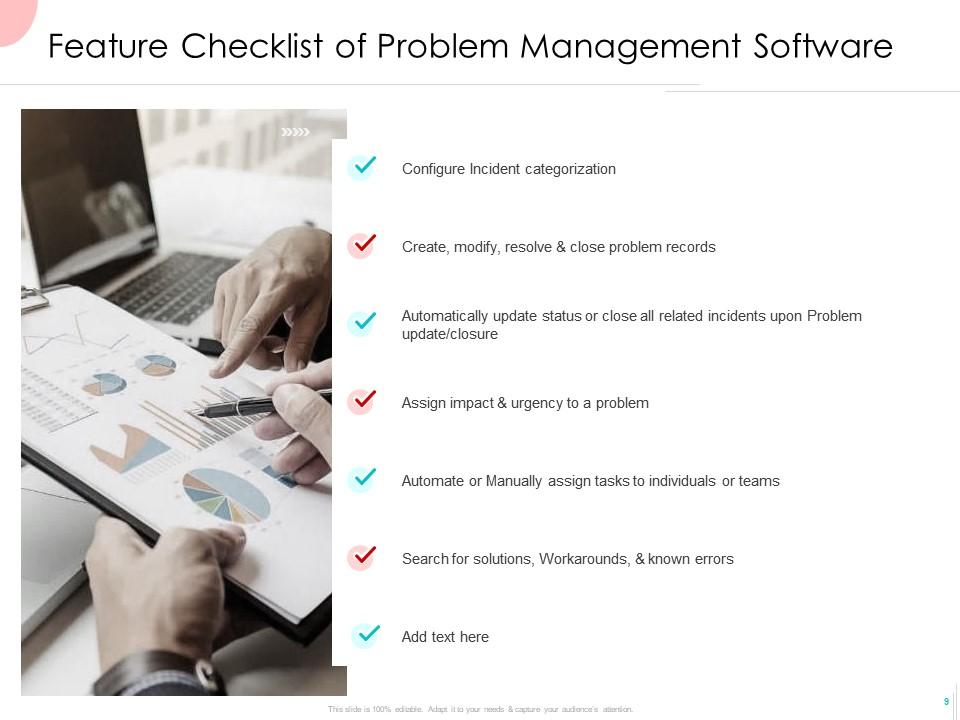
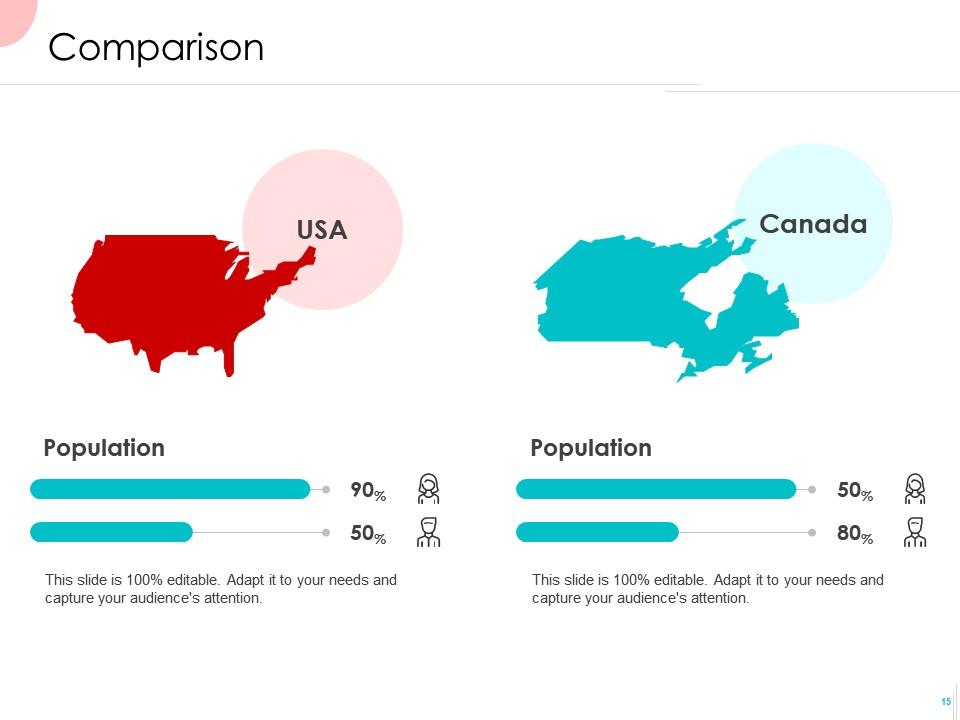
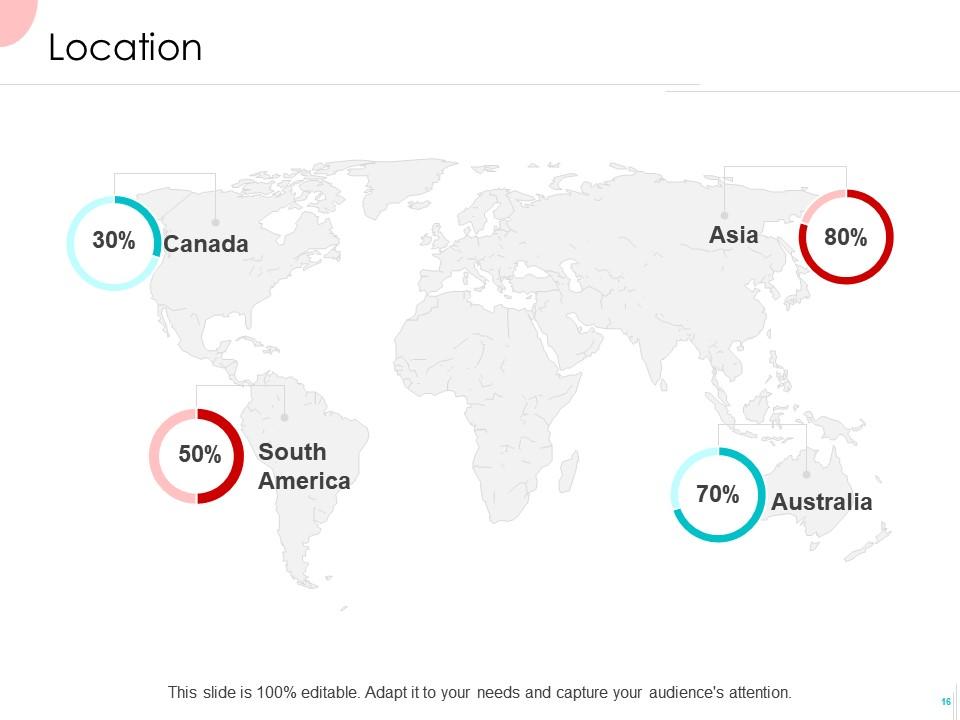
This PPT deck displays twenty one slides with in depth research. Our information technology infrastructure library ITIL problem management process powerpoint presentation Slides presentation deck is a helpful tool to plan, prepare, document and analyse the topic with a clear approach. We provide a ready to use deck with all sorts of relevant topics subtopics templates, charts and graphs, overviews, analysis templates. Outline all the important aspects without any hassle. It showcases of all kind of editable templates infographics for an inclusive and comprehensive information technology infrastructure library ITIL problem management process powerpoint presentation Slides presentation. Professionals, managers, individual and team involved in any company organization from any field can use them as per requirement.
FAQs for Information technology infrastructure library itil problem management process

So basically you're trying to stop the same crap from breaking over and over again. Root cause analysis is key - don't just slap band-aids on things, actually fix what's causing the mess. I'd start by digging into your incident data to see what keeps popping up. You also want to spot potential problems before they blow up (way easier said than done though). Keep a database of known errors so when something breaks again, your team isn't starting from scratch. Honestly it's pretty rewarding when you finally crack why something's been acting up for months.

So basically, incident management is when shit hits the fan and you need to get things working again fast. Problem management comes after - that's when you actually figure out what went wrong and fix it for good. Like if your server crashes, first you just reboot it to get users back online. Then later you dig into why it crashed and patch whatever's broken so it won't happen again. Most teams are pretty good at the firefighting part but honestly? We all suck at the follow-up investigation stuff. You should definitely create problem tickets from your incidents though.

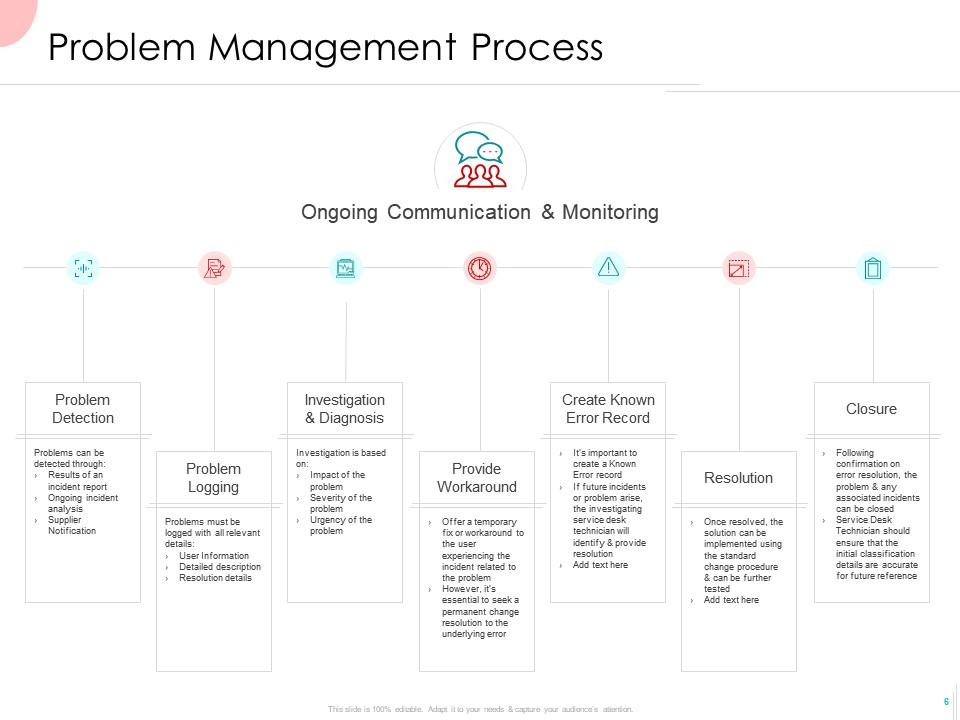
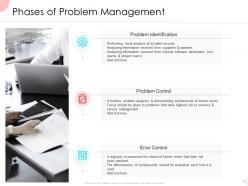
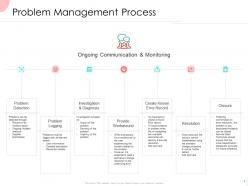
So Problem Management basically has seven steps. First you identify and log the issue, then categorize it. Investigation and diagnosis comes next - honestly this part's a nightmare and takes forever. Once you figure out what's wrong, you find workarounds and implement the fix. Document everything because spotting patterns later will save your butt. Close out the problem record when you're done, then do a review so it doesn't happen again. Oh, and track which problems become known errors too - that's super helpful down the road.

RCA is like being a detective for recurring problems. You dig past the surface stuff to figure out why issues keep popping up. Instead of fixing the same broken thing over and over, you investigate the actual source. Use tools like fishbone diagrams or ask "why" five times in a row - sounds weird but it works. Interview people, look at data patterns, whatever it takes. The goal is finding permanent fixes rather than constantly putting out fires. Honestly, it beats playing whack-a-mole with the same incidents forever. Once you've got the real culprit, you can actually solve it for good.

For digging into problems, fishbone diagrams and the 5 Whys method work great. Fault tree analysis is solid too. Kepner-Tregoe gets the job done but honestly feels way too formal most of the time. Most teams I know use ITSM tools - ServiceNow, Remedy, or Jira Service Management - to track everything and manage problem records. You'll need something for trend analysis to catch patterns in your incidents. Knowledge management helps capture solutions so you're not reinventing the wheel constantly. Pick whatever actually works for your team's workflow instead of chasing the latest shiny tool.

Honestly, Problem Management is a game-changer for IT service quality. Instead of constantly firefighting the same annoying issues, you actually dig into what's causing them. Those incidents that keep showing up every month? Yeah, those stop happening. Your users deal with way fewer outages, and your team builds up this solid knowledge base of fixes and workarounds. I've seen teams cut their ticket volume in half just by tracking repeat problems - it's pretty wild how much time you get back. Start with whatever keeps breaking. That's your goldmine right there.

Track your MTTI and MTTR first - basically how fast you spot problems and actually fix the root cause. Problem backlog size matters too. The big win though? Measuring how many incidents you prevent after solving problems. That's where you really see if it's working or just busy work. Also watch your recurring incident rates and whether you're doing permanent fixes vs just slapping band-aids on everything. I check these monthly and compare against overall uptime. Oh, and correlation doesn't always mean causation, but when your problem resolution goes up and incidents drop, that's pretty telling.

Look, you gotta actually measure this stuff if you want to get better. Mean time to resolution, recurring incidents - track what matters. Monthly team reviews are clutch for spotting trends and figuring out where things get stuck. Oh, and definitely talk to the people dealing with incidents every day - they know where the real pain points are. Honestly, most teams just check boxes without seeing if anything actually improves. Pick maybe 2-3 metrics to focus on this quarter. Don't try to boil the ocean. Build your action plan around those specific gaps and you'll start seeing real progress.

Honestly, the biggest pain is getting people to actually document stuff instead of just putting out fires and moving on. Nobody wants to do what feels like extra paperwork when systems are down. Plus you'll fight this constant battle between "fix it now" versus taking time to dig into why it broke in the first place. Role clarity becomes a mess too - like who's actually responsible for following up on investigations? My advice? Pick your most critical services first and prove it works there. Once people see the value, it gets way easier to expand.

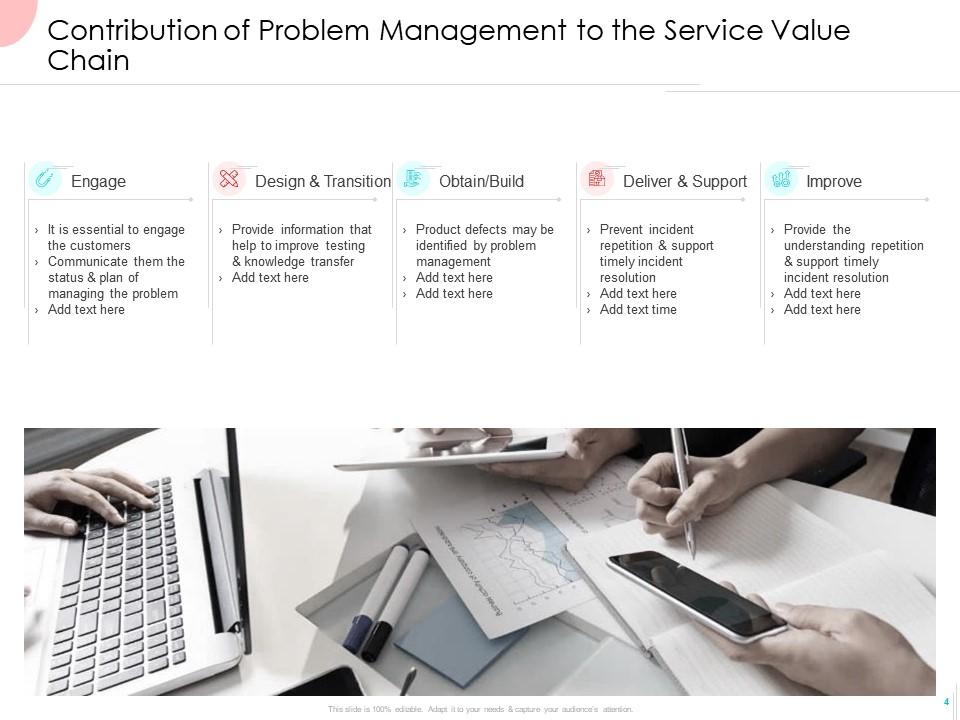
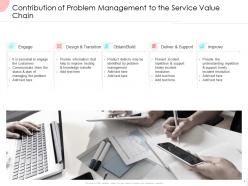
So Problem Management lives mostly in Service Operation, but it actually bleeds into everything else too. During Service Design, you're using it to stop known errors from sneaking into new stuff. Then it sends lessons back to Continual Service Improvement - which honestly makes total sense when you think about it. Service Transition uses your problem records to spot deployment risks. Here's the thing though: most problems aren't random. They're usually signs that something went wrong in an earlier stage. When you're dealing with problems, ask yourself which stage could've caught this before it became your headache.

So basically, known errors are incidents where your team already figured out what's causing the problem - you just haven't fixed it permanently yet. Problem Management identifies the root cause and logs it in the Known Error Database (KEDB). Super handy for your service desk because they can jump straight to workarounds instead of starting from zero every time. Honestly saves so much headache when the same issue keeps popping up. You'll want to turn these into RFCs eventually for actual fixes, but until then at least you've got quick solutions documented and ready.

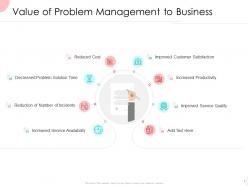
So basically ITIL Problem Management gives you a proper way to explain to the business what went wrong and how you're fixing it long-term. Instead of just "yeah it broke, we patched it," you've got actual documentation showing root causes and prevention plans. Business people eat this stuff up because they can finally see you're not just putting out fires constantly. Plus they get real visibility into how IT problems might mess with their day-to-day stuff. The trick is bringing these problem records into your regular meetings with stakeholders - makes you look way more professional than you'd think.

Honestly, start with business impact and how many users get screwed if something breaks. Frequency matters too - those annoying recurring issues will eat your team alive. I'd make a simple matrix: high/medium/low impact vs urgency. Creates clear priority buckets. Don't forget your team's bandwidth though. No point going after that gnarly infrastructure bug if your senior devs are already drowning. Document your criteria upfront so nobody's confused about what gets fixed first. Oh, and critical services obviously jump the line - learned that one the hard way last quarter.

Think of knowledge management as your team's shared brain for problem-solving stuff. Every time you work through an issue, you document the steps, what caused it, and how you fixed it. Super helpful when the same problem shows up again - saves everyone from starting over. Plus it feeds back into incident management so known errors actually get recorded properly. Oh and here's the thing that trips people up - you gotta keep updating those articles after fixes, or the whole system becomes pretty much worthless. I've seen teams forget that part and wonder why their knowledge base sucks.

Write everything down with clear templates - problem description, what broke it, which services got hit, how you fixed it. Screenshots and error logs are your best friends here. Be specific enough that whoever's on call next can actually follow your steps without texting you at 3am (learned this the hard way). Try to make it searchable and link similar incidents together. Honestly, spotting patterns saves so much time later. Don't forget to update the Known Error Database when you nail down permanent fixes - future you will thank you.

Ratings and Reviews

0% of 100
Review Form
Write a review
Most Relevant Reviews

No Reviews