

Information Technology Infrastructure Library ITIL Process Assessment Continual Service Improvement Complete Deck




Try Before you Buy Download Free Sample Product
 Impress Your
 Audience
 100%
100% Editable
 Save Hours
 of Time


Our Information Technology Infrastructure Library ITIL Process Assessment Continual Service Improvement Complete Deck are topically designed to provide an attractive backdrop to any subject. Use them to look like a presentation pro.
People who downloaded this PowerPoint presentation also viewed the following :
Content of this Powerpoint Presentation
Slide 1: This slide introduces Information Technology Infrastructure Library (ITIL) Process Assessment - Continual Service Improvement. State your Company name and begin.
Slide 2: This slide displays Content of the presentation.
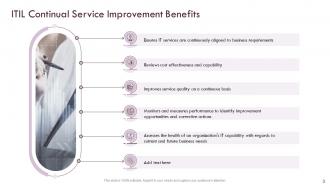
Slide 3: This slide showcases ITIL Continual Service Improvement Benefits.
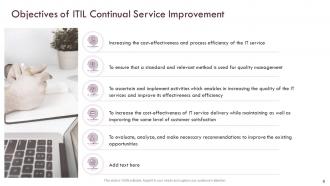
Slide 4: This slide depicts Objectives of ITIL Continual Service Improvement.
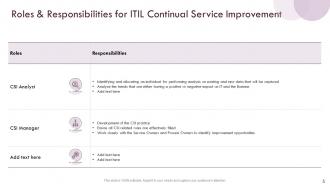
Slide 5: This slide shows Roles & Responsibilities for ITIL Continual Service Improvement.
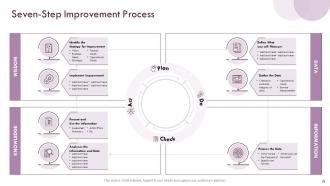
Slide 6: This slide showcases Seven-Step Improvement Process.
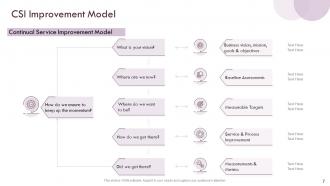
Slide 7: This slide represents CSI Improvement Model.
Slide 8: This slide showcases Improvement Register.
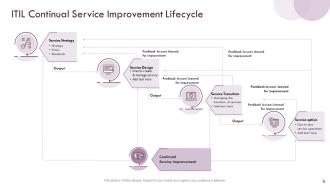
Slide 9: This slide shows ITIL Continual Service Improvement Lifecycle
Slide 10: This slide showcases ITIL Continual Service Improvement Best Practices
Slide 11: This slide showcases ITIL Process Assessment - Continual Service Improvement Icons Slide.
Slide 12: This slide is titled as Additional Slides for moving forward.
Slide 13: This is Meet Our Awesome Team slide with Names and Designations.
Slide 14: This is About Us slide to showcase Company specifications.
Slide 15: This slide shows Timeline process.
Slide 16: This slide displays Our Goals, Mission, and Vision.
Slide 17: This is Thank you slide with Contact number.
Information Technology Infrastructure Library ITIL Process Assessment Continual Service Improvement Complete Deck with all 17 slides:
Use our Information Technology Infrastructure Library ITIL Process Assessment Continual Service Improvement Complete Deck to effectively help you save your valuable time. They are readymade to fit into any presentation structure.





FAQs for Information Technology Infrastructure Library ITIL Process Assessment Continual Service
The key objectives of conducting an ITIL process assessment include identifying process gaps, measuring maturity levels, evaluating compliance with ITIL standards, determining improvement opportunities, and establishing baseline performance metrics. These assessments enable organizations to streamline service delivery, enhance operational efficiency, and reduce costs, with many IT departments finding that regular evaluations ultimately deliver improved customer satisfaction and competitive advantage.
Organizations determine ITIL process maturity through structured assessments evaluating process definition, standardization, measurement capabilities, continuous improvement practices, and organizational adoption levels. These assessments typically use capability maturity models, internal audits, and third-party evaluations, with many enterprises finding that regular maturity reviews enable targeted improvements, resource optimization, and enhanced service delivery performance.
Effective ITIL process assessment tools include maturity assessment frameworks, process mapping software, stakeholder interview templates, performance metrics dashboards, and gap analysis methodologies. These approaches streamline evaluation by benchmarking current capabilities, identifying improvement opportunities, and measuring service delivery effectiveness, with many organizations finding that combining automated assessment tools with structured interviews delivers comprehensive insights and actionable roadmaps for ITIL optimization.
Stakeholder engagement ensures comprehensive visibility into process performance, identifies improvement opportunities, and secures buy-in for necessary changes during ITIL assessments. Through collaborative workshops and structured feedback sessions, organizations gather diverse perspectives from IT teams, business users, and management, ultimately delivering more accurate assessments and smoother implementation of recommended enhancements.
Organizations identify ITIL process gaps through comprehensive assessments involving maturity evaluations, performance metrics analysis, stakeholder interviews, and process mapping against ITIL best practices. These assessments reveal inconsistencies in service delivery, incident resolution delays, and resource allocation inefficiencies, with many IT departments finding that structured gap analysis enables targeted improvements, streamlined operations, and enhanced service quality.
**INPUT**: What metrics should be considered when evaluating the effectiveness of ITIL processes? **OUTPUT**: ITIL process effectiveness metrics include incident resolution time, service availability percentages, first-call resolution rates, change success ratios, and customer satisfaction scores. These measurements enable organizations to streamline service delivery, enhance operational efficiency, and minimize downtime, with many enterprises finding that comprehensive metric tracking ultimately delivers improved customer experiences and competitive advantage.
ITIL process assessments inform continuous improvement initiatives by identifying performance gaps, measuring service delivery effectiveness, and benchmarking current capabilities against industry standards. These comprehensive evaluations enable organizations to prioritize enhancement opportunities, streamline workflows, and optimize resource allocation, with many enterprises finding that regular assessments accelerate service quality improvements and operational efficiency.
Common ITIL process assessment challenges include inadequate documentation, resistance to change, lack of stakeholder engagement, insufficient data quality, and resource constraints during evaluation periods. These obstacles often manifest in organizations where existing processes lack standardization, staff fear workflow disruptions, or leadership hasn't fully committed to comprehensive assessment initiatives, ultimately requiring strategic change management and clear communication to ensure successful outcomes.
**INPUT**: How can findings from an ITIL process assessment be effectively communicated to stakeholders? **OUTPUT**: Effective communication involves tailored reporting formats, visual dashboards, executive summaries, stakeholder-specific presentations, and actionable roadmaps that translate technical findings into business impact. Organizations increasingly use tiered communication strategies, presenting high-level strategic insights to executives while delivering detailed improvement plans to operational teams, ultimately ensuring stakeholder buy-in and accelerated implementation. **Word count: 56 words**
ITIL process assessment significantly enhances IT service management by identifying inefficiencies, standardizing workflows, and improving service delivery consistency across organizations. Through systematic evaluation, IT departments streamline incident resolution, enhance change management protocols, and optimize resource allocation, with many enterprises finding that regular assessments reduce downtime by 30-40% while delivering faster service restoration and improved customer satisfaction.
Aligning ITIL processes with business objectives enhances value delivery by ensuring IT services directly support strategic goals, improving resource allocation, and streamlining service management workflows. This strategic alignment enables organizations to deliver faster customer services, reduce operational costs, and maintain competitive advantage, with many enterprises finding that integrated ITIL frameworks ultimately optimize both IT efficiency and business outcomes.
Integrating ITIL process assessments with frameworks like COBIT or Agile delivers comprehensive governance, enhanced risk management, faster service delivery, and improved strategic alignment across IT operations. This strategic combination enables organizations to streamline compliance requirements, accelerate development cycles, and optimize resource allocation, with many enterprises finding that integrated frameworks ultimately deliver superior operational efficiency and competitive advantage.
Organizations should conduct comprehensive ITIL process assessments annually, with quarterly reviews of critical processes and monthly monitoring of key performance indicators. This strategic combination enables continuous improvement while maintaining operational stability, with many enterprises finding that regular assessments streamline service delivery, enhance customer satisfaction, and ultimately deliver sustained competitive advantage in increasingly complex IT environments.
Best practices for documenting ITIL process assessment results include creating standardized templates, maintaining detailed findings with evidence, establishing clear improvement roadmaps, tracking metrics and KPIs, and ensuring stakeholder accessibility. These documentation approaches streamline communication by providing consistent reporting formats, enabling targeted remediation efforts, and facilitating ongoing monitoring, with many organizations finding that comprehensive documentation ultimately delivers enhanced process maturity and operational efficiency.
A well-executed ITIL process assessment contributes to risk management by identifying service vulnerabilities, evaluating incident response capabilities, and assessing change management controls. Through systematic process evaluation, organizations can proactively address operational weaknesses, strengthen service continuity planning, and enhance compliance frameworks, ultimately reducing service disruptions and business impact while improving overall resilience.
-
Wonderful templates design to use in business meetings.
-
Helpful product design for delivering presentation.
-
Enough space for editing and adding your own content.
-
Innovative and Colorful designs.
-
Wonderful templates design to use in business meetings.