


Initiatives at workplace sample of ppt




Try Before you Buy Download Free Sample Product
 Impress Your
 Audience
 100%
100% Editable
 Save Hours
 of Time


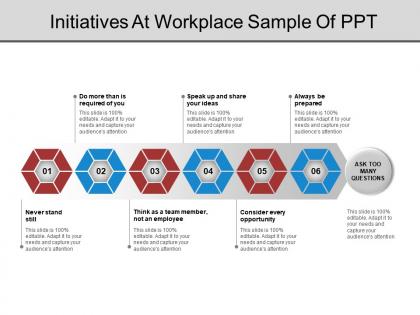
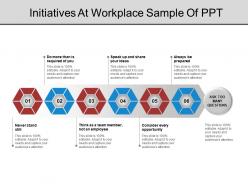
Take the initiative of downloading this initiative at workplace sample of PPT to come up with an impressive PPT slide. The workplace initiatives PPT presentation model is designed after the entire process of research and brainstorming to craft a design which fits into multiple situations and also is appropriate for multiple numbers of firms. Here our team of expert designers has made use of six hexagonal graphics of blue and red color, arranged alternately. Special text space has also been provided to incorporate the relevant text in this human and workplace initiative PowerPoint slide template. Over here from our end we have talked about the initiatives like do not talk more than a requirement, speak up and share your ideas, always be prepared, never stand still, think as a team member and not as an employee and finally consider every opportunity. As a team leader, it's your responsibility to make your team understand the significance of taking initiative and how should this quality of taking initiates be practiced. You can decipher this knowledge by the means of our professionally designed company initiatives that improve work culture PowerPoint presentation graphic. Insert elements that foster accord with our Initiatives At Workplace Sample Of Ppt. Formulate an equitable agreement.
People who downloaded this PowerPoint presentation also viewed the following :
Initiatives at workplace sample of ppt with all 5 slides:
Our Initiatives At Workplace Sample Of Ppt actually help fulfill fantasies. Even day dreams begin to bear fruit.

FAQs for Initiatives at workplace
Honestly, start with communication - people need to actually understand how their job fits into the bigger picture. So many companies are terrible at this! Recognition is massive too, doesn't have to cost much but make it real and timely. Give your team actual chances to grow, not just empty promises. Work-life balance matters more than most managers think. Oh, and create space where people can share ideas without feeling judged - that psychological safety thing is real. I'd survey your team first though, see what they actually care about instead of guessing.
Honestly, start with figuring out what success looks like first - engagement scores, retention, productivity, whatever fits your thing. Survey people beforehand to get a baseline (I always space on this part and regret it later!). Then track both the hard numbers and the softer stuff through quick check-ins or focus groups. Don't just measure what's easiest to count though. Go for what actually moves the needle on your goals. Oh, and if you haven't started collecting data yet, do it now before you lose more time.
Honestly, leadership makes or breaks everything. If they're not visibly on board, forget it - the whole thing will crash and burn. People don't listen to what bosses say, they watch what they actually do. Your leaders need to explain why this matters, jump in themselves, and clear out whatever's blocking progress. They've also got to celebrate the wins (even small ones, which I think people forget). I've seen so many good ideas just die because leadership wasn't really invested. So yeah, before you launch anything, make sure you've got leaders who actually care, not just ones going through the motions.
Honestly, just automate the tedious stuff and actually measure if things are working. I'd start with something like Asana or Monday for project management - keeps everyone in the loop without constant check-ins. Surveys and analytics dashboards will show you real engagement numbers. Slack bots are clutch for automatic reminders (seriously saved my sanity last quarter). Video platforms work great for training since people can actually show up virtually. Don't go crazy adding random tech though. Pick tools that fix actual problems your team has. Start small with one platform, then build from there.
Okay so mentorship programs work really well - pair people from different backgrounds together. Blind resume reviews help too since they cut out unconscious bias. Oh and reverse mentoring is brilliant! Younger employees actually mentor the senior folks, which honestly blows their minds sometimes. Employee resource groups let people connect naturally. Don't skip the bias training but make it interactive or everyone zones out. Track your data though - promotions, pay gaps, who's staying vs leaving. That stuff matters. Start small with one thing, get the bosses on board, then expand from there.
Honestly, workplace initiatives work really well - you can cut turnover by like 20-40% if you do them right. Professional development, flexible schedules, wellness stuff - people stick around when they feel valued. Nobody wants to bail on a company that actually invests in them, you know? The trick is asking your team what they want first instead of guessing. I've seen so many places roll out initiatives that sound great on paper but totally miss the mark. Survey people first. Then build programs around what they actually care about. It's way more effective than leadership just throwing money at random perks.
Definitely explain the "why" first - people need to know how this actually impacts them, not just some vague company benefit stuff. Mix up your communication too since everyone ignores emails half the time anyway. I'd hit them with team meetings, follow-ups, maybe throw some posters around the office (old school but it works). Train your managers properly so they can answer basic questions - nothing's worse than getting "uh, call HR" responses. Oh, and create some way for people to give feedback. Actually respond to it though, otherwise you just look like you're going through the motions.
Honestly, just ask them directly what they actually need. Surveys work, but I've had better luck with casual conversations - grab coffee with people from different teams. So many initiatives bomb because leadership thinks they know what employees want without asking. Form a committee with rotating members so it doesn't become the same voices every time. Ask about specific pain points first, then get them involved in planning. Here's the thing though - you have to show people how their feedback actually changed things. Otherwise they'll stop bothering to give input because they think you're just checking a box. Keep collecting feedback throughout, not just at the beginning.
Honestly? People just hate change - that's your biggest hurdle right there. Leadership talks a good game but won't actually back you up when it counts. Communication is always a mess because no one explains WHY this matters. Budget's another nightmare - they want magic but give you pennies to work with. Oh, and good luck measuring anything if you didn't nail down clear metrics from day one. Everything else will suddenly become "more urgent" too. Start with small pilot programs though. Get some quick wins under your belt first, then find an exec who'll actually fight for you instead of just nodding in meetings.
Honestly, most companies mess this up by throwing random perks at employees without thinking it through. First thing - figure out what you're actually trying to accomplish as a business. Real goals, not the generic mission statement BS. Customer retention? Revenue growth? Whatever it is, make sure your workplace programs connect to those outcomes. Like if you want better customer service, design your recognition system around that instead of just generic "employee of the month" stuff. I've seen so many wellness programs that sound nice but don't actually help the business. Track metrics that matter so you can show these initiatives are worth the investment.
So CSR is basically what drives most workplace programs now. Companies want their internal stuff to match what they preach publicly, you know? You'll see tons of sustainability things, diversity initiatives, volunteer days - all that flows from their CSR commitments. Honestly, it's become this massive recruiting thing because people actually want to work somewhere that cares about more than just making money. Plus employees get way more engaged when they feel like their job matters beyond the bottom line. My advice? Check what CSR promises your company's made - that's where the budget and executive support usually lives.
Honestly, the trick is making your training actually connect to what's already happening at work. Like if you're doing some big diversity push, don't just send people to random workshops - build sessions around inclusive leadership that tie directly into that initiative. Timing matters too. I've noticed companies get way better results when they do lunch-and-learns or those quick micro-sessions right alongside whatever campaign they're running. People need to see it's all part of the same thing, not just busy work. Map out your current projects first, figure out what skills are missing, then design learning around those gaps.
Dude, mental health stuff at work is honestly such a win-win. Your people stick around longer when they don't feel like garbage all the time. Plus productivity goes up, sick days drop - the whole thing just works better. I read somewhere that companies get like $4 back for every dollar they spend on it, which is pretty wild. The best part though? People actually talk about being stressed instead of just quietly falling apart at their desks. You don't need to go crazy with it either - start with mental health days or just regular check-ins with your team.
Remote work totally flips how you launch new initiatives. You can't just rely on office chatter or big meetings anymore - everything has to be digital-first. Some stuff actually works better though! People get more time to think through responses instead of being cornered at their desk. Culture building is where it gets tricky. Like, how do you recreate that random brainstorming session by the coffee machine? You really can't just copy-paste your old in-person playbook. The whole approach needs to be built for remote from the ground up, which honestly most companies are still figuring out.
Honestly, it totally depends on what industry you're in. Tech companies usually shoot for 70%+ engagement scores and keeping 90% of their people. Manufacturing is obsessed with safety (obviously) - they want zero incidents plus maybe 10-15% productivity bumps. Healthcare and finance have all that compliance stuff to deal with, but they're still chasing similar engagement numbers. Retail's different though - they just want to stop bleeding employees since most lose like 60-70% every year. Here's what I'd do: grab 3-4 metrics that actually match your biggest headaches, then see how you stack up against competitors through industry reports or whatever.
-
Enough space for editing and adding your own content.
-
I discovered this website through a google search, the services matched my needs perfectly and the pricing was very reasonable. I was thrilled with the product and the customer service. I will definitely use their slides again for my presentations and recommend them to other colleagues.
-
Graphics are very appealing to eyes.
-
Awesomely designed templates, Easy to understand.