


Inside Nike A Deep Dive Market Share Analysis Of Nike And Competitors Strategy SS V




Try Before you Buy Download Free Sample Product
 Impress Your
 Audience
 100%
100% Editable
 Save Hours
 of Time


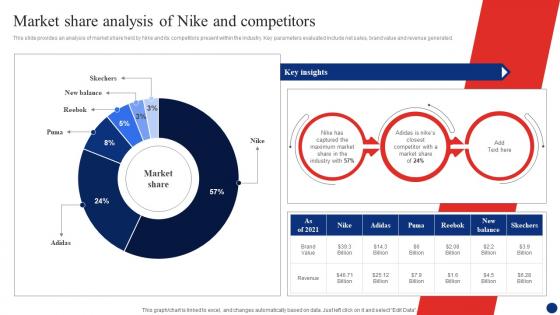
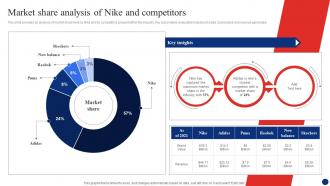
This slide provides an analysis of market share held by Nike and its competitors present within the industry. Key parameters evaluated include net sales, brand value and revenue generated.
People who downloaded this PowerPoint presentation also viewed the following :
Inside Nike A Deep Dive Market Share Analysis Of Nike And Competitors Strategy SS V with all 10 slides:
Use our Inside Nike A Deep Dive Market Share Analysis Of Nike And Competitors Strategy SS V to effectively help you save your valuable time. They are readymade to fit into any presentation structure.









FAQs for Inside Nike A Deep Dive Market Share Analysis Of Nike And Competitors
Nike currently holds approximately 25-30% of the global athletic footwear market, making it the dominant player in the industry. This substantial market share reflects Nike's strategic combination of innovative product development, powerful brand positioning, and extensive distribution networks, with the company consistently outpacing competitors like Adidas and Puma through premium pricing strategies and targeted consumer engagement across diverse demographics.
Nike dominates the global athletic footwear and apparel market with approximately 27% market share, significantly outpacing Adidas at around 11% and Puma at roughly 3%. This competitive advantage enables Nike to leverage superior brand recognition, extensive distribution networks, and innovation investments, ultimately delivering stronger pricing power and market influence across diverse segments from professional athletics to lifestyle consumers.
Nike's regional dominance stems from strategic local partnerships, targeted marketing campaigns, athlete endorsements, cultural adaptation, and strong distribution networks. Through partnerships with regional sports federations and local athletes, Nike enhances brand visibility while tailoring products to specific market preferences, ultimately delivering competitive advantages that many multinational brands find essential for sustained market leadership.
Nike's marketing strategy has significantly enhanced its market share through digital transformation, strategic athlete partnerships, and direct-to-consumer expansion over the past decade. By leveraging social media campaigns, exclusive collaborations with high-profile athletes, and innovative retail experiences, Nike has strengthened brand loyalty while capturing younger demographics, ultimately delivering sustained growth and competitive advantage in the global athletic footwear market.
Product innovation serves as Nike's primary market share driver through advanced materials, performance technologies, sustainable manufacturing processes, and data-driven design methodologies. These innovations enable Nike to command premium pricing, attract diverse consumer segments, and maintain competitive differentiation, with athletic footwear and apparel markets increasingly rewarding brands that deliver breakthrough performance and environmental responsibility.
Economic trends significantly impact Nike's market share in emerging markets through currency fluctuations, changing consumer purchasing power, and shifting demand patterns. During economic growth periods, rising middle-class populations in countries like India and Brazil increase demand for premium athletic wear, while economic downturns often drive consumers toward more affordable alternatives, ultimately affecting Nike's competitive positioning and requiring strategic pricing adjustments.
Consumer behavior shifts significantly impact Nike's market position by driving demand toward sustainability, digital engagement, and personalized experiences. As consumers increasingly prioritize eco-friendly products, direct-to-consumer purchasing, and athleisure trends, Nike leverages these preferences through innovative sustainable materials, enhanced digital platforms, and strategic product positioning, ultimately strengthening their competitive advantage in athletic retail markets.
Nike leverages e-commerce through direct-to-consumer platforms, personalized shopping experiences, mobile app integration, exclusive online releases, and data-driven marketing strategies. These digital approaches streamline customer acquisition, enhance brand loyalty, and minimize retail dependencies, with many athletic companies finding that robust e-commerce capabilities ultimately deliver higher profit margins and competitive market positioning.
Brand loyalty significantly impacts Nike's market share by creating sustained competitive advantages, predictable revenue streams, and reduced customer acquisition costs through repeat purchases and word-of-mouth marketing. This loyalty enables Nike to maintain premium pricing while expanding market presence, with many retail analysts finding that strong brand affinity translates directly into market share resilience against competitor pressures.
Nike's sustainability initiatives enhance competitiveness by attracting environmentally conscious consumers, reducing operational costs through resource efficiency, and strengthening brand differentiation in the athletic wear market. These programs, including recycled materials and carbon-neutral manufacturing, ultimately deliver improved customer loyalty and market positioning, with many retail analysts finding that sustainability drives long-term revenue growth.
Celebrity endorsements significantly enhance Nike's market share by building brand prestige, driving consumer loyalty, and creating emotional connections with target demographics. Through partnerships with athletes like Michael Jordan, LeBron James, and Serena Williams, Nike captures diverse market segments while generating billions in revenue, with Jordan Brand alone contributing over $5 billion annually, ultimately delivering sustained competitive advantage in global athletic markets.
Nike's pricing strategy significantly influences market share by targeting premium segments through high-performance athletic wear, while budget-conscious demographics often shift toward affordable alternatives like Adidas or New Balance. Through strategic pricing across product tiers, Nike maintains dominance in affluent markets and sports performance categories, while expanding accessibility through outlet stores and seasonal promotions, ultimately balancing exclusivity with broader market penetration.
Social media marketing enables Nike to reach diverse demographics, build brand loyalty, engage younger consumers, showcase product innovations, and amplify endorsement campaigns across global markets. Through strategic influencer partnerships, viral content creation, and targeted advertising, Nike strengthens emotional connections with consumers, drives purchase decisions, and maintains competitive advantage in an increasingly digital marketplace.
The pandemic initially disrupted Nike's retail operations and supply chains, prompting accelerated digital transformation and direct-to-consumer strategies that ultimately strengthened their market position. Through enhanced e-commerce platforms, virtual fitness offerings, and strategic inventory management, Nike capitalized on increased athleisure demand and home fitness trends, with many competitors finding that Nike's digital infrastructure delivered sustained growth and expanded market share globally.
Nike's competitive advantages include its powerful brand equity, extensive global distribution network, innovative product development capabilities, strategic athlete endorsements, and advanced manufacturing partnerships. These strengths enable Nike to command premium pricing, reach diverse markets effectively, and maintain consumer loyalty across multiple sports categories, with many retailers finding that Nike products consistently drive higher foot traffic and sales conversion rates.
-
Amazing product with appealing content and design.
-
I was able to find the right choice of PPT template for my thesis with SlideTeam. Thank you for existing.