

Internal Brand Rollout Plan Branding CD V




Try Before you Buy Download Free Sample Product
 Impress Your
 Audience
 100%
100% Editable
 Save Hours
 of Time


Here is a competently designed Internal brand rollout plan PowerPoint presentation covering the brand launch process for introducing a brand to the public. It includes the identification of the Target audience, Brand Launch Communications Plan, Brand Migration Plan, Brand Launch Internally, Brand competition, brand messaging, and goals. In this Brand Awareness presentation, we cover the template for the brand campaign to put the companys story and message in front of an audience, increase brand awareness, and improve brand equity in the consumers mind. The steps highlighted in the brand launch plan are the Brand creation process, Brainstorming a catchy name for the brand, Creating a brand positioning statement, Creating brand promise, and Defining the brands personality. Further, the steps include the Creation of a customers persona, Brand strategy, and Brand elements, Creating a brand storyboard, a One page brand strategy canvas, and a Brand identity prism. Lastly, the module also describes a Brand promotion plan, Brand launch success tracking metrics, Brand launch marketing budget, Brand launch timeline, Brand communication plan, Brand distribution plan by region, and geographical selection of potential brand distribution market. Download our 100 percentage editable and customizable template, which is also compatible with google slides.
People who downloaded this PowerPoint presentation also viewed the following :
Content of this Powerpoint Presentation
Slide 1: This slide displays the title Internal Brand Rollout Plan.
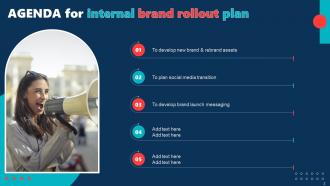
Slide 2: This slide displays the title AGENDA for internal brand rollout plan.
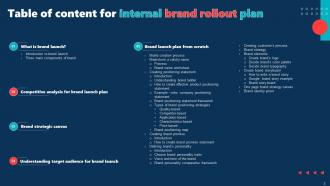
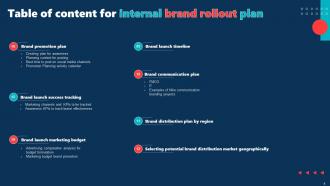
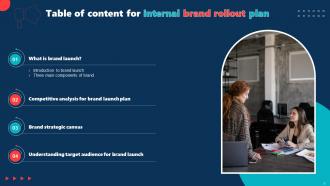
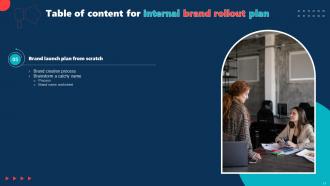
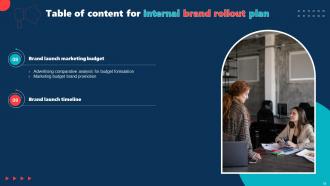
Slide 3: This slide exhibit table of content.
Slide 4: This slide exhibit table of content.
Slide 5: This slide showcase table of content that are to be discuss further.
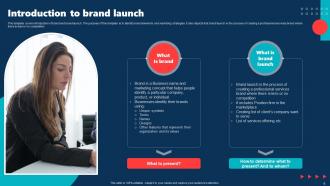
Slide 6: This template covers introduction of brand and brand launch.
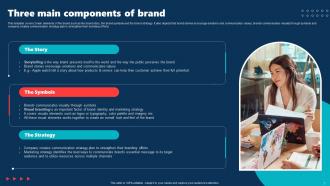
Slide 7: This template covers 3 main elements of the brand such as the brand story, the brand symbols and the brand strategy.
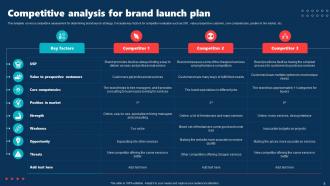
Slide 8: This template covers a competitive assessment for determining brand launch strategy.
Slide 9: This template covers major components of brand launch.
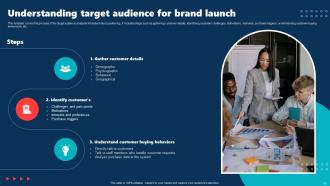
Slide 10: This template covers the process of the target audience analysis for better brand positioning.
Slide 11: This slide showcase table of content that are to be dicuss further.
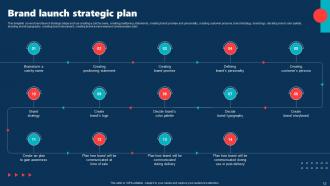
Slide 12: This template covers brand launch strategic steps such as creating a catchy name, creating positioning statements, creating brand promise and personality.
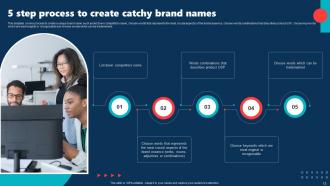
Slide 13: This template covers process to create a unique brand name such as list down competitors name, choose words combinations that describes product USP, etc.
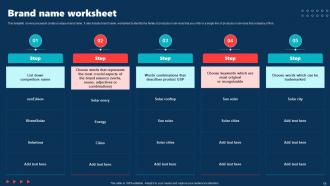
Slide 14: This template covers process to create a unique brand name.
Slide 15: This slide showcase table of content that are to be discuss further.
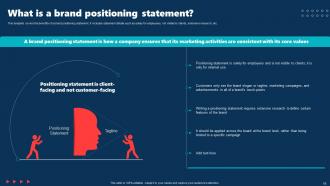
Slide 16: This template covers the benefits of a brand positioning statement.
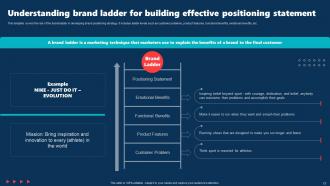
Slide 17: This template covers the role of the brand ladder in developing brand positioning strategy.
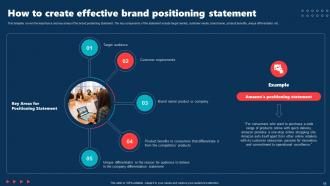
Slide 18: This template covers the importance and key areas of the brand positioning statement.
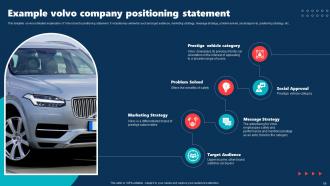
Slide 19: This template covers a detailed explanation of Volvo brand’s positioning statement.
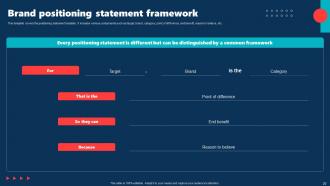
Slide 20: This template covers the positioning statement template.
Slide 21: This slide showcase table of content that are to be discuss further.
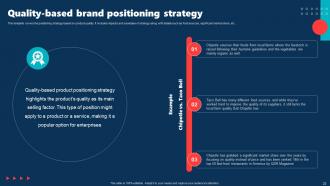
Slide 22: This template covers the positioning strategy based on product quality.
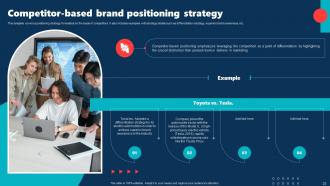
Slide 23: This template covers a positioning strategy formulated on the basis of competitors.
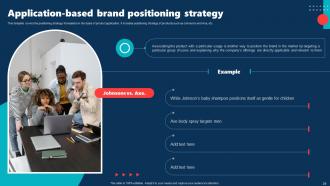
Slide 24: This template covers the positioning strategy formulated on the basis of product application.
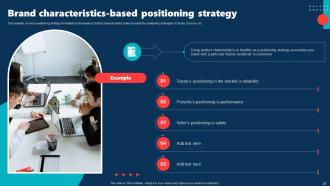
Slide 25: This template covers a positioning strategy formulated on the basis of product characteristics.
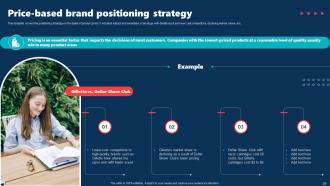
Slide 26: This template covers the positioning strategy on the basis of product price.
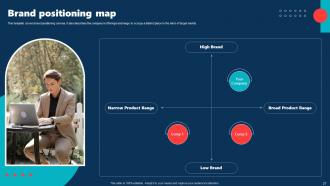
Slide 27: This template covers brand positioning canvas. It also describes the company’s offerings and image to occupy a distinct place in the mind of target market.
Slide 28: This slide showcase table of content that are to be discuss further.
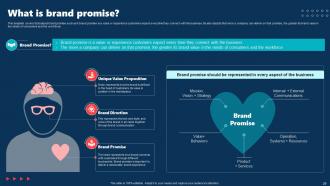
Slide 29: This template covers facts about brand promise such as it brand promise is a value or experience customers expect every time they connect with the business.
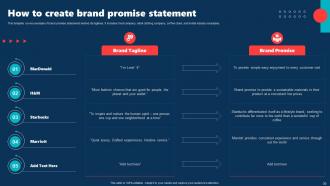
Slide 30: This template covers example of brand promise statements behind its taglines.
Slide 31: This slide showcase table of content that are to be discuss further.
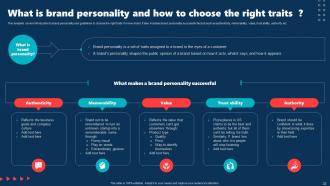
Slide 32: This template covers introduction to brand personality and guidelines to choose the right traits for new brand.
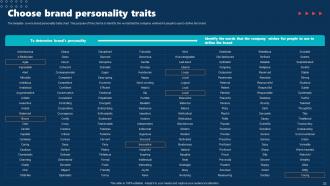
Slide 33: The template covers brand personality traits chart.
Slide 34: This template covers brand tone and voice which depicts the way companies communicate with their audience.
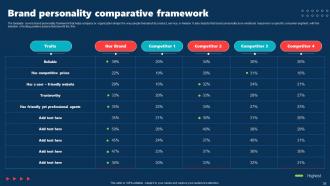
Slide 35: The template covers brand personality framework that helps company or organization shape the way people feel about its product, service, or mission.
Slide 36: This slide showcase table of content that are to be discuss further.
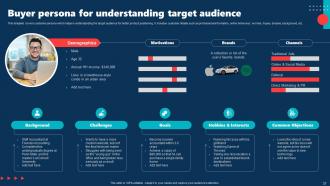
Slide 37: This template covers customer persona which helps in understanding the target audience for better product positioning.
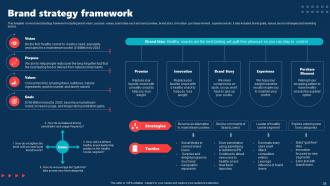
Slide 38: This template covers brand strategy framework including brand vision, purpose, values, brand idea.
Slide 39: This slide showcase table of content that are to be discuss further.
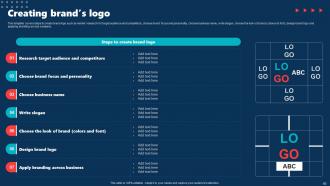
Slide 40: This template covers steps to create brand logo such as market research for target audience and competitors, choose brand focus and personality.
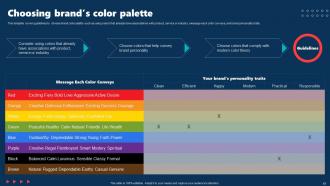
Slide 41: This template covers guidelines to choose brand color palette.
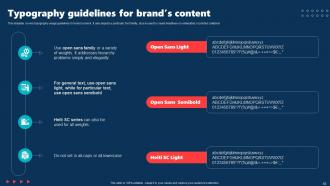
Slide 42: This template covers topography usage guidelines for brand content.
Slide 43: This slide showcase table of content that are to be dicuss further.
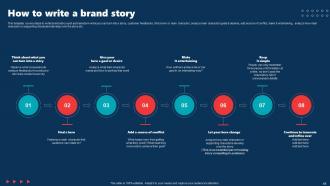
Slide 44: This template covers steps to write brand story.
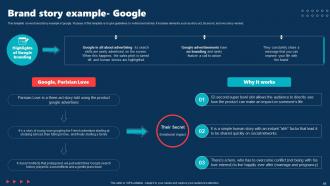
Slide 45: This template covers brand story example of google.
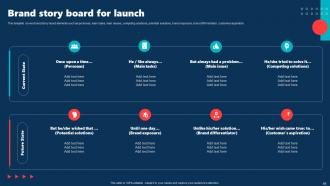
Slide 46: This template covers brand story board elements such as personas, main tasks, main issues, competing solutions.
Slide 47: This slide showcase table of content that are to be discuss further.
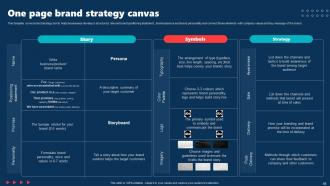
Slide 48: This template covers brand strategy tool to helps businesses develop a structured, relevant brand positioning statement, brand essence.
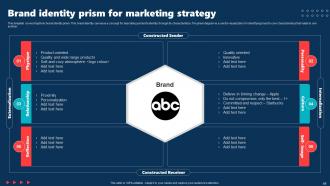
Slide 49: This template covers Kapferer brand identity prism.
Slide 50: This slide showcase table of content that are to be discuss further.
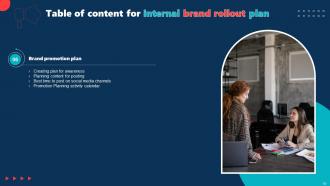
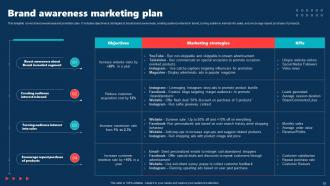
Slide 51: This template covers brand awareness and promotion plan.
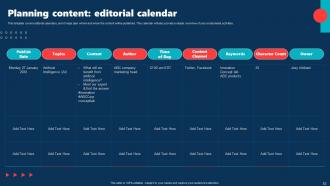
Slide 52: This template covers editorial calendars, and it helps plan where and when the content will be published.
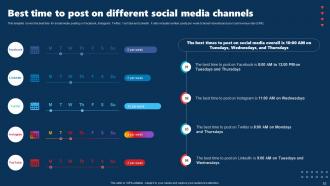
Slide 53: This template covers the best time for social media posting on Facebook, Instagram, Twitter, YouTube and LinkedIn.
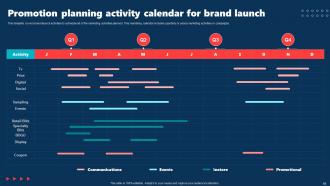
Slide 54: This template covers brand launch activities to schedule all of the marketing activities planned.
Slide 55: This slide showcase table of content that are to be discuss further.
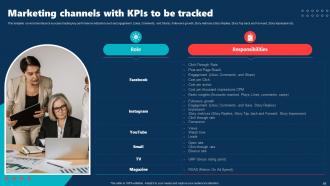
Slide 56: This template covers brand launch success tracking key performance indicators such as Engagement (Likes, Comments, and Share), Followers growth, Story metrices.
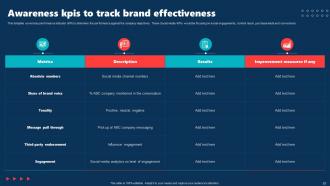
Slide 57: This template covers key performance indicator (KPI) to determine the performance against the company objectives.
Slide 58: This slide showcase table of content that are to be discuss further.
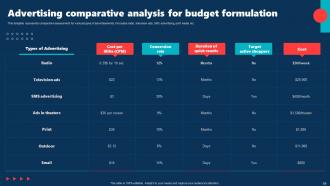
Slide 59: This template represents comparative assessment for various types of advertisements.
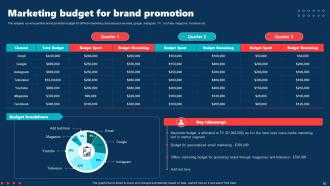
Slide 60: This template covers quarterly brand promotion budget for different marketing channels such as email, google, Instagram, TV, YouTube, magazine, Facebook etc.
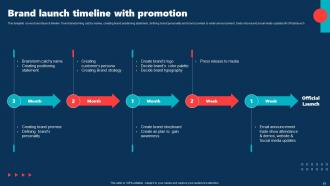
Slide 61: This template covers brand launch timeline from brainstorming catchy names, creating brand positioning statement, defining brand personality.
Slide 62: This slide showcase table of content that are to be discuss further.
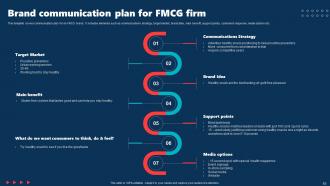
Slide 63: This template covers communication plan for an FMCG brand.
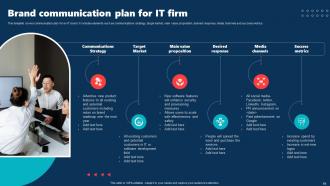
Slide 64: This template covers communication plan for an IT brand.
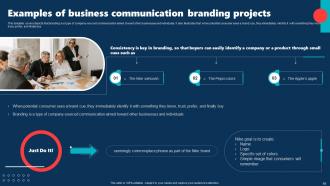
Slide 65: This template covers depicts that branding is a type of company-sourced communication aimed toward other businesses and individuals.
Slide 66: This slide showcase table of content that are to be discuss further.
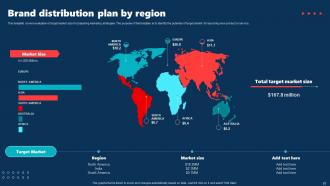
Slide 67: This template covers evaluation of target market size for preparing marketing strategies.
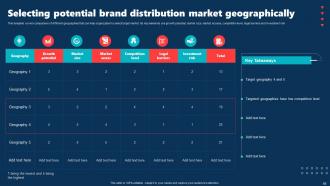
Slide 68: This template covers comparison of different geographies that can help organization to select target market.
Slide 69: This is the icons slide.
Slide 70: This slide presents title for additional slides.
Slide 71: This slide showcase the title Our goal.
Slide 72: This slide showcase Financial.
Slide 73: This slide exhibits ideas generated.
Slide 74: This slide depicts posts for past experiences of clients.
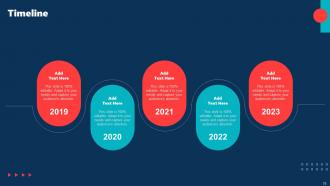
Slide 75: This slide exhibit Timeline.
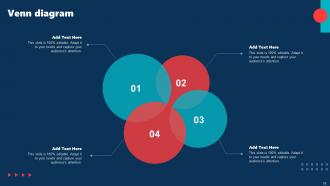
Slide 76: This slide display Venn diagram.
Slide 77: This is thank you slide & contains contact details of company like office address, phone no., etc.
Internal Brand Rollout Plan Branding CD V with all 82 slides:
Use our Internal Brand Rollout Plan Powerpoint Presentation Slides Branding CD to effectively help you save your valuable time. They are readymade to fit into any presentation structure.









FAQs for Internal Brand Rollout Plan
So you need four things to actually make this work internally. Get your leadership visibly supporting it first - like actually talking about it, not just sending one email. Training materials are huge too, but explain WHY you're rebranding, not just "here's the new logo." Communication timelines matter so people aren't confused about what's happening when. Oh and this one's critical - set up ways for teams to give you feedback. Most companies totally skip that part and then act surprised when nobody's buying in. You can't fix what you don't know is broken, you know?
Honestly, just do a quick employee survey about brand stuff - like whether they actually get your company's values and could explain what you do to their friends. Focus groups are solid too. I'd also dig into your internal comms to see what people ignore versus what they actually read. Check email open rates, intranet clicks, that kind of thing. Oh and see if teams are naturally using your brand messaging in their own presentations - that's usually a dead giveaway. The whole point is figuring out where you're at before dumping money into some big rollout that might flop.
Honestly, training your team is like 90% of whether this whole thing works or totally bombs. Your staff won't get the brand messaging without it - they'll just do whatever they used to do or give customers completely mixed signals. Really bad look. You've got to do actual interactive sessions, not boring slide decks that put everyone to sleep. Cover the "why" behind changes, not just what's different. Everyone from your front desk person to managers needs to actually understand and believe in this stuff before you launch. Otherwise you're basically setting money on fire.
Track your survey scores for brand understanding and how much people actually buy into it. Retention rates matter too - if your branding's working, people stick around. I'd set up quarterly check-ins instead of waiting for the annual survey. Watch how employees use brand messaging in their presentations and emails (super telling). Coffee conversations are honestly where you'll hear the real feedback though. Some of this stuff you can't measure with numbers - sometimes you just know when it clicks, you know?
Honestly, repetition is your best friend here - just don't be weird about it. Get leadership talking about it in team meetings first, then back it up with newsletters and email stuff. Town halls are actually pretty effective when the CEO gets up there and explains why this matters (people love hearing from the top). Throw up some visual reminders around the office too. Even little things like branded notebooks or whatever keep it in people's heads daily. Oh, and don't sleep on Slack announcements - quick and easy. I'd map out a simple calendar so you're not just randomly throwing messages at people. Hit different channels at different times.
Oh absolutely, you can't just blast the same info to everyone. Sales will freak out about what to tell clients and need new pitch materials. IT's gonna be buried updating systems and websites. HR always gets bombarded with random employee questions - honestly they need the most prep time. Marketing wants all the brand guidelines yesterday, and finance just cares about costs and deadlines. Map out what each team actually deals with daily and give them stuff that helps their specific chaos. Way better than some generic company-wide email that nobody reads anyway.
Use your intranet or Slack for the main announcements, then set up a brand portal with all the logos and templates everyone needs. Town halls are honestly your best bet for the big reveal - people get way more excited in person. Quick training videos help too, plus some branded swag never hurts. Department meetings can handle the smaller details. Oh, and definitely create feedback channels so you can see what's working and what isn't. Maybe throw in some quick reference guides while you're at it.
Honestly, stories beat boring facts every single time. People won't remember your brand values from some slideshow, but they'll totally remember how your product actually helped someone. Weave real customer experiences or company moments into your rollout - it makes everything click. Your employees will finally see how their work matters in the bigger picture too. Oh, and start grabbing authentic stories from different teams now. You can drop them into presentations or meetings later. Way more effective than just listing features, trust me.
Honestly, the biggest mistake is not getting leadership on the same page first. You'll have chaos otherwise. Train your team on the new guidelines too - I know it sounds basic but companies skip this constantly! Rolling everything out at once is brutal for teams. Nobody executes well when they're drowning. Your sales pitch, HR stuff, internal emails - all of it needs updating, not just the pretty marketing materials. Oh, and test with a small group first. Way easier to fix issues before you go all-in company-wide.
Your leaders need to jump in first - like, actually USE the new brand stuff, wear the shirts, drop the language in meetings. I've seen so many rebrands die because executives just announce it then disappear. Have them tell stories about why this matters during all-hands meetings. Also set up listening sessions where people can ask questions or complain - trust me, they will. The whole thing only works if leadership doesn't just talk about the change but actually lives it themselves.
Track how many people actually show up to training sessions and download brand stuff first. But honestly? That's just surface level. What you really need is employee surveys asking if they get the brand and feel confident talking about it. I'd also watch for things like whether they're using brand hashtags internally or posting about work on their own social media. Town hall feedback quality is another good indicator - you can tell when people are bought in. Set up a monthly dashboard so you can catch problems early and tweak things as you go.
Start with pulse surveys after big milestones and set up anonymous feedback channels - seriously, people won't be honest otherwise. Focus groups work great too, just mix up the departments. Your team leads should do regular check-ins to catch problems early. Here's the thing though: if you don't actually show how their input changed things, people will just stop caring. I've seen that happen so many times. Make the adjustments obvious and tell everyone what shifted because of their feedback. Otherwise you're just going through the motions.
Dude, you gotta treat internal communication like your brand's lifeline after launch. Most companies absolutely crush the rollout then basically disappear - don't be those people. Set up monthly check-ins and maybe a Slack channel where people can ask "does this feel on-brand?" without looking clueless. Make your guidelines actually findable when teams need them. Share wins when you see them! Quick responses to questions matter way more than you think. Oh, and update everyone when things change - nobody likes finding out guidelines shifted through random hallway gossip.
Honestly, digital tools are a game changer for brand rollouts. Slack or Teams keeps everyone in the loop with real-time updates. Your LMS can handle training modules, and intranet portals let people grab brand guidelines whenever they need them. Video calls for Q&As work way better than just sending PDFs – people actually pay attention. I'd also run digital surveys to see how adoption's going. Oh, and here's the thing – stick with tools your team already knows and likes. Don't make them learn something new on top of everything else. Just weave your brand stuff into what they're already using.
Look, your employees have to actually *live* the brand daily—they can't just fake it. If there's a gap between what you're telling them to say and their real experience at work, the whole thing crashes and burns. Nobody wants to feel like a fraud, you know? Honestly assess where your culture doesn't match your brand messaging first. Fix those disconnects before you roll anything out. Your team should be able to talk about your values from genuine experience, not some script they memorized. That's when you get real brand ambassadors instead of reluctant actors.
-
Delighted to see unique and eye-catching PowerPoint designs that are so easy to customize.
-
The slides are remarkable with creative designs and interesting information. I am pleased to see how functional and adaptive the design is. Would highly recommend this purchase!