


Introduction To Blockchain Technology And Its Applications BCT CD




Try Before you Buy Download Free Sample Product
 Impress Your
 Audience
 100%
100% Editable
 Save Hours
 of Time


Discover the blockchain world through our comprehensive PowerPoint presentation, Introduction to Blockchain Technology and Its Applications PowerPoint Presentation. Designed professionally, this deck encompasses every facet of blockchain, providing a clear grasp of its concepts and vast applications across industries. Additionally, the What is Blockchain PPT templates present a foundational overview of the presentation and elucidate blockchains key components. It then navigates through the technologys strata, offering an evolutionary timeline that traces its remarkable growth and advancement. Furthermore, the How Blockchain Works PPT slides unveil blockchain mechanics, architecture, mining process, security measures, and immutability assurance. The slides delve into the technologys versatile applications across sectors supply chain, healthcare, finance, retail, manufacturing, insurance, and gaming. Lastly, the presentation assesses blockchains potential impact on businesses, existing challenges, and forthcoming trends in development and implementation. Download this 100 percent editable presentation and get access to our highly researched and skillfully designed product.
People who downloaded this PowerPoint presentation also viewed the following :
Content of this Powerpoint Presentation
Slide 1: This slide introduces Introduction to Blockchain Technology and Its Applications. State your company name and begin.
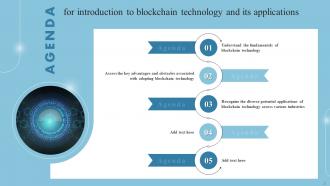
Slide 2: This is an Agenda slide. State your agendas here.
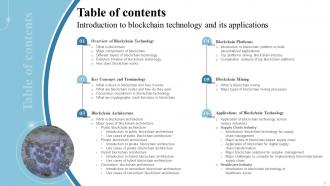
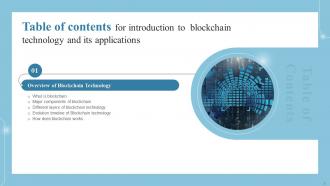
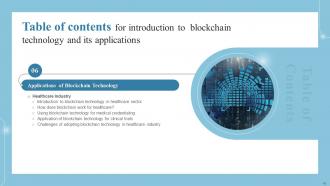
Slide 3: This slide shows Table of Content for the presentation.
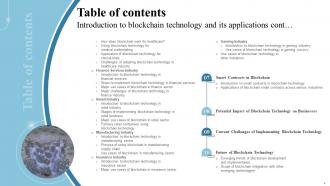
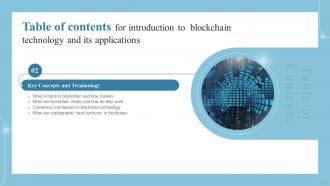
Slide 4: This slide continues showing Table of Content for the presentation.
Slide 5: This slide shows title for topics that are to be covered next in the template.
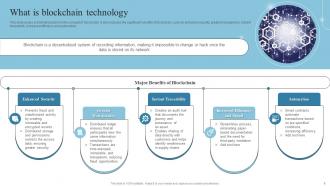
Slide 6: This slide covers a brief introduction to the concept of blockchain. It also includes the significant benefits of blockchain.
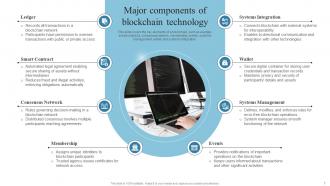
Slide 7: This slide presents the key elements of a blockchain, such as a ledger, smart contracts, consensus network, membership, events etc.
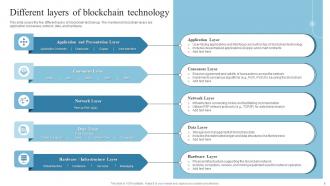
Slide 8: This slide covers the five different layers of blockchain technology.
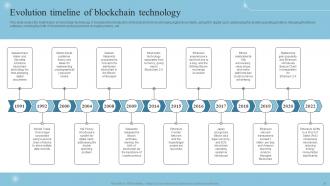
Slide 9: This slide describes the brief history of blockchain technology.
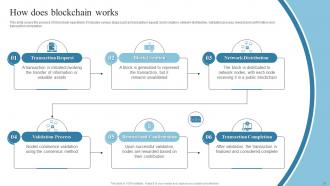
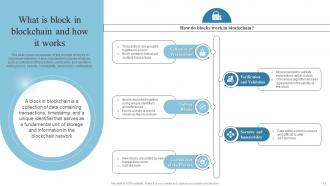
Slide 10: This slide covers the process of blockchain operations. It includes various steps such as transaction request, block creation, network distribution etc.
Slide 11: This slide shows title for topics that are to be covered next in the template.
Slide 12: This slide covers an overview of the concept of blocks in blockchain networks. It also includes the functions of blocks.
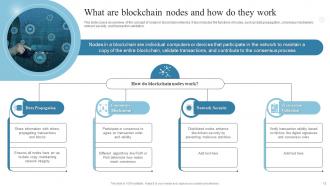
Slide 13: This slide presents an overview of the concept of nodes in blockchain networks. It also includes the functions of nodes.
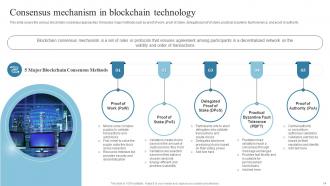
Slide 14: This slide describes the various blockchain consensus approaches. It includes major methods.
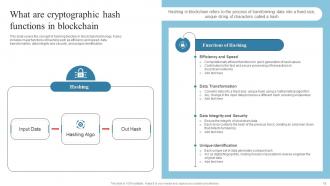
Slide 15: This slide displays the concept of hashing function in blockchain technology including major functions of hashing.
Slide 16: This slide shows title for topics that are to be covered next in the template.
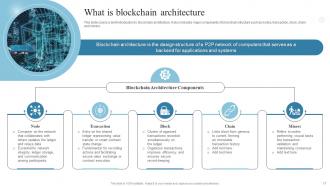
Slide 17: This slide covers a brief introduction to blockchain architecture.
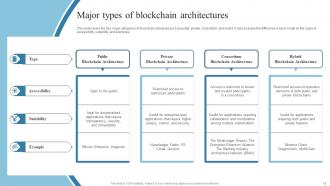
Slide 18: This slide presents the four major categories of blockchain structures such as public, private, consortium, and hybrid.
Slide 19: This slide shows title for topics that are to be covered next in the template.
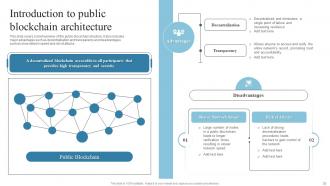
Slide 20: This slide displays a brief overview of the public blockchain structure.
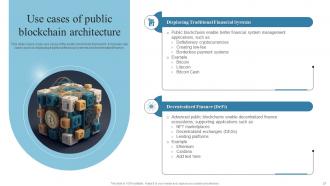
Slide 21: This slide covers major use cases of the public blockchain framework.
Slide 22: This slide shows title for topics that are to be covered next in the template.
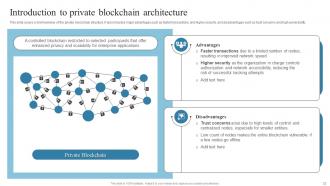
Slide 23: This slide presents a brief overview of the private blockchain structure.
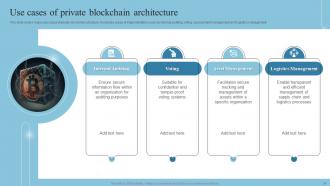
Slide 24: This slide covers major use cases of private blockchain structure.
Slide 25: This slide shows title for topics that are to be covered next in the template.
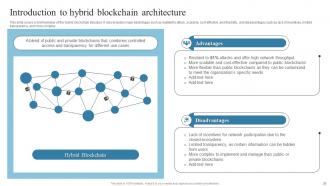
Slide 26: This slide covers a brief overview of the hybrid blockchain structure.
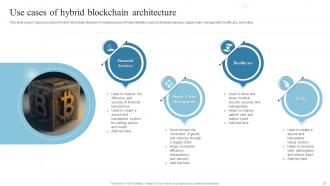
Slide 27: This slide displays major use cases of hybrid blockchain structure.
Slide 28: This slide shows title for topics that are to be covered next in the template.
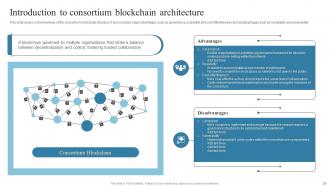
Slide 29: This slide covers a brief overview of the consortium blockchain structure.
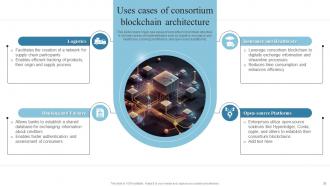
Slide 30: This slide presents major use cases of consortium blockchain structure.
Slide 31: This slide shows title for topics that are to be covered next in the template.
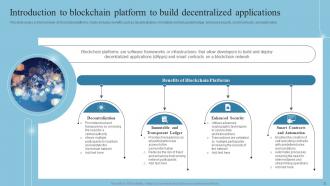
Slide 32: This slide covers a brief overview of blockchain platforms.
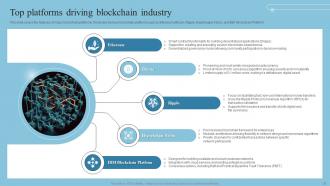
Slide 33: This slide displays the features of major blockchain platforms. It includes famous blockchain platforms such as Ethereum, Bitcoin, Ripple etc.
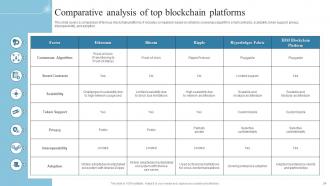
Slide 34: This slide covers a comparison of famous blockchain platforms including comparison based on a factors consensus algorithm, smart contracts etc.
Slide 35: This slide shows title for topics that are to be covered next in the template.
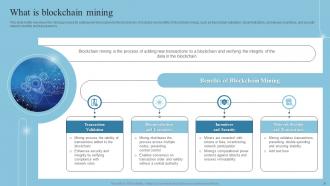
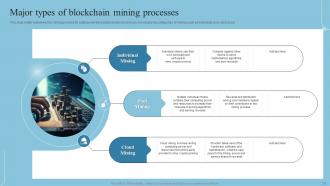
Slide 36: This slide briefly overviews the mining process for adding new transactions to the blockchain.
Slide 37: This slide also briefly overviews the mining process for adding new transactions to the blockchain.
Slide 38: This slide shows title for topics that are to be covered next in the template.
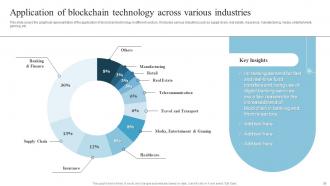
Slide 39: This slide displays the graphical representation of the application of blockchain technology in different sectors.
Slide 40: This slide shows title for topics that are to be covered next in the template.
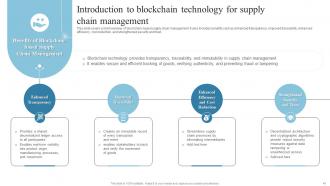
Slide 41: This slide covers a brief overview of blockchain-based supply chain management.
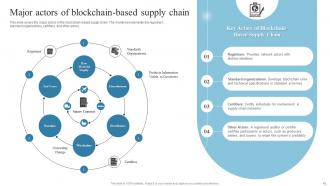
Slide 42: This slide presents major actors in the blockchain-based supply chain.
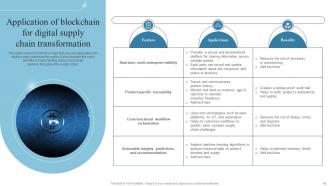
Slide 43: This slide covers blockchain's major features and applications for digital supply chain transformation.
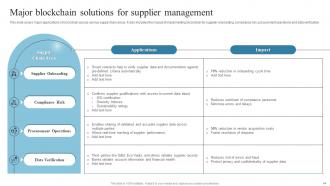
Slide 44: This slide presents major applications of blockchain across various supply chain areas.
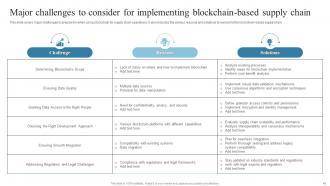
Slide 45: This slide covers major challenges to prepare for when using blockchain for supply chain operations.
Slide 46: This slide shows title for topics that are to be covered next in the template.
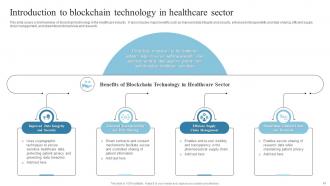
Slide 47: This slide covers a brief overview of blockchain technology in the healthcare industry.
Slide 48: This slide displays the process of blockchain operations across the healthcare sector.
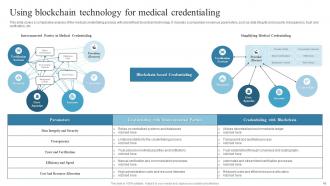
Slide 49: This slide covers a comparative analysis of the medical credentialing process with and without blockchain technology.
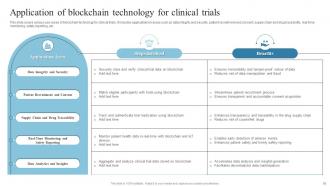
Slide 50: This slide presents various use cases of blockchain technology for clinical trials.
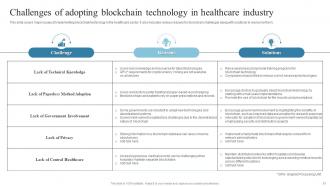
Slide 51: This slide covers major issues of implementing blockchain technology in the healthcare sector.
Slide 52: This slide shows title for topics that are to be covered next in the template.
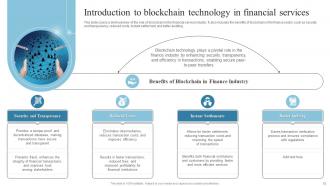
Slide 53: This slide covers a brief overview of the role of blockchain in the financial service industry.
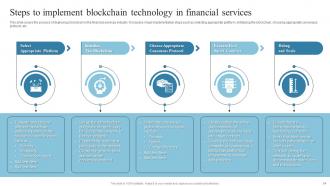
Slide 54: This slide displays the process of deploying blockchain in the financial services industry.
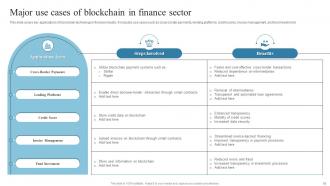
Slide 55: This slide covers key applications of blockchain technology in finance industry.
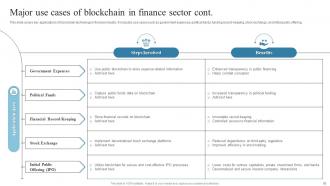
Slide 56: This slide presents key applications of blockchain technology in finance industry.
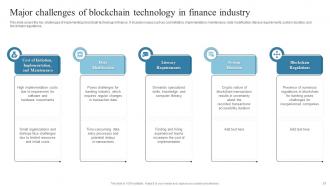
Slide 57: This slide covers the key challenges of implementing blockchain technology in finance.
Slide 58: This slide shows title for topics that are to be covered next in the template.
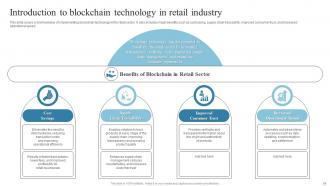
Slide 59: This slide covers a brief overview of implementing blockchain technology in the retail sector.
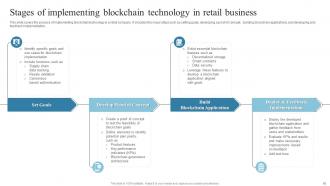
Slide 60: This slide presents the process of implementing blockchain technology in a retail company.
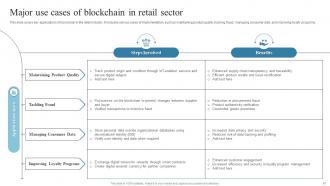
Slide 61: This slide covers key applications of blockchain in the retail industry.
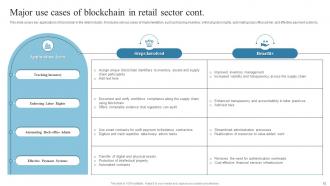
Slide 62: This slide describes key applications of blockchain in the retail industry.
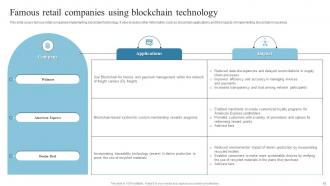
Slide 63: This slide covers famous retail companies implementing blockchain technology.
Slide 64: This slide shows title for topics that are to be covered next in the template.
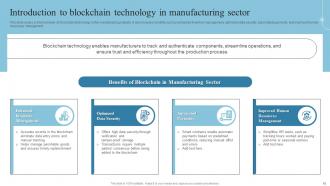
Slide 65: This slide presents a brief overview of blockchain technology in the manufacturing industry.
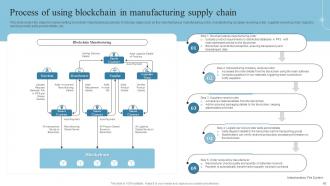
Slide 66: This slide covers the steps for implementing blockchain manufacturing business.
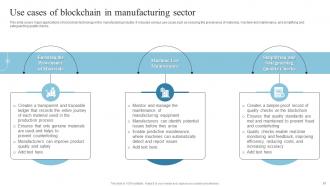
Slide 67: This slide displays major applications of blockchain technology in the manufacturing industry.
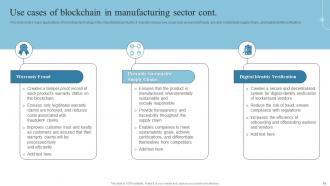
Slide 68: This slide covers major applications of blockchain technology in the manufacturing industry.
Slide 69: This slide shows title for topics that are to be covered next in the template.
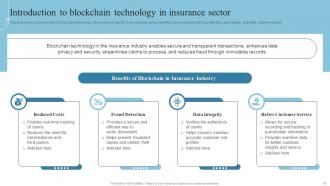
Slide 70: This slide covers a brief overview of blockchain technology in the insurance industry.
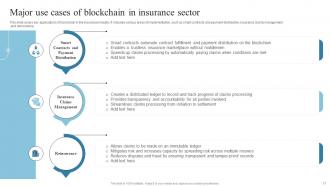
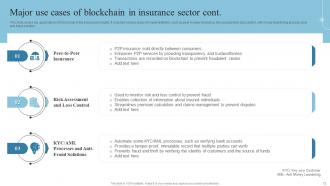
Slide 71: This slide presents key applications of blockchain in the insurance industry.
Slide 72: This slide covers key applications of blockchain in the insurance industry.
Slide 73: This slide shows title for topics that are to be covered next in the template.
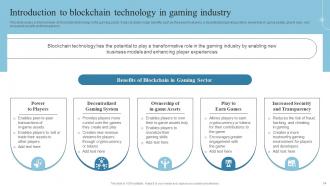
Slide 74: This slide covers a brief overview of blockchain technology in the gaming sector.
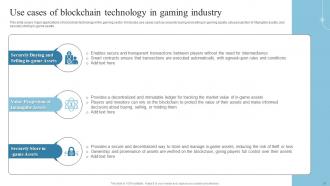
Slide 75: This slide presents major applications of blockchain technology in the gaming sector.
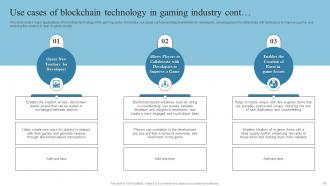
Slide 76: This slide covers major applications of blockchain technology in the gaming sector.
Slide 77: This slide shows title for topics that are to be covered next in the template.
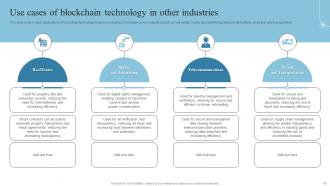
Slide 78: This slide covers major applications of blockchain technology in various industries.
Slide 79: This slide shows title for topics that are to be covered next in the template.
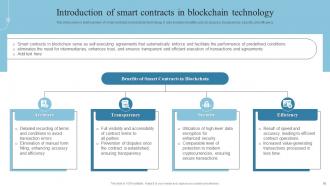
Slide 80: This slide covers a brief overview of smart contracts in blockchain technology.
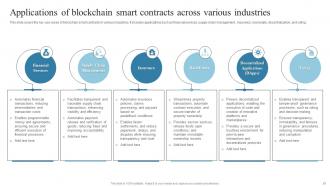
Slide 81: This slide presents key use cases of blockchain smart contracts in various industries.
Slide 82: This slide shows title for topics that are to be covered next in the template.
Slide 83: This slide covers the major areas of implementing blockchain technology.
Slide 84: This slide shows title for topics that are to be covered next in the template.
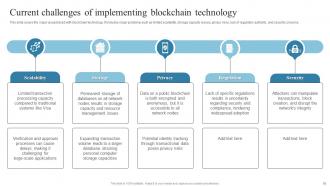
Slide 85: This slide presents the major issues faced with blockchain technology.
Slide 86: This slide shows title for topics that are to be covered next in the template.
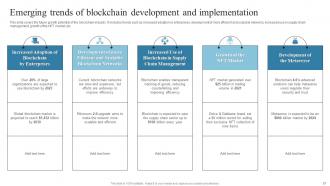
Slide 87: This slide covers the future growth potential of the blockchain industry.
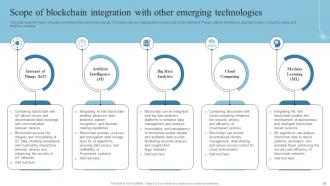
Slide 88: This slide displays the future integration potential of the blockchain industry.
Slide 89: This slide shows all the icons included in the presentation.
Slide 90: This slide is titled as Additional Slides for moving forward.
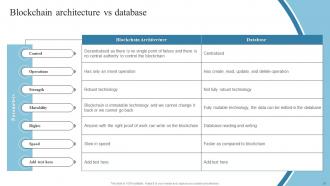
Slide 91: This slide presents Blockchain architecture vs database with two products comparison.
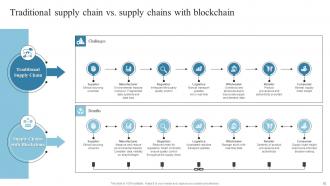
Slide 92: This slide showcases Traditional supply chain vs. supply chains with blockchain.
Slide 93: This is a Thank You slide with address, contact numbers and email address.
Introduction To Blockchain Technology And Its Applications BCT CD with all 98 slides:
Use our Introduction To Blockchain Technology And Its Applications BCT CD to effectively help you save your valuable time. They are readymade to fit into any presentation structure.







FAQs for Introduction To Blockchain Technology And Its
So blockchain basically runs on three big things: decentralization, transparency, and immutability. No single company controls it - instead there's this whole network of computers that validate stuff together. You can actually check the public ledger yourself, which is pretty cool. Once something gets recorded, good luck changing it - that's where the permanent audit trail comes in. The network has to agree on things before they happen, like a digital democracy I guess. Oh and heads up - when you're checking out blockchain projects, some actually follow these principles way better than others. Don't just take their word for it.
So blockchain's main advantage is that once something's written, you can't just go back and change it - the whole network has to agree first. Each piece of data gets cryptographically linked to everything before it, so if someone tries messing with one record, they'd basically have to rewrite the entire chain (good luck with that). Regular databases are way more vulnerable since there's usually some admin who can just... edit stuff. And blockchain copies everything across tons of computers, so there's no single point where everything breaks. Yeah, it's slower and eats more energy, but honestly? The security trade-off is pretty worth it.
Honestly, blockchain could be huge for your supply chain stuff. You get this permanent record that nobody can tamper with - tracks everything from raw materials straight to delivery. Pretty cool for catching counterfeits and fraud. When something breaks, you can pinpoint the problem fast instead of playing detective for weeks. Smart contracts handle payments automatically too, which saves headaches. The best part? Everyone's working off the same data, so no more "that's not what I have in my system" arguments. I'd start by figuring out where you're getting burned on transparency issues - that's your sweet spot right there.
So smart contracts are basically like automated middlemen - when certain conditions get met, they execute agreements automatically. No human intervention needed. You'll save money and time since there's no back-and-forth with third parties, plus way fewer mistakes. Everyone can see the contract terms too, which is nice for transparency. Here's where it gets tricky though - once you deploy these things, changing them is a total nightmare. Seriously, you better get your code right the first time. I'd definitely start with something simple like basic payments before you dive into anything complicated. Test the hell out of it first.
So basically, the consensus mechanism is what keeps your blockchain secure and validates all the transactions. Bitcoin uses Proof-of-Work which is crazy secure but burns through energy like nobody's business. Proof-of-Stake is way faster and doesn't kill the environment, though some people argue it's not as decentralized. Classic speed vs security thing - you see it everywhere in tech, honestly. Your choice here affects everything: how fast transactions go through, when they're actually final, and how well you can fight off attacks. Really depends what you're prioritizing.
So basically, public blockchains like Bitcoin are open to anyone - totally transparent but slower and pricier to use. Private ones? Only certain people get access. Companies usually go private because they want control over their data (makes sense, right?). You'd pick public for stuff like crypto where transparency matters most. Private works better for internal business stuff. I've noticed most businesses I know about went the private route - guess they don't want random people poking around their processes. Really comes down to whether you value openness or control more.
So blockchain voting basically gives you a permanent record that can't be tampered with once it's there. Anyone can check the votes were counted right, but they still can't see who you actually voted for - pretty cool system honestly. You get like a digital receipt proving your ballot went through. Real-time auditing instead of just hoping everything got counted properly (not that I don't trust election workers, most are solid). Estonia's been doing this for ages if you want to see how it works in practice. Way more transparent than what we've got now.
So blockchain makes records basically impossible to tamper with because each block connects cryptographically to the last one. Any changes get caught instantly across the whole network. Think of it like having tons of people constantly watching your data - which sounds creepy but it's actually genius for security. You can use it for identity stuff and checking if software got hacked. No single target for attackers since it's decentralized. My buddy's company started with blockchain authentication and it worked pretty well. Worth looking into that first if you're thinking about it.
So basically blockchain lets you own your medical records instead of having them scattered everywhere. You'd control who sees what - doctors need your permission first, and everything gets tracked permanently. No more calling five different offices for your test results, which is honestly such a pain. The security is way better too since it's decentralized. Estonia's already doing this nationwide and it works pretty well. Your data stays private but doctors can still access what they need when you say it's okay.
Yeah so Bitcoin mining is absolutely insane energy-wise - like, more electricity than whole countries use. Mining rigs run constantly solving math problems, which honestly seems kinda ridiculous when you put it that way. Most of that power still comes from fossil fuels, so carbon emissions are a real problem. But here's the thing - newer blockchains switched to way more efficient systems. Ethereum did this already. Plus mining operations are slowly moving toward renewable energy sources. When you're checking out blockchain projects, definitely look at what consensus method they use and where their energy comes from.
So blockchain basically creates this unhackable record system - every transaction gets stored across tons of different computers instead of just one server. Makes it way harder for scammers to mess with stuff. You can actually trace money back through the whole chain too, which is pretty cool for catching fraud. Smart contracts are clutch because they cut out the middleman entirely (no more "oops we lost your payment" BS). Oh and since everything's transparent, there's less room for shady dealings. If you're thinking about it for work, maybe start with payment verification? That's usually the easiest wins.
Honestly, the regulatory mess is wild right now. Different countries have completely different rules, and governments are basically playing catch-up with crypto. The US is probably the most confusing - SEC and CFTC can't agree if something's a security or commodity. Meanwhile Europe's rolling out MiCA to regulate everything. Asia's a mixed bag though. Japan loves crypto, China banned it (but still wants blockchain tech?), and India changes their mind every few months. Wild west days are definitely over. You'll want to check local laws wherever you're planning to operate because something legal in one place could get you sued in another.
So tokenization is basically putting your assets on blockchain as tokens - makes everything way smoother to manage. Real estate becomes fractional, you can trade anytime instead of dealing with market hours, and the blockchain keeps everything transparent. Honestly, the liquidity change alone is worth it since you can actually sell pieces of stuff that used to be impossible to move. Smart contracts handle most of the boring admin work too, so less middlemen and paperwork headaches. If you've got valuable assets sitting around, definitely check out some tokenization platforms. Game changer for sure.
So blockchain basically cuts out all the middlemen - no banks needed for trading, lending, or borrowing crypto. Smart contracts handle everything automatically, which is pretty neat honestly. You keep control of your funds the whole time instead of handing them over to some institution. Plus you can earn yield, get instant loans, or swap tokens whenever since it runs 24/7. Everything's transparent and runs on code rather than people making decisions. The space moves crazy fast though, so I'd start small if you're interested and research whatever protocols you're considering first.
So NFTs basically let artists sell directly to buyers and earn royalties when stuff gets resold later. Digital artists who couldn't make money before are suddenly pulling in serious cash - some hitting six figures. Musicians are dropping albums as NFTs to skip the label middleman, which is pretty smart honestly. The whole entertainment world is testing out NFT fan experiences too, like exclusive content or virtual hangouts. Look, the insane 2021 hype has definitely cooled off, but the idea of proving you own digital stuff is still changing how creators make money. Worth understanding even if you don't dive in right away.
-
Perfect. Thank you.
-
“One of the best experiences with SlideTeam for my presentation.Everything on time, communication is efficient and price is reasonable. All good in one place.”
-
Nothing beats the well-formatted and professionally designed templates offered. Kudos to SlideTeam for their amazing collection of PPT slides.