

Introduction To Product Planning And Development Powerpoint Ppt Template Bundles Strategy MD




Try Before you Buy Download Free Sample Product
 Impress Your
 Audience
 100%
100% Editable
 Save Hours
 of Time


Our Introduction To Product Planning And Development Powerpoint Ppt Template Bundles Strategy MD are topically designed to provide an attractive backdrop to any subject. Use them to look like a presentation pro.
People who downloaded this PowerPoint presentation also viewed the following :
Content of this Powerpoint Presentation
Slide 1: This slide introduces Product Planning and Development. State your company name and begin.
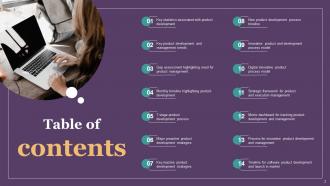
Slide 2: This slide shows Table of Content for the presentation.
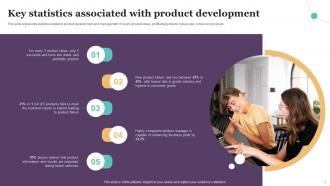
Slide 3: This slide represents statistics related to product development and management.
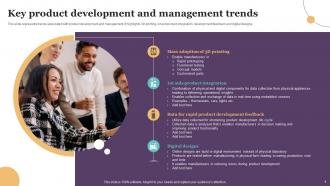
Slide 4: This slide represents key trends associated with product development and management.
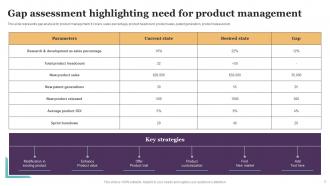
Slide 5: This slide represents gap analysis for product management.
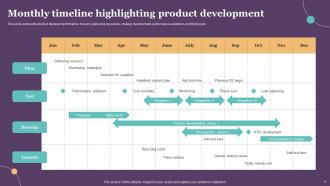
Slide 6: This slide describes monthly timeline highlighting product development.
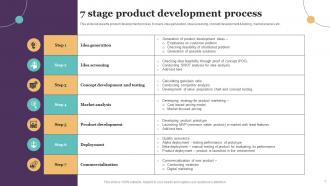
Slide 7: This slide showcases product development process. It covers idea generation, idea screening, concept development & testing, market analysis etc.
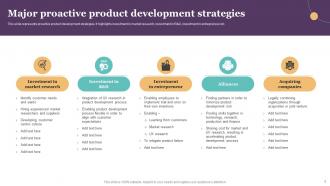
Slide 8: This slide describes major proactive product development strategies.
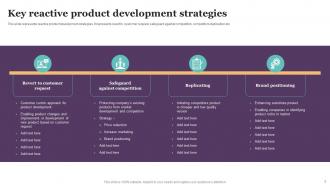
Slide 9: This slide displays key reactive product development strategies.
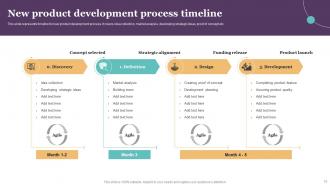
Slide 10: This slide displays timeline for new product development process.
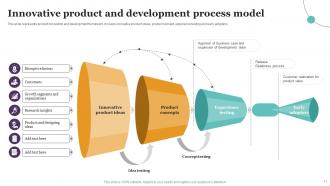
Slide 11: This slide illustrates innovative product and development process model.
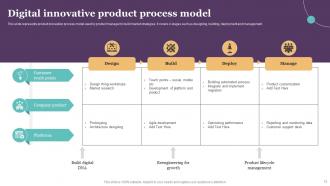
Slide 12: This slide displays digital product innovation process model.
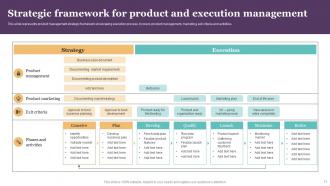
Slide 13: This slide presents strategic framework for product and execution management.
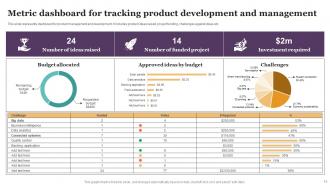
Slide 14: This slide displays metric dashboard for product management and development.
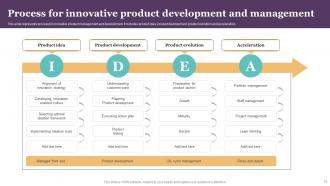
Slide 15: This slide describes process for innovative product management and development.
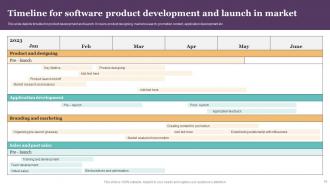
Slide 16: This slide depicts timeline for software product development and launch in market.
Slide 17: This is a Thank You slide with address, contact numbers and email address.
Introduction To Product Planning And Development Powerpoint Ppt Template Bundles Strategy MD with all 22 slides:
Use our Introduction To Product Planning And Development Powerpoint Ppt Template Bundles Strategy MD to effectively help you save your valuable time. They are readymade to fit into any presentation structure.





FAQs for Introduction To Product Planning And Development Powerpoint Ppt Template
So you've got ideation first - basically brainstorming ideas. Then comes market research to see if people actually want this thing. After that, concept development and prototyping to build something testable. Testing is where products usually live or die, honestly. Most founders hate this part but it's crucial. Once you've refined everything based on feedback, you plan production and launch. Oh, and don't let anyone rush you through research and testing - I've seen so many startups crash because they skipped steps. Way easier to fix problems before launch than after customers are already pissed.
Honestly, market research and user feedback are what should be driving your whole product roadmap. They show you what problems people actually deal with vs what you assume they have. Do research upfront to validate ideas and spot market gaps. Then use feedback to iterate while you're building. I've watched so many teams create these "amazing" features that literally nobody asked for - total waste of time. Get both the numbers (surveys, analytics) and the stories (interviews, testing). Oh and actually talk to real users regularly, not just your coworkers who already think everything you build is genius.
Dude, you absolutely need those other teams involved or you're toast. Engineering knows what's actually possible to build. Marketing gets whether people want it. Sales hears all the customer complaints - that stuff is gold. Design makes sure it doesn't suck to use. Honestly, I've seen so many products fail because PMs thought they could just wing it solo (spoiler: they couldn't). Regular check-ins are clutch. Make sure everyone can see your roadmap too - keeps people from going rogue on priorities.
Honestly, just make a simple grid - user impact on one side, business value on the other. Actually talk to real users though, not just the sales team who thinks they know what customers want. I always go for stuff that fixes genuine problems instead of flashy features that look good in demos but nobody uses. Quick wins are gold since they keep momentum going while you work on bigger stuff. Development time matters too - sometimes the "perfect" feature isn't worth six months of work. Pick three things max per cycle and don't let anyone talk you into adding more. Trust me on that one.
Don't put all your eggs in one basket - diversify your approach. Do your homework first though - research the market and validate with real users before building anything. Trust me, this saves so much pain down the road. Small iterative phases are your friend since you can pivot fast when things go sideways. I've watched teams disappear for months then launch products nobody actually wants. Always have Plan B ready for your major assumptions. Buffer time is crucial because surprises will happen. Regular stakeholder check-ins keep everyone grounded and help you spot problems early.
Honestly, the whole game has changed with tech these days. Real-time analytics let you make decisions based on actual data instead of just guessing what might work. AI predicts market trends now, which is pretty wild when you think about it. Cloud tools mean your team can prototype and pivot super fast - no more waiting around for months of traditional research. The best part? You can test ideas with MVPs and A/B testing before spending big money. Those endless email chains are basically dead too, thank god. Digital collaboration makes everything so much faster. If you're not using these tools yet, you're honestly missing out on avoiding a lot of headaches and failed launches.
Focus on three main areas: how people use your product (daily/monthly active users, which features they actually click), whether it's making money (revenue, conversion rates), and how fast your team ships stuff. Honestly, I'd rather have a decent feature out in two weeks than a "perfect" one in two months - speed wins. Track customer happiness too through surveys or support ticket volume. Retention matters more than downloads tbh. Don't go crazy measuring everything though. Pick maybe 4 metrics that actually connect to what you're trying to achieve.
Honestly, short sprints are your best friend here - like 2 weeks max instead of those brutal quarterly pushes. Test stuff with actual users constantly, not just the suits in meetings (they never know what they actually want anyway). Get your designers and devs talking daily or you'll end up with those nightmare "this looks nothing like what we discussed" situations. Don't fall in love with your original plan though. I know it's tempting when you've put work into it, but flexibility wins every time. Weekly check-ins help you pivot fast when things aren't working. Keep prioritizing based on what users are actually telling you.
Figure out your big-picture goals first - what customer problems are you actually solving? Then map out themes by quarter instead of getting lost in feature lists. Stakeholders eat that stuff up. Get your eng and design teams involved early or you'll end up with totally unrealistic timelines (learned that one the hard way). Everything should tie back to some KPI you can measure. Don't just tell people what you're building - explain why it matters. Things will change constantly, so stay flexible and keep everyone updated when priorities shift. Honest communication beats fake perfection every time.
Honestly, personas are like having a sanity check for every decision you make. When you're debating features, just ask "would Sarah the busy marketing manager actually care about this?" Instead of arguing based on gut feelings, you've got real data backing you up. They keep your whole team focused on actual humans instead of building stuff that just sounds neat in theory. I'd start with maybe 2-3 solid personas from real user research - any more gets messy. Then just bring them up in every planning session. It's kinda wild how much clearer everything becomes when you can picture your actual users.
Start with IP protection - patents, trademarks, copyrights for your stuff. Safety regs and industry certifications come next before you can launch. Privacy laws are a nightmare if you're grabbing user data (thanks GDPR). Get liability insurance too because product lawsuits suck. Employment law kicks in when you hire devs or contractors. Honestly, find a solid IP lawyer now, not later when you're scrambling. My friend learned that the hard way and it cost him big time. Don't skip the boring legal stuff - it'll bite you.
Honestly, prototypes and MVPs are lifesavers for testing stuff without blowing your whole budget. I'd start super low-fi - like sketches or wireframes - just to see if people actually get your concept. Then build an MVP with only the must-have features that solve the core problem. Real user feedback at this stage is gold. Be brutal about what makes it into version one though - I've seen too many people try to cram everything in. Oh, and map out your biggest assumptions first. Design your prototype specifically to test those risky bits. You'll catch problems way earlier this way.
Honestly, brainstorming sessions work great if you mix up your team - grab people from different departments. Throw around some "what if" scenarios and block out actual time for experimenting with stuff. Design thinking workshops are solid too since they force you to think like your users. Watch out for feature-creep though (been there!). Rapid prototyping lets you test crazy ideas without burning cash. Also, don't forget external voices - customer interviews or bringing in industry people can shake things up. Start small: schedule one innovation session this month where failing is totally fine. That last part's key.
Honestly, just build it into your planning from the start instead of scrambling later. Set some actual environmental goals next to your regular metrics - carbon reduction, recyclable materials, whatever makes sense for your product. Get your supply chain people involved early so they can find sustainable options (they're usually pretty good at this stuff). Your design team needs to know the constraints upfront too. The trick is making sustainability part of how you normally make decisions, not some separate thing you check off. Oh, and try running a sustainability impact assessment alongside your usual feasibility studies - it's way less painful than you'd think.
Honestly, B2B and B2C are like night and day. B2B means you're dealing with savvy decision-makers who want detailed features and have forever-long sales cycles. They'll actually tell you what's broken though, which is nice. B2C is the opposite - you need something dead simple that works immediately, but good luck getting feedback. Users just vanish if they don't like it. Super frustrating. First thing I'd figure out is whether people are buying this for work or themselves. That one question basically determines your entire strategy from there.
-
Best way of representation of the topic.
-
Such amazing slides with easy editable options. A perfect time-saver.