


Iot Robotics Powerpoint Ppt Template Bundles




Try Before you Buy Download Free Sample Product
 Impress Your
 Audience
 100%
100% Editable
 Save Hours
 of Time


fusion of Artificial Intelligence and the Internet of Things IoT within the realm of robotics, uncovering the potential of the Internet of Robotic Things. From smart factories to healthcare advancements, discover the diverse applications that this synergy offers. Witness how intelligent automation revolutionizes industries, optimizing processes and enhancing efficiency. Join us to comprehend the transformative power of AI-driven IoT Robotics and grasp the future where machines communicate, learn, and act collaboratively, reshaping our technological landscape. Dont miss this opportunity to unravel the intricacies of IoT Robotics and its pivotal role in shaping tomorrows innovations
People who downloaded this PowerPoint presentation also viewed the following :
Iot Robotics Powerpoint Ppt Template Bundles with all 33 slides:
Use our Iot Robotics Powerpoint Ppt Template Bundles to effectively help you save your valuable time. They are readymade to fit into any presentation structure.









FAQs for Iot Robotics Powerpoint
So basically you've got four main parts working together - sensors, actuators, connectivity stuff, and processing units. Sensors grab data from whatever's around them. Then that info either gets crunched locally or shoots up to the cloud through WiFi or cellular. Processing happens (either on the device or cloud-side), then commands get fired back to the actuators that actually make things move. It's like this constant loop going back and forth. Oh, and you can control tons of robots from one dashboard which is pretty sick. I'd say figure out your sensors first though - that choice kinda dictates everything else you'll need.
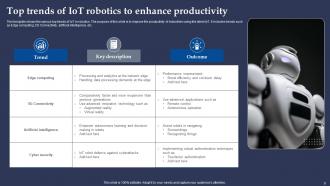
So IoT basically turns robots into these connected machines that can talk to each other and access cloud data in real-time. Manufacturing floors use them to coordinate assembly lines without human input. Your delivery bots can suddenly reroute based on live traffic updates, which honestly seems like magic sometimes. Healthcare robots pull patient info instantly from databases too. The big shift? These aren't standalone machines anymore - they're all networked together sharing data and processing power. Makes them way more adaptable since they're not just relying on their built-in hardware. Pretty crazy how much smarter they get when connected.
Dude, those IoT robots are basically hackable computers with legs - kinda terrifying if you ask me. Weak passwords and unencrypted data make them sitting ducks for hackers who can literally take control of something moving around your space. The good news? Companies are finally getting their act together with end-to-end encryption and blockchain authentication. Some even build security chips right into the hardware now. AI threat detection is getting pretty smart at catching weird behavior too. If you're buying any, just stick with vendors who actually update their firmware regularly instead of abandoning products after launch.
Honestly, IoT robots are game-changers for supply chains. They track inventory automatically and send you alerts before equipment breaks down. The robots talk to each other constantly, so they spot bottlenecks way earlier than humans would. Moving goods between warehouses becomes totally autonomous - they just follow demand patterns. Your picking gets more accurate, labor costs drop, and you'll actually know where everything is at any moment (which is honestly kind of amazing). I'd say start with something simple like automated counting in one section. You'll see returns pretty fast and can build from there.
So basically ML turns your IoT bots from dumb connected devices into actually intelligent machines. They can spot patterns in all that sensor data, predict equipment failures, adapt to new situations - no manual reprogramming needed. Gets better over time too, which is pretty sweet. Real-time decisions happen locally when cloud processing is too slow. Honestly, I'd start with predictive maintenance models first - that's where you'll make your money back fastest. Way easier than jumping into complex stuff right away.
So basically, real-time analytics turn your IoT robots into way smarter machines. They can make split-second decisions instead of just following whatever code you programmed. Think obstacle avoidance, battery optimization, predicting breakdowns before they happen - that kind of stuff. It's honestly pretty cool how responsive they get. We're talking milliseconds instead of waiting around for minutes. Oh, and definitely go with edge computing if you're setting these up. You don't want network lag screwing with your response times. Makes a huge difference in performance.
Oh man, there's some wild stuff happening right now! John Deere's tractors basically farm themselves using IoT sensors - it's crazy to watch. Blue River Technology (John Deere bought them) made these robots that spot individual weeds and spray just those, cutting herbicide use by 90%. Pretty neat, right? Harvest CROO built strawberry pickers that work all night during harvest season. Iron Ox runs these fully automated indoor farms where robots do everything. They all use computer vision and GPS with real-time data. Honestly though, pick your problem first, then figure out the tech - not the other way around.
Basically, IoT robots can handle all the repetitive city stuff - traffic control, garbage pickup, air monitoring, you name it. They're constantly collecting data through sensors, which actually helps planners figure out where to spend money and resources. The cool part is they talk to each other and city systems, so everything responds automatically when conditions change. Honestly, the 24/7 thing is huge since cities never sleep. If you're looking at this for projects, I'd start by finding those boring, repetitive urban tasks that happen over and over - that's where you'll see the biggest impact from automation.
Privacy's the biggest issue - these things are basically spying on people without them knowing. IoT bots collect tons of personal data and can create that creepy surveillance state vibe nobody wants. There's also algorithmic bias where certain groups get unfairly targeted, which is honestly pretty messed up. Data breaches are another nightmare since hackers could access all that footage. Oh, and storage costs can get ridiculous too. If you're going ahead with this, just be super transparent about what you're collecting and who can see it. People deserve to know they're being watched.
Dude, 5G is totally fixing the latency issues we've had with IoT robots. Those sub-millisecond response times mean robots can actually react instantly instead of that weird lag we used to just deal with. Bandwidth is way better too - you can connect tons more devices without everything slowing down. Edge computing finally works properly now, so robot swarms process stuff locally but stay cloud-connected. My buddy's company switched last year and won't shut up about how much smoother everything runs. If you're setting up new robotics stuff, definitely plan for 5G from day one.
So MQTT and CoAP are your go-to lightweight options, with HTTP/HTTPS for web stuff. Real-time control usually means WebRTC or custom TCP/UDP setups. WiFi and Ethernet cover most bases, but cellular's massive for outdoor bots. Bluetooth and Zigbee show up in sensor networks too. Honestly, there's way too many protocols to keep track of sometimes! I'd just start with MQTT though - it's built for IoT and doesn't freak out when connections drop. Prototype with that first, then pile on other protocols when you actually need them.
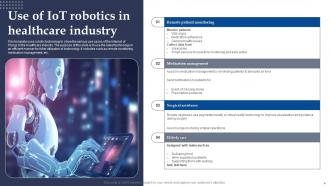
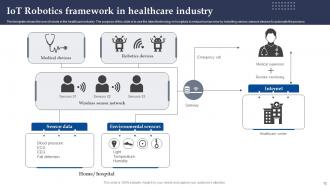
Honestly, IoT robotics could be huge for healthcare. Wearable sensors track vitals 24/7 and send everything straight to doctors. Meanwhile, robots handle the boring stuff - dispensing meds, helping patients walk around, doing basic checks. What's really neat is how it all talks to each other. If someone's heart rate spikes, the system immediately alerts nurses. Staff can actually focus on patient care instead of running around doing repetitive tasks all day. I'd start by figuring out what's taking up most of your team's time - probably monitoring, right?
Dude, edge AI is getting crazy - robots won't need to ping the cloud for every little decision anymore. They'll just figure stuff out locally. 5G is letting robot swarms actually talk to each other in real-time, which honestly still blows my mind. Digital twins are becoming the norm too, so you can test everything virtually first. But here's the wild part: these IoT robots are starting to organize themselves and share what they learn across networks. If your current setup can't handle mesh networks, you're gonna be left behind pretty fast. Isolated robots? That's so 2023.
Dude, IoT robots are seriously perfect for disaster stuff. They can crawl into collapsed buildings where it's too risky for people, plus drones give you that bird's eye view of damage. Real-time data streaming back to command centers is clutch - no waiting around for updates. You can send them through sketchy areas to find survivors or check if buildings might fall down. They're also solid for dropping supplies in places cut off from help. Gas leaks, other hazards? Robots got it covered. Honestly the tech isn't as expensive as I thought it'd be, so emergency teams should definitely partner up with robotics companies.
Dude, you NEED interoperability or you're screwed. Without it, robots can't share data or work together - basically expensive paperweights sitting around not talking. It's like having coworkers who all speak different languages. Total mess. Go for devices that support MQTT or ROS from the start. Trust me on this one - mixing components from different vendors becomes so much easier when everything plays nice together. Plus troubleshooting won't make you want to throw your laptop out the window. I learned this the hard way last year.
-
Wow, never been this impressed with any online service provider. Really appreciate the customer support all along from the navigation to purchasing the right products.
-
“Easy to use. I always wanted to have a quick search for products and SlideTeam has helped me have it.”