


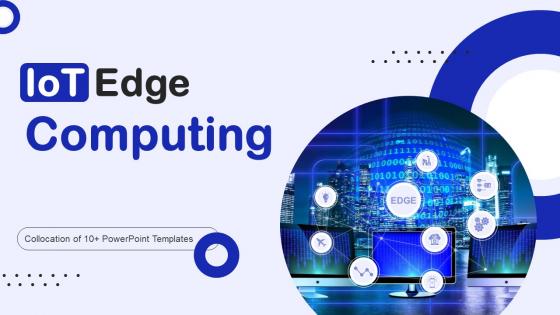
IoT Edge Computing Powerpoint Ppt Template Bundles




Try Before you Buy Download Free Sample Product
 Impress Your
 Audience
 100%
100% Editable
 Save Hours
 of Time


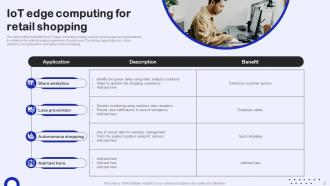
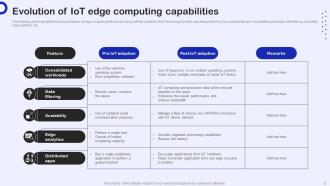
Elevate your retail operations with our cutting-edge IoT Edge Computing service. Our PPT presentation delves into the transformative realm of Edge Computing for Retail, showcasing the game-changing potential of this technology. Discover how our solution empowers businesses to process data closer to the source, minimizing latency and enhancing real-time decision-making. With a focus on efficiency and responsiveness, our presentation illuminates the seamless integration of IoT Edge Computing technology, enabling retailers to unlock new levels of operational intelligence. Join us to explore case studies, benefits, and implementation strategies, and learn how this innovation can revolutionize your retail landscape. Dont miss the opportunity to stay ahead in the retail revolution with our comprehensive IoT Edge Computing insights.
People who downloaded this PowerPoint presentation also viewed the following :
IoT Edge Computing Powerpoint Ppt Template Bundles with all 31 slides:
Use our IoT Edge Computing Powerpoint Ppt Template Bundles to effectively help you save your valuable time. They are readymade to fit into any presentation structure.






FAQs for IoT Edge Computing Powerpoint
Honestly, edge computing is a game changer for latency - traffic lights can react instantly to real conditions instead of waiting for cloud processing. Local data processing saves you tons on bandwidth costs too, which adds up quick. Your systems stay running even when internet craps out, which is huge for reliability. Smart cities get way more responsive emergency services and better energy optimization. Citizens notice the difference in service quality too. Oh and start with whatever apps need the fastest response times - those are no-brainers for edge deployment. Makes way more sense than streaming everything to some distant server farm.
So edge computing is basically moving the processing power right next to your IoT devices instead of sending everything up to the cloud first. Cuts latency down to milliseconds - honestly pretty wild when you think about it. Your devices can actually make decisions on the spot, which is critical for stuff like self-driving cars or factory sensors that can't wait around. Plus you're saving on bandwidth costs and not relying on a perfect internet connection 24/7. The smart move is handling the urgent stuff locally while still pushing the important data to the cloud later.
Dude, IoT edge security is a nightmare tbh. Your biggest problems are device tampering, crappy authentication, and data getting snagged since you're processing stuff right at the endpoints. What's worse? These devices are usually sitting out there where anyone can mess with them physically - scary stuff. Strong encryption helps a ton for data moving around and stored data. Hardware security modules work great for device auth, plus secure boot processes. Oh and definitely segment your network so if one device gets compromised, it doesn't wreck everything else. Updates are annoying but you gotta stay on top of them.
So basically edge computing handles the instant stuff right there on-site, while cloud takes care of the big picture analytics. Your edge devices are like - they jump into action immediately when something needs a quick response (stopping equipment if sensors go crazy, that kind of thing). Then they ship the useful data up to the cloud for deeper number-crunching. I actually think this setup makes way more sense than trying to do everything in one place. You get super fast local reactions plus all that cloud processing power. First step? Figure out what needs split-second timing vs what can wait for analysis.
So AI basically turns your edge devices into mini-brains that can make smart decisions without constantly pinging the cloud. Your devices start learning your patterns and can predict when they'll need more juice, filter out junk data, and even catch small problems early. Honestly, it's kind of wild how much faster everything gets when you're not waiting for cloud responses all the time. Plus you save a ton on bandwidth costs. I'd look at whatever processes you're running now that might benefit from some predictive stuff - that's usually the best place to start.
Start with data minimization at the edge - grab only what you actually need and process locally before sending to cloud. Encrypt everything, both stored data and stuff in transit. Edge computing's biggest win is honestly keeping sensitive info close to home instead of shipping it everywhere. Regular security updates for your edge devices are crucial too. Oh and don't forget retention policies so you're not just collecting personal data forever like some digital hoarder. First step though? Audit what your IoT devices are currently scooping up - I bet there's way more unnecessary junk than you'd expect.
So edge computing is literally right on your IoT devices - like your smart camera doing the processing itself. Fog computing sits between that and the cloud, using local servers nearby. People mix up the terms constantly which drives me nuts! The main thing is how close you are to the device. Edge = right there on the hardware. Fog = local area network serving multiple devices. For your project, just think about how much delay you can handle - that'll tell you which route to go. Honestly both beat sending everything to the cloud and waiting forever.
Manufacturing, healthcare, and autonomous vehicles are where the real money is. Factory floors get instant quality control, patients can be monitored remotely without glitchy connections, and self-driving cars actually work when every millisecond counts. Smart grids are pretty massive too - they'll react to power demand changes immediately. Retail's doing some cool stuff with inventory tracking and personalized shopping, but honestly? It's not as game-changing as the others. If you're thinking career moves or investments, I'd go with those first three. The ROI potential is just way better right now.
So edge gateways basically cut your latency big time because they process stuff right where your IoT devices are instead of sending everything to some faraway cloud server. It's like having a tiny data center at your location vs one three states over - no brainer which is faster, right? Your response times drop from hundreds of milliseconds down to just a few. For things like factory automation or self-driving cars, that speed difference is honestly make-or-break. I'd start by figuring out which of your IoT apps actually need those lightning-fast responses and focus on moving those first. The rest can probably wait.
Honestly, I'd go with three approaches that've worked well for me. Hierarchical deployment is clutch - set up edge clusters where some nodes handle quick local stuff and others coordinate regionally. Containerization makes your life so much easier when you're dealing with thousands of devices, so definitely use Docker. Smart load balancing is key too, something that shifts workloads around based on what each device can actually handle. Oh, and get monitoring dashboards running early (trust me on this one). Tools like Kubernetes Edge or AWS IoT Greengrass can automate most of the orchestration headaches. You'll thank yourself later.
Honestly, your protocol choice makes a huge difference for edge computing performance. MQTT and CoAP are lifesavers - they're built for devices with limited resources. HTTP works but it's pretty heavy (though sometimes you're stuck with it for legacy stuff, which is annoying). Every millisecond counts when you're doing real-time analytics. Lighter protocols = faster processing and way less battery drain. First figure out your data flow needs, then grab the most lightweight option that won't compromise reliability. The overhead really adds up if you pick wrong.
Look, Tesla's doing some really cool stuff - their cars process sensor data right there in the vehicle so they can make split-second decisions. You literally can't have delays when avoiding crashes. GE's got edge computing in wind turbines that cuts maintenance costs by 20% by analyzing everything on-site. Walmart does something similar with their refrigeration monitoring, which honestly makes total sense since you can't risk losing connection when your freezers are acting up. The big wins are faster responses, cheaper bandwidth, and way better reliability. I'd say start with whatever processes need the quickest reactions first.
Dude, edge hardware will humble you real quick. Can't just slap heavy ML models on devices with tiny CPUs and barely any memory - found that out the painful way last project! You'll need to compress everything, pick lightweight frameworks, maybe rethink what actually needs to happen on-device vs cloud. Battery drain is brutal too if it's deployed somewhere remote. Honestly the trick is planning around these constraints from the start. Way easier than trying to shrink everything down later when you realize your model is eating 90% of available resources.
Latency's your biggest deal - how fast those edge devices actually respond to stuff. Processing throughput matters too, like how much data they crunch per second. Power consumption will bite you if you're on batteries (trust me on that one). Memory usage, network bandwidth, all that basic stuff. Honestly, reliability metrics are probably even more important since these things sit in random locations where nobody can babysit them. Uptime, error rates, storage capacity. CPU utilization too or you'll hit bottlenecks fast. Just get baseline measurements first, then throw together some monitoring dashboards that actually update automatically.
Look, edge computing basically keeps your IoT devices from constantly yapping at the cloud. Your sensors process stuff locally first, then only send the important bits - kinda like having a filter that stops your phone from buzzing every two seconds. Way less data clogging up your network that way. I've seen setups cut bandwidth by like 80-90% just from this approach, which is honestly pretty wild when you think about it. Figure out what your devices can handle themselves versus what actually needs that cloud horsepower. Works great if you've got tons of sensors running 24/7.
-
I have been using SlideTeam for the past six months. Very happy and satisfied!
-
Incredibly beautiful designs that will help you get noticed! These eye-catching templates are perfect for corporate presentations that can be altered to fit any occasion or taste.