


IOT Supply Chain Powerpoint Ppt Template Bundles




Try Before you Buy Download Free Sample Product
 Impress Your
 Audience
 100%
100% Editable
 Save Hours
 of Time


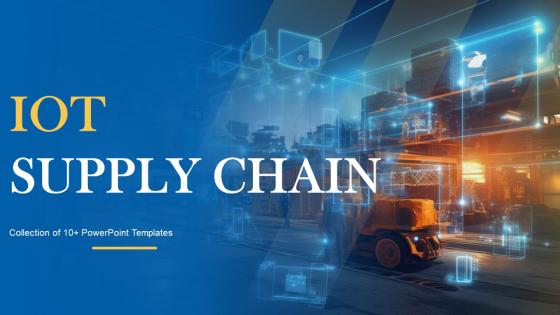
Transform your supply chain into a powerhouse of efficiency and real-time intelligence with our enlightening PowerPoint presentation on IoT Supply Chain. This meticulously designed PPT unravels the potential of Internet of Things logistics, enabling you to harness IoT enabled supply chain capabilities for enhanced performance. Dive into the world of IoT tracking in logistics and discover how it can revolutionize your inventory and asset management. Learn to employ IoT for real-time monitoring, ensuring that your supply chain operates seamlessly. Explore the possibilities of smart supply chain solutions that drive cost effectiveness and agility. Whether you re a supply chain professional or a business leader, this presentation equips you with the knowledge and strategies to navigate the IoT revolution in supply chain management. Elevate your supply chain operations with our IoT Supply Chain PowerPoint presentation.
People who downloaded this PowerPoint presentation also viewed the following :
IOT Supply Chain Powerpoint Ppt Template Bundles with all 20 slides:
Use our IOT Supply Chain Powerpoint Ppt Template Bundles to effectively help you save your valuable time. They are readymade to fit into any presentation structure.










FAQs for IOT Supply Chain Powerpoint
IoT integration delivers enhanced visibility, real-time tracking, predictive maintenance, automated inventory management, and improved quality control across supply chain operations. These technologies streamline logistics by reducing manual processes, minimizing stockouts, and enabling proactive decision-making, with many manufacturing and retail organizations finding that IoT ultimately delivers significant cost reductions and competitive advantage.
IoT enhances supply chain visibility by embedding connected sensors, RFID tags, GPS trackers, and smart devices throughout the logistics network, delivering continuous location data, condition monitoring, and automated status updates. These technologies enable manufacturers, retailers, and logistics providers to track shipments in real-time, predict delays, and optimize routing decisions, ultimately reducing costs and improving customer satisfaction.
Companies face integration complexity with legacy systems, data security vulnerabilities, high implementation costs, and skills gaps in IoT expertise when deploying supply chain solutions. While these challenges require strategic planning and investment, many organizations in manufacturing, retail, and logistics find that phased implementation approaches, robust cybersecurity frameworks, and staff training ultimately deliver enhanced visibility, operational efficiency, and competitive advantage.
IoT data analytics enhances supply chain decision-making by providing real-time visibility into inventory levels, shipment tracking, and operational performance across all touchpoints. Through predictive analytics and automated monitoring, organizations streamline demand forecasting, optimize route planning, and minimize disruptions, with manufacturers and retailers finding that data-driven insights ultimately deliver faster responses and significant cost reductions.
Edge computing enables real-time data processing at distribution centers, warehouses, and transit points, reducing latency, minimizing bandwidth costs, and enhancing decision-making speed. Through localized processing, manufacturing plants and logistics hubs achieve faster inventory tracking, predictive maintenance alerts, and automated quality control, ultimately delivering improved operational efficiency and reduced supply chain disruptions.
IoT reduces supply chain costs by providing real-time visibility into inventory levels, shipment locations, and equipment performance, enabling predictive maintenance and automated reordering systems. Through connected sensors and analytics, companies streamline warehouse operations, minimize stockouts, and optimize delivery routes, with manufacturers and retailers finding significant reductions in operational expenses while enhancing customer satisfaction.
Businesses should address device authentication, data encryption, network vulnerabilities, firmware updates, and access control when implementing IoT supply chains. These security measures protect against cyber attacks, data breaches, and operational disruptions by establishing secure communication protocols, regular monitoring systems, and comprehensive risk management frameworks, ultimately ensuring supply chain integrity and maintaining customer trust.
IoT facilitates better inventory management and demand forecasting by providing real-time tracking of stock levels, automated reorder triggers, and predictive analytics based on historical consumption patterns. Through connected sensors and smart shelving systems, retailers and manufacturers can minimize stockouts, reduce carrying costs, and anticipate customer demand more accurately, ultimately delivering improved operational efficiency and enhanced customer satisfaction.
IoT significantly enhances supply chain sustainability by enabling real-time monitoring of energy consumption, carbon emissions, waste generation, and resource utilization throughout operations. Through smart sensors and connected devices, companies streamline transportation routes, optimize inventory levels, and minimize packaging waste, with many manufacturers and retailers finding that IoT-driven insights deliver measurable reductions in environmental footprint while lowering operational costs.
IoT enhances supplier and customer relationships by enabling real-time visibility, predictive analytics, and automated communication throughout the supply chain. Through connected sensors and smart devices, businesses can proactively share delivery updates with customers, collaborate on inventory optimization with suppliers, and resolve issues before they impact relationships, ultimately delivering transparency and trust that strengthens long-term partnerships.
**INPUT**: What specific IoT devices and sensors are most effective for supply chain monitoring? **OUTPUT**: Effective IoT supply chain monitoring relies on RFID tags, GPS trackers, temperature sensors, humidity monitors, accelerometers, and barcode scanners for comprehensive visibility. These technologies streamline operations by enabling real-time location tracking, condition monitoring, and automated inventory management, with many logistics companies finding that strategic sensor deployment ultimately delivers reduced costs, faster deliveries, and enhanced customer experiences. **Word count: 58 words**
AI integrates with IoT through machine learning algorithms that analyze sensor data, predictive analytics for demand forecasting, automated decision-making systems, and real-time optimization engines. These technologies streamline supply chain operations by identifying bottlenecks before they occur, optimizing inventory levels automatically, and enhancing delivery routes, with many logistics companies finding significantly reduced costs and improved customer satisfaction.
**INPUT**: What case studies demonstrate successful IoT implementation in supply chains? **OUTPUT**: Successful IoT supply chain implementations include Walmart's temperature monitoring for food safety, Maersk's container tracking across global shipping routes, DHL's predictive maintenance systems, and Amazon's warehouse automation technologies. These companies demonstrate how IoT sensors and analytics streamline operations by reducing waste, improving visibility, and enhancing customer satisfaction, with many organizations finding that strategic IoT adoption delivers significant competitive advantages.
IoT technology enhances compliance and regulatory adherence by enabling real-time monitoring of temperature, humidity, location, and handling conditions throughout the supply chain journey. These connected sensors automatically generate audit trails, trigger alerts for deviations, and provide transparent documentation for regulatory inspections, with pharmaceutical and food companies finding that automated compliance reporting significantly reduces violations while streamlining regulatory processes.
Emerging IoT trends include edge computing, 5G connectivity, AI-powered predictive analytics, blockchain integration, and autonomous systems. These technologies revolutionize supply chain management by enabling real-time decision-making, minimizing latency, and enhancing transparency across operations, with many logistics companies finding that strategic combinations ultimately deliver unprecedented visibility and competitive advantage.
-
SlideTeam is very efficient when it comes to saving time. I am happy that I chose them for my presentation.
-
A big thanks to SlideTeam! An incredible and diverse library of templates helped me with my business project presentation.