

Iso 27001 internal isms audit program and activities ppt pictures





Try Before you Buy Download Free Sample Product
 Impress Your
 Audience
 100%
100% Editable
 Save Hours
 of Time


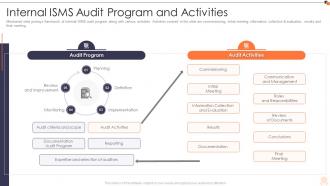
Mentioned slide portrays framework of internal ISMS audit program along with various activities. Activities covered in the slide are commissioning, initial meeting, information collection and evaluation, results and final meeting.
People who downloaded this PowerPoint presentation also viewed the following :
Iso 27001 internal isms audit program and activities ppt pictures with all 6 slides:
Use our ISO 27001 Internal Isms Audit Program And Activities Ppt Pictures to effectively help you save your valuable time. They are readymade to fit into any presentation structure.





FAQs for Iso 27001 internal isms audit program and
So basically you're doing a reality check on your security setup before the real auditors come knocking. Internal audits help you catch gaps in your controls and processes early - way better to find problems yourself than have outsiders point them out, trust me on that one. You'll also spot where people aren't actually following the policies you wrote (happens more than you'd think). Schedule these pretty regularly and don't make it feel like you're trying to catch people screwing up. Treat it more like troubleshooting - what's working, what isn't, how can we fix it?
ISO 27001 requires annual audits minimum, but that's pretty basic honestly. Six to twelve months works better for most places I've seen. Really depends on your risk level and how solid your security management is. High-risk stuff or recent incidents? Audit those controls way more often. The standard gives you flexibility on timing, which is nice. You'll need to cover your whole ISMS scope during each cycle though. Oh and document why you picked whatever frequency - auditors always ask about that. Most companies find the sweet spot somewhere in that 6-12 month range.
Start with risk management - that's where most places screw up honestly. Are your risk assessments actually current? Controls implemented for real, not just on paper? Test if incident response actually works. Asset management is huge too since you can't protect stuff you don't even know exists. Access controls get messy fast - check user permissions and if anyone's doing periodic reviews. Training records matter, plus management review processes. Oh, and definitely dig deeper into anything that's changed since your last audit or wherever you've had real security incidents. Those areas always hide surprises.
So internal audits are basically you checking your own work - either your team does it or you bring someone in to see if your ISMS is actually functioning. Pretty straightforward. Certification audits are totally different though - that's when an official third-party comes in to verify you meet all the ISO 27001 requirements for real certification. I always tell people to think of internal ones like dress rehearsals. They help you spot problems before the external auditors show up (trust me, you don't want surprises during certification). Just make sure you do your internal audit with enough time to actually fix whatever issues pop up.
Look, risk assessments are basically your cheat sheet for ISO 27001 audits. They show you which areas are most vulnerable, so you can focus there instead of wasting time on boring low-risk stuff. It's like checking the sketchy neighborhood first, not the gated community. Use them to figure out your audit scope and how to spend your time. Oh, and definitely grab the latest version before each cycle - I've seen people work off outdated assessments and miss huge gaps. Pretty embarrassing when the external auditors catch what you didn't.
Honestly, the worst part is always crappy documentation and scope creep once the audit starts. Half your staff won't even know what ISO 27001 actually does - which is embarrassing but super common. Risk assessments end up incomplete, controls are vague, and don't get me started on undertrained auditors who miss the real security holes. My last audit dragged on forever because of this stuff. Do some practice runs first to catch problems early. Train your auditors properly and get your docs updated before anyone shows up. Trust me, the prep work saves you way more headaches later.
Honestly, bite the bullet on proper ISO 27001 internal auditor training - yeah it's expensive but totally worth it. Your team needs to get both the standard itself AND how your company actually does things. Shadow experienced auditors first, then let them handle smaller sections gradually. The soft skills part is huge too - like how to interview people without making them hate you, asking good questions, that kind of thing. Oh and the standard changes over time so plan for refresher training. Start mapping out your audit schedule now so they're not just doing this once and forgetting everything.
Start with ISO 27001 control checklists and gap analysis templates - those are your bread and butter. Risk assessment matrices help too. Document sampling is where you'll spend most of your time though, pulling policies, logs, training records, all that fun stuff to prove compliance. Don't forget interviews and actually observing how things work day-to-day. Honestly, most companies look great on paper but fall apart when you see what's really happening. Process flowcharts and control testing round everything out. Just grab a solid checklist template and tweak it for your specific scope.
So you'll need to put together a formal audit report covering all your nonconformities, observations, and evidence. Structure it with sections on scope, methodology, findings (categorized by how serious they are), and corrective actions. Honestly, documenting evidence is super tedious but you can't skip it - kills your credibility otherwise. Focus on root causes rather than just surface symptoms, and include realistic timelines for fixes. Be specific enough that another auditor could come in later and verify what you found. Oh, and get that report to management within a week while everyone still remembers the details clearly.
Honestly, running regular ISO 27001 internal audits is a lifesaver. You'll spot security gaps before they blow up into actual incidents. Having your team follow procedures consistently becomes way easier too. I'd do them quarterly if possible, but twice a year minimum works. The best part? External auditors love seeing continuous improvement, and it makes their visits so much smoother. You won't be scrambling last-minute trying to fix stuff. Think of audit findings as chances to actually strengthen your security - not just annoying paperwork. Trust me, it beats dealing with compliance surprises later.
Dude, internal audits are like your ISMS reality check. They show you where your written procedures don't match what's actually happening - and honestly, that gap is where you find the best improvement ideas. Maybe you'll catch outdated processes or controls that just aren't working. Staff might be struggling with compliance in ways you didn't realize. What I really like is how audits reveal patterns over time. If the same issues keep popping up, you're looking at bigger systemic problems, not just random mistakes. Don't just treat findings as compliance boxes to tick - they're actually improvement opportunities waiting to happen.
So first thing - dig into what's actually causing the issues, not just what's on the surface. Then make action plans with real owners and deadlines for each one. Honestly, some auditors love marking everything as "critical" when half of it isn't that urgent. Tackle the high-risk stuff first, obviously. Fix the actual processes, not just paperwork (that's where people usually mess up). You'll want to circle back later and check if your fixes actually worked - can't just assume they did and move on.
Honestly, the main thing is keeping auditors away from stuff they're involved in - like, don't audit your own department, that's just asking for trouble. We usually pull people from other areas or sometimes get outside help. Rotating the team helps too so nobody gets too cozy with certain processes. Oh, and make sure whoever's running the audit reports up to the big bosses, not the people getting audited (learned that one the hard way). Document who did what so you can prove everything was legit. If there's any weird conflict situation, just grab someone else.
Look, getting stakeholders involved in your ISO 27001 audit is super important - it's how you figure out if your security controls actually work or just exist on paper. Different departments will tell you what's really happening day-to-day. Management gives you the big picture perspective. End users? They'll be brutally honest about what's broken or annoying to use. Here's the thing though - people cooperate way more when they feel like you listened to them during the process. Skip this step and you're basically flying blind. You'll miss gaps that could bite you later. Set up interviews with key people from all the relevant areas before you dive in.
Honestly, tech makes ISO 27001 audits so much less painful. Start with digitizing your audit checklist - that alone saves tons of time. Audit management platforms can automate all the evidence collection and compliance tracking stuff. Real-time dashboards beat the hell out of Excel hell, trust me. AI tools are getting pretty good at spotting control gaps too, which is nice because I always miss something. Digital evidence repositories make it way easier when external auditors come knocking. The workflow automation is probably the biggest game-changer though. You'll wonder how you did this manually before.
-
Good research work and creative work done on every template.
-
Easily Understandable slides.