

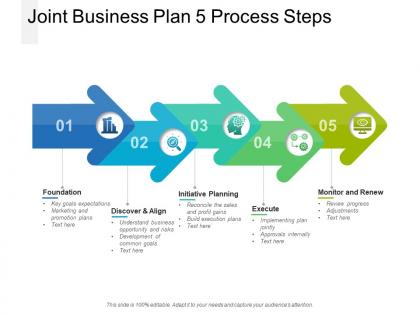
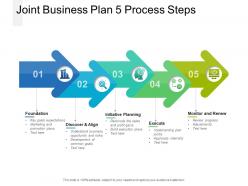
Joint business plan 5 process steps




Try Before you Buy Download Free Sample Product
 Impress Your
 Audience
 100%
100% Editable
 Save Hours
 of Time


Charm your audience with the harmony of your views. Compose them with our Joint Business Plan 5 Process Steps.
People who downloaded this PowerPoint presentation also viewed the following :
Joint business plan 5 process steps with all 2 slides:
Conduct your operation seamlessly. Our Joint Business Plan 5 Process Steps help do the deed.
FAQs for Joint business plan
So you'll need the basics: shared goals, market analysis, who's doing what, and how you're splitting resources. Financial projections are huge - honestly that's where things usually blow up if you're vague about money. Don't forget success metrics and decision-making structure either. Oh, and timeline stuff obviously. My buddy learned this the hard way when his partner thought "50/50" meant something totally different than he did. Start simple though - get the big picture aligned first, then worry about details. Templates help but focus on what each person actually brings to the partnership.
Get everyone in the same room first - seriously, you'd be shocked how often teams think they want the same things but totally don't. Figure out where your goals actually overlap vs where they clash. Focus on those win-win spots to start. Here's the thing though: you've got to be brutally honest about trade-offs, otherwise someone's gonna bail when things get tough. Write it all down so nobody can play the "that's not what we agreed on" game later. Oh, and definitely schedule those check-ins because priorities change constantly.
Honestly, I'd start with design thinking workshops - they're perfect for getting everyone on the same page about what customers actually need. Agile sprints are solid too since you can change direction fast when stuff inevitably comes up. SWOT analysis sounds boring but people actually open up during those sessions, which is half the battle. Oh, and value stream mapping if you're trying to fix broken processes together. But real talk? The specific method doesn't matter as much as having someone decent facilitate and rotating who runs things. Also build in those check-ins or people just... drift. Pick whatever your team already knows instead of learning something totally new.
Look, market analysis is basically your roadmap for not screwing up the joint venture. It shows you the real opportunities and what you're competing against. You'll find your target customers, figure out how big the market actually is, and spot those sweet gaps only your partnership can fill. Honestly, it beats pulling revenue numbers out of thin air - we've all seen how that ends. The data also warns you about threats and trends that could tank everything. Start with industry reports and customer info from both sides. That combo is pure gold for making decisions that actually make sense.
Honestly, stakeholder engagement can make or break the whole thing. Get everyone aligned on goals and expectations right from the start - I can't tell you how many partnerships I've watched implode because people thought they were on the same page but weren't. Map out who needs to be involved first. Then set up regular check-ins and document everything (boring but necessary). The feedback loops keep people accountable too. Oh, and establish how often you'll communicate upfront - saves so much drama later when things get busy.
Pick 3-5 metrics that both teams can actually control and that tie to your main goals - revenue growth, market share, efficiency stuff like that. Honestly, the biggest mistake is measuring things differently, so nail down the definitions upfront. Set up monthly check-ins where everyone can see the same dashboard. Don't overthink it though. If your metrics need a manual to understand, you've gone too far. Oh, and write everything down at the start - saves so many headaches later when people suddenly "remember" success differently.
The worst part? Teams pulling in different directions with zero clue what the other's doing. Communication breaks down fast, and suddenly nobody owns anything - classic recipe for disaster. Here's what actually works: get everyone on the same metrics from day one. Set up weekly check-ins (I know, more meetings, but trust me). Pick one person to own each piece so stuff doesn't just... disappear. Oh, and those collaborative tracking tools are a lifesaver - at least you can see who's behind without playing detective. Next time, make sure everyone agrees on WHY you're doing this before you start arguing about the details.
Multi-org risk assessment is a total nightmare tbh. Everyone brings their own baggage plus you get all these new headaches from working together - partner drama, clashing goals, different comfort levels with risk. Who's liable for what? Nobody knows until something breaks. Map out how everyone depends on each other first. Figure out risk ownership early or you'll be fighting about it later. Set up governance that doesn't make people want to scream. Seriously though, do a joint workshop right away. Better to find the landmines before you step on them.
Oh man, this is actually pretty straightforward. Start with whatever you're already using - Teams, Slack, whatever. Miro is honestly amazing for those messy brainstorming sessions where everyone's throwing ideas around. Google Docs works fine for the writing part since multiple people can jump in without breaking everything. Some folks love Monday.com or Asana for tracking who's supposed to do what by when. Visual stuff really helps though - way better than endless email chains about alignment. Just pick one thing and actually use it consistently instead of trying five tools at once.
Oh man, cultural stuff can totally tank your joint planning if you don't talk about it early. Some teams are super direct with feedback, others beat around the bush forever. Timeline expectations? Completely different across cultures. I've watched partnerships basically implode because one side thought the other was being disrespectful - when really they were just doing things their normal way. Meeting styles, decision-making processes, how they handle hierarchy - it's all over the map. Best thing you can do is hash out these differences upfront and agree on how you'll actually work together. Saves so much drama later.
First thing - figure out who owns what IP and data when you create stuff together. Confidentiality terms matter too, obviously. If you're competitors, antitrust could bite you later (learned that one the hard way). Liability's probably the biggest headache though - nobody wants to get stuck paying for someone else's mess. Map out how you'll handle termination before things get messy. Industry compliance stuff varies but don't skip it. Honestly, loop in lawyers early rather than scrambling to fix things after you've already shaken hands.
Honestly, quarterly is the bare minimum but monthly check-ins work way better. Those quick monthly calls help you spot problems before they blow up. Then quarterly is when you actually dig into the numbers and see if your strategy still makes sense. Don't be one of those people doing annual reviews only - that's just setting yourself up to fail. Markets move too fast now. I always tell people to just block the time on both calendars right away, otherwise you'll spend forever trying to find dates that work. Trust me on that one.
Get decision-makers in there, not just people taking notes. Send out the data and goals beforehand - I can't tell you how many times I've watched meetings crash because someone's learning the customer needs on the spot. Wild waste of time. Keep your agenda focused but don't be super rigid about it. Oh, and this part's crucial - assign owners and deadlines to everything. Follow up in 48 hours max with what everyone agreed to do. Wait longer than that and people forget half the conversation. Trust me, momentum vanishes if you let it sit for a week.
Okay so first thing - write down what everyone's actually contributing. Money, equipment, skills, their cousin who works at that company you need to pitch to, whatever. Figure out who's doing the day-to-day work too, because that matters as much as cash upfront. Maybe more honestly. You can split profits equally, base it on initial investment, or tie it to performance - just define what "profit" means before you start (net? gross? after you both get paid?). And yeah, document this stuff even though it feels weird. Trust me on that one.
Honestly, you can't do joint business planning without good tech anymore. Cloud platforms like SharePoint work great for sharing docs in real time. Video calls are obviously crucial since nobody's ever in the same office. For project tracking, try Asana or Monday - they're lifesavers for keeping both teams on deadline. Slack's pretty solid for quick discussions too. Here's the thing though: don't go overboard with too many tools at once. Pick one main platform everyone will actually use, then add others as needed. Trust me, if it's complicated, people just won't bother.
No Reviews