


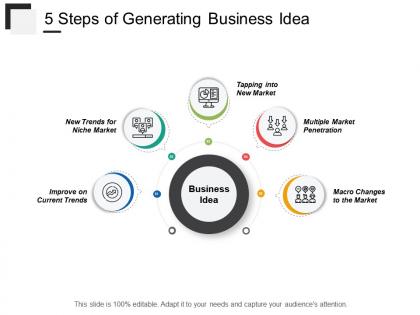
5 steps of generating business idea




Try Before you Buy Download Free Sample Product
 Impress Your
 Audience
 100%
100% Editable
 Save Hours
 of Time


Allow our 5 Steps Of Generating Business Idea to act as your eye's. Don't get blinded by all the data.
People who downloaded this PowerPoint presentation also viewed the following :
5 steps of generating business idea with all 5 slides:
Our 5 Steps Of Generating Business Idea ensure arguments don't get hectic. Conduct discussions in a calm environment.


FAQs for 5 steps of
Honestly, I swear by the "worst possible idea" method - sounds weird but it totally breaks you out of analysis paralysis. Mind mapping's solid too, just branch out from whatever topic you're stuck on. Look for problems around you first though, like stuff that annoys you daily or gaps you see at work. Then get weird with it - smash random concepts together or play the "what if" game with existing businesses. Oh and don't judge anything during your brainstorm session, that kills creativity fast. I usually do like 20-30 minutes of pure brain dump, then sort through the mess later.
Honestly, market research is just backing up your gut feelings with actual data. It helps you spot gaps in the market and figure out what's really bugging your customers. Those competitor reviews? Pure gold for finding problems people desperately want fixed. Before you dump your savings into that random business idea you had last week, research lets you test if it's actually viable. I'd start with surveys - ask your target audience directly what they need. Then scope out the competition. Trends are way easier to catch early when you're actually paying attention to the data.
Honestly, customer feedback is like having a cheat sheet for business ideas. When people complain or say "I wish there was a way to..." - boom, that's your next opportunity right there. They're basically telling you what's missing in the market. Their complaints? Those are problems begging to be solved. Plus their random suggestions often point to stuff nobody's created yet. You just gotta actually listen though - not just nod along. Set up some regular way to catch this gold, whether it's surveys or just chatting with customers. Trust me, they'll hand you ideas you'd never think of yourself.
Honestly, I'd start with ChatGPT or Claude for brainstorming - they're great for those "what if" scenarios you wouldn't think of alone. Twitter complaints are seriously underrated for spotting business opportunities. People love to vent online about stuff that doesn't work well. Market research platforms help you find gaps quickly, and digital whiteboards let you connect random ideas that might actually make sense together. Survey tools are clutch for testing concepts before you waste months building something nobody wants. Oh, and set up Google Alerts for your industry - just 15 minutes scrolling daily gives you tons of intel.
Honestly, just get out of whatever room you're in - go outside or find a different space. Your brain literally gets stuck when you stay put. Oh, and try the "terrible ideas" thing where everyone purposely suggests awful solutions for like 10 minutes. Sounds dumb but it actually works really well! You could also set a timer for rapid brainstorming, or ask what your biggest competitor would never try. Sometimes I'll grab someone from a totally different department too. The whole point is just breaking whatever mental rut you're stuck in.
Honestly, mixing up your team is like adding different spices to a recipe - suddenly everything tastes better. People from different backgrounds see opportunities you'd totally miss. Your marketing person notices customer pain points while the ops guy spots efficiency gaps. It's wild how someone from customer service can flip your whole perspective on a product idea. I mean, sitting with people who think exactly like you is boring anyway. Short brainstorms work too - you don't need some all-day thing. Just grab folks from random departments and watch the magic happen. Different experiences = way better ideas.
Dude, don't fall in love with your first idea - I've seen so many people do this. Talk to actual customers instead of guessing what they want. Copying competitors is pointless too, you'll just end up in some weird race to the bottom. Oh and that whole "we'll capture 1% of this massive market" thing? Total BS. Market size matters but be realistic about it. Here's what actually works: get out there and validate your assumptions fast. Run small experiments. Be ready to pivot when the data shows you're wrong - which honestly happens more than you'd think.
Honestly, just go talk to real people who'd actually buy this thing. Surveys, quick interviews, whatever works. I swear everyone thinks they can skip this part but you can't! Throw up a basic landing page or simple version to see if anyone actually cares. Check out your competition while you're at it - and maybe do some social media polls for quick feedback. Pre-orders are gold though, that's when you know people will put money down. Don't just ask your mom and friends, they'll lie to you. Get outside opinions from strangers who don't care about hurting your feelings.
Honestly, design thinking just makes you slow down and actually talk to people first instead of jumping straight into "wouldn't it be cool if..." mode. The whole empathize-define-ideate thing sounds corporate-y but it works. You end up with way better ideas because you're solving real problems, not made-up ones. It's collaborative too, which I know sounds annoying but different perspectives actually help. Plus you prototype fast and cheap so you fail early instead of spending months on something nobody wants. Try interviewing like 3-5 users before your next brainstorm - even quick 15-minute chats. Trust me, it'll change everything.
Honestly, checking out your competitors is the best way to find gaps. Look at their reviews - what are people complaining about? What features are they missing? I literally found my last business idea by noticing everyone was doing the same thing the wrong way. Their blind spots are your goldmine. Maybe they only focus on big companies but ignore small businesses. Or their tech is solid but customer service sucks. List out 3-5 competitors and see what they're NOT doing that customers actually want. Sometimes the obvious stuff gets overlooked, you know?
Honestly, trend analysis is like having a crystal ball for business opportunities. You're scanning different sectors for emerging tech, shifting consumer habits, regulatory changes - all that stuff. The trick? Catch trends while they're still building momentum, not when everyone's already jumped in. I spend maybe an hour each week scrolling through industry reports and following the right people on LinkedIn (sounds nerdy but whatever). Look for what's getting funded lately too - that's usually a good signal. It's basically about spotting gaps where new solutions could fit before the market gets crowded.
Honestly? Start by making people feel safe to sound stupid - nobody's gonna pitch wild ideas if they think you'll roast them later. I'd ban criticism in brainstorming sessions at first and actually get excited about the weird suggestions. Those usually go somewhere interesting anyway. Change up where you meet too. Conference rooms kill creativity. Try whiteboards, walking meetings, whatever breaks the usual vibe. Instead of people shooting down ideas, get them building on each other's thoughts. Next meeting, literally ask "what's the craziest way we could solve this?" You'd be surprised what comes up.
Start by dumping all your ideas somewhere - I use Notion but honestly even a basic Google Sheet works fine. Business Model Canvas is perfect for mapping out how things actually work. SWOT analysis helps you see what you're up against competition-wise. The "jobs to be done" thing is solid for checking if people will actually pay for your solution. Create a simple scoring system once you've got a few decent ideas. Rate them on market size, how doable they are, plus how excited you actually feel about each one (this matters more than people think). Test your top 3 with real humans and see what happens.
So basically, think of storytelling like playing "what if" games with real problems. Pick something your target customers actually deal with - busy parents, stressed students, whatever. Then write out their typical day and ask what if X solution existed? Like what if those parents could get restaurant-quality food in 15 minutes? The gaps in their story become your business ideas. I actually do this thing where I write short stories about potential customers' worst days - sounds weird but the plot holes are where opportunities hide. You can also just study how successful brands tell their origin stories. Most of them spotted some unmet need by really paying attention to customer struggles.
Dude, social media is literally perfect for finding business ideas. Just scroll through and you'll see people complaining about stuff constantly - those complaints are goldmine opportunities waiting to happen. I waste way too much time on TikTok but hey, I call it "market research" so it's fine lol. Follow hashtags in whatever industry you're into. Join groups where your potential customers hang out. When you get an idea, post about it and see how people react - instant validation. The trick is being purposeful instead of just doom-scrolling for hours. Trending topics show you what's hot right now too.
No Reviews