

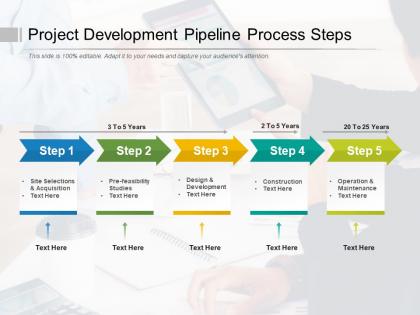
Project development pipeline process steps





Try Before you Buy Download Free Sample Product
 Impress Your
 Audience
 100%
100% Editable
 Save Hours
 of Time


Project pipeline management is a definite process that comprises of the procedures required to pick the proper project for the organisation after analysing the scope, predicting income, and planning and scheduling the necessary resources in advance. The primary goal of project pipeline management is to ensure that no essential project indicators are neglected. It makes systematic documenting of the project plan, financial projection, and resource capacity plan possible. Managing pipeline projects also helps to expedite the sales process by allowing for seamless coordination and communication between the sales and delivery teams. The Project Development Pipeline is a process that can be used in any company to manage and track the progress of projects. By understanding each step in the pipeline and using SlideTeam’s software PowerPoint templates, you can create beautiful, professional presentations that will help keep your team on track. Download our software ppt templates now to get started.
People who downloaded this PowerPoint presentation also viewed the following :
Project development pipeline process steps with all 6 slides:
Our Project Development Pipeline Process Steps will buck you up. Get that completely confident feeling.


FAQs for Project development
So there's basically five stages most teams follow: planning (figuring out what you're actually building), design (mapping out the architecture), development (the fun coding part), testing (catching all the bugs), and deployment (pushing it live). Real talk though - nobody follows these perfectly in order. You'll bounce back from testing to fix code, or halfway through design you'll realize your original plan was kinda off. That's totally normal. Just make sure your team knows what needs to happen before moving to the next stage. Saves so much confusion later.
Dude, agile is such a game changer because you're doing these short 2-week sprints instead of building something for months and praying it works. Your team stays on the same page with daily check-ins, and you actually get feedback while you can still fix stuff easily. Way better than those old school waterfall projects where everything's a mystery until launch day - honestly gave me so much anxiety back when I had to do those. Focus on getting working features out each sprint rather than obsessing over perfect docs. Stakeholders love seeing progress regularly too, which keeps everyone sane.
Honestly, stakeholder feedback is like having a sanity check built into your process. Catch problems early instead of finding out you built the wrong thing after months of work. I always set up regular touchpoints at major milestones - don't just spring the final product on people and hope for the best (trust me on this one). Quick informal chats often give you better insights than formal presentations anyway. Their perspective helps you figure out what actually matters and spot blind spots you'd never see from the trenches. Keep those communication lines open both ways.
Start with dependencies - figure out what's blocking what since that'll bite you later. Honestly, I swear by the impact vs effort matrix thing, sounds boring but it works. Knock out the high-impact easy wins first to get some momentum going. Then hit those critical path items that could mess up your whole timeline. Also factor in your team's actual bandwidth and any hard deadlines from clients or whatever. Oh and be ruthless about scope creep - every "tiny addition" always takes longer than expected. I usually timebox these planning sessions too so I don't spiral into overthinking mode.
Honestly, start with whatever your team's already using - check if it has pipeline views first. Gantt charts are clutch for timelines (Microsoft Project, Asana, Monday.com). Kanban boards work amazing for workflow stuff - Trello's my go-to because it's so clean, but Jira's solid too. For complex stuff with dependencies, you'll need flowchart tools like Lucidchart or Miro. I learned this the hard way but don't overthink it initially. Pick something simple that everyone actually knows how to use, then get fancier later when you figure out what's missing.
Look, risk management isn't just a one-time thing you do upfront. Sure, you identify stuff during planning, but then you've gotta keep watching for new problems as things move along. Each phase should have a risk check - though honestly, most teams blow this off and kick themselves later. Daily standups, sprint reviews, milestone meetings? Perfect spots to bring up new risks or see if old ones still matter. Don't make it some big formal process though. Just weave quick risk conversations into meetings you're already doing anyway. Way easier than trying to schedule separate sessions nobody wants to attend.
Track cycle time first - how long features actually take start to finish. Deployment frequency matters too. I'm weirdly obsessed with DORA metrics but they genuinely work. Lead time (idea to customer) is huge. Also watch your failure rates and build success. Code review time kills velocity more than most people realize, so don't sleep on that one. Test coverage and recovery time when stuff breaks are solid indicators too. Honestly though? If you're just starting, pick cycle time and deployment frequency. Those two will tell you if your pipeline's healthy or just... busy-looking.
Start with those cross-team standups where everyone shares what's blocking them - seriously saves your ass when problems are still small. Set up Slack channels or shared boards so people can actually see what's happening in real time. The psychological safety thing is huge though - if people are scared to say when stuff's going sideways, you're screwed. Build in some buffer time between handoffs because things always take longer than you think. Oh, and don't forget to celebrate the wins together. Sounds cheesy but it really does build the trust you'll need later.
Honestly, the main thing is that software moves way faster - you can push updates, test stuff, and change direction multiple times per day. Construction? Once that concrete's poured, you're stuck with whatever you planned. Software lets you mess up and fix it quickly, but with physical building you've gotta nail everything upfront because fixing mistakes gets crazy expensive later. Can't exactly hit "undo" on a wall, right? For your stuff, just think about how much it'll cost if you need to change course halfway through.
Honestly, just bake the testing right into your pipeline from the start. Unit tests after commits, integration tests before merges, then user acceptance before you ship. I used to do everything at the end and it was a nightmare - trust me on this one. Your CI/CD should run tests automatically and stop things if they break. Way easier to fix bugs early than later when they're tangled up with other stuff. Start with just unit tests though. Don't go crazy right away or your team will hate the whole process.
Honestly, most problems come down to bottlenecks and messy handoffs. Don't let one person become the blocker - I swear I've watched whole teams sit around waiting because their senior dev had to approve literally everything. Requirements getting fuzzy as they move downstream? That'll kill you. Same with crappy test environments and zero documentation between phases. Oh, and always build in buffer time because something will go sideways. Map out where you're currently getting stuck and fix those spots first. Clear ownership at each stage helps too, but start with the obvious pain points.
Honestly, this is where most teams mess up - they don't match their people and budget to what actually slows things down. You'll get these massive backups when one stage gets starved while another has too many resources just sitting around. Development might be flying through tasks, but then testing becomes this huge bottleneck because there's only one person handling it. It's frustrating to watch. Monitor where the real jams happen (not where you think they should be) and shift resources there. Otherwise you're just moving the problem around instead of fixing the flow.
Honestly, the biggest thing is actually using the feedback you collect instead of just hoarding it. After each project phase, do quick retrospectives and track maybe 3-4 metrics that actually matter - cycle time, defect rates, stuff like that. Don't go overboard with data or you'll drown in spreadsheets (been there). Your team needs to feel comfortable calling out what's broken without getting shot down. Here's what really works though: dedicate time every sprint to fix at least one small thing based on what you learned. Quick wins keep people motivated and show the process isn't just busywork.
Honestly, the biggest game-changer is just picking your communication tools and actually using them consistently. I'd set up specific Slack channels for different project phases - sounds obvious but you'd be surprised how many teams skip this. Those quick daily standups are worth it, even if it's just 10 minutes on a call. Document decisions somewhere everyone can access, like Notion. Otherwise you'll get the same "wait, what did we decide?" questions over and over. Oh, and create templates for status updates - I know it feels rigid at first, but it eliminates so much back-and-forth confusion when you're handing things off between phases.
So here's the thing - MVP comes after you've figured out your basic idea but way before you go crazy with features. It's like a reality check, honestly. You build just the core stuff that actually solves the problem, then see what real people think instead of just assuming you know what they want. Pretty much saves you from wasting months on features nobody cares about. I'd focus on maybe 2-3 things max that make your product work. Everything else? Leave it for later once you know people actually want this thing. It's your first real test with actual users.
No Reviews