


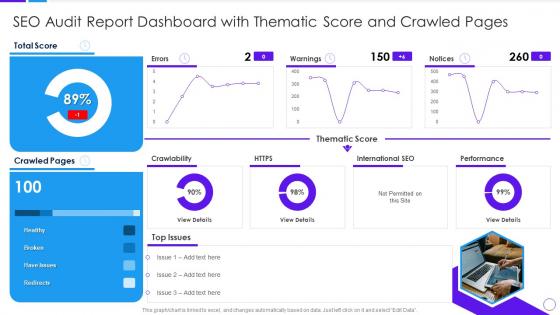
K1 SEO Audit Report Dashboard With Thematic Score And Crawled Pages Ppt File Icon




Try Before you Buy Download Free Sample Product
 Impress Your
 Audience
 100%
100% Editable
 Save Hours
 of Time


Our K1 SEO Audit Report Dashboard With Thematic Score And Crawled Pages Ppt File Icon are topically designed to provide an attractive backdrop to any subject. Use them to look like a presentation pro.
People who downloaded this PowerPoint presentation also viewed the following :
K1 SEO Audit Report Dashboard With Thematic Score And Crawled Pages Ppt File Icon with all 7 slides:
Use our K1 SEO Audit Report Dashboard With Thematic Score And Crawled Pages Ppt File Icon to effectively help you save your valuable time. They are readymade to fit into any presentation structure.





FAQs for K1 SEO Audit Report Dashboard With Thematic Score And Crawled Pages
A comprehensive SEO audit report should include technical analysis, on-page optimization assessment, content evaluation, backlink profile review, keyword performance analysis, and competitor benchmarking. These components work together to identify optimization opportunities, technical issues, and content gaps, with many digital marketing teams finding that comprehensive audits ultimately deliver improved search rankings and enhanced organic visibility.
Website design significantly impacts SEO performance through page loading speed, mobile responsiveness, navigation structure, URL architecture, and content accessibility for search engines. Poor design choices like slow-loading elements, non-mobile-friendly layouts, or confusing navigation can dramatically reduce search rankings, while optimized design enhances user experience and crawlability, ultimately delivering better visibility and competitive advantage.
Effective SEO audit tools include SEMrush, Ahrefs, Screaming Frog, Google Search Console, Moz Pro, and GTmetrix for comprehensive site analysis. These platforms streamline technical assessments, keyword performance tracking, and competitor analysis, with many digital marketing agencies finding that combining multiple tools delivers deeper insights into site health, content gaps, and optimization opportunities for enhanced search visibility.
Businesses should perform comprehensive SEO audits quarterly, with monthly monitoring of key metrics like rankings, traffic, and technical issues. In rapidly evolving digital landscapes, companies across retail, finance, and healthcare find that regular audits enable swift adaptation to algorithm updates, competitor changes, and market shifts, ultimately maintaining search visibility and competitive advantage.
Keyword rankings serve as performance indicators in SEO audit reports, revealing how well target keywords perform in search results, identifying ranking gaps, and measuring competitive positioning against industry benchmarks. These rankings enable businesses to prioritize optimization efforts, track progress over time, and allocate resources strategically, with many organizations finding that consistent ranking improvements directly correlate with increased organic traffic and revenue growth.
Backlink analysis in SEO audits involves examining link quality, domain authority, anchor text diversity, toxic link identification, and competitor comparison through tools like Ahrefs or SEMrush. Present findings through visual dashboards showing link profiles, quality scores, and actionable recommendations, with many agencies finding that clear backlink visualizations help clients understand link-building priorities and competitive positioning strategies.
SEO audit metrics should prioritize technical health indicators like page load speed, mobile responsiveness, crawl errors, and indexation status, alongside content quality metrics including keyword rankings, organic traffic, and backlink profiles. These comprehensive assessments enable businesses to identify critical issues affecting search visibility, with many organizations finding that addressing technical foundations first delivers faster improvements in search performance and user experience.
Site speed and mobile responsiveness are critical SEO audit components because they directly impact user experience, search rankings, and conversion rates. Google prioritizes fast-loading, mobile-optimized sites in its algorithm, with e-commerce and service providers finding that improved page speeds reduce bounce rates, enhance customer satisfaction, and ultimately deliver higher search visibility and competitive advantage.
Common technical SEO issues include slow page loading speeds, broken internal and external links, missing or duplicate meta descriptions, improper URL structures, and mobile responsiveness problems. These issues significantly impact search rankings by reducing crawlability, user experience, and site authority, with many organizations finding that addressing technical fundamentals delivers improved organic visibility and competitive advantage.
An SEO audit supports content strategy development by identifying keyword gaps, analyzing competitor content performance, evaluating existing content effectiveness, and revealing search intent patterns across target audiences. Through comprehensive technical analysis, businesses can prioritize high-impact content opportunities, optimize resource allocation, and align content creation with proven search demand, ultimately delivering stronger organic visibility and more strategic content investments.
On-page SEO elements are fundamental audit components that directly impact search rankings through title tags, meta descriptions, header structure, keyword optimization, and internal linking. These elements enable auditors to identify technical gaps, content opportunities, and user experience issues, with many organizations finding that strategic on-page improvements deliver significantly enhanced visibility and organic traffic growth.
Organizations tailor SEO audit reports by creating stakeholder-specific sections focusing on relevant metrics, strategic insights, and actionable recommendations aligned with each audience's priorities and expertise levels. Executive summaries emphasize ROI potential and competitive positioning, while technical teams receive detailed implementation roadmaps, and marketing departments get content strategy recommendations, ultimately ensuring each stakeholder can drive meaningful improvements within their domain.
Missing or duplicate meta tags significantly impact search engine visibility, click-through rates, and user experience by creating confusion for crawlers and reducing page distinctiveness. These issues lead to lower rankings, missed traffic opportunities, and poor search result presentations, with many websites finding that fixing meta tag problems delivers immediate improvements in organic search performance and user engagement.
An SEO audit reveals local SEO opportunities by analyzing Google My Business optimization, local keyword rankings, citation consistency across directories, and location-based content gaps. Through comprehensive review of NAP information, local schema markup, and competitor positioning, businesses can identify missing local signals, optimize for "near me" searches, and enhance geographic targeting, ultimately improving local visibility and driving more qualified local traffic.
Competitor analysis in SEO audits reveals critical insights into market positioning, keyword gaps, content strategies, and technical optimization opportunities that competitors leverage for higher rankings. This strategic intelligence enables businesses to identify untapped keywords, benchmark their performance against industry leaders, and develop targeted improvements that deliver competitive advantage, with many organizations finding that competitor insights significantly accelerate their SEO growth.
-
The ease of modifying templates is just superb! Also, the vast collection offers plenty of options to choose from.
-
Excellent Designs.