


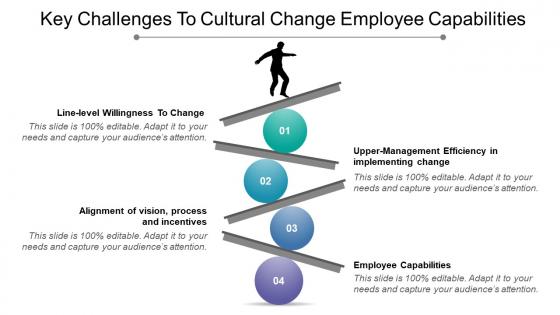
Key challenges to cultural change employee capabilities





Try Before you Buy Download Free Sample Product
 Impress Your
 Audience
 100%
100% Editable
 Save Hours
 of Time


Explain how entire communities benefit with our Key Challenges To Cultural Change Employee Capabilities. Give examples of the effect of generosity.
People who downloaded this PowerPoint presentation also viewed the following :
Key challenges to cultural change employee capabilities with all 5 slides:
Give your ideas an attractive flavour with our Key Challenges To Cultural Change Employee Capabilities. It helps add the cream.



FAQs for Key challenges to cultural
Honestly, it usually comes down to three big things. Digital transformation is pushing everyone to change how they work - remote collaboration, new tools, all that stuff. Then you've got generational differences hitting hard. Gen Z workers want purpose and flexibility in ways that catch older managers off guard. Competitive pressure is the third one - companies either adapt their culture or they're toast. Oh, and leadership changes can flip everything overnight when new execs come in with different ideas. My advice? Figure out which of these is hitting your company hardest right now, then focus your strategy there instead of trying to tackle everything at once.
Okay so first thing - actually listen to why people are pushing back instead of just blasting them with more emails about the change. Most folks are scared or pissed they weren't included from the start. Be honest about what's happening and let them help shape it. Find those early supporters who can spread the word for you. Change fatigue is brutal right now (honestly everyone's so over it), so maybe slow your roll on the timeline? Give people some quick wins they can actually see and celebrate. Your goal is making moving forward feel way less terrifying than staying stuck.
Honestly, tech completely changes how teams work together. Slack killed those awful email chains (finally), but now everyone expects instant replies. Communication patterns shift. Decision-making gets faster since info is accessible to everyone, not just managers. Office hierarchies flatten out too. Here's the thing though - people adapt way slower than the tech rolls out. That's where most companies mess up. Start small with new tools and actually explain why you're switching, not just how to use it. Otherwise you'll get pushback for no reason.
Yeah, so you've got to handle different age groups totally differently when rolling out changes. Younger folks? They're usually all over new stuff - just explain the vision and let them help figure out the details. But older employees need way more convincing upfront. Honestly, can you blame them? They've probably watched a bunch of "game-changing" projects crash and burn over the years. Give them solid reasoning and step-by-step plans. That said, don't box people in by age - some 55-year-olds are more adaptable than 25-year-olds. Focus on what each group actually cares about instead.
Look, engaged employees are literally the difference between success and failure here. They'll actually participate instead of just watching from the sidelines. You get honest feedback too - which you desperately need because leadership usually has no clue what's really happening on the ground. The thing is, people can smell BS from a mile away, so whatever you do has to be real and connect to actual results. Short sentences work. Don't just throw pizza parties and call it engagement. Get them involved in planning the changes themselves from day one.
Honestly, you gotta track the obvious stuff first - engagement scores, who's staying vs leaving, performance numbers. But here's the thing: survey fatigue is SO real right now. Watch how people actually behave instead. Are teams collaborating across departments? Do decisions happen smoothly or get stuck in weird politics? Skip the annual culture survey nonsense and do quarterly pulse checks. Stay interviews work way better than exit interviews for real insights. Focus groups too, though they can get a bit rambly. Most importantly - measure against YOUR cultural goals, not some generic template everyone uses.
Ugh, this is so common! You've gotta be way more intentional about who you're hearing from. Don't just wait for the usual suspects to dominate - actually call on quieter people first. Anonymous feedback helps tons since people worry about speaking up openly. I'd try breaking into smaller groups before the main discussion too, some folks just clam up in big meetings. Oh and rotate who's running things! Same person leading every time = same voices getting heard. Honestly the whole "let's just see what happens" approach never works. You'll need to actively mix up departments and levels.
Look, outside forces will literally make you change whether you want to or not. Remote work explosion? You're adapting. Customers demanding green practices? Culture shift time. Social movements create workplace expectations you can't ignore - employees and customers will call you out otherwise. Honestly, most companies just react instead of getting ahead of it, which is kinda dumb when you think about it. Better to watch what's happening in your space and society, then adjust before you're scrambling. Way less stressful than playing catch-up.
Hit them with the full communication blitz - town halls, team meetings, whatever digital stuff you've got. People need the "why" behind changes, not just marching orders. Honestly, stories beat PowerPoint slides every single time. Find real examples of your new culture actually happening and shout about them. Your leaders better walk the talk too, because hypocrisy kills these initiatives faster than anything. Oh, and start small with wins people can actually see. Nothing too abstract or they'll tune out completely. Early adopters should get celebrated publicly - makes others want in.
Dude, you literally can't skip this part. When changes match what your company already stands for, people get why you're doing it. Feels like growth instead of some random left turn from the boss. Map out how your changes connect to existing values first - sounds boring but trust me on this. I've watched so many initiatives crash because they felt totally disconnected from what the place was supposed to be about. Your team needs to see it builds on stuff they already believe in, not replaces it.
Oh man, the classic mistakes? Leaders rush in without getting their key people on board first. People assume everyone gets why change is happening - spoiler alert: they don't. And honestly? Nothing tanks your credibility faster than preaching transformation while you keep doing the exact same stuff. Most places think culture shifts happen in months when it's actually years. They get impatient and bail when results don't show up immediately. Plus they try changing everything at once instead of picking a few behaviors to focus on. Start small, explain the why nonstop, and actually walk the walk yourself.
Honestly, storytelling is your best bet here. Real examples work way better than boring presentations - find people who've actually benefited from the change and share their stories. Like, instead of another PowerPoint deck, talk about how Sarah's team saved 3 hours a week or whatever. People need to see it's actually possible, you know? Early adopters usually have the best stories too. Grab those anecdotes and share them in meetings or slack channels. Stories create that emotional connection that makes abstract change feel real and doable.
Honestly, think of training as the bridge between saying "we want change" and actually making it stick. You can't just tell people to be more collaborative - they need to learn HOW. When everyone goes through the same workshops, it creates this shared language and gets people excited about the new direction. The key though? Make it super practical. Nobody wants fluffy corporate speak about synergy or whatever. Connect it directly to what they deal with every day, or people will tune out completely. Those trained employees become your culture ambassadors who spread the good stuff naturally.
Start with an audit of what's already working - seriously, this step gets skipped way too often. Map out your cultural strengths before you change anything. Then build around those good parts while fixing what's broken. Think house renovation: you don't demolish the solid foundation, just update the ugly kitchen. Celebrate and protect what's already serving you well. Target problem areas specifically instead of overhauling everything. I'd write down your top 3-5 cultural wins first - any changes you make should protect those no matter what.
Look, change is messy but you've gotta bring people along instead of just dropping it on them. Let everyone know what's happening and why - nobody likes being kept in the dark. Give them actual input on how things roll out, not fake consultation. Don't trash the stuff that matters to them culturally, even if it seems outdated to you. That's the fastest way to get people digging in their heels. Think about who gets hit hardest by the changes too. Oh and create space where people can voice concerns without getting steamrolled. Trust me, involving folks in designing the change beats announcing it every time.
-
Really like the color and design of the presentation.
-
Unique research projects to present in meeting.