

Kraljic Model Powerpoint Ppt Template Bundles





Try Before you Buy Download Free Sample Product
 Impress Your
 Audience
 100%
100% Editable
 Save Hours
 of Time


Our Kraljic Model Powerpoint Ppt Template Bundles are topically designed to provide an attractive backdrop to any subject. Use them to look like a presentation pro.
People who downloaded this PowerPoint presentation also viewed the following :
Kraljic Model Powerpoint Ppt Template Bundles with all 22 slides:
Use our Kraljic Model Powerpoint Ppt Template Bundles to effectively help you save your valuable time. They are readymade to fit into any presentation structure.













FAQs for Kraljic Model Powerpoint
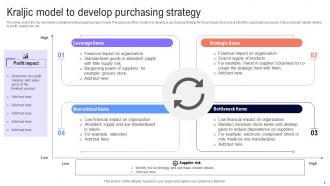
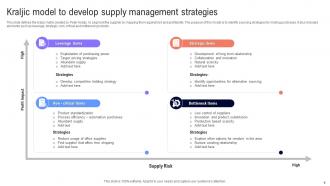
So the Kraljic Model is this 2x2 grid that sorts your purchases by supply risk and profit impact. Been around forever but honestly still super useful. You've got four boxes - strategic stuff (high risk, high impact) where you need tight supplier relationships, then routine items (low risk, low impact) where efficiency is king. The magic happens when you stop treating every purchase the same way. Plot your biggest spending categories first and you'll instantly spot where you're wasting energy on random low-value crap versus missing out on key supplier partnerships. Takes like 20 minutes but saves you tons of headaches later.
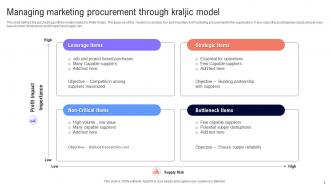
So the Kraljic Model is basically a 2x2 grid where you plot your purchasing stuff based on two things: supply risk and profit impact. High risk/high impact = strategic items. Low risk/high impact = you've got good negotiating power there. High risk/low impact creates bottlenecks (annoying but won't kill you). Low risk/low impact is just routine stuff like office supplies - honestly, don't overthink those. Each quadrant needs a different approach. You wouldn't treat buying computers the same as buying printer paper, right? I'd start by taking your biggest 20 spending categories and see where they land on the matrix.
So basically the Kraljic Matrix breaks things down using two factors: supply risk and profit impact. Supply risk is about how hard it'd be to actually get the item - like are there tons of suppliers or just a few? Profit impact looks at how much that item affects your bottom line through volume, cost, quality, whatever. Plot your procurement stuff on both axes and boom, you get four quadrants that show you how to handle each category. I'd start by just listing out your main items first - that part's kinda tedious but you gotta do it. Then honestly rate where each one sits on both dimensions.
Yeah totally! The Kraljic Model works way beyond just manufacturing. Hospitals use it for medical supplies, tech companies for software deals - I've seen it everywhere. Really, any industry can make it work. The trick is swapping out "profit impact" for whatever actually matters in your field. Maybe that's patient outcomes, customer satisfaction, operational stuff - whatever keeps you up at night, you know? Once you map your spending into those four boxes, you'll see exactly where to focus. Government agencies love this framework too, though they move slower than molasses implementing it.
Okay so risk assessment is basically half of what makes the Kraljic Model work - you're figuring out how risky your supply chain is for each category. Look at stuff like how many suppliers you have, if the market's all over the place, whether you can swap in alternatives, potential disruptions. Higher risk = needs more strategic focus. Then you plot that against profit impact to get your four boxes (bottleneck, strategic, non-critical, buying power). Honestly once you map it out it clicks pretty fast. Just be real about where you're most exposed - that's gonna drive your whole procurement approach anyway.
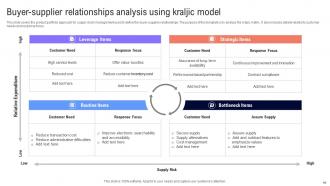
So basically each quadrant needs its own game plan. High spend/low risk stuff? That's where you can actually negotiate hard since they need your money. The high spend/high risk items are tricky - you'll want solid partnerships there, not just cheap deals. Low spend/high risk is honestly the worst combo - just focus on making sure you can actually get the stuff, even if it's pricey. For the boring low spend/low risk purchases, automate whatever you can because who has time for that? I'd start by mapping out your biggest 20 purchases and see what you're missing.
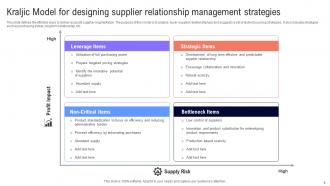
So the Kraljic Model is basically a way to sort your suppliers into four buckets based on how much you spend and how risky they are. Strategic stuff gets the VIP treatment - build real partnerships there. Bottleneck items? You'll want backup plans since those can screw you over. Routine purchases can be automated or whatever, and competitive bidding works great for high-spend/low-risk items. Honestly wish more people used this instead of just winging procurement decisions. Map out where your current suppliers fall first - that's your starting point.
Yeah, so the Kraljic Model definitely has issues. Once you stick suppliers in those four boxes, you'll probably forget to check if anything's changed - which happens constantly. The whole thing is way too simplistic for how messy supply chains actually are these days. Cost and risk matter, sure, but what about innovation or sustainability? Those can be game-changers. I've seen companies miss out on amazing partnerships because they got stuck thinking "oh, this supplier is just tactical." Use it to get started, but don't let it blind you to better opportunities down the road.
Honestly, start by digging through your spend data - yeah, it's tedious but you gotta know what you're buying first. Sort everything into those four buckets: bottleneck, strategic, non-critical, and the stuff where you have buying power. Then match your approach to each category. Automate the boring purchases, partner up for your strategic materials, lock down supply for bottleneck items. For things where you've got clout, negotiate aggressively. Your team needs to actually get which strategy goes where though - can't just wing it. I'd test it on one category first before going crazy with a full rollout.
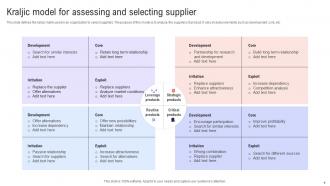
So the Kraljic model basically shows you when to actually care about your suppliers. Routine stuff? Keep it simple and transactional - you've got the power anyway. But bottleneck and strategic suppliers? That's where you need real partnerships because honestly, they can totally screw you over if things go south. Joint planning becomes huge here. Shared forecasts, co-development projects, all that relationship-building stuff. First step is figuring out where your suppliers actually fall in those quadrants, then you'll know how much effort to put into each relationship. Makes way more sense than treating everyone the same.
Honestly, the Kraljic Model pairs pretty well with JIT - just gotta be smart about where you use it. Non-critical and those high-volume items? Perfect for JIT since supply hiccups won't wreck your whole operation. You'll avoid hoarding inventory while still hitting your volume discounts. Strategic and bottleneck stuff though? Hard pass on JIT there. Way too risky - you need buffer stock for anything that could tank your business. Stick to JIT for the lower-risk quadrants and you'll be fine. Oh, and don't let procurement get too fancy with it.
Honestly, Excel or Google Sheets work great for basic Kraljic stuff - just plot your spend data and supplier risk on that 2x2 matrix. If you want something fancier, procurement platforms like Coupa or Ariba have modules that'll categorize suppliers automatically. But here's the thing - I've watched so many teams blow their budget on complex software when a simple spreadsheet would've done the trick. Power BI makes pretty charts if your executives love that kind of thing. My advice? Start with the basics first. Grab your spend data, throw it on a matrix, see what patterns pop up. You can always upgrade later if you actually need it.
So basically you'd use your existing procurement software but connect it with spend analytics tools for better visibility. Instead of those boring quarterly reviews, set up dashboards that automatically sort suppliers into the Kraljic quadrants based on real-time data. The cool part? You can monitor supplier performance 24/7 and get alerts when something shifts categories. Track spend patterns and risk assessments continuously rather than doing everything manually. Honestly, most companies are still doing this stuff by hand when they don't need to. Start with integrating what you already have - you'll see where purchases actually land on that matrix way faster.
Okay so for Kraljic KPIs, it depends on which quadrant you're dealing with. Routine stuff? Track cost savings and how well suppliers perform. Bottleneck items need supply security metrics - basically "are we gonna run out of this?" Critical purchases should focus on innovation and partnership health. Honestly, teams always overthink this. Pick 2-3 metrics per quadrant, that's it. Also worth checking your portfolio balance so you're not stuck with too much risky stuff. Oh and competitive pricing matters for your leverage buys - forgot that one. Just map your current spend first, then choose what actually matters for your business.
So the Kraljic Model actually works way better now with all the digital stuff we have. Real-time data beats those once-a-year gut-check assessments every time. AI can flag when suppliers are shifting risk levels before you even notice. The 2x2 matrix itself? Still works perfectly - honestly not much you can improve there. But now you can automate most of the monitoring instead of manually tracking everything. I'd start by looking at what digital tools you already have and see which quadrants they cover best. Supply chain visibility platforms are pretty good at catching when "routine" suppliers suddenly become critical to your operation.
-
The ease of modifying templates is just superb! Also, the vast collection offers plenty of options to choose from.
-
Happy to found you SlideTeam. You guys are value for money. Amazing slides.