


Lean Management Organization Workflow Operations Roadmap Process




Try Before you Buy Download Free Sample Product
 Impress Your
 Audience
 100%
100% Editable
 Save Hours
 of Time


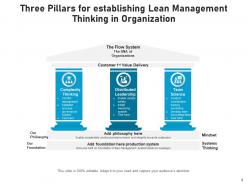
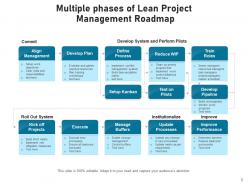
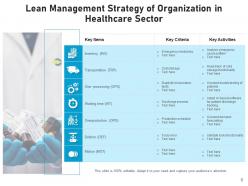
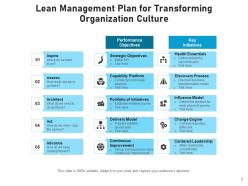
Our Lean Management Organization Workflow Operations Roadmap Process are topically designed to provide an attractive backdrop to any subject. Use them to look like a presentation pro.
People who downloaded this PowerPoint presentation also viewed the following :
Lean Management Organization Workflow Operations Roadmap Process with all 12 slides:
Use our Lean Management Organization Workflow Operations Roadmap Process to effectively help you save your valuable time. They are readymade to fit into any presentation structure.
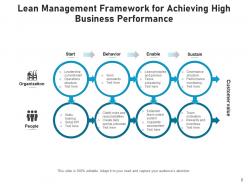
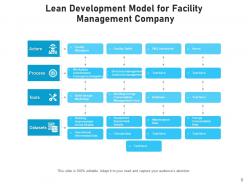
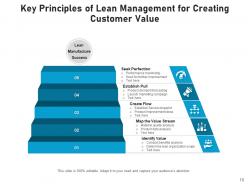
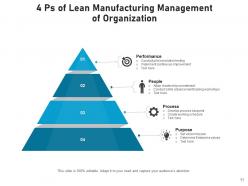
FAQs for Lean Management Organization Workflow
Lean Management's core principles include eliminating waste, continuous improvement (kaizen), value stream mapping, pull-based production, and empowering employees at all levels. These methodologies streamline operations across manufacturing, healthcare, financial services, and retail by reducing inefficiencies, accelerating delivery times, and enhancing customer experiences, with many organizations finding that strategic implementation delivers significant cost reductions and competitive advantage.
Lean Management differs from traditional approaches by emphasizing continuous improvement, waste elimination, and employee empowerment rather than rigid hierarchical control and batch processing. While traditional management focuses on individual departmental efficiency, Lean creates cross-functional teams that streamline entire value chains, ultimately delivering faster customer responses and reduced operational costs across manufacturing, healthcare, and service industries.
Waste reduction serves as the cornerstone of Lean Management, directly enhancing operational efficiency by eliminating non-value-added activities, streamlining workflows, reducing inventory costs, and minimizing production delays. Through systematic identification and removal of waste, organizations across manufacturing, healthcare, and service sectors achieve faster cycle times, lower operational costs, and improved resource utilization, ultimately delivering enhanced customer satisfaction and competitive advantage.
Lean Management in service businesses focuses on eliminating waste through streamlined processes, continuous improvement, and customer value optimization. Service organizations like banks, hospitals, and consulting firms implement these practices by mapping customer journeys, reducing wait times, and standardizing workflows, ultimately delivering faster service delivery and enhanced customer experiences while reducing operational costs.
Common challenges include resistance to cultural change, inadequate leadership commitment, insufficient employee training, lack of continuous improvement mindset, and difficulty sustaining long-term implementation. While these obstacles can initially slow adoption, organizations in manufacturing, healthcare, and financial services find that addressing them through structured training, clear communication, and executive sponsorship ultimately delivers streamlined operations and enhanced competitive advantage.
Organizations measure Lean Management success through key performance indicators like cycle time reduction, defect rates, customer satisfaction scores, employee engagement levels, and overall equipment effectiveness. These metrics enable companies to track operational efficiency improvements, cost savings, and quality enhancements, with many manufacturing and service organizations finding that regular measurement drives continuous improvement and sustainable competitive advantage.
The 5S methodology—Sort, Set in Order, Shine, Standardize, and Sustain—forms the foundation of Lean Management by creating organized, efficient workspaces that eliminate waste and enhance productivity. When implemented effectively through employee training, visual management systems, and regular audits, manufacturing facilities, healthcare institutions, and service organizations streamline operations, reduce search time, and ultimately deliver improved quality standards while fostering a culture of continuous improvement.
Lean Management promotes continuous improvement by empowering employees to identify inefficiencies, suggest solutions, and participate in regular problem-solving activities like kaizen events. Through structured feedback mechanisms, cross-functional collaboration, and recognition systems, organizations enable teams to streamline processes, reduce waste, and enhance operational efficiency, ultimately delivering improved productivity and employee engagement across all business functions.
Common Lean Management tools include value stream mapping, 5S workplace organization, kanban systems, kaizen continuous improvement, and poka-yoke error prevention techniques. These methodologies streamline operations by eliminating waste, optimizing workflow efficiency, and enhancing quality control, with manufacturing companies, healthcare institutions, and service organizations finding that systematic implementation delivers reduced costs and faster delivery times.
Lean Management principles integrate with Agile methodologies through shared focus on waste elimination, continuous improvement, and value stream optimization, creating hybrid frameworks like Lean-Agile and SAFe. This strategic combination enhances project management by streamlining workflows, accelerating delivery cycles, and improving team collaboration, with many organizations finding that integrated approaches deliver faster time-to-market and enhanced operational efficiency.
Organizations can sustain Lean Management through continuous employee training, regular performance monitoring, leadership commitment, cultural integration, and systematic feedback loops. These strategies work by embedding lean principles into daily operations, establishing accountability systems, and creating improvement cycles, with many manufacturing and healthcare organizations finding that consistent leadership support and employee empowerment ultimately deliver lasting operational efficiency and competitive advantage.
Visual management tools enhance Lean Management by providing real-time visibility into processes, performance metrics, and workflow bottlenecks, enabling immediate identification of inefficiencies and opportunities for improvement. Through dashboards, kanban boards, and visual controls, organizations streamline communication, accelerate decision-making, and maintain continuous process optimization, with many manufacturing and healthcare facilities finding that these tools ultimately deliver reduced waste and improved operational efficiency.
Lean Management principles enable organizations to respond swiftly to market changes through continuous improvement, flexible production systems, customer value focus, and streamlined decision-making processes. These methodologies enhance organizational agility by reducing waste, shortening lead times, and creating responsive supply chains, with many manufacturing and service companies finding that lean approaches deliver faster product development cycles and improved customer satisfaction in increasingly dynamic markets.
Leadership supports Lean Management implementation by establishing clear vision, providing necessary resources, and demonstrating commitment through active participation in improvement initiatives. They enable success by empowering employees to identify inefficiencies, investing in training programs, and creating cultures that reward continuous improvement, with many organizations finding that visible leadership engagement accelerates adoption and delivers sustainable operational excellence.
Toyota pioneered Lean with their Toyota Production System, eliminating waste through just-in-time manufacturing and continuous improvement. Amazon applies Lean principles in warehouse operations and delivery optimization, while GE uses Lean Six Sigma across manufacturing processes, and Nike streamlines supply chain management, ultimately delivering reduced costs, faster production cycles, and enhanced operational efficiency.
-
Great experience, I would definitely use your services further.
-
Unique design & color.
-
Nice and innovative design.
-
Unique design & color.