

Lean Manufacturing System Management Colored Icon In Powerpoint Pptx Png And Editable Eps Format




Try Before you Buy Download Free Sample Product
 Impress Your
 Audience
 100%
100% Editable
 Save Hours
 of Time


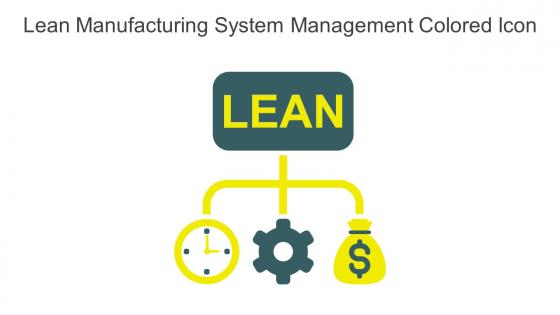
Use this Lean manufacturing system management colored icon in powerpoint pptx png and editable eps format and create amazing PowerPoint presentations or graphics with ease. This downloaded file is available in all the editable formats such as EPS, PNG and Powerpoint pptx.
People who downloaded this PowerPoint presentation also viewed the following :
Lean Manufacturing System Management Colored Icon In Powerpoint Pptx Png And Editable Eps Format with all 6 slides:
Use our Lean Manufacturing System Management Colored Icon In Powerpoint Pptx Png And Editable Eps Format to effectively help you save your valuable time. They are readymade to fit into any presentation structure.





FAQs for Lean Manufacturing System Management Colored Icon In Powerpoint Pptx Png And
Lean Manufacturing's core principles include eliminating waste, continuous improvement, just-in-time production, employee empowerment, and value stream optimization. Unlike traditional manufacturing's batch-focused approach, these principles streamline operations by reducing inventory costs, minimizing defects, and accelerating production cycles, with many manufacturers finding that this strategic combination ultimately delivers enhanced operational efficiency and competitive advantage.
Organizations effectively implement Lean Manufacturing by conducting value stream mapping, establishing cross-functional teams, standardizing workflows, implementing continuous improvement protocols, and investing in employee training programs. Through systematic waste elimination and process optimization, manufacturers like Toyota and Boeing have achieved significant cost reductions, faster production cycles, and enhanced quality control, ultimately delivering competitive advantages and improved operational efficiency.
Value stream mapping serves as a comprehensive diagnostic tool that visualizes entire production processes, identifying waste through detailed analysis of material flow, information flow, cycle times, and bottlenecks. This systematic approach enables manufacturers to pinpoint non-value-added activities like excess inventory, waiting periods, and redundant processes, with many organizations finding that targeted improvements reduce lead times significantly while enhancing operational efficiency.
Lean Manufacturing enhances employee engagement by empowering workers to identify inefficiencies, suggest improvements, and take ownership of quality outcomes through continuous improvement initiatives and cross-functional collaboration. This approach transforms traditional hierarchical structures into team-based environments where shop floor employees become problem-solvers and decision-makers, ultimately delivering higher job satisfaction and operational excellence.
Common challenges include resistance to cultural change, insufficient leadership commitment, inadequate employee training, poor communication across departments, and difficulty sustaining improvements long-term. Many manufacturing organizations find that overcoming these obstacles requires strategic planning, comprehensive workforce education, and consistent management support, ultimately delivering enhanced operational efficiency and competitive advantage.
Lean Manufacturing principles align with sustainable practices by eliminating waste, optimizing resource utilization, and minimizing environmental impact through continuous improvement processes. These methodologies enable manufacturers to reduce energy consumption, decrease material waste, and streamline production cycles, with automotive and electronics companies finding that lean approaches ultimately deliver both operational efficiency and environmental responsibility.
Key metrics include Overall Equipment Effectiveness (OEE), cycle time reduction, defect rates, inventory turnover, and first-pass yield rates. These measurements enable manufacturers to track operational efficiency, quality improvements, and waste elimination across production lines, with many automotive and electronics companies finding that consistent monitoring of these indicators delivers significant cost reductions and enhanced competitive advantage.
Lean Manufacturing integrates with methodologies like Six Sigma and Agile through shared principles of waste reduction, continuous improvement, and data-driven decision making. Organizations in automotive, healthcare, and manufacturing combine Lean's efficiency focus with Six Sigma's statistical rigor and Agile's flexibility, ultimately delivering enhanced operational performance and faster response times.
Lean Manufacturing encompasses a comprehensive philosophy targeting waste elimination, continuous improvement, and cultural transformation, while Just-In-Time focuses specifically on producing goods exactly when needed to minimize inventory costs. JIT serves as one component within broader Lean systems, with automotive manufacturers like Toyota demonstrating how JIT inventory management integrates with Lean's holistic approach to streamline operations and enhance competitive advantage.
Lean principles extend beyond manufacturing through waste elimination, process standardization, continuous improvement, and customer value focus across diverse sectors. Healthcare organizations streamline patient flow and reduce wait times, while service companies enhance operational efficiency and minimize redundancies, with many financial institutions and hospitals finding that these methodologies ultimately deliver faster customer experiences and significant cost reductions.
Lean Manufacturing transforms supply chain management by enhancing supplier collaboration, reducing inventory buffers, implementing just-in-time deliveries, and establishing transparent communication channels. These approaches enable organizations to minimize carrying costs, accelerate response times, and strengthen vendor partnerships, with many manufacturing companies finding that streamlined supplier relationships ultimately deliver improved quality control and competitive operational efficiency.
Technology like IoT sensors, automated systems, predictive analytics, real-time monitoring platforms, and smart manufacturing tools significantly enhances Lean Manufacturing by eliminating waste, optimizing workflows, and improving quality control. These technologies enable manufacturers to achieve continuous monitoring, predictive maintenance, and data-driven decision making, ultimately delivering reduced downtime, faster production cycles, and enhanced operational efficiency.
Employees transitioning to Lean Manufacturing need comprehensive training in continuous improvement methodologies, waste identification techniques, problem-solving frameworks, and collaborative teamwork approaches. This strategic combination enhances operational efficiency by empowering workers to identify bottlenecks, streamline processes, and contribute meaningful suggestions, with many manufacturing organizations finding that well-trained teams deliver faster production cycles and improved quality outcomes.
Lean Manufacturing enhances product quality through continuous improvement methodologies, standardized processes, error prevention techniques, and real-time quality monitoring systems. By eliminating waste and streamlining operations, manufacturers reduce defects, accelerate delivery times, and respond more quickly to customer feedback, with automotive and electronics companies finding that these approaches ultimately deliver higher customer satisfaction and stronger competitive positioning.
Toyota's Production System revolutionized automotive manufacturing through waste elimination and continuous improvement, while General Electric streamlined operations across multiple divisions, and Boeing reduced assembly time significantly. These implementations demonstrate how lean principles enhance operational efficiency, reduce costs, and improve quality across manufacturing, aerospace, and industrial sectors, with organizations consistently finding that systematic lean adoption delivers competitive advantages and sustainable growth.
-
SlideTeam is my one-stop destination for templates. Highly recommended!
-
Excellent template with unique design.