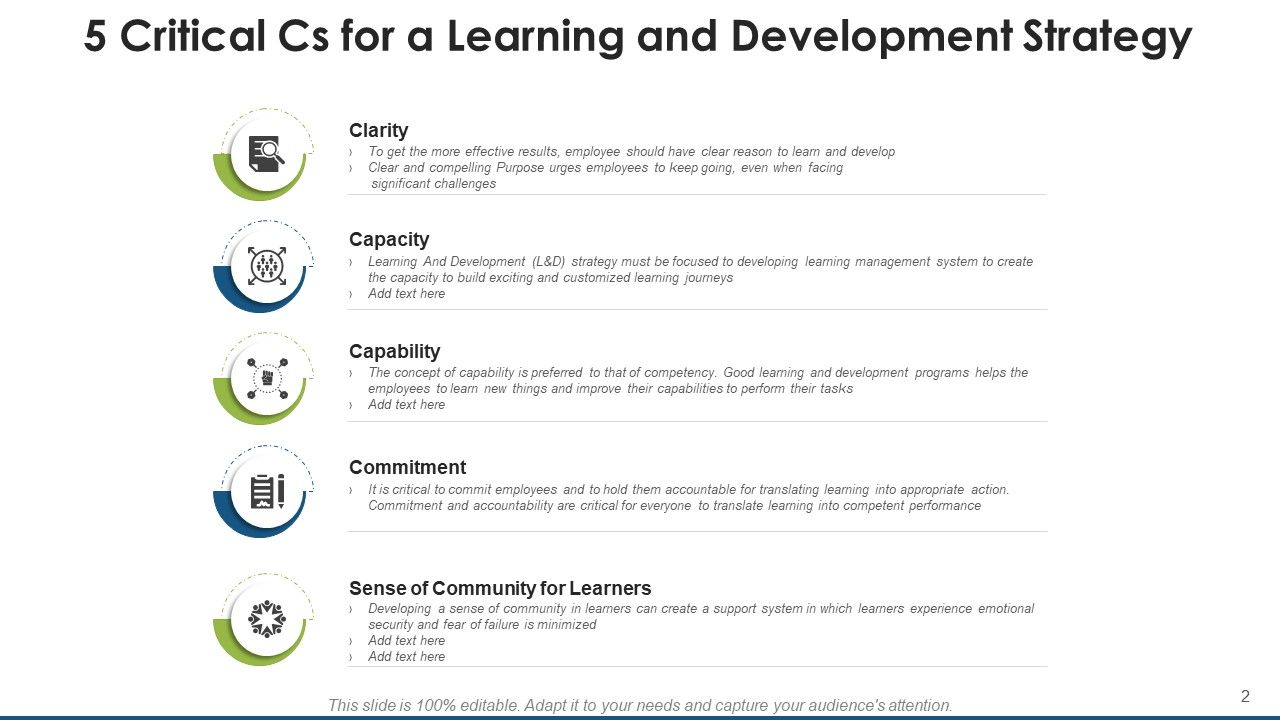
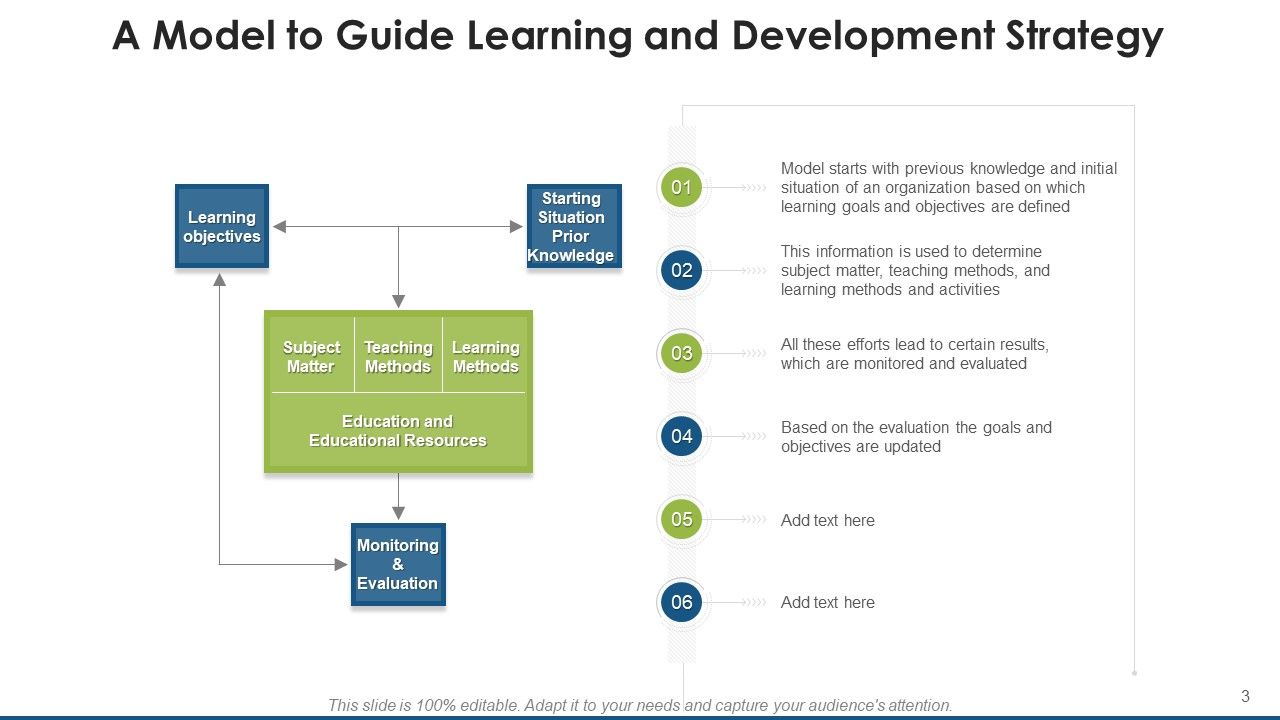
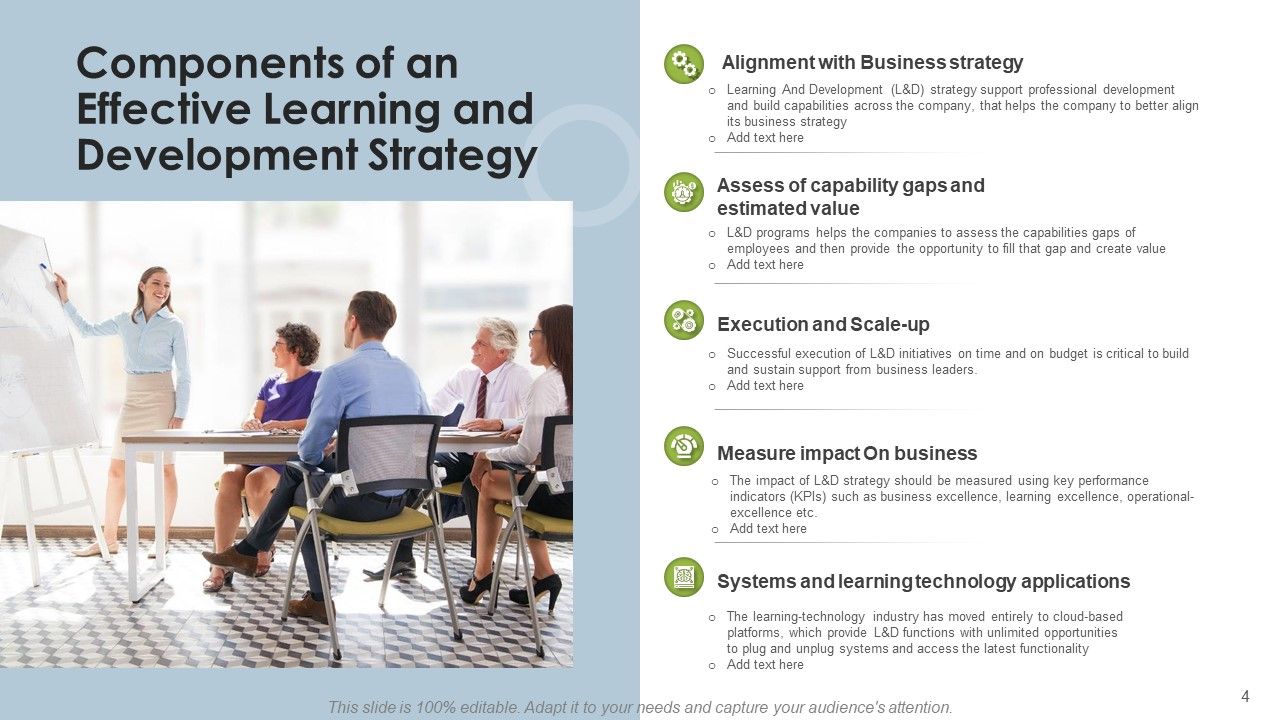
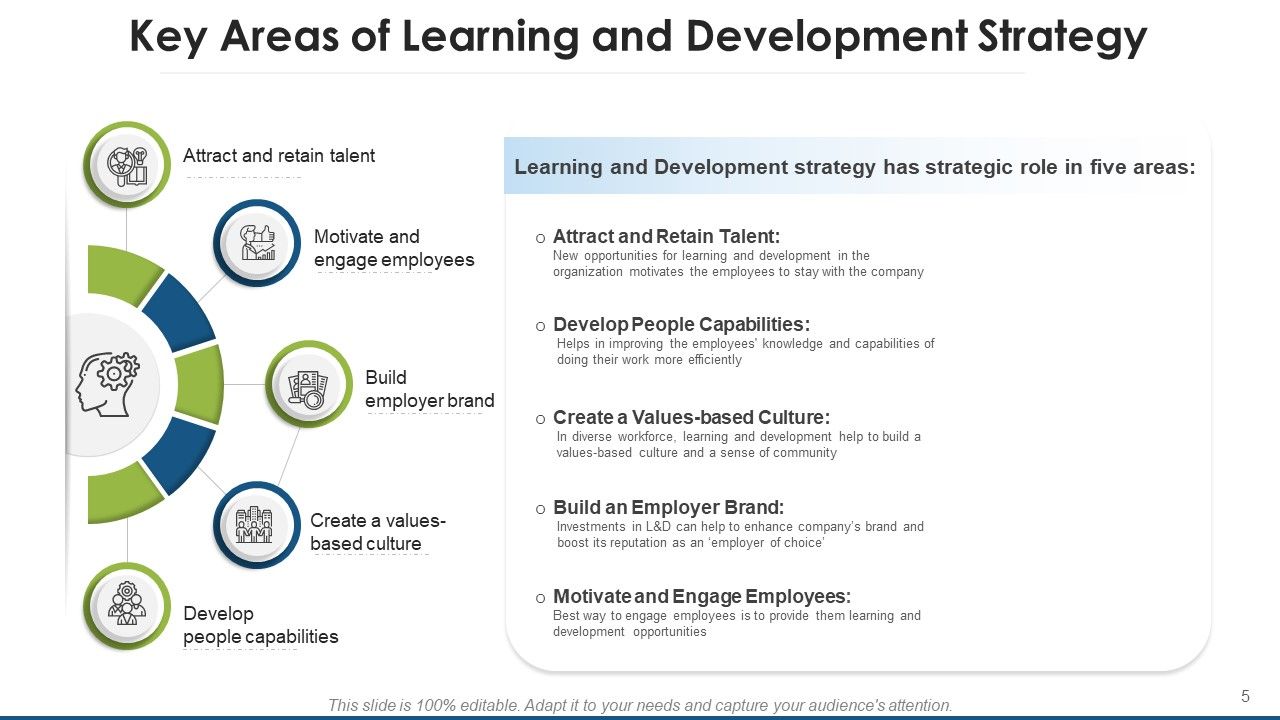
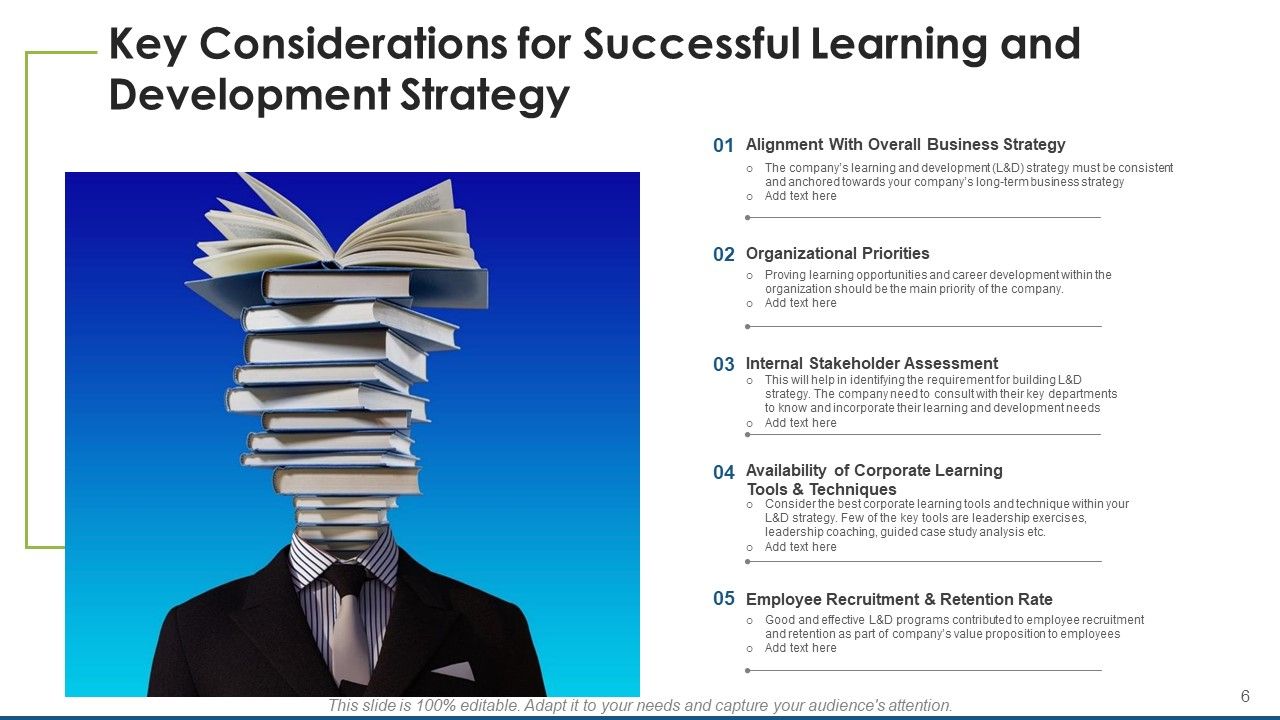
Learning and development strategy commitment educational resources components business

Rating:
85%
Learning and development strategy commitment educational resources components business
Slide 1 of 12

or

Favourites Favourites

Try Before you Buy Download Free Sample Product

Audience Impress Your
Audience
Editable 100%
Editable
Time Save Hours
of Time
The Biggest Sale is ending soon in
0
0
:
0
0
:
0
0
Rating:
85%
If you require a professional template with great design, then this Learning And Development Strategy Commitment Educational Resources Components Business is an ideal fit for you. Deploy it to enthrall your audience and increase your presentation threshold with the right graphics, images, and structure. Portray your ideas and vision using twelve slides included in this complete deck. This template is suitable for expert discussion meetings presenting your views on the topic. With a variety of slides having the same thematic representation, this template can be regarded as a complete package. It employs some of the best design practices, so everything is well-structured. Not only this, it responds to all your needs and requirements by quickly adapting itself to the changes you make. This PPT slideshow is available for immediate download in PNG, JPG, and PDF formats, further enhancing its usability. Grab it by clicking the download button.

People who downloaded this PowerPoint presentation also viewed the following :

FAQs for Learning and development strategy commitment educational

Start with a skills gap analysis - figure out where your team is vs where they need to be. Map this to actual business goals, not just random training ideas (learned this the hard way). Most people need different learning styles, so build out multiple paths. Some love workshops, others are totally self-paced online learners. The key thing everyone forgets? Set up feedback loops so you can actually see if people use what they learned. Otherwise you're just burning budget. Focus on your biggest skill gaps first and work from there.

Start with performance data and where people are actually struggling day-to-day. Manager feedback is way more valuable than surveys tbh - employees often don't realize what they're missing skill-wise. Check your succession planning too - what happens if key people bail tomorrow? Look at failed projects, upcoming initiatives that need new skills, peer observations during regular work. Quarterly check-ins beat those massive annual reviews every time. Oh, and don't try to boil the ocean - pick one department first then expand from there. Way less overwhelming that way.

Honestly, tech changes everything about training - no more boring one-size-fits-all stuff. AI can build learning paths that actually match what each person needs to work on. VR training is wild too, way better than sitting through another slideshow (we've all been there). The data you get is probably the best part though - you'll actually know if people are learning instead of just guessing. Oh, and don't try to do everything at once. Pick one tool that fixes your biggest headache first, then add more later.

Show curiosity yourself first - ask "what'd we learn?" after every project, good or bad. Listen to the actual answers too. I've watched way too many managers claim they want learning culture then panic when someone says "I have no idea how to do this." Set up skill-sharing sessions where people teach each other random stuff they know. You'll be shocked what hidden talents are sitting right there. Celebrate the attempts, not just perfect results. Oh, and ask your team what they actually want to learn this quarter - then help them find time for it instead of just saying "great idea!"

Okay so definitely track the obvious stuff first - completion rates, satisfaction scores, before/after assessments. But honestly? That's just scratching the surface. The real measure is whether people actually change how they work. Are they performing better? Using new skills on the job? Fewer mistakes, better productivity - that kind of thing. Career moves and promotions are pretty telling too. Here's what I'd do though - pick maybe 3 or 4 metrics max that actually match what you're trying to achieve. Otherwise you'll drown in data and still not know if it's working.

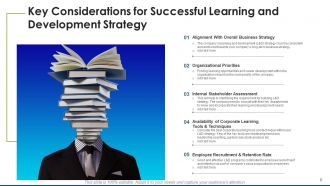
Honestly, most companies just throw random training at people and call it a day - which is why nothing ever changes. First thing? Figure out what your company actually cares about (hint: not the mission statement on the wall). Revenue growth? Focus on sales training and customer service stuff. Innovation goals? Do creativity workshops or tech skills. Map everything you do directly to those real priorities. I can't stress this enough - track whether your programs actually improve the metrics that matter, not just how many people showed up. It sounds super basic but you'd be shocked how many L&D teams skip this step completely.

Okay so first thing - plan their week before they even show up, trust me on this one. Start with the boring stuff like introductions and system logins, then slowly add the real work over 90 days. Don't just dump them in random meetings! Pair them with someone who actually wants to help, not just whoever's available. I'd do check-ins at week 1, then month 1 and 3. Most places totally botch this part and wonder why people quit. The whole point is making them feel confident, not like they're drowning. Oh and culture stuff matters just as much as the technical training.

Don't treat mentorship like some separate thing you tack on later - weave it right into how people learn at your company. Match your top performers with folks who need to level up. Your managers should coach, not just evaluate (honestly, most of them suck at this initially but they'll get better). Here's what actually works: structured programs with real goals and regular check-ins. None of that "we should grab coffee soon" BS that never happens. Mix formal mentoring for career stuff with casual peer coaching for day-to-day problems. Find your internal experts first, then get them some basic coaching training.

So D&I totally transforms your L&D approach. Different perspectives and learning styles = way better engagement across the board. I've watched diverse training groups come up with solutions nobody saw coming - it's honestly wild how creative they get. Your content needs to reflect actual varied experiences though, not the same tired examples everyone uses. Short version: check your current stuff for bias and build learning that actually works for different types of people. Oh, and retention rates go through the roof when people see themselves represented in the material.

Oh man, remote learning is such a different beast! You lose all those random coffee machine chats where people actually learn stuff. Now everything has to be super intentional. I'd start with bite-sized content people can squeeze in between meetings - nobody has time for 2-hour training sessions anymore. Async forums work great for deeper discussions. Also, record everything because people will definitely want to rewatch when they're actually doing the work later. The tricky part? Creating those peer connections artificially since that's where the real learning happens. Honestly, just audit what you have now and see what actually needs everyone online at once.

Honestly, I'd start by figuring out what skills you're missing first. Then hit up LinkedIn Learning or Coursera - they're solid for specialized stuff. Local universities are great too, especially if you want guest speakers or certification programs. Industry associations are probably your best bet though - tons of webinars and conferences. We've had luck with professional coaches doing custom workshops, but they can get pricey. Oh, and knowledge swaps with other companies work surprisingly well. Just reach out to 2-3 options and see what fits your budget.

You gotta make feedback part of the whole process, not just tack it on at the end. Pre-assessments help people see where they're starting from. Then during training - polls, quick check-ins, peer stuff. Most programs totally blow this part off which drives me crazy because it's where the good stuff happens! After they're done, get feedback on how it actually went AND see if they're doing things differently at work. Oh and actually use that info to make the next round better - sounds obvious but you'd be surprised how many people skip that step.

Honestly, soft skills matter way more than most people think. Technical stuff? You can learn that in a few weeks. But getting someone to actually communicate well or handle change without freaking out - that's the hard part. I've seen so many teams where everyone's brilliant but they can't work together to save their lives. Companies are throwing money at soft skills training now because the numbers don't lie. Figure out what's actually breaking down on your team first though. No point teaching presentation skills if the real issue is people can't give feedback without being jerks about it.

Honestly, don't try to add accessibility after you've built everything - it's such a pain. Build it in from the start. Screen readers need to work with your content, videos need captions, and you'll want audio, visual, and text options. Different people learn totally differently too. Oh, and cultural stuff matters way more than most people think. What's obvious to you might be confusing to someone else. Before launching anything, test it with actual diverse groups. Ask your learners what's blocking them instead of guessing. Pick one program you already have and audit it first - you'll probably find gaps you never noticed.

Honestly, microlearning is where it's at right now - people want quick hits they can squeeze in between calls. AI personalization is getting pretty solid too. Skills-based stuff is blowing up because nobody wants another boring compliance course, you know? VR training looks cool but it's still expensive for most companies. What's really working is peer-to-peer learning - like setting up internal mentorship things instead of the usual top-down approach. My advice? Figure out what skills your team actually lacks first. Then find platforms that deliver targeted content in short chunks. Way more effective than those marathon training sessions.

Ratings and Reviews

85% of 100
Review Form
Write a review
Most Relevant Reviews
  1. 100%

    by Darin Chen

    Great designs, Easily Editable.
  2. 80%

    by James Lee

    Awesome presentation, really professional and easy to edit.
  3. 80%

    by Dewey Stephens

    Amazing product with appealing content and design.
  4. 80%

    by Desmond Garza

    Excellent Designs.

4 Item(s)

per page: