


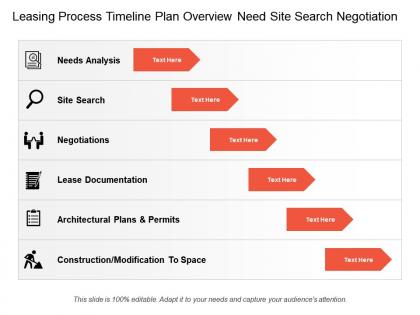
Leasing process timeline plan overview need site search negotiation




Try Before you Buy Download Free Sample Product
 Impress Your
 Audience
 100%
100% Editable
 Save Hours
 of Time


Display a wonderful showcase of information with our leasing process timeline plan overview need site search negotiation PowerPoint deck. By using this contractual operation PowerPoint template, you can guide yourself in exploring different verticals of your master plan. It helps you analyze the marketing benefits delivered by a thoughtful and considerate approach. This rental procedure PPT design is advantageous in terms of identifying the correct and logical strategies so that you can use them conveniently. The contractual model PPT deck will help you introduce all of the arrangements for renting resources in advance. This tenancy proceeding creative PPT set is well prepared and formulated as it is suitable for different industries. You can use it to jot down all the essential information so assimilate it in your business right now in order to send your detailed message in a convenient as well as understandable manner.
People who downloaded this PowerPoint presentation also viewed the following :
Leasing process timeline plan overview need site search negotiation with all 5 slides:
Earn appreciation with our Leasing Process Timeline Plan Overview Need Site Search Negotiation. Your listeners will surely laud your performance.



FAQs for Leasing process timeline plan overview need
The key stages in the leasing process timeline include property search and evaluation, application submission, credit and background checks, lease negotiation, and final signing. These stages typically span 2-4 weeks, with commercial leases often requiring additional due diligence, financial documentation, and legal review, ultimately enabling businesses to secure strategic locations while landlords minimize vacancy periods and ensure qualified tenants.
Businesses can effectively prepare by conducting thorough market research, securing financial documentation early, engaging qualified legal counsel, and developing clear space requirements before initiating negotiations. Strategic preparation involves creating detailed timelines, establishing decision-making protocols, and building relationships with brokers, while many organizations find that early due diligence and contingency planning ultimately streamline negotiations and reduce costly delays.
Leasing documentation typically includes credit reports, income verification, employment letters, bank statements, references, and identification documents. These requirements enable landlords to assess tenant reliability and financial stability, while streamlining application processing across residential and commercial properties, ultimately delivering faster approval decisions and reduced vacancy periods for property managers.
Commercial leasing typically involves 60-180 days due to extensive negotiations, legal reviews, and customized lease terms, while residential leasing usually completes within 7-30 days with standardized agreements. Commercial properties require detailed financial documentation, property inspections, and tenant improvement discussions, whereas residential leases focus on credit checks and basic application processing, ultimately delivering faster occupancy for residential but more strategic, long-term partnerships for commercial ventures.
Negotiations significantly impact leasing timelines by determining lease terms, rental rates, tenant improvements, and occupancy dates through back-and-forth discussions between landlords and tenants. Complex commercial deals often extend timelines by weeks or months, while straightforward residential negotiations streamline the process, with many landlords finding that flexible terms ultimately accelerate closings and reduce vacancy periods.
Delays in leasing process timelines create financial pressures for landlords through lost rental income and increased carrying costs, while forcing tenants to extend temporary arrangements or delay business operations. These setbacks disrupt cash flow projections, increase transaction costs, and create competitive disadvantages, with many commercial tenants finding that prolonged negotiations ultimately compromise their market positioning and operational planning.
Common leasing pitfalls include inadequate market research, rushing due diligence, overlooking lease terms and hidden costs, insufficient financial planning, and poor location analysis. These oversights can significantly impact operational efficiency and profitability, with many businesses finding that thorough preparation, legal review, and strategic timing ultimately deliver better lease conditions and long-term competitive advantage.
External factors significantly influence leasing timelines through market demand fluctuations, economic conditions, interest rate changes, and regulatory requirements that can extend or accelerate negotiations. During competitive markets, landlords may expedite processes to secure tenants quickly, while economic uncertainty often leads to prolonged due diligence periods, with many commercial real estate firms finding that strategic timing ultimately delivers better lease terms and occupancy rates.
Property management software, CRM systems, document automation platforms, electronic signature tools, and project management applications can streamline leasing timelines significantly. These technologies enhance efficiency by automating tenant screening, centralizing communication, and tracking lease milestones, with many real estate firms finding that integrated platforms reduce processing time while improving tenant experiences.
Lease terms significantly influence timeline duration, with complex arrangements involving multiple clauses, customized provisions, and extensive legal reviews often extending negotiations by weeks or months. Standard residential leases typically require 1-2 weeks, while commercial properties with intricate terms, tenant improvements, and specialized conditions can span 30-90 days, ultimately delivering more comprehensive agreements but requiring strategic time allocation.
**INPUT**: What are the best practices for conducting background checks within the leasing timeline? **OUTPUT**: Best practices include initiating checks immediately upon application submission, using automated screening platforms, setting clear approval criteria, maintaining consistent communication with applicants, and establishing backup verification methods. These approaches streamline tenant evaluation by reducing processing delays, ensuring compliance with fair housing regulations, and accelerating decision-making, with many property management companies finding that systematic background protocols ultimately deliver faster lease completions and higher-quality tenant placements.
Landlords can streamline leasing by implementing digital applications, automated tenant screening, virtual property tours, electronic lease signing, and centralized communication platforms. These technologies enhance efficiency by reducing paperwork processing time, accelerating background checks, and enabling remote interactions, with many property management companies finding that automated workflows decrease leasing timelines by 40-60% while improving tenant experiences.
A comprehensive lease agreement should include clear payment terms, maintenance responsibilities, renewal options, termination clauses, and dispute resolution procedures. These elements streamline operations by defining expectations upfront, minimizing legal risks, and establishing transparent communication channels, with many property managers finding that detailed agreements ultimately reduce tenant conflicts and accelerate resolution processes.
Tenants can ensure a smooth leasing process by preparing financial documentation early, researching market rates thoroughly, scheduling property visits strategically, and reviewing lease terms carefully before signing. These proactive steps streamline negotiations by demonstrating preparedness, enabling faster approvals, and minimizing delays, with many landlords finding that organized tenants complete transactions more efficiently.
Communication between landlords and tenants can be improved through digital platforms, automated updates, regular check-ins, transparent timelines, and dedicated support channels. These approaches streamline interactions by providing real-time status updates, centralized messaging systems, and proactive notifications, with many property management companies finding that enhanced communication reduces delays, minimizes misunderstandings, and ultimately delivers faster lease completions.
-
Excellent design and quick turnaround.
-
Best way of representation of the topic.