


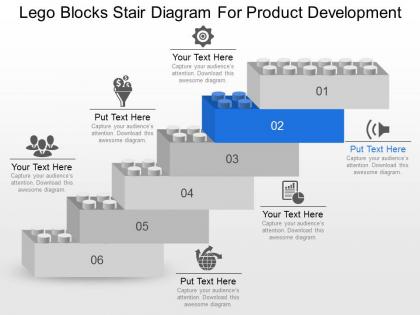
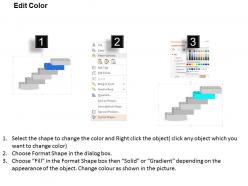
Lego blocks stair diagram for product development powerpoint template slide




Try Before you Buy Download Free Sample Product
 Impress Your
 Audience
 100%
100% Editable
 Save Hours
 of Time


Be deserving of the glory with our Lego Blocks Stair Diagram For Product Development Powerpoint Template Slide. Your thoughts will earn their admiration.
People who downloaded this PowerPoint presentation also viewed the following :
Lego blocks stair diagram for product development powerpoint template slide with all 4 slides:
Give birth to an awesome environment with our Lego Blocks Stair Diagram For Product Development Powerpoint Template Slide. A great ambiance will evolve.
FAQs for Lego blocks stair diagram for product development
The key stages in LEGO blocks product development include concept ideation, design and prototyping, testing and validation, production planning, and market launch. This systematic approach enables toy manufacturers and product teams to streamline innovation cycles, minimize development risks, and ensure market readiness, with many companies finding that structured methodologies ultimately deliver faster time-to-market and enhanced product success rates.
Market research influences LEGO set design by identifying trending themes, preferred complexity levels, target age demographics, and popular licensing opportunities through consumer surveys and focus groups. This data enables LEGO designers to create sets that resonate with specific audiences, optimize piece counts for different skill levels, and align with current entertainment franchises, ultimately delivering products that maximize market appeal and commercial success.
Consumer feedback drives LEGO's iterative design through direct input on playability, durability, and educational value, gathered via focus groups, online communities, and retail partnerships. This feedback enables LEGO to refine brick functionality, enhance set complexity, and develop new themes, with many successful product lines like LEGO Ideas emerging directly from consumer suggestions, ultimately delivering more engaging experiences and stronger market performance.
Sustainability practices significantly reshape LEGO product development through renewable materials adoption, carbon-neutral manufacturing processes, circular economy principles, and responsible sourcing standards. These initiatives enable reduced environmental impact, enhanced brand reputation, and alignment with consumer values, while many toy manufacturers find that sustainable practices ultimately deliver competitive differentiation and long-term cost efficiencies.
Effective LEGO prototyping methods include digital modeling with LEGO Digital Designer, physical brick building, computer-aided design software, rapid 3D printing of custom elements, and collaborative workshops with target users. These approaches streamline concept validation by enabling quick iterations, cost-effective testing, and early user feedback, with many toy companies finding that combining digital and physical prototyping accelerates development while minimizing production risks.
LEGO ensures durability and safety through rigorous testing protocols, including drop tests, bite tests, compression analysis, and chemical safety assessments throughout development phases. These comprehensive quality measures enable consistent manufacturing standards, regulatory compliance across global markets, and enhanced customer trust, with many toy manufacturers finding that systematic testing protocols ultimately deliver reduced liability risks and stronger brand reputation.
**INPUT**: What are the challenges of incorporating technology into LEGO products? **OUTPUT**: Incorporating technology into LEGO products presents challenges including maintaining tactile play experiences, ensuring durability standards, managing cost complexity, balancing screen time with physical building, and preserving creative open-endedness. While digital integration enhances interactivity through programmable elements and augmented reality features, manufacturers must seamlessly blend physical and digital experiences, ultimately delivering innovative play value without compromising the fundamental building and imagination benefits that define traditional construction play. [Word count: 60]
Cross-collaboration with other brands enhances LEGO offerings by combining unique intellectual properties, expanding market reach, and creating innovative play experiences that appeal to diverse demographics. Through strategic partnerships with franchises like Star Wars, Marvel, and Disney, LEGO delivers themed sets that capture broader audiences, increase brand relevance, and ultimately drive higher engagement while accessing new customer segments across entertainment industries.
LEGO employs comprehensive user testing strategies including focus groups with children and parents, prototype playtesting sessions, digital feedback platforms, and partnership collaborations with educational institutions. These approaches enable systematic evaluation of playability, educational value, and market appeal across different age groups, while gathering insights on durability and engagement levels, ultimately ensuring products deliver compelling experiences and strong commercial performance.
Design trends in the toy industry significantly influence LEGO product development through digital integration, sustainability demands, educational focus, and inclusivity requirements. These trends drive LEGO to incorporate augmented reality features, develop eco-friendly bricks from plant-based materials, and create diverse minifigures, ultimately delivering enhanced play experiences while maintaining competitive advantage in an increasingly conscious market.
Pricing a new LEGO set requires considering production costs, target demographics, piece count, licensing fees, and competitive positioning within the toy market. These factors work together to determine optimal pricing strategies, with many toy manufacturers finding that balancing educational value, play complexity, and collector appeal ultimately delivers both market penetration and sustainable profit margins.
LEGO can leverage social media by monitoring fan communities, analyzing user-generated content, tracking trending builds, conducting polls for feature preferences, and engaging directly with creators for feedback. Through platforms like Instagram and YouTube, LEGO identifies popular themes, discovers emerging play patterns, and validates concepts before production, ultimately reducing development risks while enhancing products that resonate with their passionate community.
Thematic sets enable LEGO to penetrate diverse market segments by appealing to specific interests, age groups, and fandoms, from architecture enthusiasts to movie franchises. These specialized collections drive brand loyalty, attract new demographics, and create recurring revenue streams through licensing partnerships, with many retailers finding that themed products generate higher margins and broader customer engagement than traditional building sets.
LEGO balances creativity and practicality by implementing structured design phases that encourage innovation while ensuring manufacturability, safety standards, and system compatibility with existing brick collections. Through iterative prototyping, cross-functional team collaboration, and rigorous testing protocols, the company delivers imaginative play experiences that remain technically feasible and commercially viable, ultimately maintaining their competitive advantage in the global toy market.
Other brands can learn from LEGO's emphasis on systematic modularity, user-centered design, strategic partnerships, continuous reinvention, and community engagement. Companies across industries, from software development to automotive manufacturing, increasingly adopt LEGO's approach of creating interconnected product ecosystems, fostering customer co-creation, and balancing tradition with innovation, ultimately delivering sustained market relevance and competitive advantage.
-
Really like the color and design of the presentation.
-
It saves your time and decrease your efforts in half.