


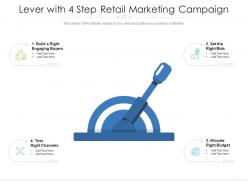
Lever with 4 step retail marketing campaign





Try Before you Buy Download Free Sample Product
 Impress Your
 Audience
 100%
100% Editable
 Save Hours
 of Time


Our Lever With 4 Step Retail Marketing Campaign are topically designed to provide an attractive backdrop to any subject. Use them to look like a presentation pro.
People who downloaded this PowerPoint presentation also viewed the following :
Lever with 4 step retail marketing campaign with all 2 slides:
Use our Lever With 4 Step Retail Marketing Campaign to effectively help you save your valuable time. They are readymade to fit into any presentation structure.
FAQs for Lever with 4 step
Honestly, it's all about knowing who you're talking to and actually giving them what they want. Pick your channels wisely - social, email, whatever - but don't just spray and pray everywhere. Your messaging has to hit different, you know? And timing... ugh, I messed that up once and it was brutal. Track everything though - set clear goals upfront so you can actually tell if you're winning or just burning money. Oh, and keep your message consistent across platforms. People notice when you sound schizophrenic. Start with one solid objective and don't overcomplicate it.
Okay so first figure out where your people actually spend their time online. Facebook and Insta have crazy good targeting - you can get really specific with demographics and interests. TikTok's perfect for younger crowds but your content has to feel authentic, not like some corporate ad. LinkedIn if you're doing B2B stuff. Here's the thing though - don't just copy paste the same post everywhere. Each platform needs its own vibe, you know? Test different audiences, see what hits, then double down on what works. I learned this the hard way lol. The data will tell you everything if you actually pay attention to it.
Dude, storytelling changes everything in retail marketing. You're not just another store anymore - customers actually feel connected to your brand. Nike's the perfect example (I know, super obvious but whatever). They don't just sell shoes, they sell this whole "push your limits" vibe. Makes people remember you way better than boring product ads. Your customers end up feeling invested, like they're part of something bigger. Figure out what story your brand's already telling naturally. Then just keep using that same narrative across all your campaigns. It's honestly one of the best ways to stand out from competitors who are still doing basic "buy our stuff" marketing.
Honestly, just pick 3-4 metrics that actually match your goals - otherwise you'll drown in data. Sales lift and conversion rates are obvious must-haves. ROI too, obviously. But engagement stuff like click-through rates and social shares? Super underrated. They tell you if people actually give a damn about your content. Customer acquisition cost is clutch if you're growing. Oh, and if you've got budget left over, run some brand awareness surveys before/after. I learned this the hard way - tracking everything sounds smart but it's just overwhelming. Focus on what moves the needle for YOUR specific campaign.
Okay so basically you want to make people feel like they're part of something, not just being sold to. Segment your audience first - like, actually look at what they buy and how they behave. Social contests and polls are huge right now, plus user-generated content if you can swing it. Email campaigns work great when you customize them based on purchase history. Gamification is honestly underrated - loyalty points, limited-time challenges, that stuff. Pick maybe 2-3 tactics where your customers actually hang out (don't spread yourself too thin), then track what's actually getting people to engage. Most brands overthink this.
Your store displays have to match whatever campaign you're running, otherwise people get confused and bail. Like if someone sees your polished Instagram ad then walks into a mess? Game over. Window displays, product placement, signage - it all needs to echo the same vibe and messaging from your ads. The disconnect kills sales every time. I learned this the hard way at my old job actually. Brief your visual team on the campaign creative before you launch anything. They need to see exactly what customers are seeing online so they can make the store match. It's honestly one of those things that seems obvious but tons of brands mess it up.
So there's some pretty cool stuff happening right now. AI personalization engines are huge - they customize product recommendations on the fly. AR/VR is solid too, lets people try stuff virtually before buying. Voice commerce through Alexa is blowing up way faster than I expected honestly. Geofencing got really smart recently, you can hit customers with targeted promos when they're near your store or even competitors lol. Predictive analytics can forecast buying patterns much better now. I'd probably pick whatever fits your customer flow best and just test it small first.
Dude, start by splitting your customers into groups - like who spends big vs. bargain hunters. Look at their buying patterns and when they usually shop online. Then hit each group with different messaging that actually makes sense for them. Those cart abandonment emails? Send them the exact stuff they were checking out. Timing matters too - some people shop during lunch, others late at night. I'd probably test just two segments first though, don't go crazy trying to do everything at once. The data's honestly pretty revealing once you dig in.
Look, seasonal trends are everything for timing your product pushes and budget allocation. Black Friday and back-to-school season? Consumer behavior gets crazy predictable during those periods - honestly kind of fascinating how reliable it is. Your messaging and creative assets have to shift with what people actually want each season. Swimming suits in December won't work, duh. I always dig into past seasonal data first to forecast demand. Then you can plan inventory and ad spend properly. The timing piece is what most people mess up though.
Oh man, loyalty programs are genius honestly. They hook people psychologically - once you've got points somewhere, you don't want to "lose" them by shopping elsewhere, you know? I do this with my coffee shop all the time lol. But seriously, the numbers are crazy good. Loyalty members spend like 20-30% more per visit and come back way more often. Plus you get all their purchase data to send better targeted stuff. When you're setting up campaigns, definitely separate loyalty people from everyone else - they go nuts for exclusive deals but ignore the basic promotional emails.
Check your numbers every day and move money to what's actually hitting - most people just launch campaigns and ignore them forever which is honestly insane. I'd start small across different channels first, maybe 20% set aside just for testing random stuff that might work. Once you see clear winners, dump more budget there. Oh and definitely decide what "winning" means before you start or you'll just be making stuff up later. The hardest part? Killing campaigns that aren't working. But seriously, cut them loose fast and put that money somewhere it'll actually do something.
Honestly, people are way more into this stuff now than even like 2 years ago. Highlight your eco-friendly products or whatever green initiatives you're actually doing. Behind-the-scenes content works great - show your recycled packaging process or team volunteering. Don't just slap "sustainable" on everything though. Customers can smell greenwashing from miles away and they'll roast you for it. Start with one real initiative you can actually prove. Carbon-neutral shipping, partnerships with environmental groups, that kind of thing. Authentic storytelling beats buzzwords every time. Build from there once you've got something solid.
Dude, biggest mistake is spreading yourself too thin across every platform. Pick one channel and actually figure it out first. Most people blow their budget because they're targeting literally everyone instead of specific groups. Super wasteful. Test your messaging small before going big - I learned this the hard way lol. Oh and don't chase new customers while ignoring the ones you already have. That's just dumb money left behind. Mobile optimization isn't optional anymore since everyone shops on their phone now. Start focused, see what actually works, then scale up from there.
So basically, you're paying people who already have followers to show off your products in a way that feels real. Way better than regular ads because people trust seeing actual humans use stuff. I'd start with smaller influencers first - they're cheaper and their audiences are usually more engaged anyway. The trick is finding ones whose followers actually match who you're trying to reach. Once you figure out what messages work, then you can think about bigger names. It's like word-of-mouth but you don't have to wait around hoping people talk about you.
Ugh, the struggle is real - you're up against companies with insane ad budgets while you're working with like 10% of what they blow on one campaign. Then there's the whole data thing... they've got teams of analytics nerds while you're flying blind half the time. Oh, and their reach? Forget about it. But honestly? Sometimes I think smaller retailers have it better in weird ways. You can actually talk to your customers like humans, pivot quickly when something isn't working, and people trust local businesses way more than some faceless corporation. Focus on your community and let happy customers do the talking for you.
-
Thanks for all your great templates they have saved me lots of time and accelerate my presentations. Great product, keep them up!