


LIFO And FIFO Method For Inventory Management Strategies For Forecasting And Ordering Inventory




Try Before you Buy Download Free Sample Product
 Impress Your
 Audience
 100%
100% Editable
 Save Hours
 of Time


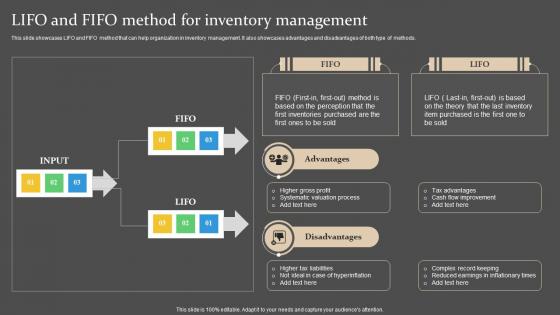
This slide showcases LIFO and FIFO method that can help organization in inventory management. It also showcases advantages and disadvantages of both type of methods.
People who downloaded this PowerPoint presentation also viewed the following :
LIFO And FIFO Method For Inventory Management Strategies For Forecasting And Ordering Inventory with all 6 slides:
Use our LIFO And FIFO Method For Inventory Management Strategies For Forecasting And Ordering Inventory to effectively help you save your valuable time. They are readymade to fit into any presentation structure.





FAQs for LIFO And FIFO Method For Inventory Management Strategies For Forecasting
So FIFO means you sell old inventory first, LIFO sells the newest stuff. Think grocery stores - they put new milk in back so old stuff sells before expiring. Here's where it gets interesting though: during inflation, FIFO makes your profits look higher since you're selling that cheaper old inventory. LIFO does the opposite. Plus FIFO gives you better balance sheet numbers since your remaining inventory reflects current prices. Honestly, most accountants I know push FIFO unless there's a specific tax reason not to. I'd go with that unless yours says otherwise.
So here's the deal with inflation - FIFO makes you look way more profitable on paper, but LIFO actually saves you money on taxes. It's weird but true. FIFO means you're selling your old, cheap stuff first. Lower costs = higher profits = looks great to investors. LIFO flips it - you expense the new expensive inventory, so profits tank but taxes drop too. Honestly? Most companies I know go with LIFO during inflation because who doesn't want smaller tax bills, even if your balance sheet looks kinda meh. Talk to your accounting people though - they'll know what works better for your specific situation and cash flow.
LIFO works best when your inventory costs keep going up and you want tax breaks. The whole idea is you're "selling" your newest, pricier stuff first - that bumps up your cost of goods sold and drops your taxable income. Manufacturing and retail companies love this during inflation because the tax savings are legit. Honestly though, it makes your balance sheet look kinda funky since you're stuck with old inventory that looks way undervalued. My cousin's company switched to it last year and saved a ton on taxes. Definitely crunch the numbers with your accountant first to make sure the savings beat out the weird reporting stuff.
Honestly, FIFO is a game-changer for cash flow. You're always pushing out the older stuff first, so nothing just sits there forever tying up your money. Way less headache to track than LIFO too - I learned that one the hard way. Your books look cleaner since what you're selling actually matches what's physically moving out. Start with whatever products you sell the most of first. You'll probably notice the difference in a few weeks once that old inventory finally starts moving. It's kinda satisfying watching your turnover improve, not gonna lie.
So basically, LIFO saves you money on taxes when prices are going up because you're writing off your most expensive inventory first. Lower profits = lower taxes. FIFO works backwards - you use the cheap old stuff first, so your profits look higher and you pay more. Pretty smart tax move, right? But here's the annoying part: once you choose LIFO, the IRS makes it a huge pain to switch back. I'd definitely crunch the numbers with an accountant first though, since what works best really depends on your specific business situation.
So here's the deal with LIFO vs FIFO - you have to pick one and stick with it for compliance. GAAP lets you use either method, but IFRS completely bans LIFO (honestly kind of annoying if you're going international). Your choice hits everything - cost of goods sold, inventory values, taxes. LIFO can save you serious money on taxes when prices are rising, which is pretty sweet. Just document whatever you choose really clearly in your accounting policies. Trust me, auditors will check that you're being consistent every single year, and they're not fun to deal with when there's confusion.
So here's the deal with demand changes - when things get crazy volatile, LIFO actually helps because you're matching today's expensive costs with today's revenue. Makes your profit numbers way more realistic. FIFO's better when demand is steady since you're using up old cheap stuff first. Honestly makes more sense to me that way. But if you've got inflation plus wonky demand? LIFO might cut your tax bill since profits look lower. I'd totally run both scenarios with your real numbers first though - the cash flow difference might surprise you.
QuickBooks and NetSuite are probably your best bets - they handle LIFO and FIFO switching pretty seamlessly. Fishbowl's solid too, and TradeGecko got bought by QuickBooks so that's another option. Most decent systems these days can track cost layers automatically and sync with your accounting software, which is honestly a lifesaver. Just make sure whatever you pick can spit out proper COGS reports for whichever method you're using. I'd demo a few first though - your industry might need something specific that I'm not thinking of. The real-time inventory updates are clutch.
So basically, FIFO leaves your newer (pricier) inventory on the books since you're selling the old stuff first. Your balance sheet looks better that way. LIFO flips it - recent purchases hit your cost of goods sold, older cheap inventory stays put. During inflation? The difference is wild. I always thought LIFO was kinda backwards but some industries swear by it. FIFO keeps your inventory values current though, which most people prefer. Just check what others in your field are doing first - you don't want to be the weird one out.
Yeah, so market trends totally matter for this stuff. LIFO's your friend when prices are going crazy high - you'll pay way less in taxes since you're matching those expensive recent costs with your sales. But if prices are dropping or you want your books to look good for investors, go with FIFO instead. Tech companies usually stick with FIFO because their costs keep falling over time. Like, making phones gets cheaper each year, you know? The trick is actually paying attention to what's happening in your industry. Don't just pick one and ignore it forever - that's a mistake I see people make all the time.
Honestly, just pick whatever matches your situation best. FIFO's solid when prices keep going up - you're selling the older, cheaper stuff first so your margins look better. LIFO does the reverse thing where you match newer expensive costs against sales, which actually cuts your tax bill during inflation. Took me forever to wrap my head around that one. Your industry trends matter a lot here though. Don't just copy what other companies do - look at your own cost patterns first, then talk it through with your accountant.
Honestly, most companies totally underestimate how much work the system overhaul is. Your accounting software, inventory tracking, reporting - everything needs updating. Staff training gets rushed and then you're dealing with data entry mistakes for months (learned this the hard way at my last job). Tax implications will blindside you too, especially if you're ditching LIFO. Your stakeholders might panic when financial ratios suddenly look different. Best move? Plan the switch during your slowest period and run both systems side by side for a while. Yeah it's extra work but you'll catch problems before they become disasters.
So FIFO makes way more sense for warehouse flow - you put new stuff in back, ship old stuff first. Prevents spoilage and angry customers. LIFO is honestly kind of a pain since you're grabbing newest items first, but whatever works for non-perishables I guess. Your picking process has to match whichever method you pick though. The big thing? Don't let your accounting method clash with how you actually move inventory around. Trust me, auditors will make your life hell if those don't line up. Layout matters too - design your warehouse around your chosen method or you'll be constantly fighting it.
Look at your inventory turnover ratio first - that'll show you how fast stuff's actually moving. Gross profit margins matter big time since LIFO vs FIFO totally changes your cost of goods sold. I'd also watch carrying costs and how much old inventory you're stuck with (trust me, dead stock is a profit killer). Days inventory outstanding tells you how long items sit around before selling. Oh, and don't forget taxes - LIFO cuts your taxable income when prices go up, but FIFO makes your profits look better on paper. Pull these numbers monthly and compare to what you did before. That's where you'll spot the real patterns.
Yeah totally! FIFO works great for anything that'll go bad - you don't want old produce sitting around. For stuff that lasts forever, LIFO can save you money on taxes when prices keep going up. My old company actually did both at the same time for different products, though our accountant was pretty skeptical at first lol. You just need solid tracking systems and good records for each type. Only thing is some countries won't let you use LIFO at all, so check what's allowed where you are before diving in.
-
It's always a delight to see new templates from you! I am extremely pleased with the fact that they are easy to modify and fit any presentation layout in seconds!
-
Editable, diversified, compatible with MS PPT and Google Slides, and on top of that finest graphics!! I mean in the words of the famous Ross Geller, “What more do you want!”