


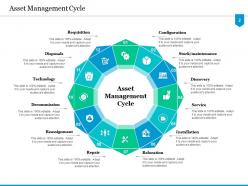
Management Cycle Requisition Technology Decommission Relocation Configuration




Try Before you Buy Download Free Sample Product
 Impress Your
 Audience
 100%
100% Editable
 Save Hours
 of Time


Our Management Cycle Requisition Technology Decommission Relocation Configuration are topically designed to provide an attractive backdrop to any subject. Use them to look like a presentation pro.
People who downloaded this PowerPoint presentation also viewed the following :
Management Cycle Requisition Technology Decommission Relocation Configuration with all 13 slides:
Use our Management Cycle Requisition Technology Decommission Relocation Configuration to effectively help you save your valuable time. They are readymade to fit into any presentation structure.

FAQs for Management Cycle Requisition Technology
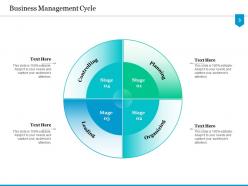
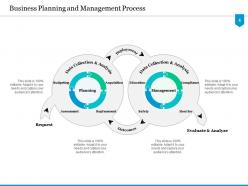
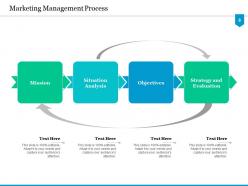
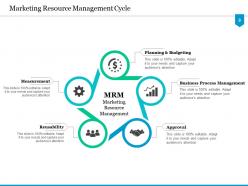
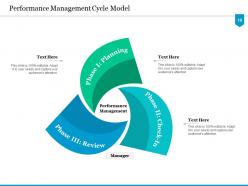
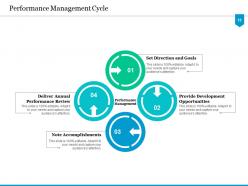
The management cycle includes planning, organizing, leading, controlling, and evaluating stages that flow continuously into each other. These interconnected stages streamline organizational effectiveness by establishing clear objectives, allocating resources strategically, motivating teams toward goals, monitoring progress through systematic feedback, and refining approaches based on results, with many organizations finding that this cyclical process ultimately delivers sustained competitive advantage and operational excellence.
Organizations can effectively measure management cycle success through key performance indicators, milestone tracking, stakeholder feedback, resource utilization metrics, and outcome assessments tailored to each stage. These measurement approaches streamline performance evaluation by establishing clear benchmarks, enabling real-time adjustments, and providing data-driven insights, with many companies finding that systematic tracking ultimately delivers enhanced operational efficiency and strategic alignment across all management functions.
Feedback serves as the critical evaluation mechanism that enables continuous improvement across planning, organizing, leading, and controlling phases of the management cycle. Through regular performance reviews, stakeholder input, and operational assessments, organizations can identify inefficiencies, adjust strategies, and enhance decision-making processes, ultimately delivering improved outcomes and maintaining competitive advantage in increasingly dynamic business environments.
Managers can adapt the management cycle by customizing planning horizons, adjusting communication frequencies, and tailoring performance metrics to match team dynamics, project complexity, and industry requirements. Through flexible goal-setting frameworks, personalized feedback mechanisms, and scalable review processes, teams in sectors like technology, healthcare, and manufacturing achieve improved productivity, enhanced collaboration, and ultimately stronger alignment with organizational objectives.
Modern businesses commonly use project management software like Asana and Monday.com, data analytics platforms, performance dashboards, automated reporting systems, and strategic planning frameworks like OKRs and balanced scorecards. These tools streamline planning, monitoring, and evaluation phases by providing real-time visibility, automated tracking, and collaborative workflows, with many organizations finding that integrated platforms significantly enhance decision-making speed and operational efficiency.
The management cycle integrates with agile methodologies through iterative planning, continuous monitoring, adaptive controlling, and regular retrospectives that replace traditional long-term cycles. Agile frameworks like Scrum and Kanban enhance management functions by enabling rapid feedback loops, sprint-based execution, and incremental adjustments, ultimately delivering faster project outcomes and improved team responsiveness.
Data analytics enhances decision-making throughout the management cycle by providing real-time insights for strategic planning, performance monitoring, and corrective actions. Through predictive modeling and automated reporting, organizations streamline resource allocation, identify operational bottlenecks, and accelerate response times, with many companies finding that data-driven management ultimately delivers improved efficiency and competitive advantage.
Organizations commonly face challenges including resistance to change, inadequate planning processes, poor communication between management levels, insufficient resource allocation, and lack of employee buy-in during management cycle implementation. These obstacles can be overcome by establishing clear communication channels, providing comprehensive training programs, securing leadership commitment, implementing gradual phased approaches, and creating feedback mechanisms, ultimately delivering improved operational efficiency and stronger organizational alignment across all management levels.
The management cycle supports strategic planning by establishing systematic processes for setting objectives, allocating resources, monitoring progress, and adjusting strategies based on performance data. Through continuous planning, organizing, leading, and controlling phases, organizations maintain alignment between daily operations and long-term goals, with many companies finding that structured cycles enhance decision-making speed, improve resource efficiency, and ultimately deliver measurable progress toward strategic objectives.
Organizational culture significantly impacts management cycle effectiveness by shaping communication patterns, decision-making processes, employee engagement levels, and change adoption rates. In collaborative cultures, organizations streamline planning and execution phases more effectively, while hierarchical environments may slow feedback loops, with many companies finding that aligning cultural values with management processes ultimately delivers improved performance and competitive advantage.
Project management software streamlines the management cycle by automating task scheduling, centralizing communication, and providing real-time progress tracking across all project phases. These platforms enable teams to minimize manual coordination, accelerate decision-making through instant data visibility, and enhance resource allocation efficiency, with organizations finding that integrated dashboards ultimately deliver faster project completion and improved stakeholder collaboration.
Industry applications of the management cycle vary significantly in timing, stakeholder complexity, and regulatory requirements, with healthcare emphasizing patient safety protocols, manufacturing focusing on operational efficiency, and financial services prioritizing risk management. While retail cycles adapt quickly to consumer trends and seasonal demands, construction and aerospace industries operate on extended planning horizons, ultimately requiring customized approaches that balance sector-specific challenges with universal management principles.
The management cycle adapts to remote environments by implementing digital performance tracking, virtual check-ins, flexible goal-setting frameworks, and cloud-based collaboration tools. These adjustments enable managers to maintain oversight while accommodating distributed teams, with many organizations finding that hybrid models actually enhance productivity through increased autonomy, streamlined communication processes, and outcome-focused evaluation methods.
Transformational, situational, and collaborative leadership styles prove most effective in guiding teams through management cycles, with transformational leaders inspiring vision during planning phases, situational leaders adapting approaches based on execution needs, and collaborative leaders facilitating team input throughout. These styles enhance team engagement, streamline decision-making processes, and deliver improved project outcomes, with many organizations finding that combining multiple approaches maximizes operational efficiency.
Communication strategies evolve from broad visioning and stakeholder alignment during planning phases to detailed task coordination and progress updates during implementation stages. Through regular feedback loops, performance reviews, and adaptive messaging, organizations streamline information flow, enhance team coordination, and accelerate decision-making processes, with many finding that strategic communication timing ultimately delivers improved project outcomes and organizational efficiency.
-
Very unique and reliable designs.