

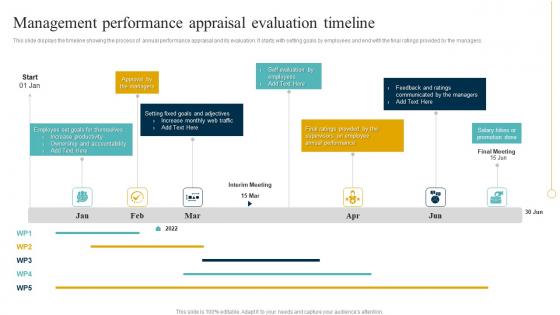
Management Performance Appraisal Evaluation Timeline




Try Before you Buy Download Free Sample Product
 Impress Your
 Audience
 100%
100% Editable
 Save Hours
 of Time


This slide displays the timeline showing the process of annual performance appraisal and its evaluation. It starts with setting goals by employees and end with the final ratings provided by the managers.
People who downloaded this PowerPoint presentation also viewed the following :
Management Performance Appraisal Evaluation Timeline with all 6 slides:
Use our Management Performance Appraisal Evaluation Timeline to effectively help you save your valuable time. They are readymade to fit into any presentation structure.





FAQs for Management Performance
So basically you're checking how everyone's doing against their goals and spotting who needs help with what. Figure out promotions and raises too. Setting expectations for what's coming next is huge - keeps everyone on the same page with company stuff. Most places completely botch these reviews though, which is frustrating. When they're done right, they're gold for career planning. Don't just dump feedback once a year - that's useless. Regular check-ins work way better. Make it a real conversation where you actually listen to what support they need.
Here's what I'd do - figure out what actually drives your company goals, then build those behaviors right into each person's review criteria. Don't just copy generic performance stuff like most places do (honestly such a waste). Break down your big strategic objectives into specific, measurable things for each role. Your managers need to get how their team's daily work connects to the bigger strategy so reviews aren't just boring checkbox exercises. Be super clear about what "good performance" actually looks like. Oh, and update those appraisal forms every year when your strategy shifts - can't tell you how many companies forget this part.
So basically, self-assessments let your people think through their own performance first before you guys meet up. They can spotlight their wins and own up to stuff they need to work on. Makes the whole conversation way less awkward, honestly. Plus you'll catch things you might've missed - they know their day-to-day better than you do, right? The trick is giving them some structure so they don't just ramble about random stuff. Takes pressure off you too since they're doing half the work upfront.
Getting feedback from just your boss? That's only half the story. When you ask peers, clients, and your team too, you'll spot patterns you'd totally miss otherwise. Like, maybe your manager thinks you're great at presentations, but your teammates see you rushing through Q&A sessions. Short bursts work better than long ones - people actually respond. The whole 360 thing sounds corporate-y but it works. You get to see blind spots AND confirm what you're already doing well. Just don't ignore the tough feedback when everyone's saying the same thing.
Honestly, most companies mess this up by tracking the wrong stuff. Skip generic metrics and go straight for what actually moves the needle - sales numbers, project completion rates, quality scores, whatever matters for that specific job. But don't ignore the soft skills either. How do they communicate? Handle feedback? Work with their team? I've watched places obsess over busy work metrics while missing the real performers. Mix your hard numbers with behavioral stuff like problem-solving and leadership potential. Start with what "winning" looks like in each role, then figure out how to measure it. Way easier than doing it backwards.
Most places still do the whole annual review thing, but honestly that's kind of useless if you want people to actually stay motivated. By the time you get around to talking, half the problems are already huge and nobody remembers the good stuff from months ago. Quarterly check-ins work way better - keeps everything fresh and you can fix things before they blow up. Then just do casual feedback whenever. I'd literally schedule your next quarter's meetings right now, even if you just finished annual ones. Trust me on this one.
Oh man, there are so many ways this can go sideways. Recency bias is huge - you'll only remember what happened last month instead of the whole year. Then there's the halo effect where one amazing project makes you forget all their mistakes. I'm guilty of confirmation bias too, where you basically hunt for evidence that backs up what you already think about someone. Honestly, the comparison thing gets me every time - judging people against their coworkers instead of actual job requirements. And don't get me started on managers who can't give real feedback because they hate confrontation. Document stuff throughout the year with specific examples, not just vague feelings when review time rolls around.
Oh man, performance reviews used to be the worst. Now I just set up automated reminders so nobody forgets deadlines. Real-time goal tracking is pretty sweet too - you can actually see progress instead of guessing. BambooHR and Workday make collecting feedback from everyone super easy. Those analytics dashboards? Game changer. You'll spot patterns you never noticed before. No more lost spreadsheets either (thank god). The software basically walks managers through everything step by step and keeps it all organized. Honestly, just pick whatever's bugging you most about your current setup and find one tool that fixes it first.
Focus on specific behaviors, not personality stuff - like "you missed three deadlines this quarter" instead of calling someone disorganized. Start with what they're doing right first. I made this mistake SO many times when I started managing people, ugh. Give concrete examples and actually ask what they think too - nobody wants to just sit there getting lectured at. Each point needs clear next steps they can work with. The whole thing should feel like a real conversation, you know?
Set clear criteria upfront so nobody gets blindsided later. Document stuff as it happens - seriously, you'll forget half of it by review time. Get feedback from multiple sources, not just your own observations. Train your managers so they're all on the same page (this is where most places screw up honestly). Regular check-ins are huge - people shouldn't be guessing where they stand for months. Oh, and ditch the gut-feeling approach for actual metrics when possible. Maybe start by looking at what criteria you're currently using? Most are probably outdated anyway.
Three big things to tackle: bias training, feedback skills, and documentation. Most managers honestly have no clue they're being biased - workshops on unconscious bias are crucial. Teach them to use specific examples instead of vague "personality" stuff. Role-playing helps a ton since they can mess up in a safe space first. Don't forget the legal side and proper documentation - that'll save you headaches later. Here's the thing though: one training session won't cut it. You'll need quarterly refreshers and maybe peer coaching so they can swap war stories and learn from each other's mistakes.
Yeah, good performance reviews can seriously bump up retention - like 20-40% better rates. People stay when they actually get useful feedback and can see where they're headed career-wise. Builds trust too, which is honestly underrated. But here's the thing - don't just give glowing reviews and then do nothing about it. If there's no follow-through with actual development or pay bumps, it's pretty meaningless. Oh, and definitely track your retention numbers before and after you change things up. You'll want to see if it's actually working or just feels like it is.
Honestly, track completion rates and see if managers actually stick with using it - that tells you a lot right there. Employee surveys are clutch though. Ask if they think it's fair and actually helps them grow. You'll get some real feedback, trust me! Also watch if your top people are sticking around and whether the underperformers improve or bail. Short version: measure both how well the process works and if it's actually moving the needle on performance and keeping good people.
Honestly, the biggest mistake is rolling it out too fast without training your managers first. You'll just have people giving useless feedback. Keep your rating scales simple too - I've seen so many companies use vague stuff like "meets expectations" and nobody knows what that even means. Test it with a small group before going wide. Get your team leads on board early or they'll resist the whole thing. Don't track a million different metrics either, just focus on what actually moves the needle for performance. Oh, and definitely iterate based on feedback - your first version won't be perfect anyway.
Start with your company's big KPIs - revenue, customer satisfaction, whatever actually matters. Then break those down into department goals. Finally, create individual metrics that people can actually control day-to-day. The key is making sure everyone sees how their work connects to the bigger picture. Most places totally bomb this by being way too vague with goals. SMART criteria helps a lot, honestly. Review quarterly to keep things on track. Oh, and definitely make these connections super clear during performance reviews - don't assume people will figure it out themselves.
-
Good research work and creative work done on every template.
-
I never had to worry about creating a business presentation from scratch. SlideTeam offered me professional, ready-made, and editable presentations that would have taken ages to design.