


Managing Employee Turnover Employee Retention Dashboard Ppt Infographics Slide




Try Before you Buy Download Free Sample Product
 Impress Your
 Audience
 100%
100% Editable
 Save Hours
 of Time


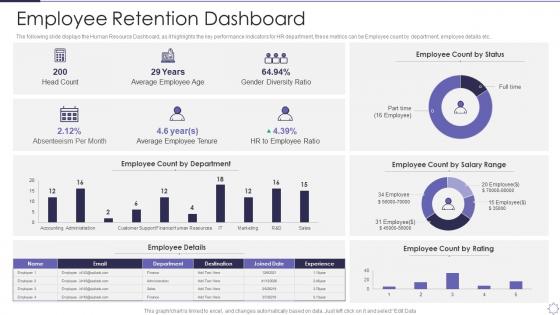
The following slide displays the Human Resource Dashboard, as it highlights the key performance indicators for HR department, these metrics can be Employee count by department, employee details etc.
People who downloaded this PowerPoint presentation also viewed the following :
Managing Employee Turnover Employee Retention Dashboard Ppt Infographics Slide with all 7 slides:
Use our Managing Employee Turnover Employee Retention Dashboard Ppt Infographics Slide to effectively help you save your valuable time. They are readymade to fit into any presentation structure.





FAQs for Managing Employee Turnover Employee Retention Dashboard
Money's obviously huge, but honestly? Bad managers kill retention faster than low pay. Work-life balance is massive too - everyone's burned out these days. Remote flexibility isn't going anywhere, and people need clear paths for advancement or they'll bounce. Feeling valued makes a bigger difference than most bosses think. Toxic culture will drive out good people even when the salary's solid. Oh, and meaningful work matters - nobody wants to feel like they're just pushing numbers around. Just ask your team directly what they actually want. You'll probably be shocked by their answers.
Honestly, culture and values are what make people actually want to stay at a job long-term. When what the company preaches matches reality, employees feel way more connected - like they're part of something meaningful beyond just collecting a paycheck. But here's the thing: people can smell BS from a mile away. If leadership talks about "work-life balance" then expects you to answer emails at midnight, you'll start updating your resume pretty quick. The companies that get this right don't just put their values on the wall - they live them when making tough decisions and treating people during crises.
Dude, professional development is seriously a game-changer for keeping people around. Your best employees will bolt if they feel stuck in the same role forever - I've seen it happen so many times. When you actually invest in their growth through training or conferences, they know you're not just using them. Ask what skills they want to build, then help make it happen. Way better than dealing with the nightmare of constantly hiring new people (and way cheaper too). Give them new responsibilities, send them to workshops, whatever. Bottom line: people stay when they feel like they're actually going somewhere.
Honestly, the early signs are pretty easy to miss if you're not paying attention. Watch for people getting quieter in meetings or giving those super short email replies. Someone who used to pitch ideas suddenly stops talking? That's your red flag right there. I'd set up regular check-ins that aren't just about deadlines - ask them what's actually going on with their job satisfaction. Maybe throw in some anonymous feedback options too, since people won't always be honest face-to-face. Once you notice someone's checking out mentally, you gotta move fast. Have that awkward conversation about what's bugging them before they're completely done.
Honestly, start with exit interviews to figure out why people are actually leaving - that's your roadmap right there. Pay and benefits need to be competitive, but that's just the baseline now. Career development is massive though - mentorship, training, clear paths up the ladder. Flexible work is non-negotiable these days. Those regular one-on-ones where you genuinely listen? Game changer. Recognition doesn't need to be expensive either, just consistent. Oh, and don't underestimate how much people value having their voice heard in decisions that affect them.
Honestly, yeah - pay and benefits are huge for keeping people around. Lose someone over 5K when you could've thrown in better health coverage? That stings. Remote work, flexible PTO, decent retirement matching - it all adds up in people's heads now. Not just the base salary anymore. I'd definitely check what competitors are offering and actually ask your team what they care about most. Some people would take a small pay cut for way better benefits. Companies that ignore this stuff just end up watching good people walk out the door for slightly better packages elsewhere.
Dude, onboarding is seriously everything for keeping people around. Those first few weeks? They literally make or break someone's whole vibe at the company. I've watched people bail after like 3 months just because they felt completely lost from day one - it's so frustrating to see. Good onboarding can cut early turnover in half, which is wild when you think about it. You want new hires feeling valued and actually prepared, not drowning in confusion. Oh, and skip the basic paperwork-only approach - build out a real 90-day plan that helps them connect with people and understand their role. Trust me, it's worth the effort upfront.
Listen way more than you talk in meetings and actually ask people what they think. Companies love hiring diverse junior staff then wonder why leadership stays the same - don't be that guy. Track your promotion patterns because the data doesn't lie. Create real psychological safety where people feel comfortable speaking up. Oh, and when someone says something exclusionary? Call it out, even if it's awkward. Trust me, your team notices when you stay quiet about that stuff. That's usually when they start polishing their resumes. Mix up your team at every level, not just the bottom.
Anonymous surveys are your best bet - people actually tell the truth when they're not worried about getting in trouble. Exit interviews are kinda pointless though, like closing the barn door after the horse already left. One-on-ones with managers work if you train them first (otherwise they'll just ask generic stuff). Focus groups are interesting too, mixing departments can show you patterns. Honestly? Start with a quick anonymous pulse survey. Takes maybe 20 minutes to set up and you'll get way better insights than you'd expect.
Yeah, remote work definitely helps with retention, but it's super dependent on what industry you're in. Tech companies and finance firms see massive improvements because honestly, most of that work translates perfectly to home offices. Manufacturing and healthcare though? Good luck trying to operate machinery or treat patients from your living room lol. Service jobs are kind of all over the place - some roles work great hybrid, others don't. I'd start by just asking your team what they actually want, then figure out which positions could realistically work remote. Don't force it where it doesn't make sense.
Honestly, timing is everything - catch people doing good stuff right when it happens. Don't just say "nice work" though, get specific about what they actually accomplished. Like "your research just saved us three weeks of back-and-forth." Some people love being praised in front of everyone, others would rather die, so figure out your team first. Oh and peer recognition programs are clutch because your teammates notice things you totally miss. Mix up rewards too - sometimes people want flexible hours way more than a bonus. Just ask them what actually makes them feel appreciated instead of guessing.
Honestly, mentorship programs work so well because people actually feel like someone cares about their career. You get mentees receiving real guidance they'd never get otherwise. Mentors feel appreciated for knowing their stuff. Creates genuine connections that make people stick around longer - who wants to leave when they've got that support system? Growth paths become way clearer too instead of people feeling trapped. Oh, and don't just randomly pair people up (I've seen that disaster). Give them structure and time to meet regularly. Makes all the difference in whether it actually works or just looks good on paper.
Honestly, it comes down to three big things: feeling valued, having some control over your work, and actually seeing where you're headed career-wise. People don't just quit bad jobs - they mentally check out first when they're micromanaged or feel invisible. Sure, money and job security matter, but I've watched folks bail on decent paychecks because they felt trapped. Recognition goes such a long way. Give someone ownership of real projects and show them a clear path up, and they'll stick around. Oh, and that whole "being part of something meaningful" thing? Totally real.
Oh totally, you can't just use the same approach for everyone. Boomers want that job security and solid benefits package. Gen X? Work-life balance is huge for them, plus they need autonomy. Millennials are looking for growth opportunities and feedback - they really want to feel like their work matters. And Gen Z... honestly they're keeping everyone scrambling with their demands for flexibility and mental health support. They expect to move up fast too. My advice? Just ask people what they actually want instead of guessing. Survey your teams by age group and tailor from there.
Dude, the numbers don't lie on this one. Companies I know have slashed turnover by 40% just adding mental health benefits and flexible schedules. Think about it - you're saving massive money on constantly hiring and training new people. Your current team actually gets stuff done instead of being stressed and checked out. Honestly, burned-out employees are basically productivity black holes. Every dollar you put into well-being comes back as $4 in better performance - that's wild ROI. Plus happy employees refer their talented friends, so recruiting gets easier. Start with like one small thing and watch your retention stats. You'll be shocked.
-
Very unique and reliable designs.
-
Innovative and creative templates with high-quality designs. Helped me with my presentation as the slides were easy to edit.