


Master Data Governance Powerpoint Ppt Template Bundles





Try Before you Buy Download Free Sample Product
 Impress Your
 Audience
 100%
100% Editable
 Save Hours
 of Time


Introducing our comprehensive Master Data Governance PowerPoint PPT presentation, designed to empower organizations with the knowledge and strategies to establish effective master data governance practices. This informative slide deck covers essential keywords such as Master Data Management, Data Maintenance, SAP Tools, Organization Data Management, and Data Governance Tools. With visually appealing slides and concise content, our PPT offers a deep dive into the principles and best practices of master data governance. Whether you are an IT professional, data manager, or business leader, this resource will enhance your understanding of data governance frameworks, data quality management, and the role of technology tools like SAP in governing master data. Gain valuable insights into establishing data policies, defining data ownership, and ensuring data integrity across your organization. Maximize the value of your master data and drive operational excellence with our user-friendly Master Data Governance PPT. Establish a strong foundation for data governance and unleash the potential of your organizations data assets.
People who downloaded this PowerPoint presentation also viewed the following :
Master Data Governance Powerpoint Ppt Template Bundles with all 25 slides:
Use our Master Data Governance Powerpoint Ppt Template Bundles to effectively help you save your valuable time. They are readymade to fit into any presentation structure.
-

Master Data Governance
-
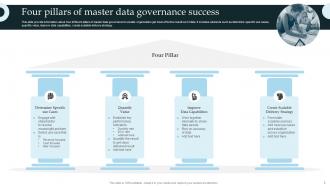
Four pillars of master data governance success
-
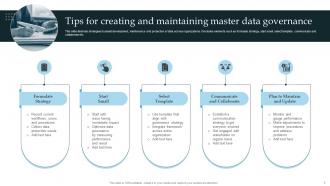
Tips for creating and maintaining master data governance
-
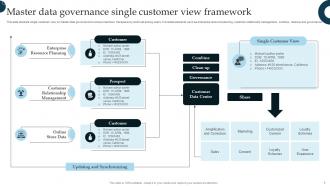
Master data governance single customer view framework
-
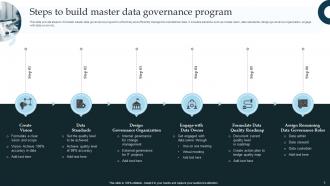
Steps to build master data governance program
-
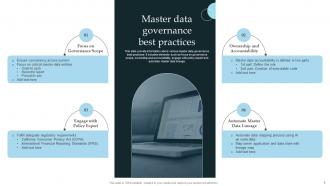
Master data governance best practices
-
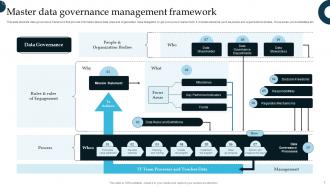
Master data governance management framework
-
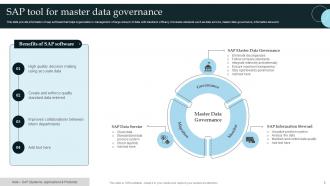
SAP tool for master data governance
-
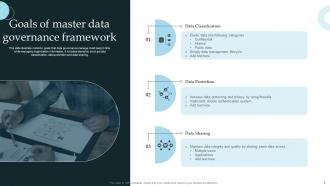
Goals of master data governance framework
-
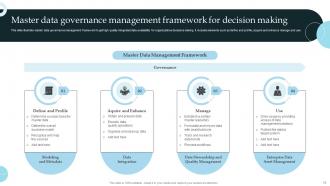
Master data governance management framework for decision making
-
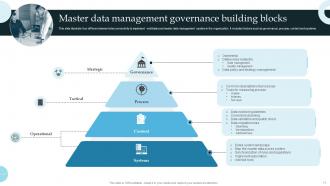
Master data management governance building blocks
-
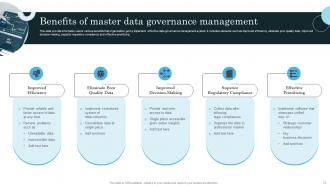
Benefits of master data governance management
-
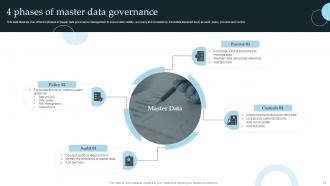
4 phases of master data governance
-
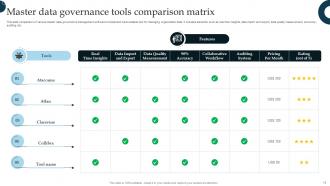
Master data governance tools comparison matrix
-
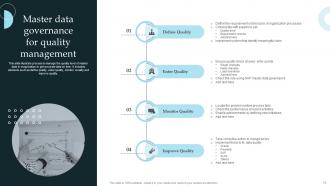
Master data governance for quality management
-
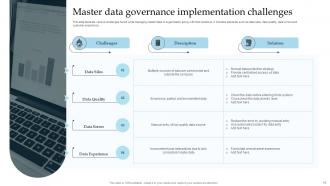
Master data governance implementation challenges
-
Master data governance cloud computing system icon
-
Master data governance centralized system icon
-
Master data governance safety and protection icon
-

Thanks for watching
-

-

-

-

-

FAQs for Master Data Governance Powerpoint
You'll need data stewards who actually own specific domains, plus solid governance policies and quality processes. Get a cross-functional committee set up to handle decisions - and yeah, people will definitely fight over data ownership lol. Technology-wise, grab tools for lineage tracking, quality monitoring, and master data management. Executive buy-in is absolutely critical though. Without it, your stewards are basically powerless. My advice? Start with just customer or product data first. Prove it works there, then expand. Way easier than trying to boil the ocean right away.
Honestly, data governance sounds boring but it actually fixes your worst headaches. When you set up clear ownership and standards for your critical data, departments stop arguing over who has the "real" numbers. Sales and finance won't be working with totally different customer counts anymore - which happens way more than it should. You'll get consistent definitions, validation rules, and someone to blame when stuff breaks. My advice? Don't try to fix everything at once. Pick your most annoying data problem first, solve that, then build out from there. Otherwise you'll burn out your team.
So you're gonna need a few different people handling this. Get a Data Steward first - they're your day-to-day quality person for specific data stuff. Business leaders should be your Data Owners making the actual decisions about their data. Technical Administrators handle all the system headaches. Honestly, the Data Governance Manager might be the most important role because someone has to coordinate this mess. Executive Sponsors give you budget and cover your back when politics get ugly (and they will). Write down what everyone's responsible for though - nobody wants finger-pointing when things break.
Honestly, you gotta track both the numbers stuff and the softer metrics. Data quality scores and duplicate records are obvious ones. But user adoption is where most companies totally blow it - doesn't matter how good your process is if nobody's actually using it. Track how long cleanup takes, issue resolution time, that kind of thing. Business impact matters too though - like are customers happier? Reports getting done faster? My advice? Pick maybe 3-4 things that actually matter to your team and stick with those. Trying to measure everything just gets messy.
Ugh, data politics are the WORST part honestly. Everyone thinks they own the "real" customer data and fights over it constantly. You'll hit data silos everywhere, plus stakeholders who refuse to change how they've always done things. Years of messy data quality issues will surface too. Oh, and integrating all those different systems? Total nightmare. But here's what actually works - pick one small area first, get a quick win to show it's worth it, then spend serious money on change management. People need to buy in or you're screwed.
Honestly, good data governance makes compliance so much less painful. You'll know exactly where your sensitive data is, who's touching it, and how it moves around - which is literally what GDPR and CCPA want you to track anyway. Think of it like organizing your closet before your mom visits. Your governance rules should match up with compliance stuff, especially for data lineage and access controls. I'd start by figuring out which master data has personal info in it. Build your protection rules around that first. Way easier than scrambling later when regulators come knocking.
So you need an MDM platform first - that's your foundation for creating single sources of truth. Data quality tools are huge too, they'll catch duplicates and clean up your mess. Seriously, the duplicate detection will make you question everything about your data lol. Data lineage tools help track where stuff comes from. Workflow tools handle approvals and that whole process. Oh, and definitely figure out your biggest data headaches first before buying anything. That way you're not just throwing money at random tools that might not even solve your actual problems.
Look, you gotta make it hit them where they already hurt. Find the data problems driving them crazy - like when they can't tell if John Smith and J. Smith are the same customer. Show how fixing governance solves that mess directly. Give business people ownership of the data they actually know. Short "data clinic" sessions work well too - they bring problems, you fix them on the spot. Honestly, skip the future benefits speech entirely. Nobody cares about hypothetical wins when they're drowning in bad data today. Quick dashboards tracking stuff that affects their bonuses? That's what gets buy-in.
Start with clear data definitions that actually make sense to everyone, not just the tech team. Pull in your business people early - they get what the data means way better than IT does. Document standard formats for customer info, addresses, product codes, all that stuff, in one place people can find. Honestly, the biggest mistake I see is skipping regular audits because standards just fall apart without upkeep. Set up automated quality checks wherever you can, assign specific people to own different data areas. Oh and build compliance right into your data entry process from the start - way easier than fixing it later.
Honestly, master data governance is like getting everyone to speak the same language. When all your systems agree on basic stuff - what counts as a "customer" or how you define "product" - everything just clicks better. No more headaches trying to figure out why the same person shows up as three different records. You'll save tons of time not having to clean up messy duplicates later. The trick is picking your most important data types first and nailing down those standards. Trust me, it's way better than dealing with integration chaos down the road.
Look, you can't just bolt governance on afterward - it has to live inside your actual work processes. Automated quality checks are a lifesaver because they catch problems right when they happen instead of three months later when everything's already broken. Train people regularly too, they forget this stuff surprisingly fast. Oh and definitely assign someone to own each data area, otherwise it becomes nobody's problem. I'd also run audits every so often to see where things are slipping. Bottom line: make following the rules easier than ignoring them, or people will take shortcuts every time.
Yeah, so much of the tedious master data stuff can be automated. Data quality checks, finding duplicates, validation rules - all that can run on its own instead of your team checking every single record manually. Total lifesaver honestly. Workflow automation is huge too for stewardship tasks. Like automatically flagging weird inconsistencies and sending them to whoever needs to fix it. My advice? Start with whatever's eating up the most time - those mind-numbing, rule-based processes your team hates. Build automation around one area first and you'll see results pretty quick. Way better than trying to automate everything at once.
So metadata management is like the foundation of your whole data governance setup. It tells you what your data actually means, where it came from, how to use it properly. Picture trying to navigate without GPS - that's what happens when you don't have solid metadata. You can't figure out data lineage, quality rules, or even basic business context. Here's the thing though - everyone needs to agree on what terms like "customer" or "product" mean in your company. Otherwise you'll have different teams talking past each other constantly. Metadata helps you set those standards and track when things change. I'd start by documenting your most critical data definitions first, then worry about who owns what.
Okay so here's the thing - you gotta speak their language. Executives? Hit them with the money talk - bad data literally costs cash. Middle management cares about making their teams run smoother and getting stuff done faster. For the people actually doing the work, show how it'll make their job less of a headache. Don't just say "data quality is good" because honestly, that means nothing to anyone. I'd grab real examples from whatever industry you're in. Paint them a picture they can actually see happening in their world. The rollouts that actually work? They solve real problems people face every day instead of just being another corporate initiative.
Honestly, AI data quality tools are getting crazy good at spotting stuff your team would totally miss. Cloud MDM platforms are kind of taking over since they're way cheaper and scale better than the old on-premise setups. Real-time governance is replacing all that batch processing nonsense too. Data mesh is trendy but still feels pretty hyped up to me. Privacy laws keep getting tighter everywhere, which is... fun. I'd probably start by figuring out where you could automate the boring manual cleanup work. Let your data people focus on the actually interesting problems instead.
-
“Detailed and great to save your time.”
-
Amazing variety of PowerPoint slides. Really helpful in designing professional presentations.