


Measure sustainability key performance indicators employee engagement company culture




Try Before you Buy Download Free Sample Product
 Impress Your
 Audience
 100%
100% Editable
 Save Hours
 of Time


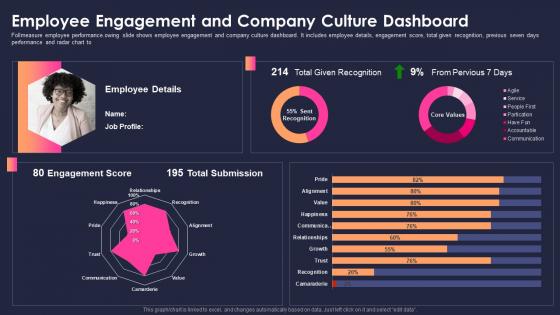
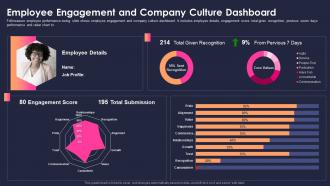
Follmeasure employee performance.owing slide shows employee engagement and company culture dashboard. It includes employee details, engagement score, total given recognition, previous seven days performance and radar chart to.
People who downloaded this PowerPoint presentation also viewed the following :
Measure sustainability key performance indicators employee engagement company culture with all 7 slides:
Use our Measure Sustainability Key Performance Indicators Employee Engagement Company Culture to effectively help you save your valuable time. They are readymade to fit into any presentation structure.
-
Measure sustainability key performance indicators employee engagement company culture
-
Measure sustainability key performance indicators employee engagement company culture
-

Measure sustainability key performance indicators employee engagement company culture
-

Measure sustainability key performance indicators employee engagement company culture
-

Measure sustainability key performance indicators employee engagement company culture
-

Measure sustainability key performance indicators employee engagement company culture
-

Measure sustainability key performance indicators employee engagement company culture
FAQs for Measure sustainability key performance indicators employee
Start with energy use, waste diversion, water consumption, and carbon emissions - those four give you the clearest view. Don't try measuring everything right away though, maybe pick 2-3 to focus on first. I made that mistake and it was overwhelming lol. Renewable energy percentage is huge too if you can swing it. Also check how sustainable your vendors actually are - some companies talk a big game but don't back it up. Pick stuff that makes sense for your industry specifically. Get your baseline numbers ASAP, then you can set realistic targets from there.
Okay so you'll need to track three main things: Scope 1 (direct emissions from your stuff), Scope 2 (energy you buy), and Scope 3 (supply chain - total pain but crucial). Measure your CO2 equivalent tons per year first. Then divide by employees or revenue to compare with others in your industry. Most companies completely bomb Scope 3 since it covers your whole value chain, but whatever. Get solid baseline numbers before anything else, then maybe aim for 30% cuts by 2030. Just start with energy bills and fuel usage - honestly you can figure out the fancy stuff later once you're rolling.
Okay so basically you need actual numbers to back up your sustainability claims - people are super skeptical about greenwashing now. Instead of just saying "we care about the planet," you can show "we cut emissions 15%." Your stakeholders will actually trust you more when they can track real progress over time. Plus it keeps your own team honest internally, which is honestly half the battle. I'd start with like 3-5 metrics that match what your key people actually care about - don't go crazy measuring everything under the sun. Things like energy use, waste reduction, diversity stats work well.
Pick 3-5 SDGs that actually match what your company does - don't try to force all 17, that's just overwhelming. Manufacturing? Focus on clean energy (SDG 7) or responsible consumption (SDG 12). Map your existing KPIs to those specific targets. The framework's pretty solid so you'll find natural connections anyway. I'd honestly stick with fewer goals but do them well rather than spreading yourself thin. Plus your stakeholders already know these standards, which makes reporting way smoother. Oh, and it's way easier to track progress when you're not juggling everything at once.
Honestly, I'd start simple with just tracking your total waste and recycling rates each month. Don't go crazy measuring everything right away - pick like 2 KPIs max. Set up automatic data collection if you can because doing it manually sucks. Do a waste audit to figure out where most of your trash is coming from, then set some realistic targets. Make sure your team can actually see the numbers through dashboards or whatever - people need that visibility to stay on track. Oh and definitely check industry benchmarks so you know if you're doing decent or terrible compared to everyone else.
Dude, sustainability stuff is literally make-or-break for suppliers now. Carbon data, waste metrics, ethical sourcing certs - you need all that before even talking to them. Crazy how fast this changed, right? Your procurement people will score suppliers on these KPIs, and honestly? Bad sustainability scores can tank a vendor completely, even if their prices rock. Oh, and get this data early in your RFP process - don't wait until you're already deep in negotiations. Trust me on that one.
So you're looking at real-time sustainability tracking? IoT sensors are your best bet - they'll monitor energy use, waste levels, all that stuff 24/7. Pair them with Tableau or Power BI for the visuals, though there's specialized ESG software like Sustainalytics too. Honestly, I'd go cloud-based since it handles those crazy data streams better. One thing though - I've watched companies blow their budgets on these gorgeous dashboards that nobody actually uses. Your sensors matter way more than how pretty everything looks. Start small with maybe two metrics, then build from there.
Honestly, just grab a spreadsheet and start there - no need for expensive software yet. Pick maybe 3-4 things you can actually measure easily, like monthly energy bills or how much waste you're throwing out. Most small businesses overcomplicate this stuff at first (I definitely did). Water usage, electricity costs - whatever data you're already getting anyway. Set some basic goals that don't feel impossible and check in monthly with your team. Those small wins really do add up. Once you've got a rhythm going for a few months, then you can get fancier with tracking if you want. But seriously, the simple approach works.
Your team can make or break those sustainability numbers, honestly. I've seen engaged employees boost waste reduction and energy efficiency by like 20-30% - it's pretty crazy. Thing is, they actually spot problems you'd never catch from your desk. Plus they'll follow the protocols instead of cutting corners. The trick? Don't just dump corporate goals on them. Get them involved in setting the KPIs from the start. When people feel ownership over the targets, they actually care about hitting them. Oh, and make it feel personal somehow - not just another box to check.
You know how constraints actually spark creativity? Same thing happens when you give your product team sustainability targets. Tell them to cut packaging waste by 30% and suddenly they're experimenting with wild new materials. Carbon footprint goals make engineers completely rethink how stuff gets built. It's honestly pretty cool to watch. The bonus is you'll stumble on wins you never saw coming - like when lighter designs save money AND emissions. Just pick 2-3 solid KPIs to start. Don't go crazy with too many metrics right off the bat. Your team's whole approach to problem-solving shifts once they've got those numbers to chase.
Ugh, the main issue is that sustainability stuff just doesn't mesh well with how finance teams work. Your dashboards aren't set up for tracking carbon emissions next to revenue - it's honestly like mixing oil and water. Data's scattered everywhere, reporting standards are all over the place, and half your team probably thinks it's just extra work. I dealt with something similar last year and it was a nightmare. Short sentences help here: pick 2-3 sustainability metrics that actually tie back to business numbers you already track. Makes the whole integration process way less painful, trust me.
Honestly, real numbers are everything when it comes to green marketing. Pick like 2-3 sustainability metrics that actually matter to your customers - carbon reduction percentages, waste diverted from landfills, that kind of stuff. Way better than those vague "we love the planet" statements everyone rolls their eyes at. Post these wins on social media and your website. People eat up transparency because they can actually see you're making progress, not just greenwashing. Energy efficiency improvements work great too. Oh, and sustainable sourcing percentages if that's relevant to your business. Numbers don't lie.
Honestly, just pick like 5-7 metrics you can actually track well instead of going overboard. Be super upfront about your data sources and how you calculate stuff - nobody wants to find out later that your numbers are sketchy. Third-party audits help a ton if you can swing the budget. Use frameworks like GRI or SASB so people can compare you to competitors. The consistency thing is huge though - don't change your methodology every year or you'll look amateur. Oh, and definitely call out any limitations in your data upfront.
So basically, new regulations totally reshape what companies track for sustainability. Carbon reporting rules drop? Boom - suddenly everyone's measuring emissions. It's super reactive, honestly. But there's an upside - at least it standardizes how different companies measure stuff, which makes comparing them way easier. Look at the EU's CSRD thing - now companies have to track tons of environmental and social data they never bothered with before. (Kind of a nightmare for compliance teams, but whatever.) Start prepping for regulations heading your way now. Trust me, you don't want to be that company scrambling to build measurement systems last minute.
Honestly, there are a few solid ways to tackle this. Industry frameworks like GRI or SASB give you standardized metrics - super helpful for comparisons. Check out your competitors' sustainability reports too, plus ESG ratings from MSCI or Sustainalytics. Bloomberg ESG and Refinitiv have massive databases you can dig into. Industry association benchmark studies can be hit or miss, but worth a look. Don't rely on just one source though - you'll want 2-3 different approaches since each tells part of the story. Pick what makes sense for your sector and go from there.
-
Much better than the original! Thanks for the quick turnaround.
-
Great quality slides in rapid time.